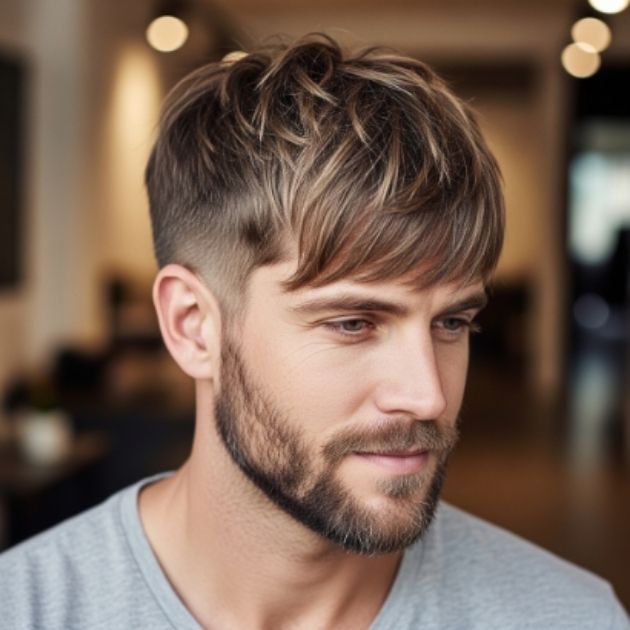
Messy French Crop Haircuts are a popular choice for men who want a stylish look without spending a lot of time on styling. This haircut combines a textured top with a short fringe and clean sides. It creates a relaxed appearance while still looking neat and well-groomed. The style works well for different ages, face shapes, and hair types. Whether you prefer a low taper or a subtle fade, the messy French crop offers a modern look that is easy to maintain.
One reason this haircut remains popular is its versatility. It can look professional at work and casual on weekends. The textured top adds movement, while the shorter sides keep the overall shape clean. With the right cut and simple daily styling, a messy French crop stays sharp, grows out well, and looks great from every angle.
Messy French Crop: Effortless Texture, Clean Outline, Fast Style
The Messy French Crop Haircuts isn’t just a haircut it’s a daily shortcut. You get a modern look that works at the office, at the gym, and everywhere in between. It’s low effort in the morning but never looks like it. That’s the whole point.
What makes it work is control underneath the chaos. A protected weight line, a calm crown, and a clean neckline do all the heavy lifting. Once your barber sets the structure right, you’re styling in under two minutes every single day.
Related Post: Burst Fade Straight Hair 15 Trendy Styles That Look Sharp
1) What Is a Messy French Crop

A messy French crop is a short textured men’s haircut with forward-facing direction and a choppy or blunt fringe. Think of it as a Caesar crop hairstyle with softer edges and real movement on top. The sides are tapered or faded low, and the top sits short to medium with loose, lived-in texture. It’s not messy in a careless way it’s messy in a deliberate, styled way. The weight line under the parietal ridge keeps the sides full and the outline balanced from every angle.
2) Why Choose This Cut
A low taper French crop hides regrowth better than a high skin fade. That means you’re not rushing back to the barber every two weeks. It’s a genuine low maintenance men’s haircut a modern French crop fade that looks sharp when fresh and still decent four weeks later. The forward fringe adds structure to your face without demanding a full styling routine. Whether you’re in a suit or a hoodie, this cut adapts without trying hard.
3) Face Shape Match
Your face shape changes which version of this cut works best. Round faces do well with a shorter straight fringe it adds a soft vertical line and stops the face from looking wider. Square faces suit a choppy fringe with reduced corner weight so the outline doesn’t go boxy. Oval faces have it easy most versions of the messy crop haircut for men work, so just pick based on your dress code. Heart and long faces should keep side fullness and avoid a high crown so the face doesn’t read longer than it is.
4) Hair Types & Top Textures
Straight hair works best with a blunt fringe and a flat textured top with light breakup near the front. Wavy hair? Go with a choppy textured crop and a soft fringe edge a French crop for wavy hair leans into the natural movement instead of fighting it. Curly hair needs a compact layered top with crown control so the fringe doesn’t balloon outward. For a short haircut for thick hair on men, thinning shears help where bulk collects without changing the shape. Fine or thinning hair benefits from forward root direction and a comb line that adds the illusion of fullness.
5) Exactly What to Tell Your Barber
Walk into your barber consultation with a clear script and a front-and-side photo. Say: “I want a cropped haircut with fringe messy French crop with a low taper or low fade. Keep the weight line protected under the ridge. Fringe either choppy or straight, depending on my forehead. Top textured, forward direction. Natural hairline or a mild shape up. Calm the crown and blend the parietal ridge clean. No high skin fade or hard part unless we decide it’s needed.” That covers everything. A good barber will take it from there.
6) In the Chair: Step by Step
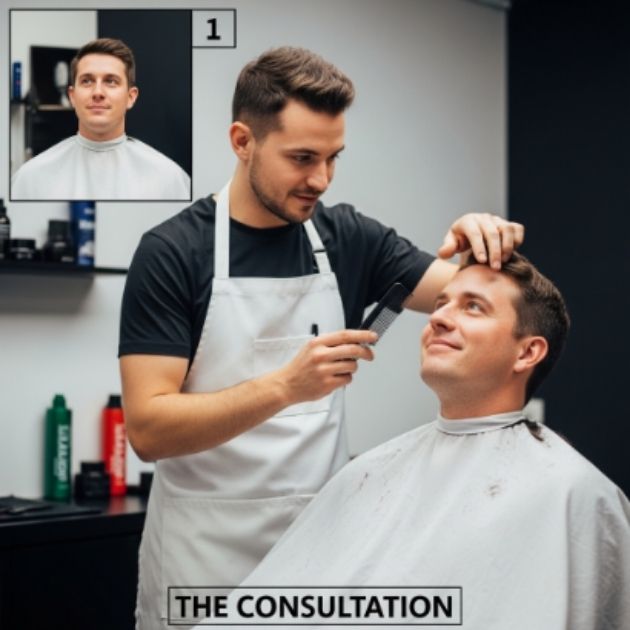
Here’s exactly how a skilled barber builds this cut from start to finish.
Step 1: Consult & Plan
Confirm taper or fade height at the top of the ear, agree on fringe shape, and decide the top length in centimetres. Map any cowlicks at the crown and ridge before touching the clippers. Also decide on the neckline natural, soft line up, or shape up. Locking this in before cutting saves time and prevents surprises at the end.
Step 2: Prep
Comb everything forward to reveal the fringe line and comb line clearly. Towel-dry to about 70% so root direction shows up naturally. Section the top if the hair is dense and clean up the temple height first. This step guides every blend that follows and reduces patchiness later in the cut.
Step 3: Set the First Guideline
Place a low, even baseline with the lever open, hugging the ear without climbing up it. Mirror the curve across the occipital bone for a smooth drop into the nape. Keep strokes short and consistent an uneven baseline at this stage creates problems through every subsequent step. The weight line starts here.
Step 4: Build the Taper or Fade
Work guards from zero to half to one to 1.5 to two, staying low to protect the weight line. Feather into the baseline to avoid visible shelves. For a low bald fade or low fade crop haircut, finish the skin area with a foil shaver and keep the blend soft. The low taper fade should sit just above the ear not creeping toward the temple.
Step 5: Blend Ridges
At the parietal ridge, use clipper-over-comb to clear corner weight without pushing the fade higher. Switch to scissor-over-comb near the occipital for a softer, more natural drop. Cross-check at 45 degrees and erase any shadows with the corner of the blade. Clean ridge blending is what separates a professional result from a home haircut.
Step 6: Texture & Balance
Point cutting and slide cutting build movement without removing length. Use texturizing shears only where bulk actually collects don’t run them through everything. Keep comb line coverage intact so the crop looks full from the front. Confirm crown control here: the hair should lay forward, not spike upward. This is what gives the men’s fringe haircut its relaxed but intentional look.
Step 7: Cut the Fringe
Keep the head neutral no tilting. Square the fringe for a crisp office-ready line or chip into the ends for a relaxed, textured fringe. Match the corners to the brow tails so the line reads straight in photos. If the forehead is short, go micro fringe. Avoid a hard part unless the hair’s natural direction calls for it.
Step 8: Finish
Set a clean neckline taper and trace the ear outline. Add a temple fade if you want a polished finish. Blow-dry forward to lock root direction from crown to fringe, then palm-press the fringe lightly to seal the edge. Step back, recheck symmetry in natural light, and book the next tidy-up before you leave.
7) Daily Routine and Fast Style
After showering, towel-dry and aim a low-heat dryer forward for 30 to 60 seconds. That sets root direction from crown to fringe before any product goes in. Use fingers or a vent brush to guide the hair along the comb line. Pinch the fringe corners lightly so the edge reads crisp. A quick pass over the parietal ridge keeps the sidewalls neat all day no second mirror check needed.
8) Beard & Outline Options
Mirror a low beard fade to your side taper so the cheek line, jawline, and neckline all read as one continuous flow. Stubble works well here as long as the outline is crisp and the area under the ear stays light. Clean-shaven gives maximum contrast and suits formal settings perfectly. For the hairline, choose natural, line up, or light shape up based on your dress code and how sharp you want the overall silhouette.
9) Maintenance Timeline
Plan a tidy-up every three to five weeks. Ask for the baseline, ear outline, and neckline taper to be refreshed each visit. If the fringe line starts to drop or the crown loses control, ask for a quick edge-up between full cuts. Because the textured crop with taper sits low, regrowth stays hidden longer than a high fade which is exactly why this cut is worth coming back to.
10) Common Mistakes & Quick Fixes
Fringe too long? Trim it shorter or go micro and reset the line from scratch. Top too heavy? Debulk the corners and re-blend the ridge don’t just thin the middle. Fade crept too high? Reset the baseline low and rebuild using short flick strokes, not long sweeping ones. Patchy skin work? A few gentle foil passes with light buffing cleans up the transition without irritating the scalp. Most problems in this cut trace back to one thing: the baseline wasn’t set low enough from the start.
Conclusion
The Messy French Crop Haircuts works because it’s built on control, not chaos. A low baseline, a protected weight line, and a calm crown give you real texture that holds up in person and in photos. Add clean ridge blending, a tidy neckline, and a 60-second morning routine and you’ve got a cut that earns its place in your life every single day. It’s not the flashiest haircut in the room but it’s almost always the sharpest one.
If you’re ready to try it, book a messy French crop with a low taper, bring a front-and-side photo, and hand your barber the script from section five. Drop your hair type and face shape in the comments and I’ll suggest the best fringe style and baseline height for your specific situation.

