

Mens Denim Jacket Outfit: 30 Looks, Fit & Styling Guide
Mens denim jacket outfit planning starts with the jacket as the visual anchor, because its wash, fit, and length set the tone for every other piece. A good outfit treats denim as a layer, not as a costume, and lets the shirt, trousers, and shoes do clear supporting work.
When the jacket fits at the waist and the sleeves end at the wrist, the whole look reads intentional rather than borrowed. Small choices matter here, since denim is a strong texture that can easily dominate a soft tee or a light chino.
Mens denim jacket outfit success also depends on contrast, because two identical denim washes can merge into one long block of blue fabric. A darker jean, a lighter jacket, and a plain middle layer usually create the cleanest separation between pieces.
Colour, texture, and proportion work together in this system, so a heavy sherpa lining needs a simpler base underneath it. The goal is balance, not maximum denim, and that balance is what separates a sharp casual outfit from a flat one.
Mens denim jacket outfit styling works across ages, body types, and seasons when the fit rules stay consistent and the occasion stays honest.
A classic trucker shape suits most builds, while a slightly relaxed shape suits layered winter outfits and street leaning looks. Denim also ages well, since fading and softening add character without changing the core shape of a well made jacket. Choose the jacket first, then build outward with purpose.
Mens denim jacket outfit choices should never rely on a single famous photo or a single celebrity look, because real life needs movement, pockets, and weather protection.
A jacket that looks perfect standing still can feel tight when you reach, sit, or drive for an hour. Test the shoulder seam, the button closure, and the arm movement before judging the style in a mirror. Comfort is part of style here, especially for a layer worn all day.
What a Denim Jacket Outfit Really Is
A Layer Led Outfit, Not a Product Page
A denim jacket outfit is built around the jacket as the outer layer, with every other piece chosen to support its colour and weight. It is not simply a jacket purchase, and it is not a jeans outfit with a jacket thrown on top.
The jacket should be visible in the overall silhouette, even when it is open, unbuttoned, or worn over a hoodie. When the jacket disappears under a coat, the outfit becomes a coat outfit instead.
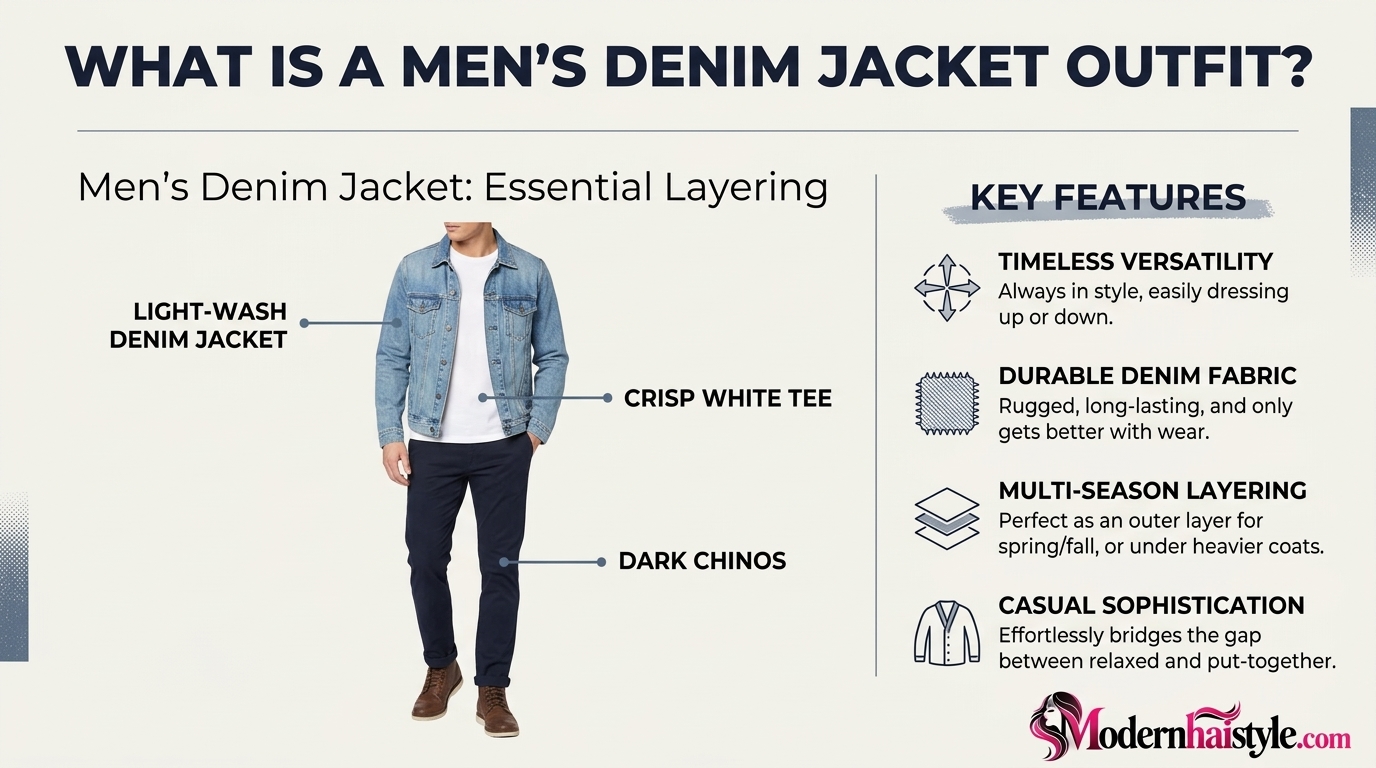
A strong denim jacket outfit also keeps the base layer simple, because busy prints under strong denim can fight for attention and create visual noise.
Plain tees, simple stripes, solid Oxford shirts, and quiet knits usually work better than loud graphics. Let one piece carry the personality, whether that is a washed jacket, a bold boot, or a textured knit underneath. Restraint makes denim look grown up rather than random.
A denim jacket outfit must still respect occasion, since denim has a casual ceiling even when the rest of the outfit looks polished. Creative offices, casual dinners, weekend trips, and relaxed social events are natural homes for this layer.
Formal workplaces, formal weddings, and funerals are not, even when the jacket is dark and the shoes are polished. Knowing that ceiling prevents the most common styling mistake.
Trucker Roots and Modern Shape
Denim jackets began as tough workwear for miners, ranch hands, and outdoor workers who needed a short, strong, and practical outer layer. The classic trucker shape kept a cropped body, chest pockets, a pointed collar, and a close fit that allowed easy movement. Workwear history sources trace those proportions back to early American workwear, with the familiar shape settling close to its modern form in the 1960s. That history explains why the jacket still ends near the waist, rather than covering the hips like a coat.
Modern trucker jackets keep that cropped length, but fabric, stretch, and lining options have widened the range for everyday wear. Rigid denim holds a sharper shape, while stretch denim moves more easily and suits slimmer fits. Sherpa lining adds warmth and bulk, so it needs a simpler base and a slightly roomier cut. The core idea remains the same, which is a short jacket that frames the torso and leaves the legs long.
A modern denim jacket outfit should not copy workwear literally, because heavy boots, a tool belt look, and a stiff silhouette can feel like a costume. Instead, borrow the structure and update the partners with clean chinos, dark jeans, simple sneakers, or leather boots. Keep the collar neat, the buttons aligned, and the hem level around the waist. Small grooming details, like a clean tee hem and tidy shoes, lift the whole outfit.
Jacket Types Compared
Classic Trucker
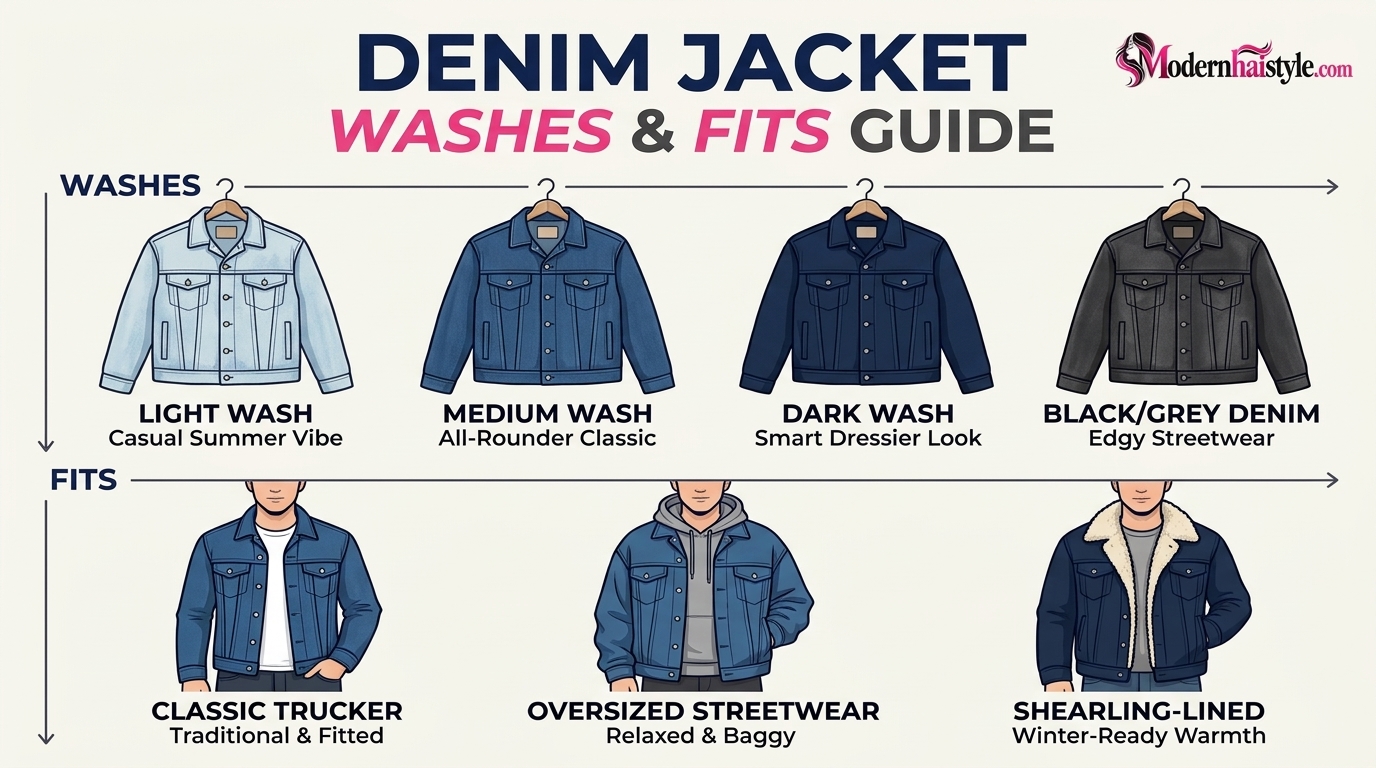
The classic trucker is the default choice for most men, because its waist length, chest pockets, and button front suit tees, shirts, and light knits. It works with jeans, chinos, and darker trousers, and it layers easily under a coat in cold weather. Choose a mid wash for maximum versatility, since it pairs with both dark and light bottoms. A trucker in a clean wash is the safest first denim jacket.
A classic trucker should feel snug but not tight, with room to button it over a tee without pulling across the chest. The shoulder seam should sit at the natural shoulder point, not drooping down the arm or pulling inward. Sleeves should reach the wrist bone when arms hang relaxed, with a small amount of shirt cuff showing only if a long sleeve layer is worn. If the jacket lifts badly when you raise your arms, size up or choose a stretch blend.
Black Denim Jacket
A black denim jacket reads sharper and darker than blue denim, which makes it useful for evening casual outfits and monochrome looks. It pairs well with black jeans, charcoal trousers, and dark boots, but it needs a lighter base layer to avoid a flat black block. White, grey, olive, or cream tees create that needed separation without adding a bright colour clash. Black denim also suits leather shoes better than light wash denim does.
Black denim fades with washing and sunlight, so wash it cold, inside out, and less often than cotton tees to slow the change. A faded black jacket can still look good, but it reads more casual and less evening ready than a deep black one. Keep black denim away from very light blue jeans unless the outfit is deliberately high contrast and casual. For smart casual nights, pair black denim with dark chinos and clean boots.
Light Wash Denim Jacket
A light wash jacket suits warm weather, beach towns, and bright daytime outfits, because its pale blue tone reads relaxed and summery. It pairs best with white tees, stone chinos, olive shorts, and darker jeans that create clear contrast. Light wash denim can look washed out with pale bottoms, so anchor it with a darker shoe or a mid tone trouser. It is a strong second jacket, not always the best only jacket.
Light wash denim shows stains and dirt more easily than dark denim, so check cuffs, pockets, and collar edges before leaving home. A light jacket also suits softer fabrics underneath, like linen blend tees and light cotton shirts, which match its airy tone. Avoid heavy black boots with a very light jacket in summer, since the weight contrast can feel unbalanced. White sneakers, tan suede, or light canvas shoes usually finish the look better.
Dark Wash Denim Jacket
A dark wash jacket is the most versatile dressier option, because deep indigo reads closer to a structured casual jacket than a faded work shirt. It works with dark jeans, grey chinos, navy trousers, and black bottoms, provided the base layer breaks up the dark tones. A white tee is the simplest partner, while a light Oxford shirt adds a smarter edge for dinner or a creative office. Dark wash denim also photographs cleanly and hides light dirt well.
Dark wash denim can bleed dye when new, so wash it separately at first and avoid pairing it with pale suede or light canvas until it settles. The deep colour also makes small fit flaws more visible, since shadows fall sharply across a tight chest or a short sleeve. Choose a fit that buttons without strain and still allows a thin sweater underneath in cooler months. Dark wash is the best choice when only one denim jacket is planned.
Sherpa Lined Denim Jacket
A sherpa lined jacket adds warmth and texture, with a soft fleece lining visible at the collar, cuffs, and sometimes the inner placket. It suits cold casual days, winter walks, and layered outfits where a coat would feel too formal. The bulk means the base layer should stay thin, like a tee or a light long sleeve top, rather than a thick hoodie. Sherpa also adds visual weight, so slimmer bottoms usually balance the silhouette better.
A sherpa jacket is elevated casual, not formal evening wear, even when it looks neat with dark jeans and boots. Do not pair it with a tie, a suit, or formal dress shoes and expect it to read as formal, because the texture alone keeps it casual. Sherpa works best with dark jeans, chinos, and sturdy boots in autumn and winter settings. Keep the collar clean and brushed, since matted sherpa quickly makes the jacket look worn out.
Oversized and Relaxed Denim Jacket
A relaxed denim jacket drops the shoulder slightly and adds room through the body, which suits street leaning outfits and heavy layering. It pairs well with wide trousers, cargo pants, and chunky sneakers, but it can overwhelm slim legs if the balance is wrong. Keep the length near the waist, even in a relaxed fit, so the legs still look long. A boxy jacket that covers the hips usually reads as a coat, not a trucker.
A relaxed jacket needs a simple base underneath, because extra volume plus a busy graphic can look messy rather than intentional. Plain tees, simple hoodies, and dark bottoms keep the volume under control. Check the back view as well, since extra fabric can bunch at the waist when sitting. Relaxed denim suits taller builds and layered winter outfits best, while shorter men should keep the extra room modest.
Denim Jacket With a Hood
A hooded denim jacket blends casual comfort with trucker structure, but the hood adds bulk at the neck and changes the collar line. It suits weekend outfits, travel days, and cold casual settings better than smart casual dinners. Keep the hood flat when it is not in use, and avoid pairing it with another hoodie underneath. A plain tee or a thin long sleeve top keeps the neck area clean and comfortable.
A hooded denim jacket should not be treated as a smarter layer, since the hood signals sport and leisure even in dark denim. Pair it with jeans, joggers in a clean cut, or chinos on relaxed days, plus sneakers or casual boots. Avoid formal shirts and polished leather shoes with this version, because the mix sends conflicting signals. Choose this type only if the hood will actually be used in wind or light rain.
| Jacket type | Best use | Watch out for |
|---|---|---|
| Classic trucker | Everyday casual, first jacket | Tight chest, short sleeves |
| Black denim | Evening casual, monochrome looks | Fading, flat all black outfits |
| Light wash | Summer, bright daytime outfits | Stains, low contrast with pale bottoms |
| Dark wash | Smart casual, versatile first buy | Dye transfer when new |
| Sherpa lined | Cold casual days, winter layering | Bulk, thick base layers underneath |
| Relaxed fit | Street looks, heavy layering | Hips covered, slim legs overwhelmed |
| Hooded denim | Weekend, travel, cold casual days | Hood bulk, formal shirt clash |
The Wash Contrast Rule
Why Contrast Matters
Wash contrast is the governing rule for denim on denim, because the eye needs a clear difference between jacket and jeans to read them as separate pieces. Identical washes merge into one long denim shape, which can look like a uniform rather than an outfit. A gap of at least one clear wash step, such as dark jeans with a mid jacket, usually solves the problem. When in doubt, choose a darker bottom and a lighter top layer.
Contrast also applies to texture, since a shiny or heavily distressed jacket next to smooth dark jeans can still clash even when colours differ. Matte denim pairs more easily, while distressed denim needs a plain base and a clean bottom to stay balanced. Keep one denim piece as the star and let the other play a quiet supporting role. That hierarchy keeps the outfit calm and intentional.
Wash contrast works best when the middle layer also helps, because a white, cream, or light grey tee creates a visual break between two denim pieces. A dark tee under a dark jacket and dark jeans removes that break and can flatten the whole outfit. Use the middle layer as a separator, not just as coverage, especially in triple denim looks. A simple colour block in the middle often saves an otherwise risky pairing.
Triple Denim Without a Costume
Triple denim means jacket, shirt, and jeans all in denim, and it only works when each wash has a distinct job in the outfit. One reliable option puts the darkest wash in the jeans, a mid wash in the shirt, and the lightest wash in the jacket.
That order keeps the legs grounded, the torso mid tone, and the jacket as the lightest frame. Reverse the order only if the jacket is dark and the shirt is clearly lighter.
A deliberate Canadian tuxedo uses matching denim on purpose, but it needs clean shoes, a simple base, and confident grooming to avoid looking accidental.
Matching washes work better when the jacket and jeans share a clean, non distressed finish and the shirt adds a plain contrast. Avoid matching a faded jacket with faded jeans plus a faded shirt, since the whole outfit can look washed out. One strong accessory, like leather boots or a clean belt, helps anchor the look.
Triple denim should stay casual, because even a polished version reads as a denim statement rather than formal tailoring.
It suits weekend events, concerts, casual dinners, and creative social settings. Do not use triple denim for formal work, weddings, or interviews, since the texture and casual history remain visible. Keep the fit sharp, the washes intentional, and the shoes clean for the best result.
Wash Pairing Table
| Jacket wash | Best jeans wash | Best middle layer |
|---|---|---|
| Light wash | Dark indigo, black | White, cream, olive |
| Mid wash | Dark indigo, black, light grey jeans avoided | White, grey, navy tee |
| Dark wash | Light wash, mid wash, black | White, light blue Oxford, cream knit |
| Black denim | Black, charcoal, dark indigo | White, grey, olive, cream |
| Sherpa lined | Dark indigo, black, dark chinos | Thin white, grey, or black tee |
Common Wash Mistakes
The most common wash mistake is pairing a mid wash jacket with mid wash jeans and a mid tone tee, which leaves no visual anchor. Another mistake is wearing a light jacket with light jeans and white sneakers, which can look pale and unfinished. A third mistake is using black denim with faded blue jeans and brown shoes without a clear colour plan. Each case improves with one darker or lighter swap in the bottom half.
Distressed denim adds another risk, because rips and heavy fading draw the eye and can clash with a clean jacket. If the jacket is distressed, keep jeans clean and dark, and keep shoes simple. If jeans are ripped, keep the jacket clean and the base plain. Only one distressed piece should lead at a time, or the outfit can look deliberately torn rather than styled.
Fit and Size
Shoulder, Chest, and Waist
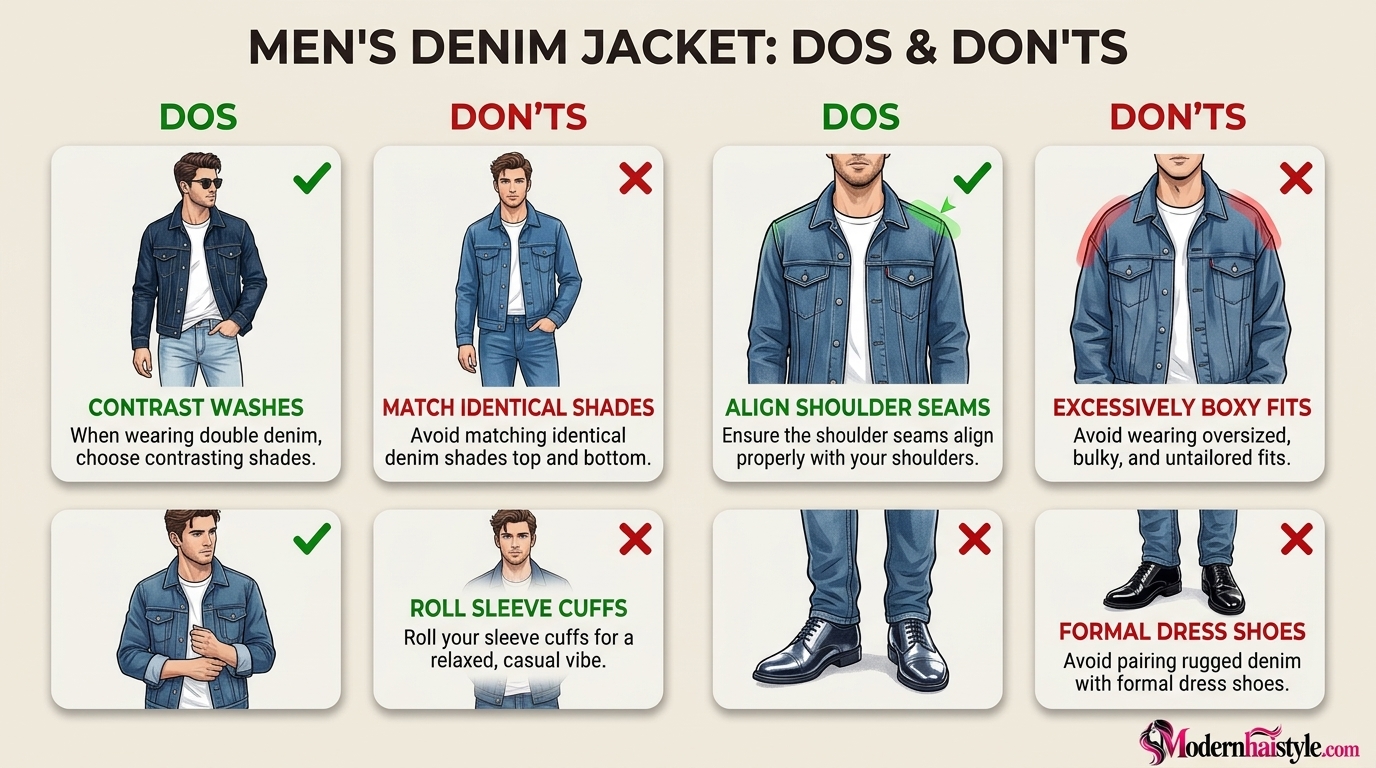
Fit starts at the shoulder, where the seam should sit at the edge of your natural shoulder without pulling inward or falling down the arm. A seam that drops too far makes the jacket look borrowed, while a seam that pulls inward restricts movement and creates lines across the chest. Check the fit with arms relaxed, then raise both arms to test for tightness. The jacket should move with you, not fight you.
The chest should close without strain, even if you usually wear the jacket open, because an open jacket still needs a clean drape. If buttons pull or the front flares open at the waist, the size is too small or the cut is too slim for your build. The waist should end near the belt line, with the hem sitting level around the body. A jacket that rides up badly when seated is too short for regular wear.
Body type changes the best cut, but the waist rule stays useful across builds. Slim builds suit a closer trucker cut with a tapered body, while broader builds suit a regular cut with more chest room. Shorter men should avoid extra long jackets, since a long hem shortens the legs visually. Taller men can handle a slightly longer trucker, but the hem should still sit near the waist, not at mid hip.
Sleeve Length and Layer Room
Sleeves should end at the wrist bone when arms hang relaxed, with the cuff sitting just above the hand. Sleeves that cover the knuckles look oversized, while sleeves that stop above the wrist look shrunken after washing. If you plan to wear a sweater underneath, leave a little extra room in the sleeve and body. A jacket that fits perfectly over a tee may feel tight over a knit.
Layer room is a separate decision from size, because a jacket bought only for tee weather will fail in autumn. Try the jacket over your thickest planned layer before deciding, whether that is a hoodie, a flannel, or a thin knit. The buttons should still close without strain, and the shoulders should not feel compressed. If winter layering matters, choose a regular fit or a sherpa version rather than forcing a slim jacket.
Cuffs should stay neat, not rolled into a thick band unless the outfit is deliberately casual and the sleeve length allows it. A single small roll can adjust a slightly long sleeve, but a large roll adds bulk at the wrist and can clash with a watch. Keep the cuff simple for smart casual looks, and save heavy rolling for relaxed weekend outfits. Check both cuffs in a mirror, since uneven rolls are easy to miss.
Size Check Table
| Check point | Correct fit | Fix if wrong |
|---|---|---|
| Shoulder seam | At natural shoulder edge | Size up or down, or change cut |
| Chest | Buttons close without pulling | Choose regular fit or larger size |
| Waist hem | Near belt line, level all around | Shorter or longer trucker length |
| Sleeve | At wrist bone, relaxed arms | Try a different size or tailor cuff |
| Layer room | Closes over planned sweater | Choose sherpa or regular fit |
| Back | Smooth, no bunching at waist | Check size, fabric stretch, or length |
Trying It On
Try a denim jacket while sitting, walking, and reaching forward, because standing still hides most fit problems. Sit in a chair and check whether the hem rides up too far or the buttons pull at the stomach. Reach forward as if driving, and check whether the back feels tight across the shoulder blades. Walk a few steps and watch the hem, since a jacket that swings unevenly may have a cut issue.
Try the jacket with your real outfit, not just a fitting room tee, because shoes, trousers, and base layers change the proportions. Dark jeans and boots make a jacket look different from light chinos and white sneakers. Bring the belt you plan to wear, since belt bulk can change where the hem sits. A five minute real outfit test prevents most returns and most styling regrets.
Fabric, Weight, and Stretch
Rigid, Stretch, and Selvedge Basics
Rigid denim holds a sharper shape and breaks in slowly, which suits classic trucker looks and structured outfits. It feels stiff at first, then softens at stress points like elbows and pockets with wear. Rigid denim usually needs a little more room, since it does not stretch to forgive a tight chest. Choose rigid denim when structure matters more than instant comfort.
Stretch denim adds a small amount of elastic fibre to cotton, which improves movement and suits slimmer fits and active days. It feels comfortable straight away, but it can lose shape faster if it is washed hot or dried on high heat. Stretch denim also drapes more softly, so it reads slightly less rugged than rigid denim. Choose stretch when comfort, travel, or a close fit is the priority.
Selvedge denim refers to a finished edge produced on older shuttle looms, and it is often linked with higher quality rigid denim. The selvedge edge itself is usually hidden inside seams, so it should not be the main reason to buy a jacket. Focus first on weight, fit, and wash, then treat selvedge as a quality detail rather than a style rule. A well fitting non selvedge jacket beats a poorly fitting selvedge jacket every time.
Weight by Season
Denim weight affects warmth, drape, and stiffness, so the same jacket cannot serve every season equally well. Lightweight denim suits spring and summer, since it breathes better and layers lightly over a tee. Midweight denim suits most of the year, because it holds shape without feeling heavy in mild weather. Heavyweight denim suits autumn and winter, especially with a sherpa lining or a coat layered over it.

Weight also changes how the jacket hangs, because heavier denim holds a straighter line and lighter denim falls more softly. A heavy jacket can overwhelm a thin summer tee, while a light jacket can look thin under a winter coat. Match the jacket weight to the base layer and the outer layer, not just to the temperature. A midweight jacket is the safest single choice for a four season wardrobe.
Fabric labels deserve a careful read, because cotton percentages, stretch content, and lining details change care and fit. A label that lists cotton with a small stretch share usually signals comfort denim, while a pure cotton label signals rigid denim. Sherpa lining should be listed clearly, not assumed from a soft collar alone. If a listing gives conflicting fibre details, treat the listing as unverified and check the maker care label instead.
| Fabric type | Feel | Best season |
|---|---|---|
| Lightweight cotton denim | Soft, breathable, less structured | Spring, summer |
| Midweight cotton denim | Balanced, holds shape well | Spring, autumn, mild winter |
| Heavyweight rigid denim | Stiff at first, strong structure | Autumn, winter |
| Stretch cotton blend | Flexible, close fit friendly | Year round, travel, active days |
| Sherpa lined denim | Warm, bulky, textured | Late autumn, winter |
Colourfastness and Fading
Denim fading is normal, but the rate depends on wash, dye, and care habits. Dark indigo fades fastest at creases, pockets, and cuffs, which can look good when the fade is even. Uneven fading from harsh washing can look patchy, so cold water and gentle cycles help keep the colour consistent. Turn the jacket inside out before washing, and avoid long soaks that strip dye unevenly.
Black denim needs extra care, since fading shifts black toward grey and changes the evening ready look. Wash black denim rarely, cold, and inside out, and keep it out of prolonged direct sunlight when drying. Light wash denim fades less noticeably, but it can yellow if stored damp or washed with dark items. Store denim jackets hung up, not folded tightly for months, to avoid sharp crease lines.
Under Layers
Tee, Graphic Tee, and Long Sleeve
A plain white tee is the simplest under layer, because it creates contrast, keeps the outfit clean, and works with every wash. Choose a tee with a neat collar, a straight hem, and a fit that does not bunch under the jacket. White works with dark, mid, black, and sherpa jackets, while grey and black tees suit lighter jackets better. Keep the tee tucked or untucked based on trouser rise, not habit alone.
A graphic tee adds personality, but the print should stay simple and the colours should match the jacket wash. A small chest print or a quiet vintage style graphic usually works better than a large bright design. Avoid pairing a loud graphic with distressed denim, since both compete for attention. A graphic tee suits weekend and street leaning outfits more than smart casual dinners.
A long sleeve tee adds warmth and coverage in spring and autumn without the bulk of a sweater. It works well under a trucker when the sleeves are slim and the cuffs sit neatly at the wrist. Striped long sleeve tops can add subtle interest, but keep stripes narrow and colours muted. Avoid thick long sleeve tops under a slim jacket, since they can bunch at the elbows and shoulders.
Oxford Shirt, Flannel, and Knit
An Oxford shirt adds a smarter edge to a denim jacket, especially in white, light blue, or pale grey. Keep the collar neat, the shirt tucked or half tucked based on trouser style, and the sleeves at a clean length. An Oxford under dark denim suits creative offices and casual dinners, while an Oxford under light denim suits daytime social events. Avoid a tie with a denim jacket, since the mix reads as formal costume rather than smart casual.
Flannel adds texture and warmth in autumn, with checks that suit dark and mid wash jackets best. Choose a flannel in muted colours, like navy, olive, or burgundy, rather than a bright large check that fights the denim. Keep the flannel untucked only if the hem sits neatly above the jacket hem, or tuck it for a cleaner line. Flannel suits boots, dark jeans, and outdoor casual settings especially well.
A thin knit adds softness under denim in cooler months, especially in crew neck or quarter zip styles. Choose a fine knit rather than a chunky sweater, since a slim jacket has limited room for bulk. Neutral knits in grey, navy, cream, or olive keep the outfit calm, while a textured knit adds interest without a print. Avoid a heavy roll neck under a slim trucker, since it can push the collar up awkwardly.
Hoodie Under Denim
A hoodie under a denim jacket is a classic casual layer, but it needs the right jacket fit to avoid a bulky neck and tight shoulders. Choose a thin hoodie and a regular fit jacket, so the hood can sit flat behind the neck when not worn. Dark hoodies suit light and mid wash jackets, while light grey hoodies suit dark and black jackets. Keep the hoodie hem shorter than the jacket hem for a clean line.
A hoodie should not be paired with a formal shirt or polished dress shoes, since the hood signals leisure even when the jacket is dark. It suits sneakers, casual boots, jeans, and chinos on relaxed days. Avoid a hoodie plus a sherpa jacket together, because two bulky layers usually look padded and restrict movement. One warm layer at a time keeps the silhouette clean.
| Under layer | Best jacket match | Best occasion |
|---|---|---|
| Plain white tee | Dark, mid, black, sherpa | Everyday, evening casual |
| Graphic tee | Mid, light, relaxed fit | Weekend, street, concerts |
| Long sleeve tee | Mid, dark, light | Spring, autumn, travel |
| Oxford shirt | Dark, black, mid | Creative office, casual dinner |
| Flannel shirt | Dark, mid, sherpa outer | Autumn, outdoor casual |
| Thin knit | Dark, mid, sherpa outer | Cool days, smart casual |
| Hoodie | Regular fit, mid, light | Weekend, travel, relaxed days |
Over Layers
Overcoat, Puffer, and Rain Shell
An overcoat over a denim jacket creates a layered city look, but the denim jacket must stay slim enough to fit under the coat without bunching. Choose a wool blend overcoat in charcoal, navy, or camel, with the denim collar peeking out at the neck. Keep the overcoat longer than the denim jacket, so the hem lines do not clash at the waist. This pairing suits cold creative workdays and evening city walks.
A puffer over denim works for cold casual days, but the puffer should be cropped or mid length rather than very long. A short puffer keeps the legs visible and avoids hiding the denim jacket completely. Choose a matte puffer in black, navy, or olive, and keep the base layer simple underneath. Avoid a shiny puffer with shiny shoes, since too much shine can dominate the outfit.
A rain shell over denim suits wet weather travel, but it should be lightweight and packable rather than a heavy hiking shell. A simple hooded rain shell in black or navy protects the denim without adding a technical outdoor look. Keep the shell unzipped indoors, so the denim jacket remains visible as the main layer. Avoid a bright technical shell with smart casual trousers, since the mix can look mismatched.
Blazer and Leather Jacket Warnings
A denim jacket under a blazer is a creative or relaxed smart casual idea, not a formal work outfit, and it only works in very relaxed settings. The blazer must be unstructured, the denim must be dark and clean, and the shoes must stay casual smart rather than formal. Even then, many workplaces will read the mix as too casual for client meetings. Do not present this pairing as a safe office formal solution.
A denim jacket over a leather jacket is rarely practical, since two stiff outer layers restrict movement and add bulk at the shoulders. A better approach is to choose one outer hero per outfit, either denim or leather, and let the other piece wait for another day. If a leather layer is worn, it should be a thin shirt style layer, not a thick biker jacket. Keep the silhouette simple and let one texture lead.
A denim jacket under a suit jacket or with a shirt and tie should not be sold as formal, because denim texture, metal buttons, and casual stitching keep it casual. Formal work needs a matching suit, a dress shirt, a tie, and polished leather shoes without denim in the mix. Denim can be smart, but smart casual is its ceiling, and that distinction protects the wearer from an awkward dress code miss. When the invitation says formal, leave denim at home.
| Over layer | Works when | Avoid when |
|---|---|---|
| Overcoat | Slim denim, cold city days | Tight denim, bulky sherpa inside |
| Puffer | Short puffer, cold casual days | Long puffer hiding denim completely |
| Rain shell | Light rain, travel, wet commutes | Bright technical shell with smart trousers |
| Unstructured blazer | Creative relaxed settings only | Formal work, client meetings, weddings |
| Leather outer | Choose one hero outer only | Thick leather plus thick denim together |
Bottoms
Dark Jeans, Light Jeans, and Black Jeans
Dark jeans are the safest bottom for most denim jacket outfits, because they ground the look and pair with every jacket wash. Choose a slim or straight cut with a clean hem, and avoid heavy distressing when the jacket is already a strong feature. Dark jeans suit sneakers, boots, and loafers in casual settings, and they work from day to evening. Keep the jean hem at the shoe, not pooling heavily over it.
Light jeans suit summer and bright outfits, especially with a dark or black denim jacket that creates clear contrast. Choose a clean light wash without heavy rips, and pair it with white sneakers or tan shoes for a fresh daytime look. Light jeans can look pale with a light jacket, so use a darker shoe or a mid tone top to anchor the outfit. Light jeans suit weekend trips, beach towns, and relaxed lunches best.
Black jeans suit evening casual outfits with black or dark denim jackets, especially when the base layer adds a lighter break. Choose a clean black jean without fading at the knees if the goal is a sharper night look. Black jeans also pair well with leather boots and a dark jacket for concerts and dinners. Avoid black jeans with a faded light jacket and bright shoes unless the outfit is deliberately high contrast.
Chinos, Trousers, and Shorts
Chinos are the smart casual bridge for denim jackets, because they soften denim without making the outfit formal. Navy, charcoal, olive, and stone chinos all work, depending on jacket wash and shoe colour. A tapered chino with a clean hem suits a trucker jacket best, since both pieces share a neat waist length. Chinos suit creative offices, casual dinners, and daytime social events.
Tailored trousers can work with a dark denim jacket in relaxed smart settings, but the trouser should be matte, not shiny suit fabric. Charcoal or navy trousers with a white tee and clean loafers can look intentional, while a full suit trouser with a tie does not. Keep the trouser crease soft, not razor sharp, so the denim and trouser textures stay in the same casual family. This pairing needs a confident, simple shoe choice to succeed.
Shorts suit summer denim outfits, especially with a light or mid wash jacket worn open over a tee. Choose chino shorts or tailored shorts in stone, navy, or olive, with a hem above the knee and a clean fit. Avoid very short athletic shorts with a denim jacket, since the sport texture clashes with the trucker shape. White sneakers or leather sandals usually finish a shorts and denim outfit better than heavy boots.
Cargo, Wide Leg, and Joggers
Cargo pants suit relaxed and street leaning denim outfits, especially with a relaxed trucker and simple sneakers. Choose a tapered cargo with flat pockets rather than a baggy cargo with large bellows pockets that add width at the thigh. Keep colours muted, like olive, black, or stone, so the denim jacket remains the main texture. Cargo outfits suit travel, outdoor days, and casual weekend plans.
Wide leg trousers need careful proportion with a cropped denim jacket, because a short jacket plus wide legs can balance well or look top heavy. Choose a regular fit jacket, not a very slim one, and keep the base layer tucked or neat. Wide trousers in dark denim, black, or charcoal work better than very light wide trousers with a light jacket. Clean shoes with a simple profile help keep the wide leg look intentional.
Joggers suit only clean, relaxed denim outfits, and they should be tapered with a neat cuff rather than baggy gym styles. A denim jacket with joggers works for travel, errands, and casual meetups, but not for smart casual dinners or creative offices. Choose joggers in black, charcoal, or olive, and pair them with clean sneakers. Avoid shiny joggers or loud logos, since they can make the denim jacket look like an afterthought.
| Bottom | Best jacket wash | Best shoe partner |
|---|---|---|
| Dark jeans | Mid, light, black, sherpa | Boots, white sneakers, loafers |
| Light jeans | Dark, black | White sneakers, tan suede |
| Black jeans | Black, dark, mid | Leather boots, black sneakers |
| Chinos | Dark, mid, light | Loafers, clean sneakers, suede boots |
| Tailored trousers | Dark only, relaxed smart | Loafers, clean leather shoes |
| Chino shorts | Light, mid | White sneakers, leather sandals |
| Cargo pants | Relaxed, mid, dark | Sneakers, casual boots |
| Wide trousers | Regular fit, dark, black | Simple clean shoes |
| Tapered joggers | Mid, dark, relaxed | Clean sneakers only |
Shoes
White Sneakers, Leather Boots, and Suede
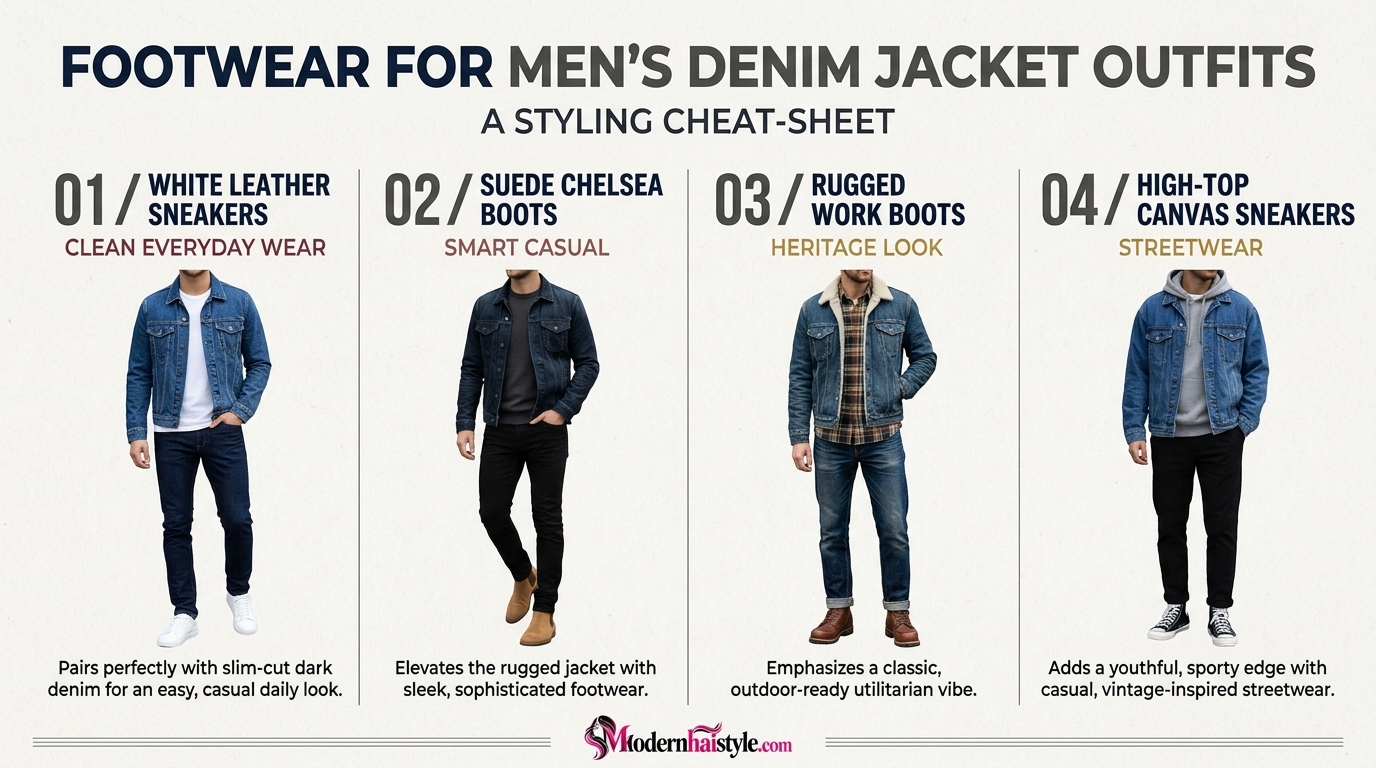
White sneakers are the default shoe for most denim jacket outfits, because they add brightness and keep the look fresh. Choose a clean leather or canvas sneaker with a simple shape, not a bulky running shoe with bright colours. White sneakers suit jeans, chinos, and shorts, and they work with every jacket wash. Keep them clean, since scuffed white sneakers can drag down an otherwise sharp outfit.
Leather boots add weight and structure, which suits dark denim, sherpa jackets, and autumn outfits. Chelsea boots suit smarter casual looks, while lace up boots suit rugged weekend outfits. Choose brown leather for blue denim and black leather for black denim, unless the outfit is deliberately mixed. Boots should be polished but not shiny formal, since denim keeps the overall tone casual.
Suede shoes add soft texture that contrasts nicely with stiff denim, especially in desert boots, loafers, or chelsea boots. Tan suede suits light and mid wash jackets, while dark brown suede suits dark denim and autumn outfits. Protect suede from rain, since water marks can ruin the soft finish quickly. Suede suits smart casual dinners and daytime events better than muddy outdoor walks.
Loafers, Canvas Shoes, and Sandals
Loafers suit smart casual denim outfits with chinos or dark jeans, especially in leather or suede. Choose a simple penny or plain loafer without heavy hardware, and wear them with no show socks or clean ankle socks. Loafers work best with a dark denim jacket and a neat Oxford or plain tee. Avoid loafers with a hoodie and joggers, since the formality mix can look confused.
Canvas shoes suit summer and travel denim outfits, because they are light, breathable, and easy to pack. White, off white, and navy canvas shoes pair well with light and mid wash jackets. Keep canvas shoes clean and dry, since stained canvas can make a light denim outfit look tired. Canvas suits shorts, chinos, and light jeans better than dark formal trousers.
Sandals suit only warm, relaxed denim outfits, and they should be simple leather sandals rather than sport slides. A light denim jacket, a white tee, chino shorts, and leather sandals make a coherent summer set. Avoid sandals with dark denim, heavy boots style bottoms, or smart casual dinners, since the mix can look too beachy. Keep feet groomed and sandals clean for a polished warm weather result.
| Shoe | Best outfit tone | Avoid with |
|---|---|---|
| White sneakers | Everyday, summer, smart casual | Muddy trails, formal events |
| Leather boots | Autumn, winter, rugged casual | Light summer shorts outfits |
| Suede boots or loafers | Smart casual, dinners | Rain, mud, heavy outdoor work |
| Canvas shoes | Summer, travel, weekend | Formal trousers, cold weather |
| Leather sandals | Warm relaxed days, shorts | Dark formal looks, cold weather |
Colour Palette
Core Neutrals
A denim jacket outfit works best with a core neutral palette, because denim already brings strong blue texture to the look. White, black, grey, navy, olive, stone, and cream cover most successful outfits without a colour chart. Choose one neutral base, one denim wash, and one shoe colour, then stop adding colours. That restraint keeps the outfit calm and wearable across seasons.
White is the most useful separator, since it breaks up dark denim and brightens light denim without adding a new colour story. Grey softens black denim and dark jeans, while cream softens light denim and summer outfits. Navy works as a near neutral with blue denim, but it needs a lighter base to avoid merging with the jacket. Use neutrals as the frame, not as an afterthought.
Olive and stone add warmth without clashing, especially with mid wash denim and brown shoes. Olive suits autumn and outdoor outfits, while stone suits summer and light denim looks. Charcoal suits evening casual outfits with black denim, especially with a white or grey base layer. Keep accent colours to one per outfit, like a muted burgundy knit or a forest green tee, rather than several bright pieces.
Accent Colours That Work
Muted reds, like burgundy and rust, suit autumn denim outfits with dark jeans and brown boots. Forest green suits olive chinos and mid wash jackets, while mustard suits only small accents, like a tee under a dark jacket. Keep accents in the base layer or shoes, not in both, so the outfit has one clear warm point. Bright neon colours usually clash with denim texture and should stay out of smart casual looks.
Pastel colours suit spring and summer denim outfits, especially pale blue, sage, and soft cream under a light jacket. Use pastels in tees or Oxford shirts, not in heavy trousers that can look pale from head to toe. A pastel base with dark jeans and white sneakers creates a fresh daytime balance. Avoid pairing a pastel jacket wash with pastel trousers and pastel shoes, since the outfit can lose all contrast.
30 Outfit Formulas
Classic and Everyday
1. Dark jacket, white tee, dark jeans, white sneakers. This is the cleanest everyday formula, because dark on dark is broken only by the white tee and shoes. It suits errands, casual meetups, and travel days without looking overdone. Keep the jeans slim or straight, and keep the sneakers clean for the best effect.
2. Mid jacket, grey tee, black jeans, black sneakers. This formula uses tonal dark bottoms with a mid jacket to create a clear wash gap. It suits evening casual plans and city walks, especially with a simple watch or belt. Avoid a bright graphic tee here, since the tonal base works best plain.
3. Light jacket, white tee, dark jeans, tan suede shoes. This formula pairs a bright jacket with grounded dark legs and warm shoes for a fresh daytime look. It suits spring lunches, weekend trips, and outdoor social events. Keep the tee plain and the shoes clean to let the light wash lead.
4. Black jacket, white tee, black jeans, black boots. This is the monochrome night formula, with white as the only break in an otherwise dark outfit. It suits concerts, casual dinners, and evening city walks. Keep the jacket deep black and the boots polished but not formal.
5. Dark jacket, light Oxford, navy chinos, brown loafers. This formula lifts denim into creative smart casual, with the Oxford adding structure and the loafers adding polish. It suits casual dinners and relaxed creative workdays. Keep the shirt tucked neatly and the jacket open for a clean line.
6. Mid jacket, striped long sleeve, olive chinos, white sneakers. This formula adds subtle pattern through narrow stripes while keeping colours muted and wearable. It suits spring days, casual offices, and weekend outings. Keep the stripe colours to navy and white or grey and white for the safest result.
Weekend and Street
7. Relaxed jacket, plain tee, cargo pants, chunky sneakers. This formula uses relaxed volume on top and bottom, balanced by a simple tee and clean shoes. It suits street leaning weekends, travel days, and outdoor meetups. Keep cargo pockets flat and colours muted to avoid a bulky costume look.
8. Light jacket, graphic tee, light jeans avoided, dark jeans, canvas shoes. This formula keeps the graphic as the star while dark jeans ground the look and canvas shoes keep it light. It suits concerts, casual hangouts, and summer days. Choose a graphic with colours that match the jacket wash, not a random bright print.
9. Sherpa jacket, black tee, dark jeans, lace up boots. This is a cold weather weekend formula, with sherpa warmth, dark tones, and sturdy boots for outdoor plans. It suits winter walks, casual markets, and relaxed evenings. Keep the tee thin, since sherpa already adds bulk and warmth.
10. Hooded denim, plain tee, tapered joggers, clean sneakers. This formula suits travel and errands, where comfort matters and the outfit still looks intentional. It works best with dark joggers and simple sneakers, not shiny or logo heavy styles. Avoid this formula for dinners or work settings, since the hood keeps it firmly casual.
11. Mid jacket, hoodie, dark jeans, white sneakers. This is the classic layered casual formula, with a thin hoodie adding warmth without hiding the jacket shape. It suits cool spring days, campus visits, and relaxed weekends. Keep the hoodie slim and the hood flat behind the neck when not in use.
12. Dark jacket, flannel shirt, dark jeans, brown boots. This formula adds autumn texture through flannel, while dark jeans and boots keep the outfit grounded. It suits outdoor autumn days, casual dinners, and weekend trips. Choose a muted flannel check in navy, olive, or burgundy for the best match.
Smart Casual and Creative
13. Dark jacket, white tee, charcoal chinos, suede loafers. This formula is a smart casual staple, because charcoal softens denim without making it formal. It suits casual dinners, gallery visits, and creative workdays. Keep the tee tucked or neatly untucked based on chino rise and belt choice.
14. Black jacket, grey knit, black trousers in matte fabric, black loafers. This formula uses dark tones and soft knit texture for an evening smart casual look. It suits dinners, theatre nights, and city evenings in cooler months. Avoid shiny trousers or formal shoes, since the goal is smart casual, not formal.
15. Mid jacket, light blue Oxford, stone chinos, tan loafers. This formula suits bright daytime smart casual, with light colours balanced by tan shoes and a mid jacket. It works for lunches, daytime events, and relaxed offices. Keep the Oxford collar neat and the chinos pressed but not sharply creased.
16. Dark jacket, cream knit, navy chinos, brown suede boots. This formula adds soft winter colour through cream knit, while navy chinos keep the outfit grounded. It suits cool dinners, autumn events, and smart casual weekends. Keep the knit thin enough to button the jacket without strain.
17. Sherpa jacket, grey tee, charcoal chinos, dark boots. This formula makes sherpa look neater by pairing it with chinos instead of only jeans. It suits cold casual dinners and winter city walks. Keep the tee plain and the boots clean, since sherpa already adds strong texture.
18. Dark jacket, black tee, dark jeans, Chelsea boots. This is a sharp night formula, with black and dark tones lifted by Chelsea boot shape. It suits evening meetups, casual dates, and city nights. Keep the jacket dark and clean, and avoid heavy distressing for this smarter version.
Seasonal and Travel
19. Light jacket, white tee, stone shorts, white sneakers. This is the summer day formula, with light colours, breathable fabrics, and simple shoes. It suits beach towns, weekend trips, and warm lunches. Keep shorts tailored, not athletic, so the denim jacket still reads as a styled layer.
20. Mid jacket, long sleeve tee, olive chinos, canvas shoes. This formula suits spring travel, because it layers lightly and packs easily. It works for walking days, casual sightseeing, and relaxed dinners. Choose a slim long sleeve top so the jacket still buttons comfortably.
21. Dark jacket, thin knit, dark jeans, leather boots. This is a cool weather staple, with knit warmth, dark tones, and boots for autumn or mild winter. It suits city walks, casual dinners, and weekend trips. Keep the knit fine, not chunky, so the jacket silhouette stays clean.
22. Sherpa jacket, long sleeve tee, dark jeans, lace up boots. This formula suits cold outdoor days, with sherpa warmth and sturdy boots for longer walks. It works for winter markets, countryside trips, and relaxed evenings. Keep the base layer thin and the boots broken in before a long day.
23. Light jacket, linen blend tee, white chinos avoided, stone chinos, leather sandals. This formula uses warm weather fabrics while keeping contrast through stone chinos and a light jacket. It suits resort days, warm lunches, and relaxed travel. Keep sandals simple leather, not sport styles, for a cleaner result.
24. Dark jacket under overcoat, white tee, dark jeans, boots. This is a layered city winter formula, where denim acts as a mid layer under a longer coat. It suits cold commutes and evening city walks. Keep the denim jacket slim, so it does not bunch under the overcoat.
Date, Dinner, and Social
25. Dark jacket, plain black tee, dark jeans, clean leather shoes. This formula suits casual dates with a simple, confident colour plan and clean shoes. It works for dinners, bars, and evening walks when the venue is relaxed. Keep grooming neat and the jacket free of stains for the best impression.
26. Black jacket, cream tee, charcoal chinos, suede loafers. This formula adds soft contrast for evening social events without going formal. It suits dinners, small gatherings, and city nights. Keep the tee plain and the loafers clean, since the outfit relies on tone rather than pattern.
27. Mid jacket, white Oxford, navy chinos, brown loafers. This formula suits daytime social events with a smart shirt and relaxed trousers. It works for lunches, family gatherings, and casual celebrations. Keep the Oxford tucked neatly and the jacket open to show the shirt collar.
28. Light jacket, white tee, dark jeans, white sneakers, simple watch. This formula is a fresh daytime social option, with light denim balanced by dark legs and clean accessories. It suits weekend meetups, outdoor lunches, and casual parties. Keep accessories minimal, since the light jacket already draws attention.
29. Dark jacket, burgundy knit, black jeans, black boots. This formula adds muted autumn colour for evening social plans without bright clash. It suits dinners, concerts, and cool weather gatherings. Keep the knit thin and the boots polished but not formal.
30. Sherpa jacket, white tee, dark jeans, brown boots, simple belt. This formula suits cold casual gatherings, with sherpa texture balanced by simple tones and sturdy shoes. It works for winter dinners, outdoor markets, and relaxed evenings. Keep the belt simple leather, since sherpa already adds strong visual texture.
Occasion Ceiling
Where Denim Works
Denim jackets work best in casual and creative smart casual settings, where texture and relaxed structure are welcome. Weekend outings, casual dinners, concerts, travel days, and relaxed social events are natural fits. Creative offices with a relaxed dress code can also work, especially with a dark jacket, a neat shirt, and clean shoes. The key is to match the venue tone, not just the weather.
Denim jackets also suit outdoor casual settings, like markets, parks, beach towns, and countryside walks, because the fabric is durable and easy to layer. A light jacket suits warm outdoor days, while a sherpa jacket suits cold outdoor days. Choose shoes for the ground, not just for style, since outdoor settings punish suede and light canvas quickly. Practical shoes keep a denim outfit looking intentional outdoors.
Denim jackets can work for casual dates when the rest of the outfit is clean, simple, and well fitted. A dark jacket, a plain tee or knit, dark jeans or chinos, and clean shoes usually read as effortful without being overdressed. Keep grooming neat, avoid heavy distressing, and choose a venue appropriate shoe. A casual date is not the place to test a loud graphic, a baggy fit, and bright shoes at once.
Where Denim Does Not Work
Denim jackets do not work for formal work, formal weddings, funerals, or interviews, even when the jacket is dark and the shoes are polished. Formal dress codes expect matching tailoring, dress shirts, ties where required, and polished leather shoes without casual texture. Denim buttons, stitching, and fabric history signal casual wear, even in a dark wash. Respecting that signal protects the wearer from looking underdressed.
Denim jackets also struggle in very formal creative settings where a blazer or suit is expected, even if the office is usually relaxed. Client meetings, presentations, and formal dinners often need a blazer, not a trucker jacket, regardless of how dark the denim looks. When the invitation or host hints at smart dress, choose tailoring first and save denim for the after event. A denim jacket under a blazer does not turn the outfit formal.
| Occasion | Denim jacket verdict | Best version |
|---|---|---|
| Weekend, travel, errands | Yes | Classic, light, relaxed |
| Casual dinner, bar, concert | Yes | Dark, black, sherpa in winter |
| Creative office, relaxed dress code | Sometimes | Dark, neat shirt, clean shoes |
| Formal office, client meeting | No | Tailoring instead |
| Formal wedding, funeral, interview | No | Suit, dress shirt, polished shoes |
| Outdoor market, park, beach town | Yes | Light, sherpa, sturdy shoes |
Season System
Spring
Spring denim outfits should stay light and flexible, since mornings can be cool and afternoons can turn warm. A mid or light jacket over a tee or long sleeve top covers most spring days without a heavy coat. Choose chinos, dark jeans, or light jeans with white sneakers or canvas shoes for easy movement. Keep a thin layer handy, since spring weather can change during a long day out.
Spring colours suit soft neutrals with one fresh accent, like a pale blue shirt or a sage tee under a mid jacket. Avoid heavy sherpa in spring, since the bulk can feel too warm and visually heavy for the season. A light jacket with stone chinos and white sneakers captures spring best, while a dark jacket with dark jeans suits cooler spring evenings. Check the forecast, not just the calendar, before choosing a lining.
Summer
Summer denim outfits need breathable layers, so a light jacket worn open over a tee is the core formula. Choose lightweight denim, linen blend tees, chino shorts, and white sneakers or leather sandals for warm days. Keep the jacket unbuttoned most of the time, so air can move and the base layer stays visible. A light wash jacket suits summer best, while dark denim can feel heavy in strong sun.
Summer shoes should be light and simple, with white sneakers, canvas shoes, or simple leather sandals leading the choices. Avoid heavy boots with shorts and a light jacket, since the weight contrast can look unbalanced. Keep colours bright but controlled, with white, stone, olive, and pale blue doing most of the work. A summer denim outfit should feel easy, not layered for a colder season.
Autumn
Autumn is the best season for denim jackets, because cool air, layered textures, and boot friendly outfits all suit trucker shapes. A dark or mid jacket over flannel, thin knit, or long sleeve tops works across most autumn days. Pair it with dark jeans, chinos, and leather or suede boots for a grounded seasonal look. Autumn colours like olive, burgundy, charcoal, and brown add warmth without clashing with denim.
Autumn layering should stay balanced, with one warm layer under the jacket and one optional coat over it on colder days. A flannel plus a denim jacket plus an overcoat can work if each layer stays slim, but three bulky layers will restrict movement. Choose a midweight jacket for autumn, since light denim can feel thin and heavy sherpa can feel too warm early in the season. Boots should be broken in before long autumn walks.
Winter
Winter denim outfits need a warm core, so sherpa lining, a thin knit, and a longer coat over denim become the practical system. Wear the denim jacket as a mid layer under an overcoat or a short puffer, rather than as the only outer layer in freezing weather. Choose dark jeans, sturdy boots, and a warm base layer that still fits under the jacket. Keep the neck protected with a scarf or a high collar base, not with a bulky hood plus sherpa together.
Winter denim should stay dark and simple, since dark washes, black denim, and charcoal trousers suit low light and cold city settings. Avoid light wash denim as a main winter layer, since it can look summery against snow and grey skies. Keep shoes practical for wet or icy ground, with leather boots leading over suede or canvas. A winter denim outfit succeeds when warmth, movement, and clean proportions all hold together.
Care Guide
Washing and Drying
Wash denim jackets rarely, since frequent washing fades colour, softens structure, and wears out cuffs faster than needed. Spot clean small marks first, air the jacket after wear, and wash only when it truly smells or looks dirty. When washing is needed, use cold water, a gentle cycle, and a mild detergent, with the jacket turned inside out. That routine slows fading and keeps the shape more consistent over time.
Dry denim jackets by hanging them in fresh air, away from direct heat and prolonged strong sunlight. Avoid high heat tumble drying, since heat can shrink cotton, distort stretch fibres, and fade dark washes unevenly. If a dryer must be used, choose low heat and remove the jacket while slightly damp, then hang it to finish. A well dried jacket keeps its shoulder shape and sleeve length far better than a heat dried one.
Vinegar softening is a page claim, not a verified textile method, so do not treat it as a guaranteed way to soften rigid denim. Some style pages suggest vinegar rinses, but results vary by fabric, dye, and wash history, and vinegar will not turn a stiff jacket soft overnight. Wear, gentle washing, and time soften rigid denim more reliably than home remedies. If you try a rinse, test it cautiously and do not expect a dramatic change.
Storage, Repairs, and Sherpa Care
Store denim jackets hung up on a sturdy hanger, with buttons closed and pockets emptied, so the shape stays even. Avoid folding a jacket tightly for months, since sharp folds can create permanent crease lines across the back. Keep jackets in a dry, ventilated space, away from damp walls and direct sunlight that can fade one side. A clean, dry jacket stored well will look better after a season off than one crammed into a drawer.
Repair small issues early, because a loose button, a frayed cuff, or a torn pocket seam gets worse with wear. A tailor can replace buttons, fix hems, and reinforce pocket corners for a modest cost compared with replacing a good jacket. Check the collar, cuffs, and buttonholes each season, since those areas wear first. A repaired jacket with good fit beats a new jacket with poor fit in almost every outfit.
Sherpa lining needs gentle care, since heat and harsh washing can mat the fleece and flatten its soft texture. Wash sherpa jackets cold on gentle, inside out where possible, and air dry rather than using high heat. Brush the collar lightly once dry to lift the fibres, and avoid ironing the sherpa area directly. Keep sherpa away from Velcro and rough fabrics in the wash, since those can pull fibres and create pilling.
| Care task | Best practice | Avoid |
|---|---|---|
| Washing | Cold, gentle, inside out, rarely | Hot water, harsh detergent, frequent washing |
| Drying | Air dry on a sturdy hanger | High heat tumble drying |
| Softening | Wear, gentle washing, time | Vinegar as a guaranteed fix |
| Storage | Hung, dry, ventilated | Tight folding, damp storage |
| Sherpa | Cold gentle wash, air dry, light brushing | High heat, ironing sherpa directly |
| Repairs | Fix buttons and seams early | Wearing a torn pocket until it splits |
Buying Checklist
1. Decide the first wash. Choose a mid or dark wash first, since those pair with the most bottoms and occasions. Light wash and sherpa work best as second jackets, once the core outfit system is covered. A first jacket should be versatile, not the most eye catching option in the shop.
2. Choose the fit family. Decide between slim, regular, and relaxed before shopping, based on your build and planned layers. Slim suits close fits and tee weather, regular suits sweaters and hoodies, and relaxed suits street looks and heavy layering. A clear fit family prevents buying a jacket that only works with one base layer.
3. Check shoulder and chest. Try the jacket with arms relaxed, then button it over your planned base layer to test for pulling. The shoulder seam should sit at the natural edge, and the chest should close without strain. If either point fails, change size or cut rather than hoping the fabric will stretch enough.
4. Check sleeve and waist length. Sleeves should end at the wrist bone, and the hem should sit near the belt line all around. Sit down and reach forward to test both points in real movement, not just in a mirror pose. A jacket that rides up badly when seated will annoy you all day.
5. Choose fabric and stretch. Decide between rigid and stretch based on comfort, structure, and travel needs. Rigid suits structured looks and long term break in, while stretch suits close fits and active days. Read the fibre label, and treat conflicting online fibre details as unverified until the care label is checked.
6. Test wash contrast at home. Pair the jacket with your existing jeans and chinos before keeping it, since shop lighting can hide wash clashes. A jacket that matches your only jeans exactly may need a different wash or a new bottom partner. Contrast should be visible in daylight, not just under shop lights.
7. Plan the shoe partners. Make sure the jacket works with at least two shoe types you already own, like white sneakers and boots. A jacket that only works with one rare shoe will sit unused for most of the week. Shoes set the tone, so a versatile jacket should not depend on a single pair.
8. Set a price tier, not a copied price. Use budget, mid, and premium tiers for planning, since prices change by retailer, season, and region. A budget tier suits a first test jacket, a mid tier suits a daily wear jacket, and a premium tier suits a long term rigid or selvedge style. Do not trust a non US price, a wholesale price, or a deal aggregator price as a current US retail price.
9. Check returns and exchanges. Confirm the return window, exchange rules, and fit policy before buying, especially for online orders where fit cannot be tested first. Keep tags on until the jacket has been tried with real outfits at home. A clear return policy protects you when a size that looked right in photos fits wrong in person.
10. Wear it for a full day. Test the jacket on a normal day with sitting, walking, driving, and layer changes before deciding it is a keeper. A jacket that feels perfect for five minutes can feel tight after an hour in a car. A full day test reveals sleeve, shoulder, and waist issues that a quick mirror check misses.
Quick Quiz
Question 1: Dark jeans or light jeans with a light jacket?
Dark jeans win, because they create clear contrast and ground the pale jacket with a darker base. Light jeans plus a light jacket can look pale and unfinished without a darker shoe. Use dark jeans first, then try light jeans only with a strong shoe anchor.
Question 2: Can a denim jacket work for formal work?
No, because denim texture, metal buttons, and casual stitching keep it casual, even in a dark wash. Formal work needs matching tailoring, a dress shirt, and polished leather shoes without denim. Save denim for creative smart casual settings and relaxed social plans.
Question 3: What is the simplest triple denim order?
Put the darkest wash in jeans, a mid wash in the shirt, and the lightest wash in the jacket. That order keeps legs grounded, torso mid tone, and jacket as the lightest frame. Reverse it only when the jacket is dark and the shirt is clearly lighter.
Question 4: Should a sherpa jacket be worn with a tie?
No, because sherpa texture makes the outfit elevated casual, not formal, even with dark jeans and boots. A tie with sherpa sends conflicting signals about dress code and comfort. Keep sherpa for cold casual days and relaxed evenings instead.
Question 5: What shoe suits most denim outfits?
White sneakers suit most everyday denim outfits, because they add brightness and work with jeans, chinos, and shorts. Leather boots suit autumn and winter, while loafers suit smarter casual versions. Choose shoes for occasion and weather, not just for colour match.
Question 6: How should a trucker jacket fit at the waist?
The hem should sit near the belt line, level all around, without riding up badly when seated. A hem that covers the hips reads as a coat, while a hem far above the belt looks shrunken. Waist length is what keeps legs looking long in a trucker shape.
Question 7: Is a blazer over denim a formal outfit?
No, because that pairing is creative or relaxed smart casual at best, and only in very relaxed settings. Many workplaces will still read it as too casual for client meetings. Do not use a blazer over denim as a safe formal work solution.
Question 8: What is the best first denim jacket wash?
A mid or dark wash is best first, since it pairs with dark jeans, black jeans, chinos, and most shoes. Light wash and sherpa make strong second jackets, once the core system is covered. Versatility should beat novelty for a first purchase.
Mistakes to Avoid
1. Matching washes by accident. Identical jacket and jean washes merge into one flat denim block without a clear outfit structure. Check contrast in daylight, and swap the bottom wash when the two pieces look like one garment. A deliberate match needs clean shoes and a plain base to read as intentional.
2. Wearing denim to a formal event. A dark jacket does not become formal just because shoes are polished and the shirt is neat. Formal events need tailoring, not denim texture, and guests who wear denim risk looking underdressed. When the invitation says formal, choose a suit and leave denim at home.
3. Adding a tie to a denim jacket. A tie plus denim creates a costume clash, because the tie signals formal tailoring while denim signals casual workwear. Even a dark jacket with a neat Oxford does not make a tie look natural. Keep denim outfits tie free, and save ties for suits and formal shirts.
4. Pairing denim under a blazer for formal work. A blazer over denim is creative casual, not a formal work outfit, and it can fail in client meetings. The blazer does not erase denim texture, metal buttons, or casual stitching. Use this pairing only where the workplace dress code is clearly relaxed.
5. Choosing a jacket that is too tight. A tight jacket pulls at buttons, restricts arm movement, and looks strained over a sweater or hoodie. Fit should be tested over the thickest planned layer, not just over a tee. Size up or choose a regular cut when buttons strain or shoulders feel compressed.
6. Choosing sleeves that are too long or short. Sleeves that cover knuckles look oversized, while sleeves above the wrist look shrunken after washing. Sleeves should end at the wrist bone with arms relaxed, and layer room should be planned in advance. A tailor can adjust cuffs, but a very wrong sleeve length usually means a wrong size.
7. Wearing two bulky layers together. A thick hoodie plus a sherpa jacket often looks padded and restricts movement at the neck and shoulders. Choose one warm layer at a time, with a thin base under sherpa and a slim hoodie under regular denim. Bulk should be planned, not stacked by accident.
8. Using bright shoes with a busy outfit. Bright shoes plus a graphic tee plus distressed denim can create three competing focal points at once. Let one piece lead, whether that is the jacket wash, the shoe colour, or the graphic print. Simple shoes usually save a strong denim outfit from visual noise.
9. Washing dark denim too often or too hot. Frequent hot washing fades dark indigo unevenly and wears out cuffs faster than normal wear. Wash rarely, cold, and inside out, and air dry away from high heat. Spot cleaning and airing after wear keep dark denim looking deep for longer.
10. Copying a non US price or a wholesale price. Prices from other countries, wholesale listings, and deal aggregators do not equal current US retail prices, and they can mislead a buying plan. Use price tiers for planning, and verify the actual price on a live US retailer page before buying. Currency, shipping, and return rules also differ by region.
Expert Tips
1. Start with one jacket, three bottoms. A single mid or dark jacket plus dark jeans, navy chinos, and black jeans covers most casual weeks. That small system creates many outfits without buying a new jacket for every look. Add a second wash only after the core system feels easy.
2. Keep the middle layer simple. A plain tee, a neat Oxford, or a thin knit usually beats a busy print under strong denim. Simple middles create contrast, separate washes, and let shoes or boots add personality. When the jacket is distressed, the middle should be even simpler.
3. Check the back view. Denim jackets can bunch at the waist or pull across the shoulders in ways the front mirror hides. Ask for a back photo or check a three way mirror before keeping a jacket. Back fit matters most when sitting, driving, and walking, which is most of the day.
4. Break in rigid denim slowly. Wear rigid denim for short periods first, then longer days as it softens at elbows and pockets. Avoid forcing a stiff jacket into a tight fit on day one, since rigid fabric needs time to mould. Gentle washing and regular wear shape rigid denim better than harsh treatments.
5. Use shoes to set the tone. The same jacket and jeans can read weekend, smart casual, or rugged depending on shoes alone. White sneakers soften the look, loafers smarten it, and boots rugged it up for autumn. Change shoes first when an outfit feels off, before changing the jacket.
6. Keep one denim star per outfit. When the jacket is distressed or light, keep jeans clean and dark, and keep accessories simple. When jeans are ripped, keep the jacket clean and the base plain. One star prevents the outfit from looking torn, faded, or random all at once.
7. Plan for the venue, not just the weather. A jacket that suits a park walk may not suit a casual dinner, even on the same day. Pack or plan a shoe change, a neater base layer, or a darker jacket when the day moves from outdoor to evening. Venue planning is the difference between dressed and merely covered.
8. Treat black denim like a separate colour. Black denim fades toward grey, pairs best with black or charcoal bottoms, and needs a lighter base to avoid flatness. Do not treat black denim as just another blue wash, since its contrast rules differ. White, grey, olive, and cream bases keep black denim sharp.
9. Save sherpa for real cold. Sherpa looks best when its warmth is needed, not as a fashion extra on a mild day. A sherpa jacket in warm weather can look heavy and out of season, even if the outfit colours match. Use regular denim in mild weather, and bring sherpa out for late autumn and winter.
10. Photograph outfits in daylight. Shop lighting can hide wash clashes, fading, and fit pulls that daylight reveals clearly. Take a quick daylight photo before a first wear, and check jacket hem, sleeve length, and bottom contrast. A photo often shows what a mirror misses, especially at the back and sides.
FAQs About Mens Denim Jacket Outfit
What is a mens denim jacket outfit?
A mens denim jacket outfit is a layer led look built around a denim jacket, with a simple base, a chosen bottom, and shoes that set the tone. The jacket should be visible as the outer layer, not hidden under a coat or buried under bulky layers. Wash contrast, fit at the waist, and occasion honesty decide whether the outfit reads as styled or random.
Can men wear a denim jacket with jeans?
Yes, men can wear a denim jacket with jeans when the washes differ clearly enough to read as separate pieces. Dark jeans with a mid or light jacket usually work best, while identical mid washes can merge into one flat block. A plain middle layer, like a white tee, helps separate the two denim pieces.
What is the Canadian tuxedo?
A Canadian tuxedo is a deliberate matching denim outfit, usually a denim jacket with jeans in a similar wash. It works best with clean, non distressed denim, a plain base, and clean shoes that anchor the look. Matching by accident, with faded and ripped pieces, usually looks less intentional than a planned version.
Should a denim jacket be tight or loose?
A denim jacket should feel snug but not tight, with room to button over a tee without pulling across the chest. The shoulder seam should sit at the natural shoulder, and sleeves should end at the wrist bone. Slim fits suit tee weather, regular fits suit sweaters, and relaxed fits suit street looks and heavy layering.
How long should a denim jacket be?
A classic denim jacket should end near the belt line, with a level hem all around the waist. That cropped length keeps legs looking long and preserves the trucker silhouette. A jacket that covers the hips reads more like a coat, while a jacket far above the belt can look shrunken.
What colour tee goes with a denim jacket?
A white tee suits almost every wash, because it creates contrast and keeps the outfit clean. Grey suits black and dark denim, cream suits light denim and summer looks, and olive suits mid wash jackets in autumn. Keep the tee plain when the jacket is distressed, light, or sherpa lined.
Can a denim jacket be worn to work?
A denim jacket can work in a creative or relaxed office with a dark wash, a neat shirt, and clean shoes. It does not work for formal work, client meetings, or interviews, where tailoring is expected. Check the workplace dress code first, since a blazer over denim does not make the outfit formal.
Can a denim jacket be worn with a tie?
No, a denim jacket should not be worn with a tie as a formal outfit, because denim texture and casual stitching clash with formal tailoring signals. A neat Oxford under dark denim can look smart casual, but adding a tie pushes the mix into costume territory. Save ties for suits and formal dress shirts.
What jeans go best with a black denim jacket?
Black jeans, charcoal jeans, and dark indigo jeans suit a black denim jacket best, especially with a lighter base layer. A white, grey, or cream tee prevents the outfit from becoming one flat black block. Black denim also pairs well with leather boots and clean black sneakers for evening casual looks.
What jeans go best with a light wash denim jacket?
Dark indigo jeans suit a light wash jacket best, because the dark base creates strong contrast and grounds the pale top. Black jeans also work, especially with white sneakers for a fresh daytime look. Avoid light jeans with a light jacket unless a darker shoe anchors the outfit.
Is a sherpa denim jacket formal?
No, a sherpa denim jacket is elevated casual, not formal, even when paired with dark jeans and boots. The fleece texture, casual collar, and workwear roots keep it firmly in casual territory. It suits cold casual days, winter walks, and relaxed evenings, not formal work or formal events.
Can a denim jacket be worn under a coat?
Yes, a denim jacket can be worn under an overcoat or short puffer when the denim fit stays slim enough to avoid bunching. The overcoat should be longer than the denim jacket, so hem lines do not clash at the waist. Keep the base layer thin, since two bulky layers under a coat restrict movement.
What shoes go with a denim jacket?
White sneakers suit most everyday denim outfits, leather boots suit autumn and winter, and loafers suit smarter casual versions. Suede shoes add soft texture, canvas shoes suit summer, and simple leather sandals suit warm relaxed days. Choose shoes for occasion and weather, not just for colour match with the jacket.
Can short men wear a denim jacket?
Yes, short men can wear a denim jacket well when the hem stays near the waist and extra volume stays modest. A cropped trucker keeps legs looking long, while a long or very relaxed jacket can shorten the silhouette. Slim or regular fits usually work better than oversized fits for shorter builds.
Can tall men wear a denim jacket?
Yes, tall men can wear a denim jacket well, with a slightly longer trucker length still sitting near the waist rather than at mid hip. Regular and relaxed fits suit taller builds, especially for layered winter outfits. Check sleeve length carefully, since tall builds often need longer sleeves than standard sizes offer.
Should denim jackets be washed often?
No, denim jackets should be washed rarely, with spot cleaning and airing used first for small marks and odours. When washing is needed, use cold water, a gentle cycle, and mild detergent, with the jacket inside out. Air drying on a sturdy hanger protects colour, shape, and sleeve length better than high heat drying.
How do you soften a stiff denim jacket?
A stiff denim jacket softens mainly through wear, gentle washing, and time, as fabric breaks in at elbows, pockets, and creases. Vinegar rinses are a page claim, not a verified textile method, and should not be treated as a guaranteed fix. Start with short wears, then longer days, and avoid harsh treatments that can fade colour unevenly.
What is the difference between a trucker jacket and a denim shirt?
A trucker jacket is a structured outer layer with a cropped body, chest pockets, and a button front designed to be worn open or closed over a base. A denim shirt is a lighter, longer shirt layer that usually tucks or hangs like a shirt, not a jacket. Trucker jackets hold shape and warmth better, while denim shirts layer more softly under other outers.
Can a denim jacket be worn in winter?
Yes, a denim jacket can be worn in winter as a mid layer under an overcoat or short puffer, or as a sherpa lined outer on cold casual days. It should not be the only outer layer in freezing weather, since denim alone lacks enough insulation. Pair winter denim with a thin knit, dark jeans, and sturdy boots for warmth and proportion.
Can a denim jacket be worn in summer?
Yes, a denim jacket can be worn in summer as a light open layer over a tee, especially in light or mid wash. Choose lightweight denim, breathable tees, chino shorts or light chinos, and white sneakers or sandals. Keep the jacket unbuttoned for airflow, and avoid sherpa or heavy rigid denim on hot days.
What bottoms work besides jeans?
Chinos, tailored matte trousers, chino shorts, cargo pants, wide trousers, and tapered joggers can all work with denim jackets in the right setting. Chinos suit smart casual looks, shorts suit summer, and tapered joggers suit relaxed travel days only. Keep bottom colours muted and fits clean, so the jacket remains the main texture.
Should a denim jacket match belt and shoes?
A denim jacket does not need to match belt and shoes exactly, but the tones should belong to the same colour family. Brown leather shoes suit blue denim and brown belts, while black leather shoes suit black denim and black belts. A simple leather belt usually works better than a bright or heavily branded belt with denim.
Is distressed denim still in style for men?
Distressed denim can still work in casual and street leaning outfits, but it should be the only distressed piece in the look. Pair a distressed jacket with clean dark jeans, or ripped jeans with a clean jacket and plain base. Heavy distressing suits weekends and concerts better than smart casual dinners or creative offices.
How do you choose between rigid and stretch denim?
Choose rigid denim for structure and long term break in, and stretch denim for comfort, close fits, and active days. Rigid denim feels stiff at first and softens with wear, while stretch denim feels comfortable straight away but can lose shape with hot washing. Read the fibre label, and test fit over your thickest planned layer before deciding.
Conclusion on Mens Denim Jacket Outfit
Mens denim jacket outfit success comes down to a simple system: a well fitting jacket, clear wash contrast, a simple base, and shoes that match the occasion. Start with a mid or dark trucker, pair it with dark jeans or navy chinos, and let a white tee create the clean break between layers. Add a second wash, a sherpa version, or a relaxed fit only after that core system feels easy and repeatable.
Mens denim jacket outfit choices also improve when you test fit in real movement, check contrast in daylight, and respect the casual ceiling for formal events. A jacket that buttons without strain, ends near the waist, and pairs with at least two shoe types will earn far more wear than a striking jacket that only works once. Build the core first, then expand by season, occasion, and texture, and let simple, clean partners do the supporting work.

Dilawar is a passionate writer and contributor at Modern Hairstyle (modernhaistyle.com), specializing in hairstyles, hair care, grooming, fashion, beauty, and lifestyle trends. He enjoys sharing practical tips, hairstyle inspiration, and easy-to-follow guides to help readers discover their personal style. His goal is to provide informative, engaging, and helpful content that keeps readers updated with the latest trends.


