A low taper fade design takes a clean, understated haircut and adds one small detail that makes it yours. It could be a thin line above the ear, a curve near the nape, or a tiny shape that only shows up close. The fade stays soft and professional, and the design does the talking.
This guide covers 10 low taper fade designs worth asking for in 2026, sorted by placement and hair type. You will also get a plain explanation of taper and fade terms, a look at how barbers cut these designs, a script for your next appointment, product picks, upkeep rules, and quick answers to common questions.
Quick answer: A low taper fade design is a haircut where the sides and back shorten gradually from just above the ears and neckline, with a shaved line, shape, or pattern added to that short area. It usually needs a refresh every 2 to 4 weeks and suits most face shapes, hair textures, and workplaces.
What Is a Low Taper Fade Design and How Long Does It Last?
A low taper fade design combines a low, gradual blend with a shaved detail in the shortest section of hair. In most cases it looks sharp for 2 to 4 weeks. Fast growers may see the lines blur after 10 to 14 days.
Several things decide where you land in that range:
- Growth rate: Scalp hair grows roughly half an inch a month, so crisp lines soften quickly.
- Hair density and color: Thick, dark hair shows regrowth against skin faster.
- Design detail: Thin lines and small shapes lose definition before bold ones.
- Fade contrast: A soft taper hides regrowth better than a skin edge.
Here are general ranges, not guarantees:
| Design type | Typical freshness |
| Single line or small shape | 2 to 4 weeks |
| Geometric or double line | 2 to 3 weeks |
| Freestyle artwork or fine detail | 10 to 14 days |
What Is a Low Taper Fade Design?
A low taper fade is a haircut where the length shortens gradually along the sideburns, around the ears, and across the nape. The blend starts low, so most of the hair on the sides stays intact. A design is then carved into the short zone.
That low starting point matters. Because the fade does not climb toward the temples, the cut reads as polished rather than dramatic. It is also why the design becomes the focal point.
Key features
- A low, gradual starting point near the ears and nape
- A smooth transition instead of a hard line
- A short, clean zone that works as a canvas for lines and shapes
- A look that fits school, the office, and weekends
A quick note on terms. Barbers do not always use the same words. Strictly speaking, a taper keeps a little length at the edge, while a fade goes down to the skin. Many shops use “taper fade” as shorthand for a soft, low blend. If you want zero surprises, show a photo and say where the cut should start and end.
Many barbers start around a #1 or #1.5 guard at the lowest point, then step up through a #2 or #3 before connecting to the top. Exact numbers depend on the clipper, your hair type, and the finish you want.
Related Post: 14 Best Buzz Cut and Fade Haircuts for Men: A Barber’s Guide
Low Taper Fade vs. Skin Fade: Which Is Better for Designs?
A low taper fade is better for subtle, work friendly designs and easier upkeep. A skin fade is better for sharp, high contrast artwork where every detail needs to pop.
| Feature | Low taper fade | Skin fade |
| Starting point | Low, near ears and nape | Low, mid, or high |
| Skin exposure | Minimal | Down to bare skin |
| Contrast | Soft | Strong |
| Refresh timing | Every 2 to 4 weeks | Every 1 to 3 weeks |
| Regrowth look | Grows out evenly | Fuzz shows sooner |
| Office friendliness | Very high | Depends on the workplace |
A skin fade makes small details look crisp, but it demands more barber visits. A low taper fade forgives a late appointment.
A middle option: Ask for a low taper with a thin skin edge only around the design. You get a clear pattern without a bare sides look, and the rest of the cut stays soft.
If you are unsure, start with the low taper. It is the safer base, and it grows out evenly.
10 Best Low Taper Fade Designs for Men
Each design below includes what it looks like, who it suits, and what to know before you book. Pick one that matches your hair growth speed and your comfort with upkeep.
Back Low Taper Fade Designs
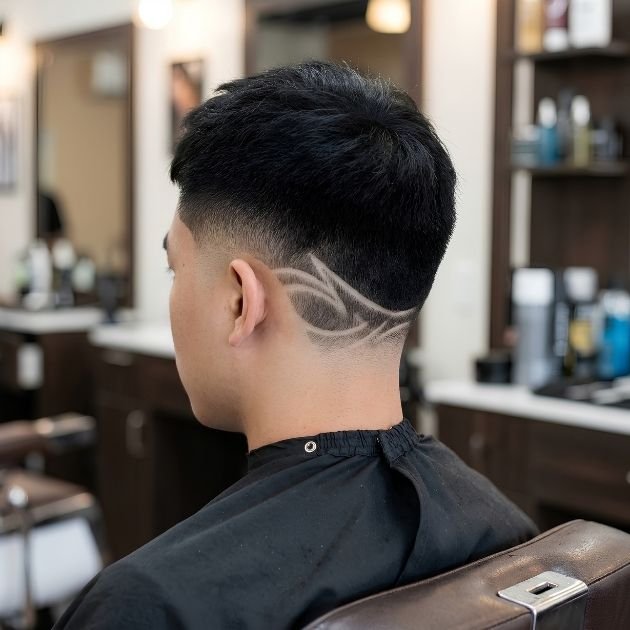
The back of the head gives barbers a wide, flat area to work with. These designs are best seen from behind, so they pair well with shorter tops that do not cover the nape.
1. Curved line design. One smooth, sweeping line follows the shape of the head just above the nape. It is simple, clean, and forgiving as it grows out. A good first design for anyone nervous about commitment.
2. Geometric block pattern. Small squares, triangles, or stepped blocks are shaved into the low taper area. The result looks modern and structured. Straight hair and dense hair show these shapes best, but expect to refresh it sooner because sharp corners blur fast.
Side Low Taper Fade Designs
Side designs are the most requested because they show from the front and are easy to maintain. They also work with nearly every top style, from textured crops to quiffs and slick backs.
3. Single side part line. A thin, straight line above the ear separates the fade from the top. It adds definition without overwhelming the cut and suits office settings.
4. Double line with a small shape. Two parallel lines frame a tiny star, arrow, or lightning bolt. It reads as bolder than a single line but still stays tidy. Ask your barber to keep the shape small so it holds up between visits.
Freestyle Low Taper Fade Designs
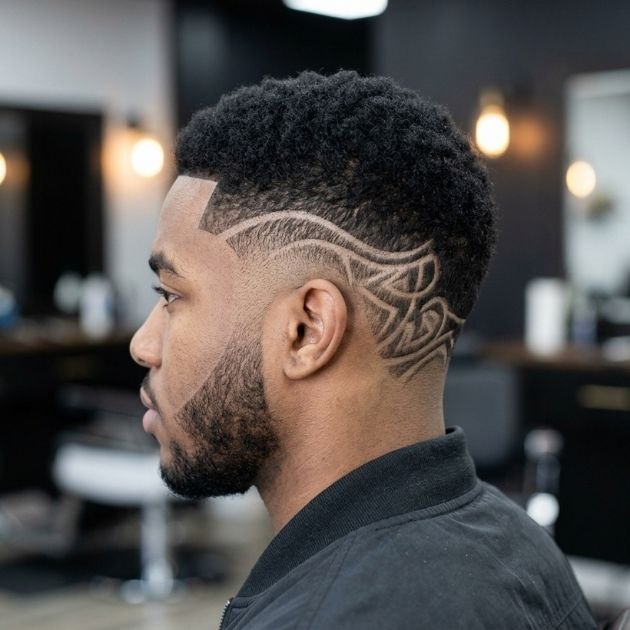
Freestyle work is custom artwork. It needs a skilled barber, so check their portfolio first and bring reference photos.
5. Custom initials or numbers. Letters, a jersey number, or a meaningful date are shaved into the side or back. Keep them compact and bold. Tiny script looks great on day one and unreadable by day ten.
6. Abstract freehand pattern. Flowing lines with no fixed shape, drawn to suit your head. No two are alike. This is the highest maintenance option, so plan on frequent touch ups.
Edgar Cut with Low Taper Fade Designs
The Edgar cut features a blunt, straight fringe across the forehead. Paired with a low taper, it creates a structured top with a soft fade underneath. It is popular with younger clients and works best on thick or coarse hair that holds a straight edge.
7. Edgar cut with a thin side line. A single clean line above the ear keeps the focus on the fringe while adding a sharp detail.
8. Edgar cut with a temple curve. A small curved cut near the temple softens the squared fringe and gives the cut a custom feel. Share a photo so the curve matches your hairline.
Small & Subtle Low Taper Fade Designs
Not every design needs to be seen from across the street. These options suit interviews, offices, and anyone who likes a quiet detail.
9. Mini triangle or dot pattern. A tiny shape placed just above the ear. People notice it only when they look closely.
10. Thin single line near the temple. A short, light line that adds detail without looking like a full design. It is the easiest design to maintain and the easiest to grow out.
Low Taper Fade Designs by Hair Type
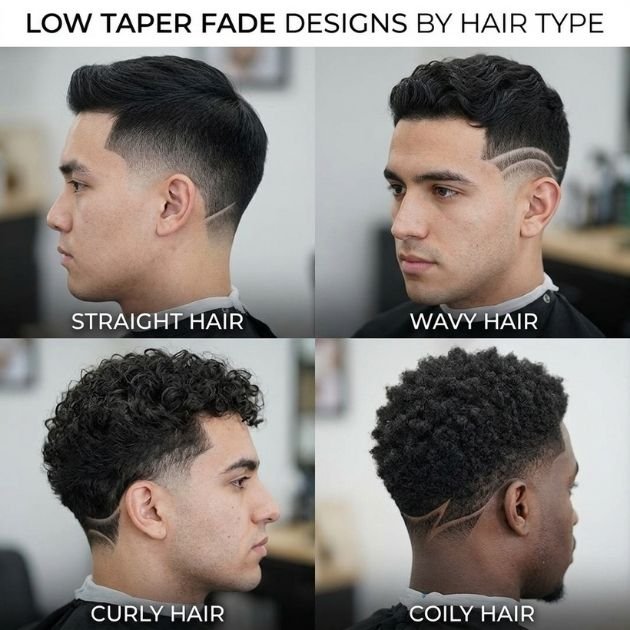
Hair type changes how a design looks on day one and day twelve. Use this as a guide for choosing placement and style.
Low Taper Fade Designs for Curly Hair
Leave the curls longer on top and keep the design on the side or nape. The contrast between soft curls and clean lines looks intentional. A simple line or small shape works best, since curly hair already supplies plenty of visual texture. Moisture matters here, so keep the curls hydrated to avoid frizz around the faded area.
Low Taper Fade Designs for Straight Hair
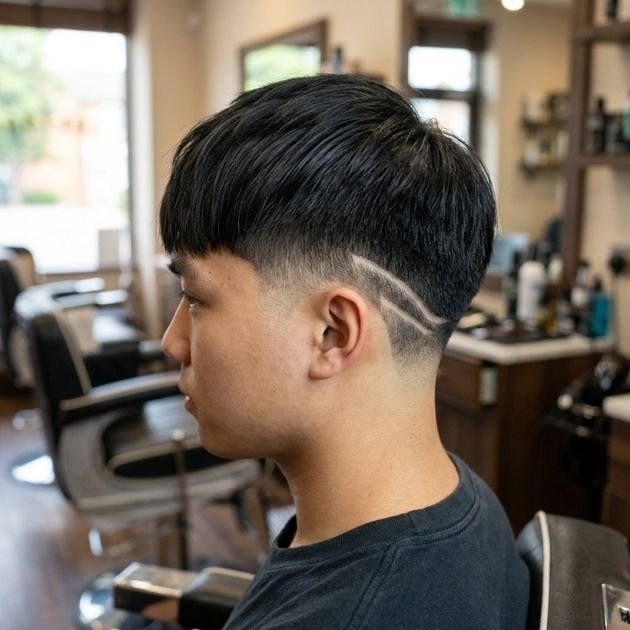
Straight hair shows fade lines clearly, which makes it ideal for detailed patterns. Geometric blocks and double lines look crisp. The trade off is that regrowth is also easy to see, so book your next visit early if the design is detailed.
Low Taper Fade Designs for Wavy Hair
Waves add natural movement on top, which balances sharp shaved lines below. Side line designs are a strong match. A light sea salt spray or cream keeps the waves defined without hiding the cut.
Low Taper Fade Designs for Afro-Textured Hair
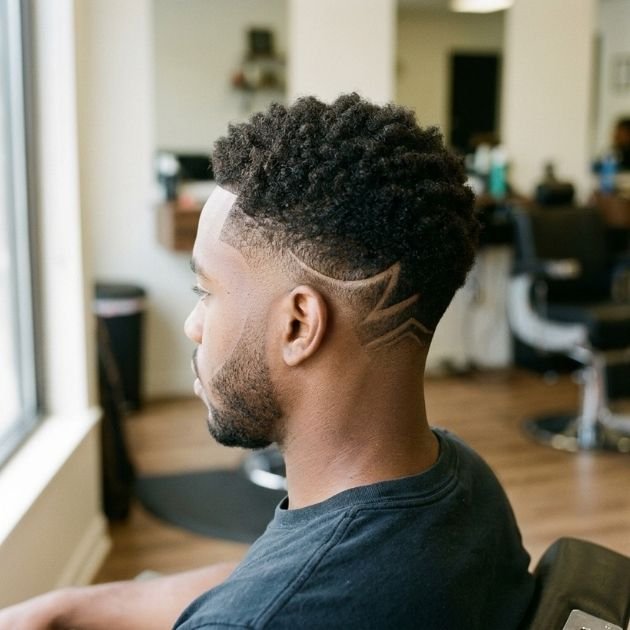
Dense, coiled hair holds bold shapes extremely well. Freestyle artwork, geometric patterns, and sharp lines stand out against volume on top. Because tight coils can cause razor bumps, ask your barber to avoid shaving too close and to use clean, sharp blades.
How Are Low Taper Fade Designs Created? (Step-by-Step)
A good barber follows a clear order. Knowing it helps you judge the quality of the work.
- Consultation: The barber checks your hair type, growth direction, and face shape, then confirms the design and placement.
- Sectioning: The top hair is clipped out of the way so the fade zone stays separate.
- Fading: Clippers and guards blend the length gradually from the nape and ears up toward the top.
- Outlining: The barber marks the design with a comb, pencil, or light trimmer pass.
- Design shaving: A fine trimmer cuts the pattern into the short hair, usually working in small passes.
- Detailing: A straight razor or trimmer sharpens edges, lines, and the neckline.
- Finishing: The barber checks symmetry from every angle, brushes away loose hair, and applies product if needed.
Most appointments take 30 to 60 minutes. Complex freestyle work can run longer.
Pro tip: Ask the barber to show you the back with a hand mirror before the final cleanup. Fixing a line is easier before the neckline is finished.
How to Ask Your Barber for a Low Taper Fade Design?
Clear instructions save you from a cut you regret for three weeks. Use this checklist:
- Bring 2 to 3 reference photos. Include a photo of the design and one of the fade level.
- Say “low taper.” Do not rely on “fade” alone, since it can mean different things from shop to shop.
- Point to the starting spot. Show where the fade begins, such as at the ears or the nape.
- Describe the design size and placement. Side, back, or both, and whether you want it thin or bold.
- Mention your top length. Say how much you want to keep.
- Ask about upkeep. A good barber will tell you how long the design should last.
Sample script: “I would like a low taper with a soft blend around the ears. Please add a thin line above my left ear, like this photo. I want to keep the length on top.”
Best Styling Products for Low Taper Fade Designs
Product choice follows hair texture. Apply a small amount first, then add more if needed. Too much product makes the top look heavy and can dull the contrast of the fade.
For Curly Hair
- Curl defining cream: Controls frizz while keeping curls light.
- Light hold gel: Adds definition without a crunchy finish.
For Straight Hair
- Matte clay: Gives texture and a natural, dry finish.
- Light pomade: Adds shine and hold to a styled top.
For Wavy Hair
- Sea salt spray: Builds texture and volume.
- Medium hold cream: Defines waves without flattening them.
For Afro-Textured Hair
- Leave in conditioner: Keeps coils moisturized and reduces breakage.
- Twisting cream or edge control: Shapes the top and tidies the hairline.
How to Maintain a Low Taper Fade Design?
A little routine care keeps the design sharp between visits.
- Book touch ups every 2 to 3 weeks. Detailed designs may need 2 weeks.
- Wash 2 to 3 times a week. Overwashing dries the scalp, while too little washing causes product buildup.
- Brush the faded area gently. A soft brush smooths loose hairs and keeps the blend even.
- Do not trim it yourself. Home clipping can erase a line in seconds.
- Moisturize the scalp. This matters most for curly and afro-textured hair.
- Protect the skin. Shaved areas are sensitive, so apply sunscreen when outdoors.
Low Taper Fade Design Mistakes to Avoid
These common errors shorten the life of your design:
- Choosing a design that is too complex for your growth speed. It will blur before your next appointment.
- Skipping touch ups. The pattern merges with regrowth and looks messy.
- Using the wrong products. Heavy gels on fine hair or light creams on dense coils both miss the mark.
- Giving vague directions. Saying only “make it fade” leaves the result to chance.
- Going to an unproven barber for freestyle art. Always view their recent work.
Frequently Asked Questions
How long does a low taper fade design last?
It typically lasts 2 to 4 weeks. Fast hair growth or fine lines can shorten that to 10 to 14 days.
Is a low taper fade good for curly hair?
Yes. It controls bulk at the sides while letting the curls stay full on top.
Can I get a low taper fade design for work?
Yes. Small, subtle designs fit most workplace dress codes. Check your company policy if unsure.
What is the difference between a low and mid taper fade?
A low taper starts near the ears and nape. A mid taper starts higher, around the temple area, and shows more contrast.
Do low taper fade designs suit all face shapes?
Mostly yes. The low placement keeps the cut balanced, though your barber can adjust the top to flatter your face.
How much does a low taper fade design cost?
Prices vary by city and barber, but a design usually adds a modest amount to a standard fade. Ask for a quote first.
Can beginners try a low taper fade design at home?
Not recommended. Clean lines need professional tools, steady technique, and a view of the back of your head.
Final Thoughts
A low taper fade design gives you a versatile way to personalize a classic haircut. It works for the office, the weekend, and almost every hair type. You can keep it subtle with a thin line or go bold with freestyle art.
Choose a design that fits your hair growth and daily routine. Bring photos, use clear wording with your barber, and keep up with regular touch ups. With those habits, your low taper fade design will stay sharp for weeks.

