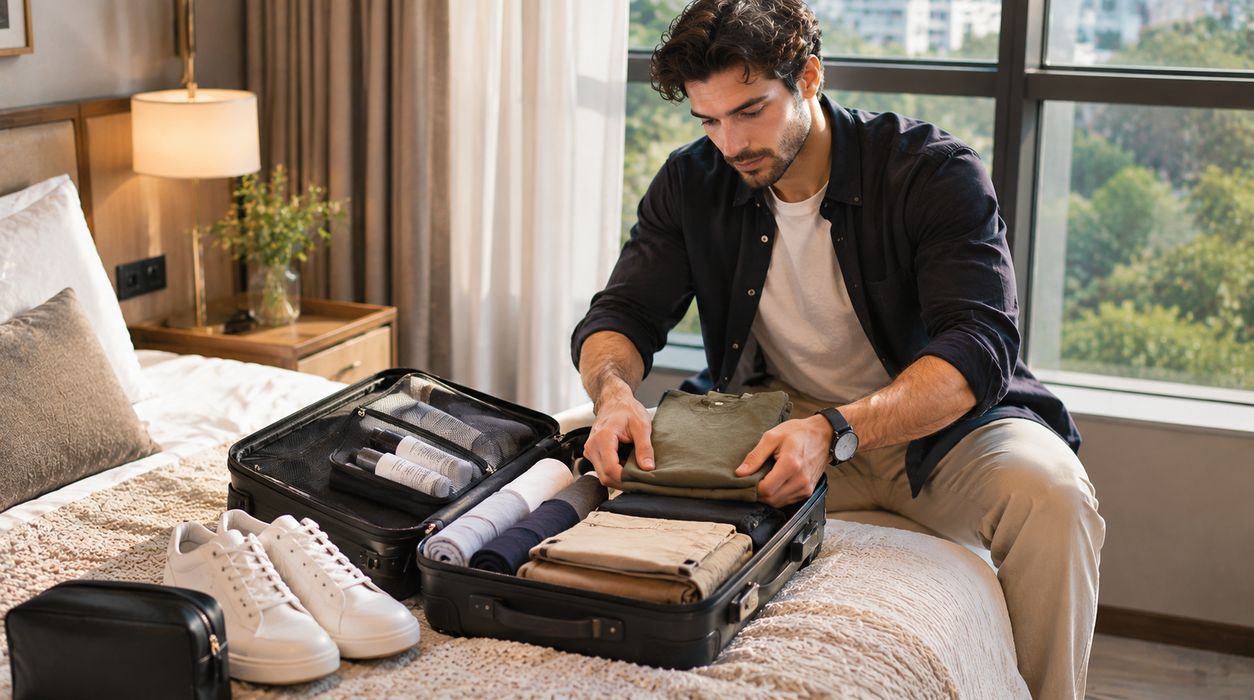
How to Pack for a 7-Day Trip in a Carry-On Without Overpacking
Packing for a week sounds simple until you open your suitcase and realize you’ve somehow collected enough clothing for three different vacations.
There are extra shirts for unexpected dinners, shoes you might wear once, a second jacket just in case, and a toiletry bag that takes up half your luggage.
Before long, your carry-on won’t close.
The good news is that learning how to pack for a 7-day trip doesn’t mean wearing the same outfit every day or giving up your personal style.
With a practical packing list, a few versatile clothing combinations, and some thoughtful organization, you can travel for an entire week with one carry-on suitcase.
The secret isn’t squeezing as much as possible into a small bag. It’s bringing the right things and leaving unnecessary items at home.
Whether you’re planning a city vacation, business trip, beach getaway, or international adventure, this guide will help you pack lighter without feeling unprepared.
Can You Really Pack for Seven Days in a Carry-On?
Yes. For many travelers, a seven-day trip can fit into a carry-on suitcase, particularly when the destination has mild weather and the itinerary doesn’t require specialized equipment.
You don’t necessarily need seven different pants, seven complete outfits, or several pairs of shoes.
Instead, choose clothing that can be mixed and matched.
A pair of neutral chinos might work for sightseeing, casual dinners, and a travel day.
A plain T-shirt can be worn alone in warm weather or layered beneath an overshirt when temperatures drop.
One comfortable pair of sneakers may cover most activities.
However, carry-on allowances vary by airline, ticket type, and aircraft.
The International Air Transport Association explains that cabin baggage allowances are airline-specific.
Before packing, confirm your airline’s permitted dimensions, weight allowance, and personal-item rules.
Don’t assume that a suitcase labeled “cabin size” will be accepted on every flight.
The Complete 7-Day Carry-On Packing List
Here’s a practical starting point for a one-week trip in mild or warm weather.
The quantities include items worn during travel where indicated.
| Category | Recommended Quantity |
|---|---|
| T-shirts | 4 |
| Polo or casual shirt | 2 |
| Pants or chinos | 2 |
| Shorts | 1 |
| Lightweight sweater or overshirt | 1 |
| Underwear | 7 pairs |
| Socks | 7 pairs |
| Sleepwear | 1 set |
| Comfortable sneakers | 1 pair, worn |
| Optional sandals or dress shoes | 1 pair |
| Belt | 1 |
| Toiletry kit | 1 compact bag |
| Phone charger and cables | As needed |
| Travel documents | Essential documents only |
This is a flexible checklist, not a universal requirement.
For a cold destination, you may need thermal layers and warmer outerwear.
For a beach vacation, you might replace a pair of pants with swimwear.
If laundry facilities are available, you can reduce the number of shirts, socks, and underwear.
The most important rule is to pack for your actual itinerary.
1. Start With Your Travel Schedule, Not Your Closet
One of the biggest packing mistakes is choosing clothes before thinking about what you’ll actually do.
Imagine you’re spending seven days in a coastal city.
Your itinerary includes sightseeing, casual restaurants, beach visits, and one nicer dinner.
You probably don’t need three formal shirts, two blazers, and several pairs of dress shoes.
Instead, write down your planned activities.
Consider the weather, local dress expectations, and how much walking you’ll do.
Ask yourself whether you’ll need specialized clothing for hiking, swimming, religious sites, or formal events.
Once you know what your trip involves, selecting clothing becomes much easier.
Pack for confirmed activities first.
Then allow a little flexibility for unexpected plans.
2. Build a Small Travel Capsule Wardrobe
A capsule wardrobe is a collection of clothing that works together in multiple combinations.
It’s especially useful when packing for a week.
Instead of packing seven separate outfits, select a few tops and bottoms that coordinate.
For example, four shirts and three bottoms can create up to twelve basic combinations before adding layers or accessories.
You won’t necessarily wear every combination, but the flexibility makes a small wardrobe more practical.
Choose clothing that suits your personal style.
If you enjoy minimalist outfits, focus on neutral colors and simple silhouettes.
If you prefer relaxed streetwear, choose comfortable T-shirts and trousers that coordinate.
Our men’s summer capsule wardrobe guide explains how to create versatile clothing combinations for warm-weather trips.
A well-planned travel wardrobe should feel familiar.
You don’t need to purchase entirely new clothes just because you’re going on vacation.
3. Choose Two or Three Main Colors
Color coordination makes packing much easier.
When most of your clothes work together, you can create different outfits without bringing unnecessary items.
A simple approach is to choose two neutral colors and one accent.
For example:
- Navy, white, and olive
- Black, gray, and beige
- Cream, brown, and dark blue
- Charcoal, white, and forest green
Imagine packing navy chinos, beige shorts, a white T-shirt, a gray polo, and an olive overshirt.
Most of these pieces can be combined without much effort.
You can also add a patterned shirt for variety.
The goal isn’t to wear only neutral clothing.
It’s to avoid packing pieces that require several additional items just to create one outfit.
4. Pack Fewer Pants Than Shirts
Pants usually take up more suitcase space than T-shirts.
For a typical week-long vacation, two pairs of long pants and one pair of shorts may be enough.
You can wear one pair of pants during your flight and pack the others.
Choose versatile styles such as chinos, relaxed trousers, or comfortable travel pants.
Dark navy or charcoal trousers can work for sightseeing and casual dinners.
Shorts are useful for warm destinations, but they may be unnecessary for colder trips.
If you prefer relaxed silhouettes, our men’s oversized outfits guide offers ideas for combining loose shirts with practical pants.
Avoid packing multiple pairs of nearly identical trousers.
If two items serve the same purpose, consider leaving one at home.
5. Limit Yourself to Two Pairs of Shoes
Shoes are among the bulkiest items in a carry-on suitcase.
Packing four pairs can quickly consume space that could hold clothing and other essentials.
For many trips, two pairs are sufficient.
Wear comfortable sneakers during travel.
Pack one additional pair based on your itinerary.
For a beach vacation, that might mean sandals.
For a business trip, you might prefer loafers or dress shoes.
If your sneakers are appropriate for every planned activity, you may not need a second pair.
Choose footwear you’ve already worn comfortably.
A week-long vacation isn’t the ideal time to discover that your new shoes cause blisters.
6. Wear Your Bulkiest Clothing During Travel
One of the easiest ways to save suitcase space is to wear your largest practical clothing items while traveling.
For example, wear your sneakers rather than packing them.
If you’re bringing jeans, consider wearing them on the journey if they’re comfortable enough for the flight.
Carry or wear your jacket instead of stuffing it into the suitcase.
However, don’t sacrifice comfort just to save space.
A heavy coat may be unnecessary when departing from a hot destination.
Choose a travel outfit that works with your journey.
For inspiration, our men’s athleisure outfits guide includes comfortable combinations suitable for airports and long travel days.
A simple T-shirt, relaxed trousers, sneakers, and lightweight layer can work well.
7. Roll Soft Clothes and Fold Structured Items
Rolling clothing can help organize smaller items and reduce wasted gaps inside your suitcase.
T-shirts, casual shorts, and some lightweight fabrics are easy to roll.
However, rolling isn’t automatically better for every garment.
Structured shirts, jackets, and trousers may be easier to manage when folded.
Try this approach:
Roll: T-shirts, casual shorts, sleepwear, and some underwear.
Fold: Button-down shirts, structured trousers, and garments that crease easily.
Pack separately: Shoes, toiletries, and delicate accessories.
Place heavier items near the suitcase’s wheel end when upright, and keep frequently needed items accessible.
The best packing method is the one that protects your clothing while making everything easy to find.
8. Use Packing Cubes if You Already Have Them
Packing cubes can help organize a carry-on, particularly when you’re moving between hotels.
You might use one cube for shirts, another for underwear and socks, and a third for pants.
This prevents small items from spreading throughout the suitcase.
Compression packing cubes can reduce the volume of some soft clothing.
However, they don’t reduce weight.
A tightly compressed suitcase can still exceed your airline’s baggage allowance.
You don’t need to buy expensive packing accessories.
Reusable fabric pouches or simple zippered bags can provide similar organization.
The goal is convenience, not collecting more travel equipment.
9. Keep Your Toiletry Bag Small
A large toiletry bag can take up valuable suitcase space.
For a seven-day trip, bring the grooming products you actually use.
A practical kit might include:
- Toothbrush and toothpaste
- Deodorant
- Small shampoo or suitable hair product
- Facial cleanser
- Moisturizer
- Sunscreen
- Razor or grooming tool, if permitted
- Comb
- Essential medications
Use travel-size containers where appropriate.
Avoid bringing several versions of the same product.
If you’re staying in a hotel, check which toiletries are provided, but don’t assume every property supplies everything you need.
Understand Airport Liquid Restrictions
For flights departing from U.S. airports, the TSA generally limits carry-on liquids, aerosols, gels, creams, and pastes to containers of 3.4 ounces (100 milliliters) or less, fitting into one quart-size bag, subject to applicable exceptions.
You can review the official TSA liquids guidance before departure.
Other countries and airports may apply different screening requirements.
Always check the rules for your departure airport and any connecting airports.
10. Pack a Personal Item Strategically
Your personal item can be extremely useful during a seven-day trip.
Depending on your airline’s allowance, you may be permitted a small backpack or bag that fits beneath the seat.
Use it for items you need during the flight.
These may include your passport, wallet, phone, charger, headphones, medications, and a light sweater.
Keep valuable electronics and essential travel documents accessible.
The Federal Aviation Administration’s carry-on baggage guidance recommends checking airline baggage limits and keeping important safety considerations in mind.
Power banks and spare lithium batteries generally belong in cabin baggage, subject to applicable battery restrictions.
If your carry-on suitcase must be checked at the gate, remove those items as instructed.
Don’t assume your airline allows both a cabin suitcase and a separate personal item without an additional fee.
11. Create a Seven-Day Outfit Plan
Planning outfits before packing helps you identify unnecessary clothing.
Here’s an example for a warm-weather city vacation.
| Day | Outfit |
|---|---|
| Day 1 — Travel | White T-shirt, navy chinos, sneakers, overshirt |
| Day 2 — Sightseeing | Gray T-shirt, beige shorts, sneakers |
| Day 3 — City exploring | Navy polo, chinos, sneakers |
| Day 4 — Casual activities | White T-shirt, shorts, sandals |
| Day 5 — Dinner | Casual button-down, dark trousers, sneakers |
| Day 6 — Day trip | Gray T-shirt, chinos, sneakers |
| Day 7 — Return | Polo, comfortable pants, overshirt |
This plan assumes some garments can be reworn when clean and appropriate.
Underwear and socks should be changed regularly, and sweat-soaked clothing should be washed before reuse.
If you’re traveling somewhere hot and humid, bring sufficient fresh clothing or plan to do laundry.
Our men’s summer outfits guide provides additional outfit ideas for warm destinations.
12. Plan One Laundry Session if Necessary
Doing laundry once during your trip can significantly reduce how much you need to pack.
If your hotel has laundry facilities, you might wash shirts, socks, and underwear halfway through the week.
Some travelers prefer hand-washing small items, provided the garment care labels permit it.
Use an appropriate detergent and make sure clothing dries completely before packing.
Don’t rely on overnight drying without considering humidity and airflow.
In tropical destinations, clothes can take longer to dry than expected.
If laundry won’t be available, pack enough clean essentials for the entire trip.
The point is to plan ahead rather than discover halfway through your vacation that you’ve run out of clean clothes.
13. Avoid Packing Too Many Just-in-Case Items
Overpacking often begins with reasonable-sounding questions.
What if the weather changes?
What if there’s a fancy dinner?
What if I need another jacket?
A little preparation is sensible, but packing for every unlikely possibility can quickly fill your suitcase.
Instead, consider how likely each situation is.
If rain is forecast, bring a compact rain layer.
If you have a confirmed formal event, pack appropriate clothing.
But don’t bring several extra outfits for events that aren’t part of your plans.
When an item has only one unlikely use, question whether it’s worth the space.
14. Leave Some Space in Your Suitcase
A completely full suitcase can be difficult to close, especially after your clothes have been worn and repacked.
Try leaving a little unused space.
This makes it easier to organize your belongings during the trip.
It also provides room for small souvenirs or purchases.
However, don’t assume that leaving space guarantees you’ll remain within the weight allowance.
Weigh your packed suitcase if your airline has a strict cabin baggage limit.
Remember that wheels, handles, and external pockets may count toward size restrictions.
15. Do a Final Packing Check Before Leaving
Once everything is packed, take a few minutes to review your suitcase.
Ask yourself:
- Does every clothing item have a clear purpose?
- Can most tops work with more than one bottom?
- Have I packed appropriate footwear?
- Are my toiletries within applicable security limits?
- Do I have enough clean underwear and socks?
- Have I checked the weather?
- Does my bag meet the airline’s size and weight rules?
- Are my documents and medications accessible?
If you’ve packed three items that perform nearly identical functions, consider removing one.
Your suitcase should contain what you need, not everything you own.
How to Pack for Different Types of Seven-Day Trips
Beach Vacation
Prioritize lightweight shirts, shorts, swimwear, sandals, sunscreen, and breathable clothing.
A pair of casual trousers and one nicer shirt may be useful for evening restaurants.
City Vacation
Comfortable walking shoes are essential.
Bring versatile trousers, casual shirts, and a lightweight layer for changing temperatures.
Business Trip
Choose wrinkle-conscious shirts, suitable trousers, and shoes appropriate for your meetings.
Pack a blazer only when your itinerary requires one.
Cold-Weather Vacation
Thermal layers, weather-appropriate outerwear, and suitable footwear become more important.
Bulky clothing may make carry-on-only travel more difficult.
Adventure Trip
Specialized footwear, weather protection, and activity-specific equipment may be necessary.
Don’t sacrifice safety equipment just to fit everything into a small suitcase.
Common Carry-On Packing Mistakes
Packing too many shoes: Footwear consumes valuable space and adds weight.
Bringing complete outfits that can’t be mixed: Versatile clothing creates more combinations.
Ignoring airline restrictions: Bag allowances vary and may change by fare.
Packing full-size toiletries: Liquids may exceed security limits.
Forgetting the destination climate: Clothing should match expected conditions.
Overusing compression bags: Smaller volume doesn’t mean lower weight.
Skipping a laundry plan: This can leave you without clean essentials.
Packing everything at the last minute: Rushed decisions often lead to unnecessary items.
Avoiding these mistakes makes one-bag travel much easier.
Frequently Asked Questions
Can you pack seven days of clothes in a carry-on?
Yes. Many travelers can pack for a week using versatile clothing, limited footwear, and compact toiletries. Your needs will depend on climate, activities, laundry access, and airline restrictions.
How many outfits should I pack for a seven-day trip?
You don’t necessarily need seven complete outfits. Four to six versatile tops, two or three bottoms, and suitable layers can create multiple combinations.
How many pairs of shoes should I bring for a week?
One or two pairs are often sufficient for a typical vacation. Wear your bulkiest comfortable pair during travel and pack another only when your itinerary requires it.
Is rolling clothes better than folding?
Rolling can organize soft garments efficiently, while folding may work better for structured clothing. Neither method is universally superior.
How do I pack for seven days without doing laundry?
Bring enough underwear, socks, and essential clothing for the entire trip. Choose versatile outfits and account for expected sweating, weather, and activities.
What size carry-on do I need for a week?
The appropriate size depends on your airline’s cabin baggage limits. Check the permitted dimensions and weight before selecting or packing a suitcase.
Can I bring a backpack and carry-on suitcase?
Many airlines permit a cabin bag and personal item, but allowances vary by fare and carrier. Confirm your specific booking conditions.
What should I leave out of my carry-on?
Avoid unnecessary duplicate clothing, excessive footwear, prohibited items, oversized liquid containers, and anything you won’t realistically use.
Final Thoughts
Learning how to pack for a 7-day trip in a carry-on is about making thoughtful choices rather than squeezing your entire wardrobe into a suitcase.
Start with your itinerary and destination weather.
Choose versatile clothing in coordinated colors, limit footwear, and organize your belongings so everything is easy to find.
Bring the essentials, plan for laundry when appropriate, and leave unnecessary just-in-case items behind.
Most importantly, check your airline’s baggage rules before leaving home.
A well-packed carry-on can make your trip easier from airport check-in to the final day of your vacation.
And once you experience traveling for a week with less luggage, you may find it difficult to return to overpacking.