Human Hair Half Wig: The Front Blend Decides, Leave-Out Is a Dial, and Prices Are Channels
Human hair half wig shopping usually goes wrong at the checkout, but the failure happens later, at the mirror. The unit arrives, the hair is lovely, and the front will not blend, so the seam shows and the whole look collapses.
This guide is built on the one rule that decides everything about this format. A half wig covers the back and crown while your own front hairline and part stay out, which means the wig never shows its own edge where it matters most.
The front blend is the product, and this guide treats it that way. You will learn the daylight test for the seam, the leave out dial that replaces the fixed measurement everyone asks for, and how to read prices by channel.
What a Human Hair Half Wig Is
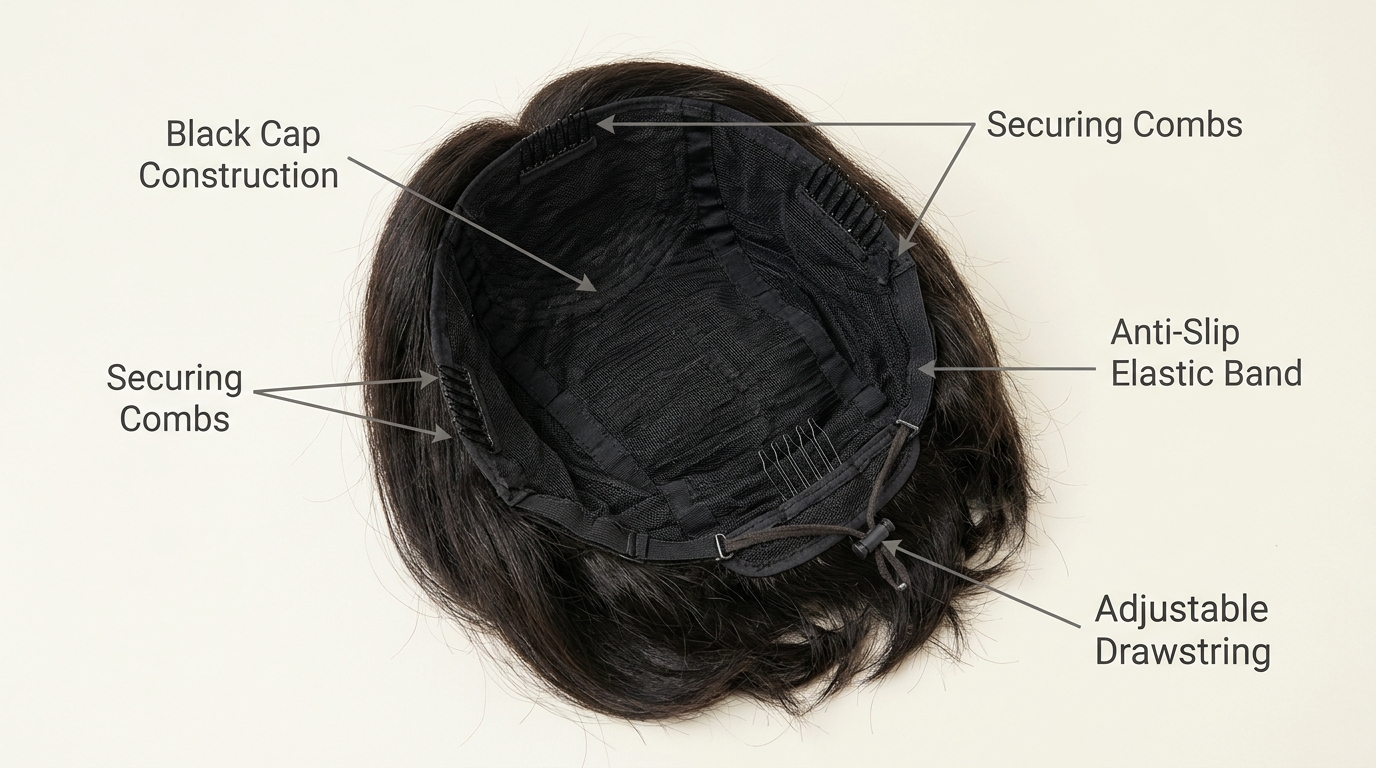
A human hair half wig is a three quarter coverage unit made of real hair. It sits over the back and crown of your head and fastens with a drawstring, an elastic band, and combs inside the cap.
Your own hair does the front work. The hairline, the baby hairs, and the front of the part are yours, which is why a good half wig reads as hair rather than as a wig.
Most current units are the 3-in-1 format. The same cap wears as a half wig, cinches into a drawstring ponytail, or sits under a headband, so one purchase covers three kinds of day.
Real hair is the point of the format. It heat styles, it can be colored by a professional, and it moves like the hair it blends with, in ways synthetic fiber only imitates at a distance.
How This Guide Differs From the General One
The general reference for the format lives at our half wig human hair guide, and it covers selection end to end. This guide goes deeper on the three things that decide outcomes after the box opens.
First comes the blend system: the daylight test, the texture distance rules, and the daily recheck. Second comes the leave out dial, set by your part and your style goal. Third comes channel literacy for prices.
If you are still choosing the format itself, start with our hair wig buying guide. Come back here when the question becomes how to wear the unit so nobody can find the seam.
Wig formats across the whole cluster are gathered at the ModernHairstyle home page. This page assumes the half wig is already your format and works on mastery.
The Front Seam Is Where Half Wigs Pass or Fail
The strongest wearing guidance in this niche, the YWigs wearing guide, states the rule plainly. The front seam is where half wigs pass or fail, and everything else about the unit is secondary to that one line.
The reason is geometry. The back and crown hide under volume, but the front sits at eye level in every conversation and photograph, exactly where a viewer looks first.
A seam fails in two ways only. The color steps at the hairline, or the texture steps at the hairline, and usually one of the two is doing all the visible damage.
The fix is therefore diagnostic, not general. Find which step is showing, color or texture, and treat that one; rebuying the unit treats neither.
The Daylight Test
Match the piece to your hair in daylight, at the hairline, on both color and curl. Indoor lighting forgives differences that a window or a sidewalk will announce immediately.
Hold a front section of your hair against the unit’s front wefts. If the tones separate in daylight, they will separate in every photograph, no matter how the product photos looked.
Check curl the same way. A pattern that reads close under warm bathroom light can read a full family apart outside, especially once humidity loosens your leave out.
Do the test before the first install, while returns are still simple. A blend that fails the daylight test is a return, not a styling challenge.
The Meet Halfway Rule
Texture distance has a rule for each direction. The wearing guidance spells both out, and together they cover nearly every blend problem a beginner meets.
If your front is straighter than the piece, move your hair toward the unit. Wrap the leave out in a small braid or rod set it to the piece’s texture the night before, and the seam closes.
If your front is curlier than the piece, move the choice, not your hair. Pick a looser wave the front can meet halfway, because fighting your own pattern flat every morning loses by week two.
What never works is forcing one side all the way. A front pressed bone straight against a curly unit, or curled hard against a straight one, shows the effort at the seam.
Leave Out Is a Dial, Not a Number
Every beginner asks the same question: how much hair do I leave out? The honest answer disappoints and then liberates, because no fixed measurement exists.
The wearing guidance defines it as a function. The amount is set by your part and the piece: enough length at the hairline to blend the seam, with the rest pinned flat or under.
That makes leave out a dial you set daily, not a number you memorize. Weather, style goal, and how the unit sits all move the setting, and experienced wearers adjust without thinking.
Once the dial replaces the number, the question changes. You stop asking how much, and start asking what this style needs, which is a question with an answer.
The Dial in Both Directions
The dial turns toward volume for full styles. Install guidance at the Gemeria install guide advises leaving a little more of your own hair out when you want big, full hair in front, so the front carries its share of the silhouette.
It turns toward sleek for smooth styles. For straight or polished looks, leave out just a small amount, so the front reads neat and the blend line stays short and manageable.
Between the two sits the everyday setting, enough front to cover the seam generously on a normal day. Most wearers live at this setting and turn the dial only for occasions.
Treat the first week as calibration. Photograph each setting in daylight, note which one disappeared, and your dial has its marks.
The Classic Mistake: Too Much Leave Out
The install guidance names the signature error directly. Leaving out too much natural hair is the common mistake, and it makes blending harder rather than easier.
The mechanism is surface area. Every extra inch of leave out is more of your texture on display, more frizz to manage, and more uneven texture exposed beside the unit’s consistency.
Too much leave out also works against protection. The hair left out takes the heat, the weather, and the manipulation, so an oversized front quietly defeats the format’s main benefit.
When a blend looks wrong, reduce before you restyle. Pull a little front back under the cap, and many failed blends fix themselves in one move.
The Leave-Out Dial Table
|
Style goal |
Dial setting |
What the front does |
|---|---|---|
|
Sleek and straight |
Small leave out |
Reads polished, short blend line |
|
Everyday natural |
Moderate leave out |
Covers the seam with margin |
|
Big and full |
Larger leave out |
Front carries real volume |
|
Ponytail mode |
Minimal front |
Drawstring does the silhouette |
|
Headband mode |
None needed |
Band covers the seam entirely |
Read the table as starting points. Your part and your unit shift every row slightly, and the daylight test settles arguments the table cannot.
The Fastening Set Is the Real Spec
Construction decides whether the blend survives the day. The standard set in current units is named completely in the ISEE Hair install guidance: an invisible drawstring, an anti slip elastic band, and four combs.
Each component has one job. The drawstring sets the fit and the silhouette, the band grips so the cap stays placed, and the combs anchor the front and sides against movement.
Judge listings by this checklist, not by comfort adjectives. A listing that names its drawstring, band material, and comb count is describing a product; one that only promises comfort is describing a feeling.
Placement matters as much as presence. Combs should secure without yanking edges, as the wearing guidance warns, because a blend that costs your hairline is not a protective style.
Cap Size and Fit Strands
One current retail listing states a medium cap at 22.5 inches as its average size. Treat that as one brand’s strand, useful for orientation, not a standard the industry follows.
The drawstring is the real fit system. It lets one cap cover a range of head sizes, which is why fit problems usually trace to placement and base flatness rather than to the cap itself.
A flat base makes any cap fit better. Hair braided or pinned flat removes the lumps that push a cap up and back, which then reads as a fit problem at the seam.
Measure your head if you sit between descriptions, and prefer listings that print a size range over listings that promise one size fits all.
Texture Families, From Straight to Kinky Curly
The format spans a straightness ladder. Straight and kinky straight sit at one end, body wave and water wave in the middle, and deep wave and kinky curly at the far end.
Kinky straight deserves its own note. Its blown out texture exists to meet relaxed and pressed natural hair halfway, which is why it leads so many retail lists for this keyword.
The farther a texture sits from yours, the more blend work it demands. Straight units against curly fronts and curly units against straight fronts are the two expensive directions.
The curly end forgives small mismatches. Curl breaks up the seam line visually, which is why curly units are the recommended first purchase for uncertain blenders, a point the dedicated guide develops at our curly half wig human hair guide.
Lengths and the Stretched Rule
Retail ladders for this format run from 14 inch bobs to 26 inches, in two inch steps. A current platform listing offers 14, 16, 18, 20, 22, 24, and 26 inches from one product page.
Wig length is measured stretched. A wavy or curly unit wears visibly shorter than its number, so the length you live in is always less than the length you bought.
Buy by worn length, not by number. Decide where you want the hair to fall on your back in its worn state, then step up the ladder until the stretched number delivers it.
Longer lengths raise everything else: price, weight, tangling, and care time. The middle of the ladder, 18 to 20 inches, is where most daily wearers settle.
Density and the Part Check
Densities in current retail strands run 180 to 250 percent, with 200 percent common in value listings. No registry certifies these numbers, so read them as relative settings inside one brand’s range.
Density shows itself at the part. The wearing guidance warns against a mismatch that makes the part look like a helmet line, where the unit’s fullness steps down to your front too abruptly.
Match density to your front’s volume. A fine front under a 250 percent unit announces the transition; a full front under a light unit reads thin at the crown.
When in doubt, choose one step down. A slightly lighter unit blends into more fronts than a slightly heavier one, and volume can be added with styling while excess density cannot be removed.
Install, Step by Step
The install sequence is short and repeatable. Brand guidance from ISEE Hair and the wearing guide agree on the same order, which is a good sign it is the real one.
Step one: prepare your natural hair. Braid or cornrow the back flat, moisturize before installing, and section the front leave out with a clean part.
Step two: place and secure the unit. Set it from back to front, seat the band, engage the combs without edge tension, and cinch the drawstring to a firm, comfortable hold.
Step three: style the leave out to match. Use water, mousse, or gel as the texture requires, and shape the front into the unit’s pattern rather than beside it.
Step four: blend and set. Twist a small front piece of yours together with a front piece of the wig to marry the textures, flip the hair over, and let a headband hold the set while it settles if needed.
The Daily Recheck
A blend is not set and forget. The wearing guidance adds the ownership detail sellers skip: on clip and comb styles, recheck the blend daily, because your own hair moves as you do.
Build the recheck into an existing habit. Mirror, daylight if you can get it, one pass over the seam with fingers or a soft brush, and a mist of water where the front has lifted.
Midday fixes are small by design. A lifted corner or a frizz halo takes thirty seconds in a restroom mirror, and catching it early is the difference between maintenance and embarrassment.
Nightly removal is part of the system. The unit comes off, the leave out gets moisture, and both rest, which is why daily wearers outlast install and forget wearers.
Reading Prices by Channel
Half wig prices confuse because three markets share one search page. Separating them turns a suspicious spread into readable information, and it is the habit this guide most wants to install.
Retail roundups aggregate consumer listings. A top 10 roundup updated November 11, 2026 lists units from 49.99 to 139.57 dollars, with was prices beside them showing the discount cadence of the season.
Platform listings carry their own evidence. One current listing prices a water wave unit at 123.16 dollars against 182.88, with a 4.8 rating across 529 reviews and 4,300 sold, platform strands that say demand, not quality proof.
Wholesale aggregators quote factory pricing from 5.80 dollars a unit at minimum orders. That number explains why retail spreads exist; it is not a price any consumer can pay for one wig.
The Channel Price Table
|
Channel |
November 2026 strand |
What it tells you |
|---|---|---|
|
Retail roundups |
49.99 to 139.57 dollars |
The consumer range and its discounts |
|
Platform listings |
123.16 dollars, 4,300 sold |
Demand evidence, dated |
|
Brand direct |
Varies by texture ladder |
Terms and support included |
|
Wholesale |
From 5.80 dollars per unit |
Supply context, never retail |
Read every price with its channel and date attached. A number without both is marketing, and the strands above are labeled so you can reuse the habit anywhere.
For a live version of that range, the ChoiceComparer top 10 roundup keeps the retail list current. Check it against brand direct before paying, because roundups refresh slower than storefronts.
Listing Hygiene: Trust, but Verify the Fields
This search results page is noisy. A full lace wig currently ranks inside the half wig results, and one platform listing’s own summary text is flagged as AI generated inside its crawl.
Hygiene starts with variant fields. Read the texture, density, and length on the exact variant you are buying, because headline textures and variant textures disagree often enough to matter.
Check the fastening set on the listing itself. Drawstring, band, and comb count should be printed; if a listing will not name its construction, its comfort claims are worth nothing.
Finish with return terms. A blend you cannot test in daylight is a gamble, so the return window is part of the product, and a seller who hides it has told you something.
Human Hair Versus Synthetic, for This Format
The comparison matters more here than for full wigs. Your leave out is real hair, so the unit beside it is judged against living texture at close range, in daylight.
Human hair heat styles and recolors, moves with the same weight as your front, and ages gradually rather than suddenly. Synthetic wins on price and on holding a set style through humidity.
For a first half wig, the blend forgives more in human hair. The seam is the whole game in this format, and the material that matches your front most closely wins it most often.
The wider material comparison, including care and lifespan, sits inside our human hair wig guide. This guide’s vote for half wigs specifically is human hair, for blend reasons.
Half Wig, Headband Wig, or V Part
Formats divide on one question: how much of the front is yours. The half wig leaves the most out, and in exchange gives the most believable hairline available in any wig format.
The headband format leaves nothing to blend, covering the seam with the band itself. Our comparison at our headband wig human hair guide suits readers who want the coverage without the daily blend work.
The V part format opens a narrow window at the part only, a middle setting between the two. The construction and its part shapes are covered at our V part wig human hair guide.
Choose by honest self knowledge. If you will do a two minute blend each morning, the half wig rewards you; if you will not, the honest format is the one that asks less.
Care for the Unit and the Leave Out
Wash the unit like real hair with a history. Detangle dry, wash gently in lukewarm water, condition well, and dry it on a stand so the cap keeps its shape between wears.
The leave out needs more care, not less. It takes the heat styling and the weather for the whole style, so moisturize it on a schedule and give it full rest days inside a rotation.
Edges deserve a standing rule. Combs engage behind the hairline where hair is stronger, never levered against the fragile front edge, and any style that pulls gets retired.
Storage is part of care. A unit kept on a stand, detangled and dry, installs in minutes; a unit kept in a bag arrives at the mirror pre tangled and costs you the morning.
Who This Format Suits Best
Beginners suit it genuinely, with one condition. The install is minutes and the removal is seconds, but the blend is a skill, and the first week is calibration rather than mastery.
Short hair works through the low base. Short natural hair brushes back into a low ponytail or bun under the cap, and the front section does the blending, per the beginner guidance in the competitor set.
Long hair works through the flat base. Cornrows take the length down so the cap sits true, and the same front section blends as it does for everyone else.
Protective style rotators may suit it best of all. Most of the hair rests covered while a small, cared for front does the visible work, which is the format’s whole design in one sentence.
Frequently Asked Questions
1. What is a human hair half wig?
A human hair half wig is a three quarter coverage unit of real hair. It covers the back and crown while your own front hairline and part stay out, fastening with a drawstring, an elastic band, and combs.
With no lace and no glue.
2. How much hair do I leave out for a half wig?
Leave out is a dial, not a number. The wearing guidance defines it as a function of your part and the piece: enough length at the hairline to blend the seam, with the rest pinned flat or under.
Adjusted by style goal.
3. Why can I see the seam at the front of my half wig?
A visible seam means color or texture is stepping at the hairline. Diagnose which one in daylight, then treat that one: recolor matching for a color step, and the meet halfway moves for a texture step.
Rather than replacing the whole unit.
4. What if my own hair is straighter than the half wig?
Move your front toward the piece. Wrap the leave out in a small braid or rod set it to the unit’s texture the night before, so your straighter front arrives already speaking the piece’s pattern at the seam.
5. What if my own hair is curlier than the half wig?
Choose a looser wave your front can meet halfway. Fighting a curlier front flat every morning loses by week two, so the fix happens at purchase: pick the texture your own hair can meet.
Not the one it must surrender to.
6. Do half wigs need glue or lace?
No, and that is the format’s appeal. Half wigs fasten with a drawstring, an anti slip band, and combs, with no lace to cut or melt and no glue to apply.
Which is why installation takes minutes and removal takes seconds.
7. How does a 3-in-1 half wig work?
One cap wears three ways. As a half wig it covers the back and crown with your front out; cinched, the drawstring turns it into a ponytail; under a headband, the band covers the seam for a no blend day.
8. How many combs should a half wig have?
The named standard set includes four combs. Brand install guidance describes an invisible drawstring, an anti slip elastic band, and four combs as the secure set, so treat that trio as the checklist when a listing describes its construction.
9. How long does it take to install a half wig?
Minutes, once the base is ready. With hair braided or pinned flat and the leave out sectioned, placing, securing, and blending the unit is a few minutes of work, and nightly removal is what keeps the routine sustainable.
10. How do I install a half wig step by step?
Follow the four step order. Prepare and moisturize the flat base, place and secure the unit back to front, style the leave out into the unit’s pattern, then blend the front pieces together and set the seam.
11. Are half wigs beginner friendly?
Yes, with one honest condition. The install is minutes and the removal is seconds, which suits beginners well, but the front blend is a skill, so expect the first week to be calibration rather than instant mastery.
12. Can I wear a half wig with short hair?
Yes, through the low base route. Short natural hair brushes back into a low ponytail or a small bun under the cap, and the front section still does the blending, a method brand beginner guidance describes directly.
13. Can I wear a half wig with long hair?
Yes, through the flat base route. Long hair cornrows down flat so the cap sits true over it, and the same front section blends at the hairline, so length changes the preparation, not the principle.
14. What textures do human hair half wigs come in?
Six families span the straightness ladder. Straight and kinky straight, body wave and water wave, and deep wave and kinky curly cover the retail range, with kinky straight built to meet relaxed and pressed natural hair halfway.
15. What lengths do human hair half wigs come in?
The retail ladder runs 14 to 26 inches. One current listing offers 14 inch bob through 26 inches in two inch steps, and because length is measured stretched, wavy and curly units wear visibly shorter than the number.
16. What density should I choose for a half wig?
Match density to your front’s volume. Retail strands run 180 to 250 percent with no certifying registry, so use the part check: fullness that steps down abruptly to your front creates a helmet line.
And one step lighter usually blends better.
17. How much does a human hair half wig cost?
Read the price by channel. A November 2026 retail roundup lists 49.99 to 139.57 dollars, a platform unit shows 123.16 dollars with strong sold counts, and wholesale starts near 5.80 dollars per unit, three strands that must never merge.
18. Why is the same half wig so much cheaper on wholesale sites?
Wholesale prices are factory prices at minimum orders. Aggregators quote per unit rates for bulk buyers, which explains why retail prices spread so widely, but no consumer can buy a single wig at the wholesale figure.
19. Are the cheap platform half wig prices real?
Platform deals are real listings with real caveats. Prices and sold counts are dated strands of demand evidence, and one major listing’s summary text is flagged as AI generated, so verify the variant fields yourself before trusting any platform page.
20. Does invisible hairline mean the wig has a special edge?
No, the hairline is yours. Invisible hairline in half wig marketing describes the effect of your own front hairline showing instead of a wig edge, so the invisibility comes from your hair, not from a special edge on the unit.
21. Can I bleach or dye a human hair half wig?
Yes, with professional judgment. Human hair accepts bleach and dye, which is why listings advertise it, but process a front matching unit carefully, strand test first, and remember your leave out must still match the new color afterward.
22. Can I heat style a human hair half wig?
Yes, heat styling is a core advantage. Real hair takes flat irons and curling wands like your own, which is also how the leave out gets matched to the unit.
So use heat protectant on both the unit and your front.
23. How long does a human hair half wig last?
Lifespan follows care more than calendar. No registry certifies wig lifespan claims, so judge by behavior: a unit washed gently, detangled before washing, stored on a stand.
And rotated with rest days outlasts one worn daily and stored in a bag.
24. Can I wear a half wig every day?
Yes, if nightly removal stays in the routine. Daily wear works because the unit comes off at night, the leave out gets moisture, and both rest, while sleeping in the unit and skipping care is what shortens its life.
25. Do I need to recheck the blend during the day?
Yes, briefly and daily. The wearing guidance advises rechecking the blend daily on clip and comb styles because your own hair moves as you do, and a thirty second mirror pass catches a lifted seam before it announces itself.
26. Is a half wig a protective style?
Mostly, with the leave out as the exception. The covered hair rests from heat, weather, and manipulation, which is the protective design, while the small front section takes the styling load and needs deliberate moisture and rest days.
27. How do I wash a human hair half wig?
Wash it like real hair with a history. Detangle dry first, wash gently in lukewarm water with a mild shampoo, condition well, and dry the unit on a stand so the cap keeps its shape between wears.
28. How do I keep my leave-out from breaking?
Moisturize it on a schedule and rest it. The leave out carries the heat and weather for the whole style, so condition it regularly, keep heat moderate, and rotate styles so the front gets full rest days under the cap.
29. Will combs damage my edges?
Placed carelessly, combs can stress edges. The wearing guidance warns to secure combs without yanking edges, so engage them behind the hairline where hair is stronger, and retire any placement that pulls, because protection is the point.
30. Can a half wig slip off?
A correctly fitted set should not. Slipping traces to a loose drawstring, a cap riding on a lumpy base, or combs placed without grip, so flatten the base, cinch the drawstring firmly, and seat the band before blaming the unit.
31. Half wig or full wig: which looks more natural?
The half wig, at the hairline specifically. Its front is your own hairline, which no full wig edge fully imitates, while the full wig wins on complete coverage and zero blend work.
So the choice is realism at the front versus effort.
32. Half wig or headband wig: what is the difference?
The difference is who covers the seam. A half wig leaves your front out and you blend it, while a headband wig covers the seam with the band and asks for no blending.
Trading some realism for zero daily blend work.
33. Half wig or V part wig: what is the difference?
The V part shows only a narrow part window. A half wig leaves the whole front section out, while a V part wig opens a small V at the part for a sliver of your hair.
A middle setting between coverage and blending.
34. Can I do a half up half down style with a half wig?
Yes, it is a natural style for the format. The covered back and your blended front support a half up half down split cleanly, and the 3-in-1 cap’s security set keeps the up half placed through the day.
35. Can I wear a half wig as a ponytail?
Yes, that is the second of its three modes. Cinch the drawstring and the same cap becomes a drawstring ponytail, which is why the format is sold as 3-in-1 alongside half wig and headband wear.
36. What cap size is a typical half wig?
One listing strand says medium, 22.5 inches. That is a single brand’s average, not an industry standard, and the drawstring covers the fit range in practice, so measure your head if you sit between descriptions.
37. How do I choose the right color for a half wig?
Choose it in daylight, at the hairline. Hold your front hair against the unit’s front wefts in natural light, because indoor lighting forgives tone steps that daylight and photography expose, and a failed daylight test is a return.
Not a challenge.
38. Why do curly half wigs blend more easily?
Curls break up the seam line visually. Where straight textures draw a clean line the eye can follow, curl pattern interrupts it, forgiving small texture and density mismatches, which is why curly units are recommended for first time blenders.
39. What is the biggest mistake beginners make with half wigs?
Leaving out too much hair. Install guidance names it directly: extra leave out exposes more uneven texture, makes blending harder, and quietly defeats the protective purpose, and most failed blends improve simply by pulling some front back under the cap.
40. How do I know a half wig listing is trustworthy?
Trust listings that name their construction. Check that the variant fields match the headline texture, that drawstring, band, and comb count are printed, and that return terms are visible, because sellers who specify are describing a product, not a feeling.
41. Can I return a half wig if the blend fails?
Only inside the stated return window. Because the blend can only be judged in daylight on your head, the return terms are part of the purchase.
So read them before ordering and do the daylight test while returning is still simple.
42. Is human hair worth it over synthetic for a half wig?
For this format, usually yes. Your leave out is real hair judged at close range beside the unit, and human hair matches its weight, movement, and heat behavior most closely, which is exactly where the blend is won or lost.
Conclusion
A human hair half wig succeeds or fails at one line, and you now own the system for that line. The front blend decides, judged in daylight, on color and curl, at your own hairline.
Set the leave out as a dial, more for volume and less for sleek, and treat too much front as the first suspect in any failed blend. Verify the fastening set on every listing, and read every price inside its channel and date.
Start with the daylight test on your current or next unit. The cluster context for formats and materials is gathered at the ModernHairstyle home page.

Dilawar is a passionate writer and contributor at Modern Hairstyle (modernhaistyle.com), specializing in hairstyles, hair care, grooming, fashion, beauty, and lifestyle trends. He enjoys sharing practical tips, hairstyle inspiration, and easy-to-follow guides to help readers discover their personal style. His goal is to provide informative, engaging, and helpful content that keeps readers updated with the latest trends.