Curly hair and a mid taper fade are one of the easiest combinations to get right and one of the easiest to get wrong if you don’t know what to ask for. This cut keeps your curls at their natural length on top while the sides and back shorten gradually, with the blend starting around the temple. Below is everything you need: what the cut actually is, the best curly variations, exact wording for your barber, and how to keep both the fade and the curls looking sharp between visits.
What is a mid taper fade on curly hair?
A mid taper fade on curly hair shortens the sides and back gradually, with the blend beginning around the temple, while the curls on top and through the crown stay at their natural length. It sits between a low taper (more side weight, subtle contrast) and a high taper (less side weight, sharper contrast), which is why it’s such a popular middle-ground request.
The taper does a specific job on curly hair. Curls tend to expand outward, so left ungroomed, the sides can build up into what barbers sometimes call a “pyramid” or “mushroom” shape wide at the temples, narrow up top. A mid taper trims that bulk away gradually instead of cutting straight across, so the head keeps a balanced shape while the curly crown stays full and bouncy.
Mid taper vs. mid fade: why the names get confused
A taper and a fade are technically different instructions, even though barbershops often use the terms interchangeably. A mid taper blends gradually around the neckline, sideburns, and temple, leaving more length through the sides. A mid fade takes a wider section of the side down shorter, sometimes to skin, creating a bolder, more graphic line.
In plain terms: a taper is subtle and grows out cleanly, while a fade is sharper and needs more frequent upkeep. Since shops don’t always agree on where one ends and the other begins, your safest move is to bring a reference photo and name the finish you want shadow, skin, or blended.
Mid taper vs. low and high tapers on curly hair
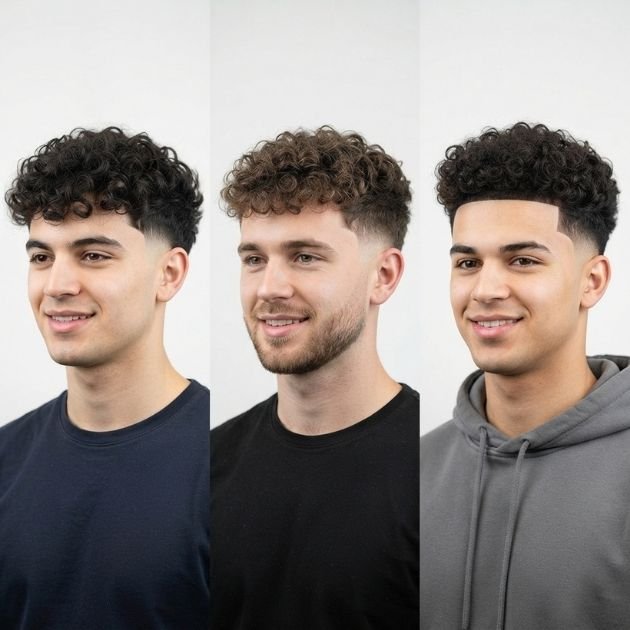
Taper height changes how much side volume disappears and how much contrast shows against your curls. Here’s how the three heights compare:
| Taper Height | Blend Starts | Side Weight | Contrast |
| Low taper | Near the ear and nape | Most | Subtle |
| Mid taper | Around the temple | Moderate | Moderate |
| High taper | Above the temple | Least | Strong |
None of these is objectively better they answer different questions about how much scalp you’re comfortable showing and how sharp you want the line between curls and skin.
Low taper vs. mid taper on curly hair
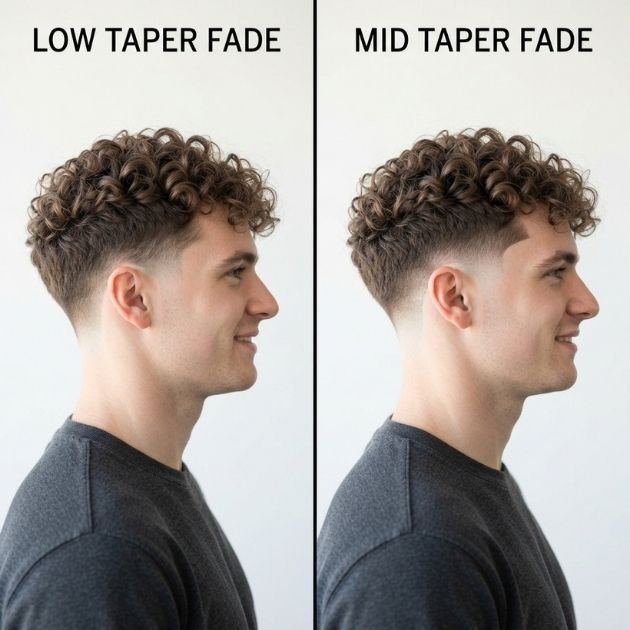
A low taper starts near the ear and nape and keeps almost all your side volume, which reads as tidy rather than styled. A mid taper starts higher, at the temple, and removes noticeably more bulk, creating a more visible break between the sides and the curls on top. If your sides run naturally dense, the mid placement is usually the better fix for a heavy-looking silhouette.
Mid taper vs. high taper
A high taper pushes the blend above the temple, exposing more skin and sharpening the contrast against curly volume on top. It looks bolder but needs touch-ups sooner, since a crisp line loses definition faster than a soft one. A mid taper is the safer, more reversible choice your barber can always take it higher next time, but there’s no putting length back on the same day.
Is a mid taper good for your curly hair?
Yes, for the vast majority of curl types. A mid taper doesn’t change how your curls behave it only reshapes the perimeter around them. What determines whether you’ll like the result comes down to three things: how much side weight you keep, how much length stays on top, and how well your barber understands shrinkage and density in textured hair.
Loose curls, tight curls, and coily hair
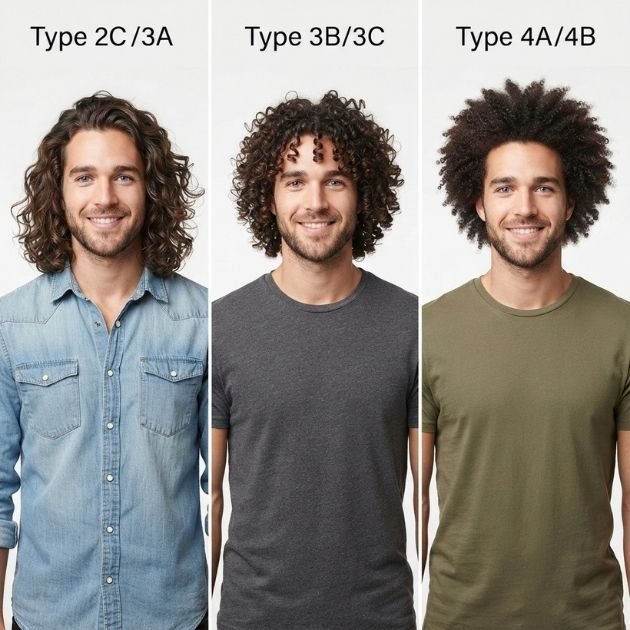
The cut works across loose waves, defined curls, and tight coily or afro-textured hair what changes is the silhouette it creates. Looser curls blend into the taper line with less visible separation, while tighter, denser patterns build a fuller crown that contrasts more strongly against the shortened sides.
Curl charts are less useful here than density and shrinkage. A skilled barber reads your actual hair in the chair rather than relying on a label, so focus your conversation on how much your hair shrinks when it dries, not which “type” number it falls under.
Related POST: Paul Mauro Wikipedia 2026: Age, Height, Net Worth and Family
Short, medium, or long curls on top
Top length changes the finished look far more than the taper itself does:
- Short curls a compact, low-maintenance silhouette where the taper line does most of the visual work.
- Medium length a balance between visible curl definition and manageable daily styling.
- Longer curls more movement and versatility, but more product and drying time required.
Decide this before you sit down. Top length and taper height are two separate decisions, and leaving either one open to interpretation is the most common reason people leave the chair unhappy.
Best mid taper fade curly hair styles

These six variations cover most of what people actually ask for think of them as combinations to specify rather than fixed names to memorize.
1. Classic curly mid taper
Natural-length curls on top over a cleanly tapered perimeter. It’s low-effort, needs minimal product, and gives you room to go shorter or longer next visit. A solid starting point if this is your first taper.
2. Mid taper with curly fringe
The front curls are cut and encouraged forward instead of falling naturally, creating a fringe that partially covers the forehead. Because this changes the front more than the sides, be specific with your barber about fringe length and how much forehead coverage you want.
3. Curly blowout mid taper

More height and volume on top, lifted and dried outward rather than left compact, over a crisp tapered perimeter. It’s the highest-maintenance of the six, since the shape depends on your drying routine as much as the cut itself.
4. Short curly mid taper
Curls cut close and even on top, letting the taper’s clean lines carry the look. It takes the least daily styling time, though it also leaves the least room to change your style between appointments.
5. Mid taper with coily or afro-textured hair
On coily and afro-textured hair, the taper sculpts around the crown’s natural shape instead of compressing it, keeping full volume intact above the blend. This combination is a staple request among barbers who specialize in textured hair.
6. Mid taper with line-up or beard blend
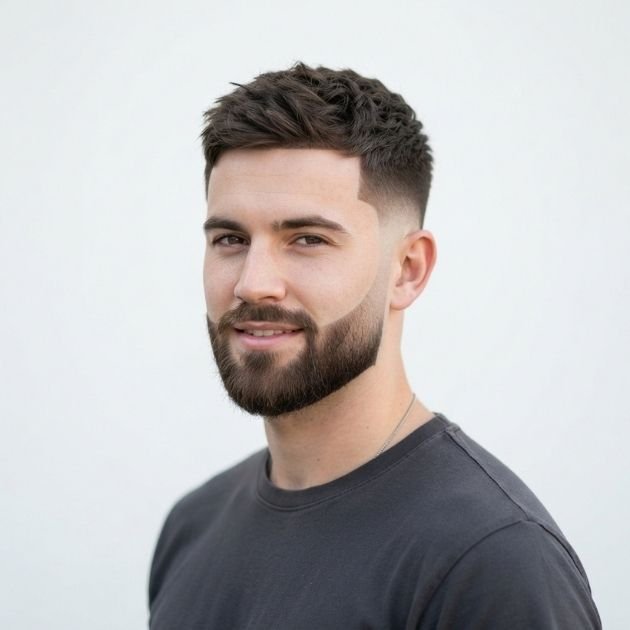
A line-up sharpens the hairline and temple edges, while a beard blend runs the sideburn taper directly into facial hair rather than leaving a visible step. Both are optional add-ons, and both mean more frequent upkeep, since edges are the first thing to look messy as hair grows.
What should you ask your barber for?
A useful brief covers five specifics. Naming these removes the guesswork that the phrase “mid taper” leaves open:
- A reference photo close to your own curl density
- Where the taper should start
- How short the bottom finishes
- How much curl length stays on top
- How bulk, fringe, and the neckline should be handled
1. Show a reference photo
Bring one or two clear photos, front and side, ideally of hair similar in density and curl pattern to yours. Confirm your barber interprets the photo the way you do before the clippers come out that’s the cheapest point to correct a misunderstanding.
2. Say where the taper should begin
Point to the spot on your own head. “Around the temple” is the standard mid reference, but pointing removes any ambiguity, since a taper placed too high can’t be undone the same day.
3. Decide how short the bottom goes
Choose whether the shortest point reaches skin, a guard length, or a soft shadow. This single decision controls both how much contrast shows and how soon you’ll need a touch-up.
4. Explain how much curl length to keep
Describe the result you want in plain terms enough to see defined curls, or long enough to reach your forehead. Curly hair shrinks noticeably as it dries, so always ask your barber to check the length dry before calling the cut finished.
5. Discuss bulk, fringe, and neckline
Tell your barber whether fullness should sit toward the front, spread evenly, or be reduced overall, and whether you want a natural or squared-off neckline. A natural taper at the neckline grows out more gracefully than a blocked shape.
How do you style a mid taper with curly hair?
Only the top needs active styling the taper is your barber’s work and doesn’t need product.
Step 1: start with damp, detangled hair
Always detangle curly hair while it’s wet, using fingers or a wide-tooth comb in sections. Brushing curls dry is one of the fastest ways to cause frizz and breakage.
Step 2: add moisture and definition
Apply a leave-in conditioner first, then a curl cream, mousse, or gel based on how much hold you want. Use the smallest amount that gets the job done, and keep product off your scalp to avoid buildup.
Step 3: air-dry or diffuse without flattening the shape
Air-drying is gentler on curl pattern than heat. If you diffuse, scrunch upward instead of pulling down pulling flattens curls against the taper line and kills the contrast the cut was built to show off.
Step 4: refresh between wash days
Mist with water and work through a small amount of leave-in rather than repeating your full routine. Finger-detangle only, and skip the brush entirely.
How do you maintain a curly mid taper?
Two separate schedules run side by side: the taper needs periodic barber visits, while the curls need ongoing care regardless of the haircut.
How often should you get the taper cleaned up?

Every two to four weeks, depending on how close to skin the finish is. A softer shadow finish holds its shape longer, while a skin-close taper blurs sooner and needs more frequent visits. Between appointments, you can clean up your own neckline and sideburns, but leave the actual blend to your barber.
How should you care for the curly top?
Condition the full length, not just the ends, and follow up with an oil or leave-in after every wash. Overnight, a loose pineapple ponytail and a satin or silk pillowcase (or bonnet) cut down on friction that would otherwise distort your curl pattern and flatten the sides.
Common mid taper mistakes to avoid
- Letting the taper creep too high always confirm the starting point by pointing at it before the clippers start.
- Cutting too much off the top while wet curly hair shrinks after drying, so ask for dry length to be checked before the cut is finished.
- Using a mismatched reference photo a photo from a different curl texture or density won’t translate onto your own hair, so bring one close to your actual pattern.
Alternatives if a mid taper is not the look you want
If the mid placement doesn’t feel right, the fix is usually a different height or shape rather than a whole new concept:
- Low taper keeps the most side weight and shows the least skin.
- High taper or full mid fade more contrast and a bolder, sharper line.
- Burst fade arcs around the ear and leaves the back longer.
- Drop fade curves down behind the ear toward the nape.
- Temple fade concentrates the short work only at the temples.
Conclusion
A mid taper fade works with curly hair rather than against it. The cut simply reshapes the perimeter trimming bulk from the sides and neckline while leaving your natural curl pattern intact on top. What actually decides whether you’ll love the result isn’t the name of the cut, but the specifics you bring to the chair: a matching reference photo, a clear starting point for the taper, an honest length decision made on dry hair, and a plan for the neckline and bulk.
Pair that with a simple styling routine damp detangling, a leave-in and curl cream, gentle drying and a touch-up schedule every two to four weeks, and the cut holds its shape without much daily effort. Whether you’re after a classic clean taper, a curly fringe, or a full coily crown left untouched above the blend, the same rule applies: know your curls, communicate clearly, and let the taper do the rest.

