The Textured French Crop is one of the sharpest short haircuts a man can wear right now. It combines a forward-styled fringe, choppy layered top, and clean faded sides into one effortless look. You get structure without trying hard. Whether you’re heading to work or the weekend, this cut keeps up with you.
What makes the textured French crop stand out is how little it demands. No complex styling routine. No expensive products. Just a small amount of matte clay, a quick blow-dry forward, and you’re done in under two minutes. It works on straight, wavy, curly, thick, and fine hair. It suits most face shapes. And it stays fresh for weeks between barber visits. If you want a clean, modern cut with almost zero daily effort this is it.
Textured French Crop: Quick Guide
| Feature | Detail |
| Top length | 1–2.5 inches, styled forward |
| Sides | Taper or fade (low, mid, or high) |
| Fringe | Short, blunt or softly textured |
| Maintenance | Every 3–5 weeks |
| Best for | Most hair types and face shapes |
| Styling time | 1–3 minutes |
| Product needed | Matte clay, paste, or texturizing spray |
1) What is a Textured French Crop?
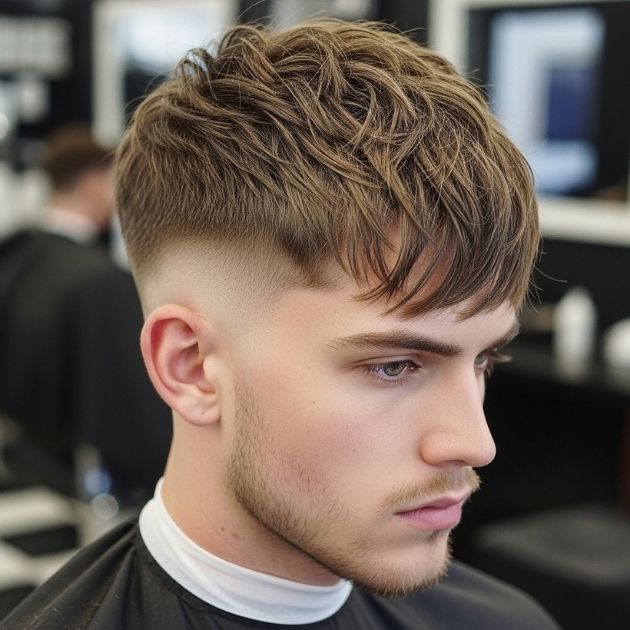
The textured French crop is a short men’s haircut built around three elements: a forward-styled fringe, a choppy or layered top with natural movement, and faded or tapered sides that keep everything clean and connected.
Unlike the classic Caesar which sits flat and structured the textured version uses point-cutting or razor work to break up the surface, giving the hair grip, dimension, and a lived-in quality that looks intentional without looking overdone. The fringe doesn’t need to be ruler-straight; a softly textured fringe is just as valid and arguably more wearable day to day.
In short: it’s a precision cut that wears like a casual one.
2) Why Choose This Cut
The textured French crop has surged in popularity for practical reasons, not just aesthetic ones.
- Low daily effort. A small amount of matte clay or paste pushed through damp hair is genuinely all it takes. Many men pull it off with just a quick blow-dry forward and nothing else.
- Works for thinning or receding hair. The forward fringe reduces visible scalp contrast and adds the illusion of density at the hairline which is why barbers frequently recommend it for men with early recession.
- Office-friendly and off-duty ready. The clean silhouette reads professional; the textured top keeps it relaxed enough for weekends.
- Barber-versatile. You can take it from conservative (low taper, blunt fringe) to bold (high skin fade, disconnected texture) without changing the fundamental shape.
Related Post: Burst Fade Mohawk Why This Haircut Looks Sharp On Everyone
3) Face Shape Match
Getting the proportions right matters more than the exact fringe length. Here’s how to match the cut to your face:
| Face Shape | Best Approach |
| Oval | Nearly any variation works balanced proportions suit all fringe lengths |
| Round | Add slight crown height; keep the fade low to slim the sides |
| Square | Soften with a rounded fringe and a gentle taper at the temples |
| Oblong / Long | Keep crown volume calm; a wider, fuller fringe balances vertical length |
| Diamond | A fuller fringe and low-contrast taper broadens the forehead softly |
| Heart | Medium fringe and low fade balance a stronger forehead |
When in doubt, ask your barber to keep the top relatively flat and the fringe just touching the brow that works for every face shape.
4) Hair Types and Top Textures
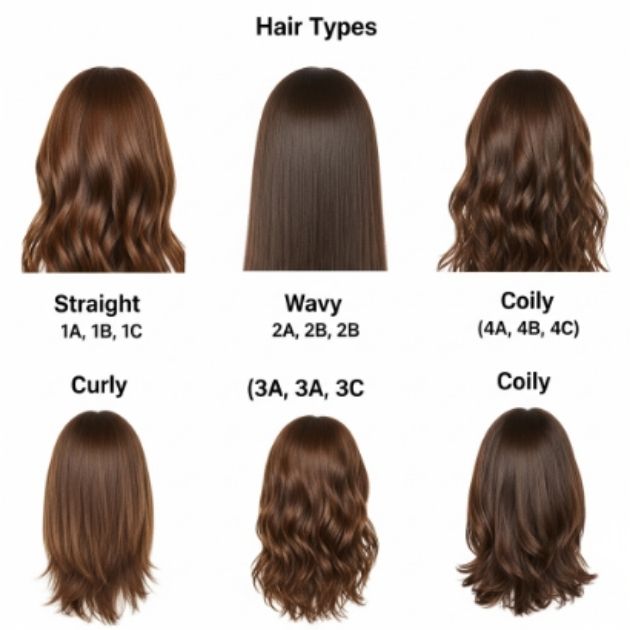
One of the reasons the textured French crop has become a barbershop staple is how well it translates across different hair types. The technique changes slightly depending on what you’re working with:
Straight hair: Point-cutting is the go-to method. It breaks up a flat surface, creates separation, and gives the illusion of natural texture. Matte paste or sea salt spray finishes the look cleanly.
Wavy hair: Waves do most of the visual work for you. The barber focuses on removing bulk and keeping the top from puffing outward. A light cream or low-hold clay on damp hair lets the wave pattern do its thing.
Thick or coarse hair: Thinning shears or internal point-cutting removes weight so the top sits flat rather than mushrooming. Without this step, the parietal ridge gets too wide and the shape loses its edge.
Fine hair: Minimal layering is better. Keeping the top denser fewer layers, more uniform length creates the appearance of fuller hair. Sea salt spray adds grip without weighing strands down.
Curly or wavy-curly hair: A short, textured French crop on curls looks genuinely great. The natural coil creates its own definition. A light leave-in plus a small amount of paste on the fringe is usually enough.
5) Exactly What to Tell Your Barber
The fastest way to get a bad haircut is to say “short on the sides, textured on top” and leave it there. Be specific. Here’s a script that covers everything your barber needs:
“I want a textured French crop. Keep the top around [1.5 inches / 2 inches pick one]. I want a short forward fringe, blunt [or softly textured if you prefer]. For the sides, a [low / mid / high] [taper / fade / skin fade] I want it to sit clean at the ear. Remove weight from the crown so the top lies flat, but use point-cutting to keep texture. Finish matte, no shine. Leave enough length so I can rough-dry it in two minutes.”
Bring a reference photo. Even a single image from this guide eliminates guesswork and virtually eliminates miscommunication about fade height and fringe shape.
6) In the Chair – Step by Step
Here is how a skilled barber executes a textured French crop from start to finish.
Step 1: Consult and Plan
The barber checks your natural growth direction, crown patterns, and hairline shape before picking up a single tool. This determines where the fringe will sit naturally, how high the fade should start, and whether the crown needs debulking. The ideal consultation takes under three minutes but saves significant rework later.
Step 2: Prep
Hair is washed or dampened so growth direction is fully visible. Towel-drying to about 70% moisture is ideal damp enough to see root behavior, dry enough that the cut is accurate. Everything is combed forward to reveal the natural fringe line.
Step 3: Set the First Guideline
The barber establishes the baseline at the sides a low, even line that hugs the ear. This initial guideline controls the entire shape of the fade and must be level before anything above it is touched. Short, consistent clipper strokes keep the line smooth. This is the foundation everything else is built on.
Step 4: Build the Taper or Fade
Working upward from the baseline, the barber moves through guard sizes (typically 0 → ½ → 1 → 1.5 → 2 or similar) to build a gradual transition. The lever on the clipper is used to feather between guard sizes and avoid hard shelves. A skin fade requires a foil shaver at the base for a clean finish; a taper ends with visible stubble that gradually blends to the top length.
Step 5: Blend Ridges
At the parietal ridge where the sides meet the top clipper-over-comb or scissor-over-comb work removes corner weight without dragging the fade upward. This is where many cuts go wrong: leaving a visible ridge line creates a disconnected, bowl-like appearance. Cross-checking at 45 degrees catches any shadows or shelves.
Step 6: Texture and Balance the Top
Scissors take over. The barber works through the top section, using point-cutting (snipping into the hair at a vertical angle) to remove weight and create movement rather than cutting a blunt horizontal plane. Thick hair may get additional work with thinning shears. The crown is checked from above and from the front the goal is a flat, even surface with visible texture, not a flat helmet shape.
Step 7: Cut the Fringe
The fringe is combed fully forward and cut with deliberate precision. A blunt fringe is cut straight across, landing ideally just above the eyebrow or at brow level. A textured fringe gets point-cut after the initial line is set, which softens the edge and removes the Caesar-like rigidity. The barber checks fringe length against the client’s forehead height shorter foreheads suit a slightly shorter fringe; longer foreheads can carry a slightly longer drop.
Step 8: Finish
Outlines are cleaned with a trimmer or straight razor at the temples and neckline. A natural neckline (following the hairline’s own curve) grows out better than a squared-off hard line. A light product is applied to show the client the final result, and a hand mirror confirms the back. At home, the finish is always matte clay, paste, or texturizing spray which preserves the textured quality and avoids a slick, greasy result.
7) Daily Routine – Fast
The textured French crop asks almost nothing of you day to day. Here’s the complete morning routine:
- Dampen hair slightly (spray bottle or a quick rinse no need to fully wash).
- On straight hair, mist sea salt spray and blow-dry forward with fingers or a soft brush.
- Rub a pea-sized amount of matte clay or paste between your palms.
- Work it through the mid-lengths and ends, pushing everything forward.
- Use fingertips to define the fringe and pinch texture into the top.
- Done. Total time: 60–120 seconds.
Avoid product at the roots that’s what causes collapse and greasiness by midday. If you need extra lift, a small dusting of volumizing powder at the crown does the job without weight. Skip heavy pomades; they flatten the texture and create a sheen that reads more Caesar than crop.
8) Beard and Outline Options
The textured French crop pairs naturally with facial hair because both share a “clean-but-not-precious” quality. Here’s what works:
| Beard Style | Effect |
| Clean-shaved | Maximizes the cut’s modern sharpness |
| 5 o’clock shadow / stubble | Most versatile casual and polished simultaneously |
| Short box beard (1–2 cm) | Grounds the face, works especially well on round or oval shapes |
| Full beard | Strong contrast; the short crop balances heavy lower-face density |
For outlines, temple fades can be shaped clean (skin at the edge) or left soft, depending on how much maintenance you want between visits. A hard temple line looks sharper immediately but requires upkeep every 1–2 weeks with a home trimmer to stay defined.
9) Maintenance Timeline
| Week | What to Expect |
| 1–2 | Cut looks exactly as intended peak sharpness |
| 3 | Fringe begins to grow past the brow; sides soften slightly |
| 4 | Taper or fade loses definition, especially on faster-growing hair |
| 5–6 | Full trim needed to restore shape |
General rule: plan a barber visit every 3–4 weeks to keep a skin fade sharp. A taper can stretch to 4–5 weeks. Between visits, a home trimmer used around the neckline adds another week of freshness without touching the fade itself.
10) Common Mistakes and Quick Fixes
Too much product. Heavy or shiny products flatten texture and fight the point-cut work your barber spent time creating. Fix: switch to a matte clay, and use a fraction of the amount you think you need.
Fringe growing too long. Once the fringe starts dipping past the brow, it stops reading as a crop and starts looking like an overgrown undercut. Fix: a quick 5-minute trim at the barbershop between full cuts, or ask your barber to cut the initial fringe slightly shorter than you think you want.
Fade creeping too high. When the fade extends past the occipital bone, the cut loses its structured quality and can look visually disproportionate. Fix: at your next visit, ask the barber to reset the baseline lower and rebuild the transition from there.
Crown bulge. If the top sits like a dome instead of lying flat, the barber hasn’t removed enough interior weight. Fix: ask specifically for point-cutting and crown debulking at your next appointment.
Patchy skin fade at the neckline. Usually caused by skipping foil shaver work or uneven clipper pressure. Fix: a few light passes with a foil shaver and gentle buffing smooth out the transition.
Conclusion
The textured French crop earns its reputation because it genuinely solves a real problem: looking good without spending time on it. It works on straight, wavy, thick, fine, and curly hair. It suits nearly every face shape with small adjustments. It pairs with anything from a business shirt to a weekend hoodie. And with a clear brief to your barber and the right matte product at home, it takes almost no effort to maintain.
If you’ve been circling the idea of trying a crop, this is the version to start with structured enough to look intentional, textured enough to feel natural, and versatile enough to grow with you as your style evolves.

