Fade haircuts are everywhere right now. They’re clean, sharp, and work for almost any guy. But once you sit in the barber’s chair, things can get confusing fast.
Low taper fade vs mid fade vs high fade what’s actually different The answer comes down to one thing: where the blend starts on your head. That starting point changes the whole look.
Pick the right fade, and it elevates your style. Pick the wrong one, and it might clash with your face or hair. A skilled barber can help you match the fade to your features and lifestyle.
What Is a Fade Haircut?
A fade haircut blends hair from long to short as it moves down the sides and back. Some fades stop at a short clipper length. Others, like a skin fade haircut, go all the way to bare skin.
Low, mid, and high fades are the most common types. You’ll also hear about the taper fade, which is subtler and focuses on the sideburns and neckline. There’s also the burst fade and drop fade, but this guide sticks to the big three.
Related Post: Low Taper Fade Black Male: 2026 Barber Guide for Waves, Curls, Afros & Locs
What Is a Low Taper Fade?
A low taper fade is the softest of the three. It starts low, just above the ears, and curves down toward the neckline. The transition feels gentle, not dramatic.
You keep more hair on the sides with this style. That makes it a favorite for office settings and formal looks. It’s polished without trying too hard.
This low taper fade haircut pairs well with a textured top, loose curls, or a slick back. It’s easy to wear and rarely looks out of place. That’s exactly why so many guys default to it.
What Is a Mid Fade Haircut?
The mid fade sits right in the middle. It splits the difference between a low fade’s softness and a high fade’s boldness. The fade usually starts at the temples.
This is arguably the most popular fade out there. A mid fade haircut suits straight, wavy, and curly hair equally well. Not every style can say that.
Whether you want a pompadour, a quiff, or something more relaxed, the mid fade gives you room to play. It stays clean while letting the top do its own thing. That balance is exactly why so many barbers recommend it first.
What Is a High Fade Haircut?
Want something bold? This is it. A high fade starts near the temples or higher, then drops fast to very short hair or skin.
That sharp contrast is the whole appeal. It’s a favorite for modern, urban-inspired looks. You’ll see it paired with a buzz cut, a French crop, or extra texture on top.
Just know this one exposes more scalp than the other two. It’s not the most forgiving option if you skip trims. Regular upkeep is part of the deal.
Low Fade vs Mid Fade vs High Fade
Here’s a quick side-by-side of low taper fade vs mid fade vs high fade:
| Feature | Low Taper Fade | Mid Fade | High Fade |
| Starting point | Above ears | Middle of head | Near temples |
| Contrast | Subtle | Balanced | Bold |
| Maintenance | Every 3–4 weeks | Every 2–3 weeks | Every 1–2 weeks |
| Best for | Professional style | Most people | Trendy, sharp styles |
Remember this simple rule: low fades are subtle, mid fades are balanced, high fades are bold. That basic breakdown holds up across most barber guides.
Which Fade Haircut Is Best for Your Face Shape?
Face shape matters more than people expect. A round face usually looks better with a mid or high fade, since both add height. An oval face is the lucky one — nearly every style works.
Got a square face? A low taper fade softens strong jaw angles. If your face runs long, skip the high fade. A low or mid fade adds width and keeps things balanced instead.
Which Fade Works Best for Different Hair Types?
Hair texture plays a big role in fade selection. Straight hair works with any of the three, since clean lines are easy to achieve. Curly hair usually looks best with a mid or high fade.
Thick hair benefits from a high fade, since it strips away bulk. Thin hair is different — a low fade often works best here. It preserves coverage and avoids exposing too much scalp.
Low Fade vs Taper Fade
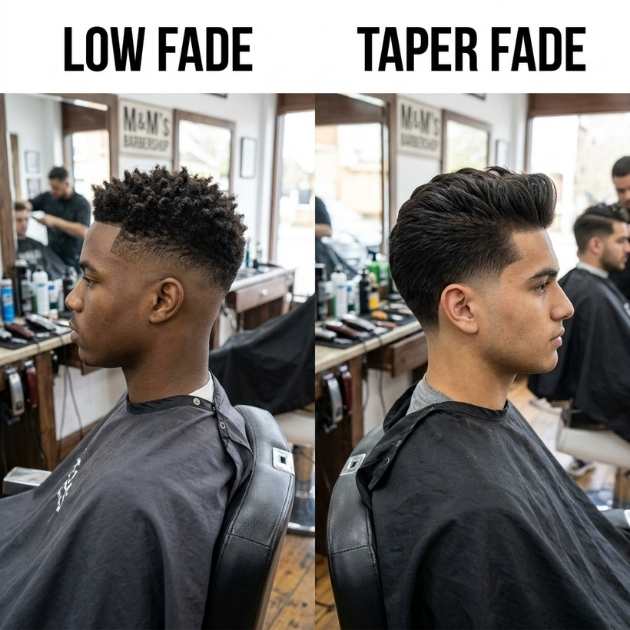
People use “taper” and “fade” interchangeably, but they’re not quite the same. A classic taper gradually shortens hair while leaving some length at the bottom. A true fade, especially a skin fade, blends all the way to bare skin.
A taper fade haircut usually lands in between. It keeps the shortest section focused on the sideburns and neckline. Less dramatic than a full fade, but sharper than a plain taper.
How to Ask Barber for Fade
Knowing how to ask for a fade haircut saves time and avoids mix-ups. “Fade” alone doesn’t tell your barber enough. Try being specific instead:
- “Give me a low taper fade with a clean neckline.”
- “I want a mid fade with some length on top.”
- “Give me a high fade with short sides.”
Mention your top style, how short you want the fade, and your ideal maintenance schedule. A quick chat before the clippers come out saves you from an unwanted result.
How Often Should a Fade Be Maintained?
A low fade usually looks sharp for three to four weeks. That gradual blend just grows out slower. A mid fade needs attention sooner, typically every two to three weeks.
High fades need the most upkeep — often every one to two weeks. That sharp contrast grows out fast. Between visits, keep the neckline clean and use light styling products.
Why Your Barber Matters for a Perfect Fade
A fade looks effortless once it’s done, but it takes real skill. Precise blending and steady clipper control matter. So does a solid read on your head shape.
Rusty Blade Barber offers classic and modern cuts, straight razor cleanup, and hot towel service. That level of detail is exactly what a clean fade needs. Call (619) 885-2150 or book online to get started.
Popular Fade Haircut Styles in 2026
A few pairings keep showing up in grooming coverage. The textured crop with a mid fade remains a go-to look. A messy quiff with a low taper fade stays popular for office-friendly styles.
On the bolder end, the buzz cut with a high fade is still dominating. The curly top with a taper fade keeps proving curls and clean sides aren’t mutually exclusive.
Final Thoughts
The Low Taper Fade vs Mid Fade vs High Fade debate really comes down to personal style. Each option in the Low Taper Fade vs Mid Fade vs High Fade lineup offers something different. Low fades stay subtle. Mid fades stay balanced. High fades stay bold.
Choosing between Low Taper Fade vs Mid Fade vs High Fade depends on your face shape and hair type. It also depends on how often you want a trim. A good barber makes the Low Taper Fade vs Mid Fade vs High Fade choice easy. Ask questions. Get expert advice. Then pick the fade that fits you best.

