The Low taper fade haircut for Black men has become one of the most requested styles in barbershops today. It looks clean without being loud, works with almost any texture, and sits perfectly next to a lined-up beard. Guys with coils, curls, waves, twists, or locs can all wear it without changing their natural pattern.
What sets this cut apart is how forgiving it is day to day. Because the fade starts low near the hairline, regrowth stays subtle, so touch-ups can wait longer between visits. It’s a sharp, low-maintenance choice that works just as well for the office as it does for the weekend.
What is a low taper fade haircut?
A low taper fade shortens the hair gradually as it moves toward the hairline, ears, and neckline. Unlike a high or mid fade, the blend starts low close to the natural hairline instead of climbing toward the temples. The top keeps most of its length and texture, while the sides taper into very short hair or a clean skin finish near the bottom. Because the transition sits low, the cut reads as subtle and natural.
How it differs from a regular fade
“Fade” gets used loosely. What sets a low taper apart is where the blend begins:
| Fade type | Starting point | Best for |
| Low taper fade | Near the hairline and ears | Subtle, natural, low-maintenance looks |
| Mid fade | Above the ears, mid-head | Balanced contrast with more edge |
| High fade | Near the top of the head | Bold, high-contrast styles |
A low taper removes the least hair, so it creates less contrast than a mid or high fade making it a forgiving choice if you’re new to fades or want something office-appropriate.
Why a low taper fade works with Black hair textures
Black hair spans a huge range, from tightly coiled 4C to looser 3A/3B curls, and the low taper doesn’t fight any of it. Since the fade stays close to the hairline, it leaves the top pattern untouched, making it a flexible base for waves, curls, an afro, twists, or locs.
There’s a practical upkeep benefit too:
- Less visible regrowth a low fade hides new growth better than a high fade, so you can stretch time between trims.
- Hairline protection staying low reduces the risk of clashing with your natural hairline, which can happen when a fade is pushed too high.
- Reads clearly on density thicker, fuller hair creates a sharp line between the top and sides even at a low fade height.
Related post: Ivan Cornejo Bio: Height, Age, Real Name, Parents & Net Worth (2026)
Best low taper fade styles for Black men
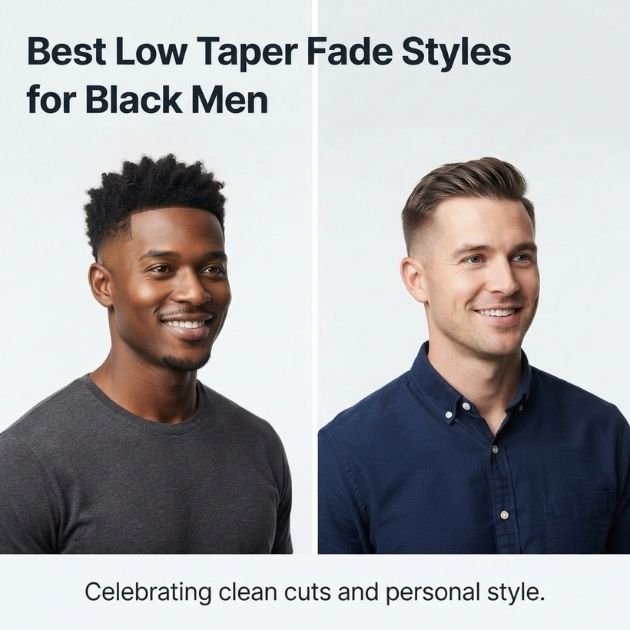
The base cut stays the same. What changes the look is how you style the top.
Low taper fade with waves
One of the most requested combos right now. The fade cleans up the sides while waves do the visual work on top. 180 waves flow in a half-circle and are the more realistic starting point for beginners. 360 waves wrap fully around the head, and a low taper is what lets the full rotation show clearly against the skin.
Low taper fade with curls or an afro
A mini afro keeps the top compact, around an inch, with the fade tidying the perimeter. A fuller, rounded afro lets the top grow out while the low taper keeps it from looking bulky. Looser curls benefit from a curl cream or defining gel to make the pattern pop against the fade.
Low taper fade with sponge curls, twists, or locs
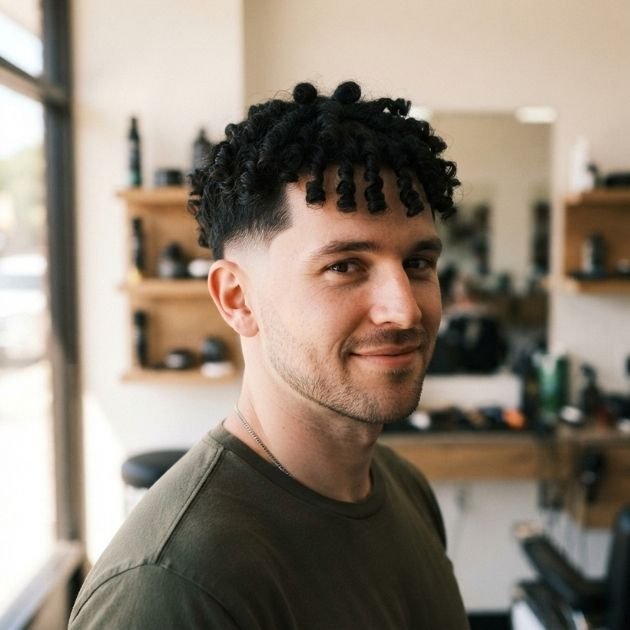
Sponge curls give uniform definition with minimal daily styling. Two-strand or comb twists add texture and dimension at short-to-medium length. Locs pair naturally with a low taper the fade keeps the sides clean while the locs stay the focal point.
Low taper fade with a buzz cut
The lowest-maintenance option available. Almost no daily styling is needed, and the taper keeps coilier hair from looking disconnected at the sides.
Low taper fade with a beard and line-up
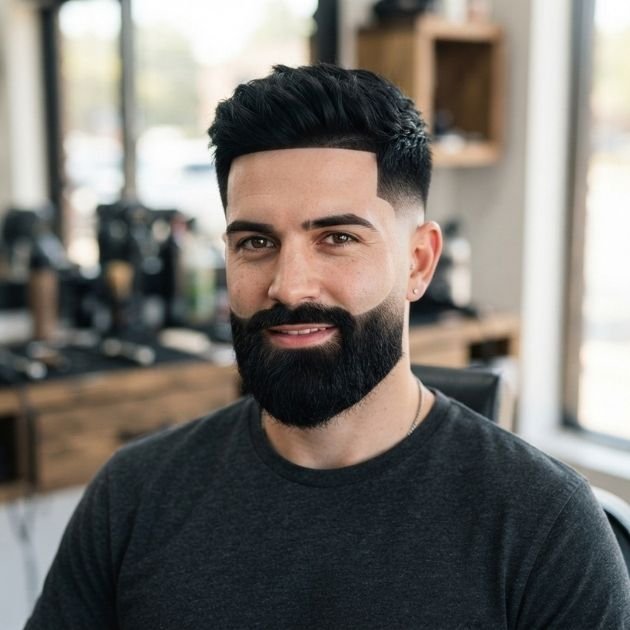
The sideburns should taper smoothly into the beard with no harsh gap, so the cut reads as one continuous shape. The line-up (edge-up) finishes the look with sharp trimmer work along the hairline and beard edges. One caution: repeatedly re-shaping the hairline instead of just maintaining it can push the line back over time.
Low taper vs mid taper vs high taper fade
| Fade type | Where it starts | Contrast level | Best for |
| Low taper | Near the hairline/ears | Low | Subtle, professional, everyday wear |
| Mid taper | Above the ears | Medium | Balanced, slightly bolder |
| High taper | Near the top of the head | High | Bold, statement styles |
A low taper looks the most natural because it removes the least hair which also makes it the safest pick for work, school, or conservative settings.
How to choose the right low taper fade for your face shape
- Round more height on top, like a fuller afro or rounded curls, balances the shape.
- Long a shorter top with less added height keeps proportions even.
- Square a slightly rounded top, like a mini afro or soft curls, softens strong angles.
- Oval the easiest match; suits almost anything from waves to a buzz cut.
What to ask your barber for a low taper fade
Say something specific: “I want a low taper fade, kept close to my hairline and ears not too high. Blend it into a natural line-up, and taper my beard into it too.” That sentence gives your barber the height, blend, and beard expectation in plain terms.
Guard lengths and fade height
A common starting point is a #2 or #3 guard on top, tapering to a #1 or 0.5 near the hairline, finished with a skin fade at the bottom if wanted. Say “low” out loud some barbers default to mid or high unless told otherwise.
Why a reference photo helps
Barber terminology drifts from shop to shop, so a photo removes the guesswork. Even with a different texture than yours, it still gives a clear target for shape and fade height.
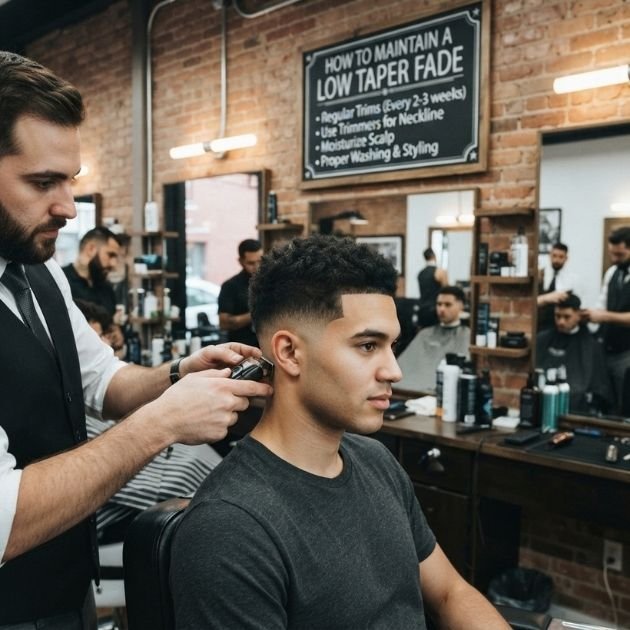
How to maintain a low taper fade
How often to get a touch-up
Most guys stretch a low taper to two or three weeks. If you keep a sharp hairline, tight beard blend, or 360 waves, a two-week schedule keeps things crisper.
Daily and weekly routine
- Brush or comb your pattern once or twice a day.
- Apply a light moisturizer or leave-in conditioner, especially in dry weather.
- Tie a durag or wave cap at night to protect the pattern.
- Shampoo weekly to clear buildup, then follow with a light conditioner or scalp oil.
Keeping the hairline fresh
Avoid shaving your own hairline between visits unless you’re confident with a trimmer. Only remove new growth if you touch it up at home don’t re-cut the line deeper each time, or you risk pushing it back.
Best products for a low taper fade on Black hair
- Waves: wave brush, light pomade or wave grease, durag for overnight compression.
- Curls: curl cream or defining gel, plus a leave-in conditioner underneath.
- Afro: lightweight moisturizer and a wide-tooth comb or afro pick.
- Beard blending: beard oil or balm, plus a trimmer with adjustable guards.
Common mistakes to avoid
- Wrong height say “low,” or some barbers default to mid or high.
- Over-lining full hairline re-shaping every visit can push it back over time.
- Ignoring texture a style that works on loose curls may not translate to tighter coils.
- Skipping maintenance brushing, moisturizing, and scalp care keep even a fresh cut looking sharp.
- Harsh products alcohol-based gels can dry out or irritate the scalp.
Low taper fade cost and appointment time
A standard low taper takes 30 to 45 minutes, longer with a line-up or beard blend. Fades sit toward the higher end of a shop’s pricing due to the blending work, and city shops typically cost more than smaller towns. Add-ons like a skin fade finish or beard sculpting push the total up. A 15–20% tip is standard.
Is a low taper fade good for work, school, and formal events?
Yes it’s one of the safest, most adaptable cuts around. It looks neat and groomed without being flashy, which suits school or a professional workplace. For formal events, a freshly touched-up fade with a sharp line-up and beard blend does the job without needing a different haircut.
Conclusion
The Low taper fade haircut for Black men has earned its place as one of the most requested cuts because it solves a real problem — sharp and intentional, without fighting your natural texture. Whether you wear waves, an afro, twists, locs, or a simple buzz cut, the low fade gives you a clean base that adapts to whatever’s on top, and it grows out more gracefully than higher fades.
Getting it right comes down to two things: telling your barber exactly what height and blend you want, and keeping up a simple routine at home. Nail those, and this cut stays sharp for weeks.

