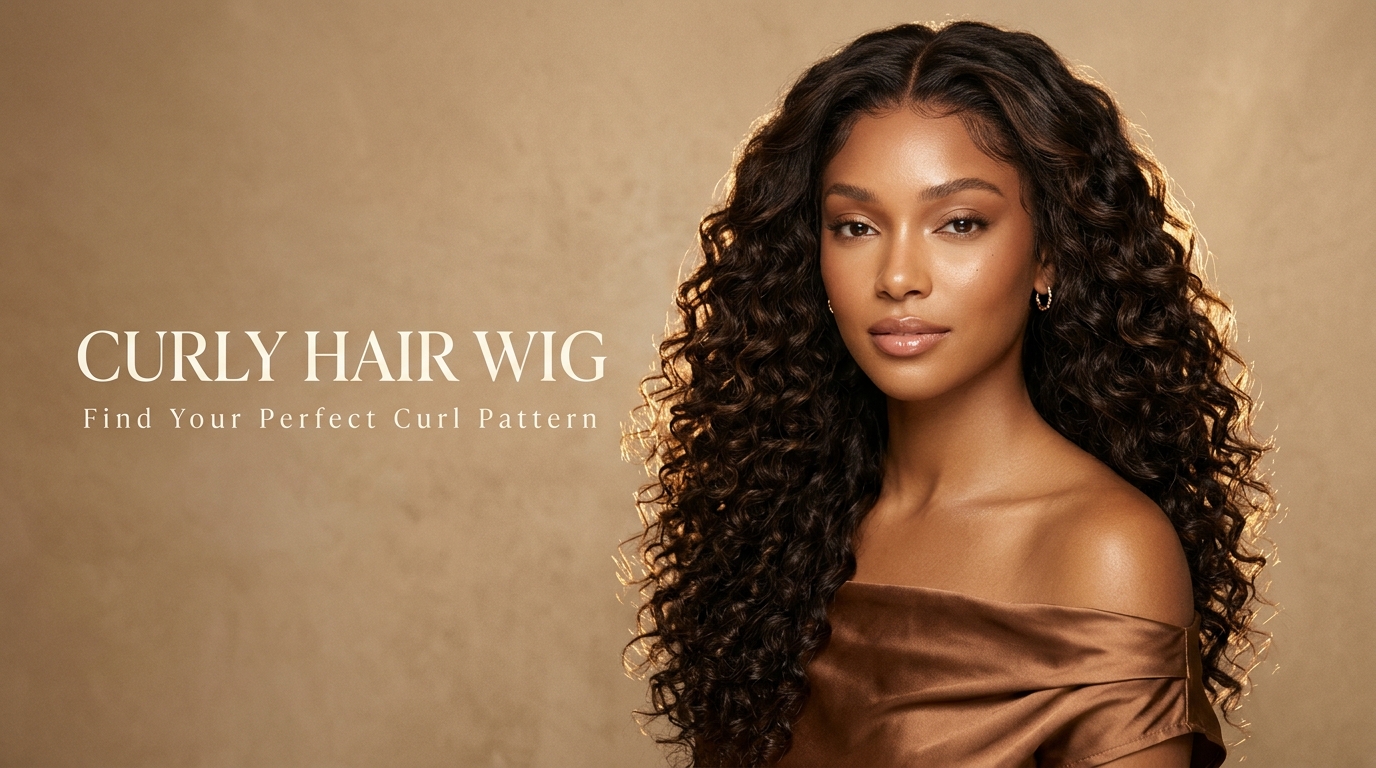
Curly Hair Wig: Patterns, True Lengths, and the Care System That Keeps Curls Alive
Curly hair wig buying punishes everyone who shops for it like a straight wig. The length on the box is not the length on your head.
The density that looks natural straight looks theatrical in curls, and the brush that maintains straight hair destroys this hair in one dry pass.
Three flips run the whole category. Length is measured stretched, pattern sets density, and detangling happens wet or not at all. Master those, and the pattern map, the prices, and the care system all fall into place.
Modern Hairstyle collects the wig buying guides in its hair wig guides. This guide is the curly chapter: patterns decoded, shrinkage made honest, and a care system built on the one substance curls actually run on, which is moisture.
Three Rules That Flip When Hair Curls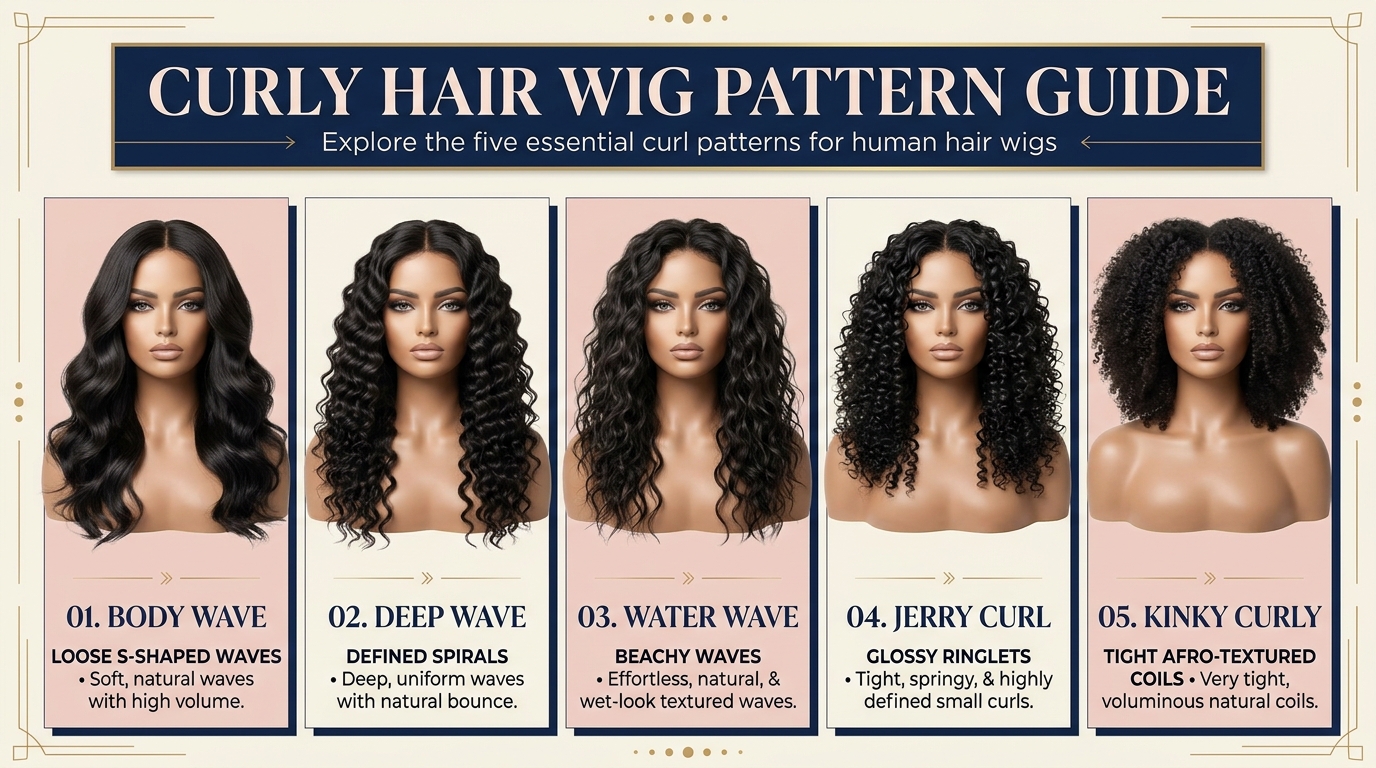
Curly hair breaks the rules that straight wig shopping teaches. Length, density, and detangling all work backwards in curls. The buyer who imports straight instincts buys the wrong unit three ways.
Rule one: the length number lies politely. Curly hair is measured pulled completely straight. The worn length is always shorter, by an amount the pattern decides.
Rule two: density reads fuller. A curly unit at 150 percent looks like a straight unit at far more. Overshooting density is the classic curly mistake.
Rule three: brushing is damage. Curls are detangled wet and conditioned, fingers first, or the clumps break into frizz. Every section that follows is one of these rules, unpacked.
The Pattern Map: From Loose Waves to Afro Kinky
A curl pattern is a shape with a name. The names vary by brand, but the families hold steady. Learn the families and every listing becomes readable.
The shared language is the Andre Walker typing system. Type 2 covers waves, type 3 covers curls, and type 4 covers coils. The curly weave types guide maps product names onto it.
|
Walker type |
Product names you will see |
Character |
|---|---|---|
|
Type 2 waves |
body wave, loose wave |
S shapes that lie flatter, minimal shrinkage |
|
Type 3 curls |
deep wave, water wave, jerry curl |
Spirals with real bounce and volume |
|
Type 4 coils |
kinky curly, afro kinky curly |
Tight coils built to mimic natural textured hair |
Loose family first: body wave and loose deep wave. These are the forgiving curls. They read as glamorous waves, detangle easily, and suit beginners best.
The middle family carries the market. Deep wave is a uniform, defined S pattern, polished and deliberate. Water wave is its looser, beachier cousin, with more separation between strands.
Jerry curl is the glossy spiral. Defined, wet look ringlets, mapped by the weave guides to around 3C textures. It reads as a salon finish rather than natural texture.
Kinky curly and afro kinky close the map. Tight, matte, coarse coils that grow outward as volume. They exist to mimic natural afro textured hair convincingly.
Regional names decorate the edges. Spanish curly, Italian curly, funmi curls, and pineapple wave appear across listings. Judge every one by the pictured pattern, not the poetry of the name.
The pattern also sets the workload. Looser patterns forgive skipped routines. Tighter patterns demand the full moisture discipline from the first wear.
The Shrinkage Rule: Buying Length That Lands Where You Want
Shrinkage is the gap between measured and worn length. A curly unit’s box length is its stretched length. Its life is lived at its visible length.
The curly hair length chart guide separates the two numbers cleanly. Resting length is what you see. Stretched length is what you bought. The pattern decides how far apart they sit.
|
Pattern family |
Visible length lost |
An 18 inch unit wears as |
|---|---|---|
|
Loose and body wave |
About 1 to 2 inches |
About 16 to 17 inches |
|
Deep wave and jerry curl |
About 2 to 4 inches |
About 14 to 15 inches |
|
Kinky curly and afro kinky |
About 4 to 6 inches |
About 12 to 14 inches |
Those inch bands come from the curly weave types guide shrinkage rule. The same vendor’s chart also speaks in percentages. Type 3 textures shrink roughly 30 to 50 percent.
Type 4 shrinkage reaches about 75 percent at the extreme. Twenty inches stretched might hang at only 8 to 10 inches dry. Print both frameworks; they describe different products.
The buying rule absorbs the math. Order 2 to 4 inches longer than the look you want. The tighter the pattern, the more inches the rule adds.
Worked example one: shoulder length in deep wave. You want curls grazing the shoulders, about 14 visible inches. Buy 18 inches and the shrinkage lands you there.
Worked example two: waist length in kinky curly. You want 20 visible inches of tight coils. Buy 26 to 28 inches, or the unit retires as a bob.
Measure your own unit the honest way. Lay it flat, pull one curl straight, and measure. Then let it spring back and measure again. Both numbers are true; only one is photographed.
Density in Curls: Why Less Reads More Natural
Density is how much hair the cap holds. Percentages run from about 130 to 250. In curls, every percentage point is amplified by the pattern’s shape.
The curly wigs human hair guide puts the popular curly band at 150 to 180 percent. The reasoning given is fullness without heaviness. That band suits loose and medium patterns best.
Calibrate by pattern, not by number alone. The same 180 percent is a glamorous deep wave. It is a very large kinky curly. Tight patterns need fewer points for the same presence.
|
Pattern |
Natural everyday |
Full and glamorous |
|---|---|---|
|
Body wave, loose curls |
130 to 150 percent |
150 to 180 percent |
|
Deep wave, water wave |
130 to 150 percent |
150 to 180 percent |
|
Jerry curl |
130 to 150 percent |
150 to 180 percent |
|
Kinky curly, afro kinky |
130 percent reads full |
150 percent is a statement |
The table above is this guide’s calibration, built from the band logic. When torn between two densities in curls, take the lower one. You can add volume with styling; you cannot subtract hair without shears.
Too much density also costs care time. More hair dries slower, tangles more at the nape, and drinks more product. The natural band is the low maintenance band too.
The Pattern Commitment: Human Hair or Synthetic
Every curly wig is a promise about its pattern. Human hair and synthetic fiber keep that promise differently. Choose by which failure mode you prefer.
Human hair curls are steam set. The pattern is processed into real hair. It returns after washing, and it can be restyled, straightened, and colored like your own.
The cost of that freedom is behavior. Human curls react to humidity, frizz when dry, and loosen under repeated heat. They are real hair, with real hair’s moods.
Synthetic curls are the fiber’s memory. The curly wig materials and care comparison states the advantage plainly. The pattern survives washing and damp weather, because the curl is the material, not a setting.
The cost there is a ceiling. Most synthetics refuse heat, shine a little too evenly, and retire in 3 to 6 months of regular use. The pattern never drops, but the fiber tires.
|
Question |
Human hair curly |
Synthetic curly |
|---|---|---|
|
Pattern behavior |
Returns after washing, loosens with heat over time |
Fixed permanently, can be distorted by heat |
|
Humidity |
Frizzes like real hair |
Holds pattern in damp weather |
|
Restyling |
Heat and color allowed |
Mostly heat refused, no color |
|
Lifespan |
1 to 3 years with care |
About 3 to 6 months of regular use |
|
Price |
About 90 to 350 dollars DTC, more at retail |
About 20 to 80 dollars |
Neither column is the better wig. One is a wardrobe piece you maintain for years. The other is a reliable look you replace on schedule.
Prices and Lanes: What Curly Wigs Actually Cost
Curly prices follow the material fork. Synthetic units from the big textured brands run 20 to 80 dollars. Human hair units from direct brands cluster around 90 to 350.
Retail sits above the direct lane. The curly lace front wig page lists its Remy curly lace front at 369 to 469 dollars. Salon and boutique pieces climb from there with cap work.
The bundle math underneath explains the floor. Sunber Hair’s curly extension cost guide prices curly bundles at about 45 to 115 dollars by texture and length. A full three bundle install totals roughly 140 to 330.
Tighter textures cost slightly more. The cost guide attributes that to the processing that holds definition. Kinky curly tops its table; water wave sits at the gentle end.
Length is the other multiplier. Every lane charges by the inch, and shrinkage means curly buyers purchase more inches per look. Budget the look, not the number.
The human hair wig guide on Modern Hairstyle prices the wider category. This site’s hair wig guides collect the wig buying guides together. Read the lanes here, then compare the general framework there.
Choosing Your Pattern: A Five Step Decision
Step one: name the head you want. A photo beats a paragraph. Save two or three looks, and read their pattern family before reading their prices.
Step two: match your own texture if you blend. Leave out and edges must meet the wig’s pattern honestly. Your 3B against a 4A unit will show at the seam.
Step three: run the shrinkage math. Decide the visible length first. Then add the pattern’s loss from the table, and let that set the purchased inches.
Step four: calibrate density downward. Pick from the natural band for your pattern. Glamour is a styling session away; excess hair is permanent.
Step five: set the material by your calendar. Daily wear for years argues human hair. A season, an event, or a first experiment argues synthetic’s easy promise.
Then check the return policy before checkout. Pattern disappointment is only visible on your head, in your light. The curly wigs human hair guide menu reads well; your mirror arbitrates.
Style the result like an outfit, not an object. The womens streetwear outfits show how texture carries a whole look. Curls are a silhouette decision, and the accessories guide finish it.
The Moisture System: Wash, Condition, Define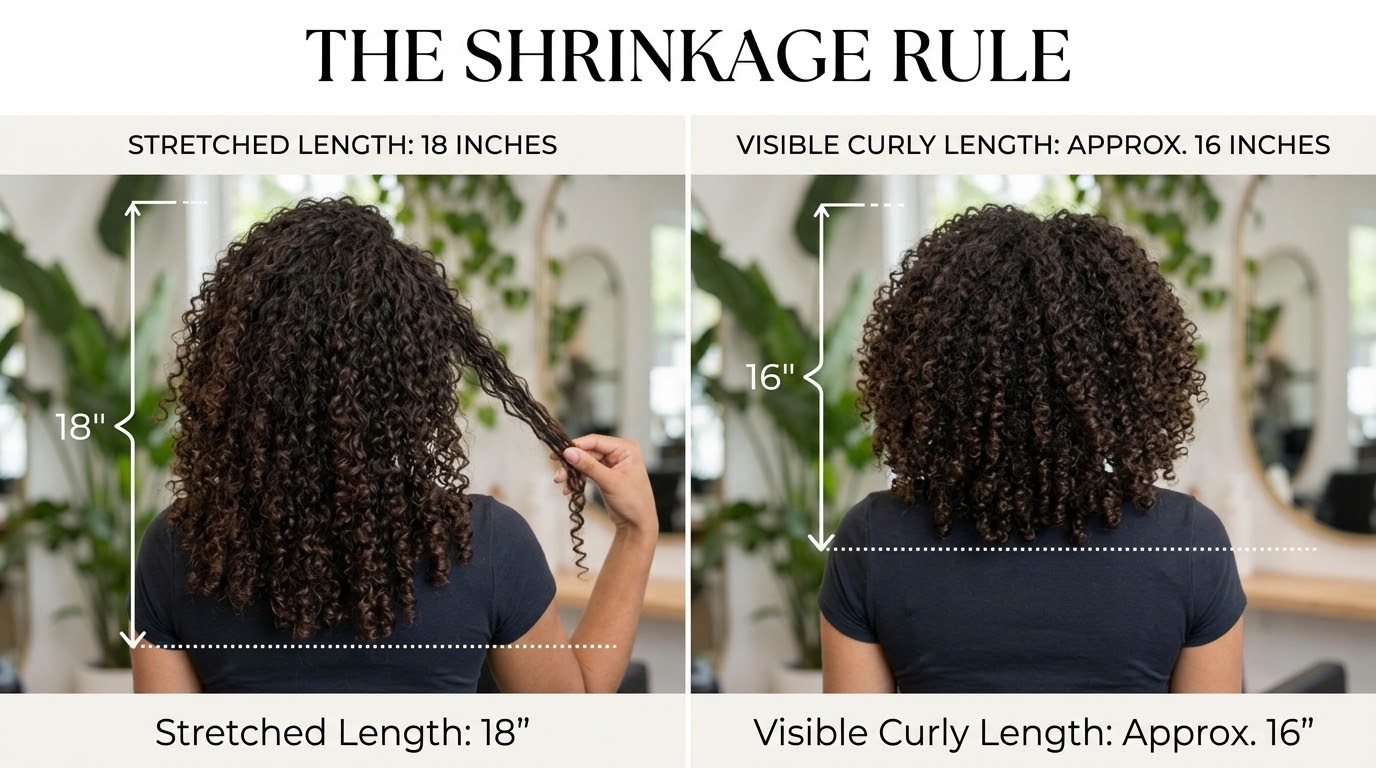
Curly hair is thirsty by structure. Every coil is a bend where moisture escapes and friction gathers. The care system is therefore a moisture system first.
Wash on the wear count, not the calendar. Guidance in this category runs from every 7 to 10 wears to every 1 to 2 weeks of wear. Build up ends the debate early.
The wash steps, in order:
- Detangle first, wet. Never wash a tangled curly unit. Work it out with water and conditioner before the shampoo touches it.
- Cleanse gently downward. Sulfate free shampoo, smoothed along the hair, never scrubbed in circles. Circles are how wash day manufactures tangles.
- Condition generously and wait. A rich conditioner with humectants such as glycerin or honey. Give it minutes, not seconds, then detangle inside the conditioner.
- Rinse cool and define. Cool water helps set the curl. Work leave in and curl cream or mousse through soaking wet hair, in sections.
- Scrunch and do not touch. Scrunch upward to form the clumps. Air dry on a stand, or diffuse on low, and keep hands off until fully dry.
The curly wig care FAQ lays out the same moisture sequence. Sulfate free cleansing, humectant conditioning, styler scrunched into damp hair. Independent sources converge on the system.
The product shelf stays short. Shampoo, conditioner, leave in, and one styler. Heavy oils and layered products build up, and build up strings curls out.
Detangling: The Wet Only Rule
The rule has no exceptions. A curly wig is detangled wet, conditioned, and unhurried, or it is not detangled at all. Dry detangling is not a shortcut; it is the damage.
The curly wig care FAQ answers the brush question with a flat no. Dry brushing disrupts the curl clumps and leads to puffiness. It names it one of the most common mistakes outright.
Why it works is mechanical. A dry curl clump is a formed structure. A brush tears the structure apart strand by strand, and the strands stand up as frizz afterward.
The correct sequence is short:
- Wet the hair fully. Soak it or mist it to dripping. Damp is not enough for a real tangle.
- Load it with conditioner. Slip is the whole game. The conditioner is the lubricant that lets knots slide apart.
- Fingers before tools. Find the tangles by hand and tease them loose. Fingers feel what a comb rips through.
- Comb from the ends. Wide tooth comb, small sections, ends first, roots last. Support the roots so hair is not pulled from the lace or wefts.
The nape needs detangling first. It tangles fastest, against collars and chair backs. Catch it at every wash before it felts into a mat.
The Refresh: Reviving Curls Between Washes
Most curly wig days are refresh days. The wash builds the curls. The refresh defends them against sleep, weather, and time.
The tool is a mist, not a routine. Water with a little leave in conditioner or curl activator, in a spray bottle. Lightly mist the frizziest sections only.
Scrunch the mist in and walk away. The clumps reform as the hair dries. Touching during drying is how refreshes fail, so the last step is hands off.
Refresh on the second morning, not the fifth. Small revivals beat rescues. A unit refreshed twice a week rarely needs heroic wash days.
Storage is half the refresh. A stand keeps the shape overnight. Satin stops the friction that cotton causes, which the care guides blame for frizz and lost definition.
Heat is the refresh of last resort. A diffuser on low revives flat sections quickly. Irons reset nothing in curls; they only spend the pattern.
Troubleshooting: Frizz, Matting, and Pattern Loss
Work the ladder from cause to cure. Curly problems have short cause lists. Diagnose before buying products, because most cures are technique, not shopping.
Frizz halo on a fresh unit. Cause: dryness or disturbance, usually both. Cure: the moisture system, a gel cast for hold, and no touching while drying.
Frizz that arrives with humidity. Cause: human hair behaving like human hair. Cure: anti humidity serum, a scarf in transit, and a mist refresh on arrival.
Matting at the nape. Cause: friction plus skipped detangling. Cure: wet rescue with conditioner and fingers, from the ends, patiently. Prevention is detangling the nape first at every wash.
Curls going stringy. Cause: product build up weighing the clumps apart. Cure: one clarifying wash, then return to the short product shelf.
Pattern loosening over months. Cause: accumulated heat on steam set hair. Cure: flexi rods or rollers on damp hair overnight reset the curl without irons.
The costume look. Cause: uniformity, excess density, and product gloss. Cure: separate the curls by hand after washing, thin if needed, and finish to a soft sheen, not a shine.
Cutting, Coloring, and Heat on Curls
Cut curly hair dry, in its pattern. Wet curls stretch and lie about length. Trim a little, check the fall, and repeat; point cutting suits curls better than blunt lines.
Thinning is a stylist’s job on dense units. Removing weight well means knowing where curls stack. A shaping appointment costs little and its mistakes are the ones you avoid.
Color gently or not at all. Deposit only color and glosses are the safe end on processed curls. Bleach can loosen the pattern and dry the hair severely.
Heat has a ceiling and a budget. The curly wig care FAQ advises keeping tools below about 180 degrees C / 356 F with protectant. Every straightening spends pattern; spend it rarely.
Synthetic heat is a label question. Heat friendly fibers accept low temperatures only. Standard synthetics can distort permanently under irons, pattern and all.
Storage, Sleep, and Day Two Curls
Store curls in open air on a stand. The shape sets as it dries and holds as it rests. A drawer crushes; a bag rubs; a stand preserves.
Never store a unit damp. Mildew and mustiness love a sealed wet wig. Full dry first, then the stand, in a cool spot out of direct sun.
Sleep protection is a scarf or a bonnet. For sewn or worn overnight units, gather the hair loosely on top. The pineapple method keeps curls off the pillow’s friction.
Day two curls are a storage achievement. The morning mist refresh only tops up what the night preserved. Wearers who master storage wash less and refresh more.
Rotate two units if you wear daily. Rest days dry the cap, relax the fibers, and double the calendar life of both. Rotation is the cheapest lifespan extension in the category.
Frequently Asked Questions
What is a curly hair wig?
A wig whose hair is set in a curl pattern, from loose waves through deep wave and water wave to kinky curly and afro textures.
The pattern is the product: it decides the look, the visible length, the density you need, and the care routine.
Curly wigs come in human hair and synthetic fiber, and in every cap construction the straight market uses.
How do I choose the right curl pattern?
Match the family to the head you want, using the typing system as the shared language.
Loose waves sit in type 2, deep wave and jerry curl around type 3, kinky and afro textures in type 4. Blending with your own hair means buying your own family.
Standing alone, choose by maintenance appetite: looser forgives more, tighter demands more moisture.
Why does my curly wig look shorter than the length I ordered?
Shrinkage.
Curly hair is measured pulled completely straight, so the box length is the stretched length.
Loose waves lose about 1 to 2 inches of visible length, deep wave and jerry curl 2 to 4, kinky and afro kinky 4 to 6.
The fix sits at purchase: order 2 to 4 inches longer than the look you want.
How much shrinkage should I expect by curl type?
Use bands, held loosely.
The inch rule: loose patterns lose 1 to 2 inches, medium curls 2 to 4, tight coils 4 to 6.
The percentage framework from the same vendor’s chart runs about 30 to 50 percent for type 3 and up to roughly 75 percent at the type 4 extreme.
Both are guides; your unit’s pattern decides.
What density should I get for a curly wig?
Less than straight instinct suggests, because curls occupy space.
The popular curly band in retailer guidance is 150 to 180 percent for fullness without heaviness, and 130 to 150 percent reads most natural for everyday wear.
In tight patterns, overshooting is the classic mistake.
When torn between two densities, take the lower one.
What is the difference between deep wave and water wave?
Definition and mood.
Deep wave is a uniform, defined S pattern flowing one direction, polished and deliberate.
**Water wave is looser and more irregular**, with a wetter, beachier finish and more separation.
Deep wave reads dressier; water wave blends more casually with natural textures.
Their shrinkage sits in the same medium band.
What is the difference between kinky curly and jerry curl?
Tightness, shine, and what they imitate.
Jerry curl is a glossy, defined spiral, the classic wet look curl, mapped around 3C textures.
**Kinky curly is a tighter, matte, coarser coil** built to mimic natural afro textured hair in the type 4 family.
Jerry curl falls as ringlets; kinky curly grows outward as volume.
Can I straighten a curly human hair wig?
Yes, with protectant and moderate heat, and the curls largely return after washing.
Two costs accumulate: repeated high heat loosens the pattern over time, and straightening a full curly unit is slow work.
Retail guidance suggests keeping tools below about 180 degrees C / 356 F.
Treat straightening as an occasional change, not a second job.
Will the curls come back after I wash a curly wig?
On human hair, yes.
Washing reactivates the set pattern, and scrunching with curl cream or mousse while damp brings the clumps back.
What washing cannot restore is pattern lost to heat damage.
On synthetics the pattern is the fiber’s memory and survives washing unless heat has distorted it.
Flat curls after washing usually mean build up; clarify first.
How do I detangle a curly wig without ruining the curls?
Wet, conditioned, and patient, never dry.
Mist or soak the wig, work conditioner through it, and detangle with fingers first, then a wide tooth comb, from the ends upward in sections.
Support the roots so hair is not pulled from the lace.
Do it on wash day or during a refresh, and let the curls reset as they dry.
How often should I wash a curly wig?
By wear and build up.
Curly guidance ranges from every 7 to 10 wears to about every 1 to 2 weeks of regular wear, with conditioner only co washes between shampoos.
Curly units carry more product than straight ones, so build up arrives sooner.
When curls stop clumping and start stringing, the wash is due.
How do I refresh curls between washes?
Mist, scrunch, leave alone.
Spray the frizziest sections with water plus a little leave in conditioner or curl activator, scrunch upward to reform the clumps, and let it air dry untouched.
Work section by section rather than soaking the unit.
A diffuser on low is the speed option when air drying is too slow.
How do I keep a curly wig from frizzing?
Attack the three causes.
Dryness: sulfate free washing, humectant conditioner, leave in on damp hair.
**Friction: satin or** silk storage and stand storage instead of bags and cotton.
Disturbance: no dry brushing and minimal touching while drying.
Humidity still swells human hair curls, so add serum and a scarf as the weather layer.
Why does my curly wig tangle at the nape?
The nape rubs collars, coats, and chair backs all day, in the zone with least airflow, and curly strands are shaped to catch each other.
Keep it conditioned, detangle it first at every wash before it mats, and lift hair off collars when you can.
Mats come out wet, with conditioner and fingers, from the ends, never torn dry.
Can I brush a curly wig?
Not dry, and not with a brush, if the curls matter.
Retailer guidance answers it as a flat no: dry brushing breaks the clumps into puff and frizz and stresses the hair.
Fingers and a wide tooth comb, on wet conditioned hair only, are the allowed tools.
Even then, the comb is the safer instrument.
What products should I use on a curly wig?
A short, moisture first shelf: sulfate free shampoo, a rich conditioner with humectants such as glycerin or honey, a leave in conditioner or detangling spray, and one styler, curl cream for softness or mousse for hold.
Avoid heavy oils that build up and alcohol heavy sprays that dry.
Restraint beats rescue on processed curls.
Human hair or synthetic curly wig: which is better?
They win different categories.
Synthetic holds its pattern permanently, even after washing and in damp weather, costs far less, asks little care, and lasts about 3 to 6 months of daily use.
**Human hair moves and reflects light like real hair**, takes heat and color, reacts to humidity like real hair too, and lasts 1 to 3 years at several times the price.
How much does a curly hair wig cost?
By lane.
Synthetic curly wigs from the big textured brands run about 20 to 80 dollars.
Human hair units from direct brands cluster around 90 to 350 dollars, with a retail Remy curly lace front in this guide’s research at 369 to 469.
Underneath, curly bundles price at roughly 45 to 115 dollars by texture, with a three bundle install near 140 to 330.
How long does a curly wig last?
Human hair curly units carry the wider category’s span: 1 to 3 years with care in comparison guides.
Synthetic curly wigs run about 3 to 6 months of regular use.
The curly specific killers are pattern loss from heat, matting from skipped detangling, and dryness from over washing, all routine failures rather than product failures.
Can I swim in a curly wig?
With standard wig cautions plus one curly bonus: the pattern hides water chaos better than straight hair.
Chlorine and salt still dry and tangle, so rinse before and after, wash the same day, and prefer an older unit.
Secure it well, because a wet curly wig is heavy.
Many wearers treat swim days as wash days and reset the curls after.
How do I store a curly wig?
On a stand or mannequin head, in a cool dry spot out of direct sun, so the curls keep their shape in open air.
For travel or sleep protection, wrap loosely in silk or satin to stop friction frizz.
Never store it damp, never crush it into a drawer, and never hang it by the lace.
Day two curls are a storage achievement.
What is the best curly wig for beginners?
A glueless or wear and go unit in a loose to medium pattern (body wave, loose deep wave, water wave), at 130 to 150 percent density and 14 to 18 inches.
Loose patterns forgive imperfect detangling, medium density avoids the too much hair shock, and glueless caps remove the lace learning curve.
Tight kinky patterns are the worst teachers.
Which curly wig looks most natural?
The one whose pattern and density agree with each other.
Naturalism comes from irregularity: a worked hairline with baby hairs, a pattern that is not machine uniform, and fullness that follows the pattern’s logic.
Overly perfect ringlets at very high density read as costume.
Mid density, slightly imperfect, and moisturized to a soft sheen wins.
Can I wear a curly wig every day?
Yes, and curls forgive daily wear: the pattern hides small sins and the refresh is faster than a restyle.
The daily discipline is small: stand at night, mist and scrunch the flat spots in the morning, hands out during the day.
Rotate two units if you can; rest days are the cheapest lifespan extension in the category.
How do I make a curly wig less puffy?
Puffiness is separated, dry curls, so the fix is clumping and patience.
Work leave in and curl cream through soaking wet hair in sections, scrunch, and let it dry completely untouched; most puff is created during drying.
If the unit is simply too dense, a stylist can thin and layer it.
Oils only make weighed down curls stringy, not sleek.
Can I cut or trim a curly wig myself?
Yes, with the curly rule: cut it dry, in its pattern, a little at a time, because wet curly hair stretches and lies about length.
Point cutting suits curls better than blunt lines.
End trims and light shaping are home work.
Full restyles and thinning a dense unit belong to a wig stylist; the mistakes they prevent are permanent.
Why do the curls on my wig look different from the photos?
Three normal reasons.
The listing photo is styled: freshly washed, product loaded, arranged curl by curl at the wig’s best hour.
Shipping compresses curls, so the unit needs a wash and refresh before judging.
And shrinkage means the model’s 22 inches fall where you expected 18.
The out of box state is not the product.
What length should I buy for a curly wig?
Decide the visible length, then add your pattern’s shrinkage: roughly 2 extra inches for loose waves, 3 to 4 for deep wave and jerry curl, 4 to 6 for kinky and afro textures.
Shoulder grazing in medium curls lands around 16 to 18 purchased inches; waist length in kinky curls can mean 26 to 28.
Between sizes, go longer; trims are easy.
Are curly wigs good for protective styling?
Yes, with the usual asterisk: the hair underneath rests while the wig takes the weather and friction, and curly volume hides edges and under hair preparation better than sleek styles.
Keep the under hair moisturized on a schedule and the cap comfortable, not tight.
Protection is only real when the routine underneath continues.
Which curly wig is best for hot and humid weather?
Shorter, looser, and, if the realism trade is acceptable, synthetic.
Short curly bobs keep hair off the neck and dry fast after a refresh.
Loose patterns swell less dramatically.
Synthetic’s pattern memory means humidity cannot frizz it the way human hair frizzes.
In human hair, plan serum, a scarf for transit, and a refresh on arrival.
Can I wear a curly wig with my own curly hair blended?
Yes; curls are the most forgiving blend in the wig world, because pattern irregularity hides seams.
U part and V part curly units exist for exactly this, and curly leave out needs no heat to match.
Match the pattern family honestly, keep both moisturized to the same sheen, and expect the blend to improve on day two.
Do curly wigs work for hair loss and chemo?
Yes, with one kindness: volume reads as abundance, so a mid density curly unit looks full even at an affordable tier.
Choose soft, well lined or monofilament caps for sensitive scalps and fits that need no adhesive.
For diagnosed loss, check the cranial prosthesis paperwork route from the wider wig category before buying; it can change the budget.
How do I revive an old curly wig that looks tired?
Most tired curly wigs are dirty and dry, not dead.
The sequence: a clarifying wash to strip build up, a long deep condition, a full wet detangle from the ends, then leave in and curl cream scrunched in and a complete air dry.
Trim frayed ends.
Heat loosened patterns can be reset with flexi rods on damp hair overnight.
What is a wet and wavy wig?
A human hair texture, usually in a deep or loose curl family, that changes character with water: worn dry it presents as soft waves, and wet it contracts into defined curls, returning as it dries.
Two looks from one unit is the pitch.
The wet look is a styling state, so expect to re wet to re curl.
Can I dye a curly human hair wig?
Yes, with doubled caution.
The pattern was set by processing, and bleach can loosen curl and dry the hair severely, because curly strands are already the driest structure.
Deposit only color and glosses are the gentle end; lifting toward blonde is a stylist job.
After any color, the moisture system becomes non negotiable.
Do curly wigs shed more than straight wigs?
They appear to.
Curly strands are longer than they look, so each shed hair is a full curl, and curls hold their shed hairs until detangling collects days of them at once.
True excess still signals rough detangling, dry brushing, weak construction, or chemical damage.
Under gentle wet detangling, shedding should settle to a few strands per session.
What face shapes suit curly wigs?
Curls add width and softness.
Oval faces take nearly every pattern and length.
**Round faces gain** from length and crown volume rather than cheek volume.
Square faces soften with mid length curls breaking up the jaw line.
Long faces gain from width, where shorter, bigger shapes shine.
Placement matters more than tightness; treat these as starting points.
How do I keep curls defined all day?
Definition is won at the wash and defended after.
Set the clumps on soaking wet hair with your styler, dry completely without touching, and keep hands and wind exposure low.
A light gel cast scrunched out once dry gives the longest hold in the guides.
Mid day, mist and scrunch the top layer.
Satin storage protects tomorrow’s definition tonight.
Are there curly wigs for men?
Yes, though the market is thinner and quieter.
Short curly units, curly toppers for thinning crowns, and natural textured pieces live in the men’s hair system world, usually sold as systems rather than wigs.
The pattern and care guidance here transfers directly; the differences are cap sizing, shorter stock lengths, and a realism bar favoring low density and matte finishes.
What is the difference between a curly wig and a wavy wig?
Where the pattern sits and how it behaves.
Wavy hair (type 2) forms S shapes that lie flatter; curly hair (type 3 and up) forms spirals and coils with real shrinkage, volume, and frizz behavior.
Wavy units need less length compensation and forgive brushing more.
Retail names blur the line (water wave is nearly a curl), so judge by the pictured pattern.
How do I stop my curly wig from looking like a costume?
Attack the three costume signals: uniformity, excess, and misplaced shine.
Choose patterns with natural irregularity and separate the curls by hand after the first wash.
Keep density in the believable band for the pattern.
Finish to a soft moisturized sheen, not a product gloss, and make the hairline effort match the lengths.
Costume is a styling state more than a price tier.
What should I check before buying a curly wig?
Five checks.
The pattern name and, if offered, a photo of it washed, not just styled.
The length stated as stretched, with your shrinkage math done before checkout.
The density against the pattern, lower than your straight instinct.
The fiber truth, human or synthetic, and the heat rules for it.
Finally, the return policy matters, because pattern disappointment shows only on your head.
Conclusion
Curly hair wig shopping rewards the buyer who thinks in patterns. Choose the family first, run the shrinkage math before checkout, calibrate density downward, and pick the material whose failure mode fits your life.
Then run the moisture system and defend the clumps. Wash gently, detangle wet, refresh with mist, store on satin and a stand. Curls are not high maintenance; they are differently maintained, and the difference is learnable in one wash day.
Start with the hair wig guides on Modern Hairstyle. The human hair wig guide there covers the wider category this piece specializes, and the curly chapter you just read supplies the pattern, length, and care judgment to buy it well.

Dilawar is a passionate writer and contributor at Modern Hairstyle (modernhaistyle.com), specializing in hairstyles, hair care, grooming, fashion, beauty, and lifestyle trends. He enjoys sharing practical tips, hairstyle inspiration, and easy-to-follow guides to help readers discover their personal style. His goal is to provide informative, engaging, and helpful content that keeps readers updated with the latest trends.