Pink Human Hair Wig: Pick the Shade Your Base Can Hold, Then Plan the Fade
Pink wig human hair shopping goes wrong predictably: buyers pick a shade from a photograph, then discover the colour behaves differently.
A pink wig in human hair is real hair lightened to a blonde base and deposit dyed pink. The base decides the shade.
Two systems decide the purchase: the shade map matches pink to base, undertone and setting, and the fade calendar plans the colour’s next move.
Pink is rented, not owned: a starting shade, a fade path and a refresh routine, as Modern Hai Style sets out below.
The Short Answer: What a Pink Human Hair Wig Is
A pink human hair wig is human hair, not synthetic fibre, lightened first and then deposit dyed in a shade such as pastel, bubblegum or hot pink.
Because the hair is real, it can be heat styled, washed and refreshed like natural hair. Because the colour sits on the surface, it washes out fast, so plan for the fade from day one.
The Two Rules of Pink
Rule one: the base decides the shade. Pastel needs a near white level 10 base; hot pink and magenta sit happily on level 7 to 8.
Rule two: the wash decides the calendar. Every wash removes deposit colour, so wash habits set the shade’s lifespan.
Decision One: The Base Decides the Shade
Under every pink wig sits a blonde base with a level, running from level 1 black to level 10, the palest blonde lightener can reach.
Pink dye is deposit only colour: it coats and stains rather than lifting. A deposit can only show what the base underneath allows.
Put pale pink on a yellow level 8 base and the result turns salmon and peach, not pastel. The base was too dark and too warm.
Pastel Needs a Level 10 Base
Pastel, baby pink and cotton candy are mostly white base with a whisper of pigment. Any yellow in the base shows straight through.
A true pastel needs hair lightened to level 10, near white, first. That lightening costs money and stresses hair, which is why real pastel costs more.
Hot Pink Forgives a Darker Base
Hot pink, neon pink and magenta carry far more pigment, and strong pigment covers base sins. These shades sit well on level 7 to 8 bases.
Fuchsia and magenta lean blue based, fighting warmth in a darker base.
The Shade System: Seven Pinks and the Base Each One Needs
|
Shade family |
Base level needed |
Fade speed |
Fades toward |
Best first buy |
|---|---|---|---|---|
|
Pastel, baby, cotton candy |
Level 10, near white |
Fastest |
Pale peach, then blonde |
Short lengths |
|
Bubblegum and sakura |
Level 9 to 10 |
Fast |
Soft peach pink |
Bobs and lobs |
|
Rose, blush and petal |
Level 8 to 9 |
Medium |
Warm rose gold |
Everyday wear |
|
Hot pink, neon, Barbie pink |
Level 7 to 8 |
Medium slow |
Bright coral pink |
Festivals, photos |
|
Magenta and fuchsia |
Level 7 to 8 |
Slowest of the pinks |
Muted berry pink |
Long lengths |
|
Ombre and balayage pink |
Dark root, level 8+ lengths |
Medium |
Softens into the gradient |
Fade fearing beginners |
|
Pink highlights on dark base |
Dark base, pink pieces level 9+ |
Medium |
Pink pieces soften first |
No full bleach base |
The pattern: the paler the pink, the paler the base must be, and the sooner it leaves.
The Shade Map: Shade by Base, Undertone and Setting
Three filters decide it: base level sets the possible, skin undertone sets the flattering, and setting sets how loud the shade may be.
|
Shade family |
Base needed |
Cool undertone |
Warm undertone |
Workplace |
Everyday |
Events and cosplay |
|---|---|---|---|---|---|---|
|
Pastel and baby pink |
Level 10 |
Strong fit |
Can read ashy |
Rarely |
Soft statement |
Dreamy |
|
Bubblegum and sakura |
Level 9 to 10 |
Strong fit |
Fair fit |
Bold |
Wearable |
Character accurate |
|
Rose, blush, petal |
Level 8 to 9 |
Fair fit |
Strong fit |
Dress code decides |
Natural everyday pink |
Soft glam |
|
Dusty and muted pink |
Level 9 to 10 |
Fair fit |
Neutral ground |
Best office pink |
Calm |
Understated |
|
Rose gold |
Level 9 to 10 |
Fair fit |
Strong fit |
Passes as tint |
Lowest commitment |
Warm, glowing |
|
Hot pink and neon |
Level 7 to 8 |
Strong fit |
Strong fit |
Statement only |
Bold signature |
Festival ready |
|
Magenta and fuchsia |
Level 7 to 8 |
Strongest fit |
Fair fit |
Statement only |
Longest lasting |
Vivid |
|
Highlights or peekaboo on dark base |
Dark base, pieces level 9+ |
By piece shade |
Fits by piece shade |
Conservative route |
Has an off switch |
Hidden reveal |
Read the matrix by finding your row twice, once for undertone, once for setting. Where both agree, that is your shade family.
Cool Undertones: The Blue Based Pinks
Cool undertones usually suit blue based pinks: magenta, fuchsia, orchid and blue leaning bubblegum echo coolness instead of fighting it.
The Alibaba SmartBuy guide prints the same split from the other side for cool toned skin. Treat every chart as guidance, not law: a shade strand held to your face in daylight beats any matrix.
Warm Undertones: The Peach Leaning Pinks
Warm undertones usually suit peach leaning pinks: rose, coral pink, salmon pink and warm rose gold.
The SmartBuy strand agrees in structure for olive and deeper complexions. Dusty and muted pinks are the neutral ground when undertone is hard to read.
The Setting Decides the Saturation: Work, Everyday, Events
A conservative workplace rewards low contrast pink: dusty pink, muted rose, or pink placed where it can hide. A natural shade like a brown hair wig is the calm exit if pink proves a phase.
Soul Lady lists pink highlights on a dark base under code P1B/PK; its peekaboo piece hides colour under the top layer.
Everyday wear sits in the middle: rose, bubblegum and dark rooted ombre read as a colour choice, not a costume. Events and cosplay invert the logic: saturation is the point.
Found your row? Shop that shade family first, in the base it demands, and let the fade calendar plan the rest.
The Fade: What Happens After You Buy
Pink belongs to the red pigment family, whose molecules are large, loosely held and quick to wash out. A wig has no regrowth to disguise the loss, so fade is the whole colour story.
The Fade Order, Fastest to Slowest
Colourists put the family in a consistent order. Pastel fades first, then baby and bubblegum, then rose, then hot pink, with magenta holding longest.
Stylist guidance puts noticeable fade at roughly two to six weeks of regular wear and washing; one marketplace guide instead claims six to ten washes, a single low authority strand, never merged.
The working rule: buy one shade deeper than your target, and let the wig pass through your shade as it fades.
The Fade Calendar: Week by Week, Wash by Wash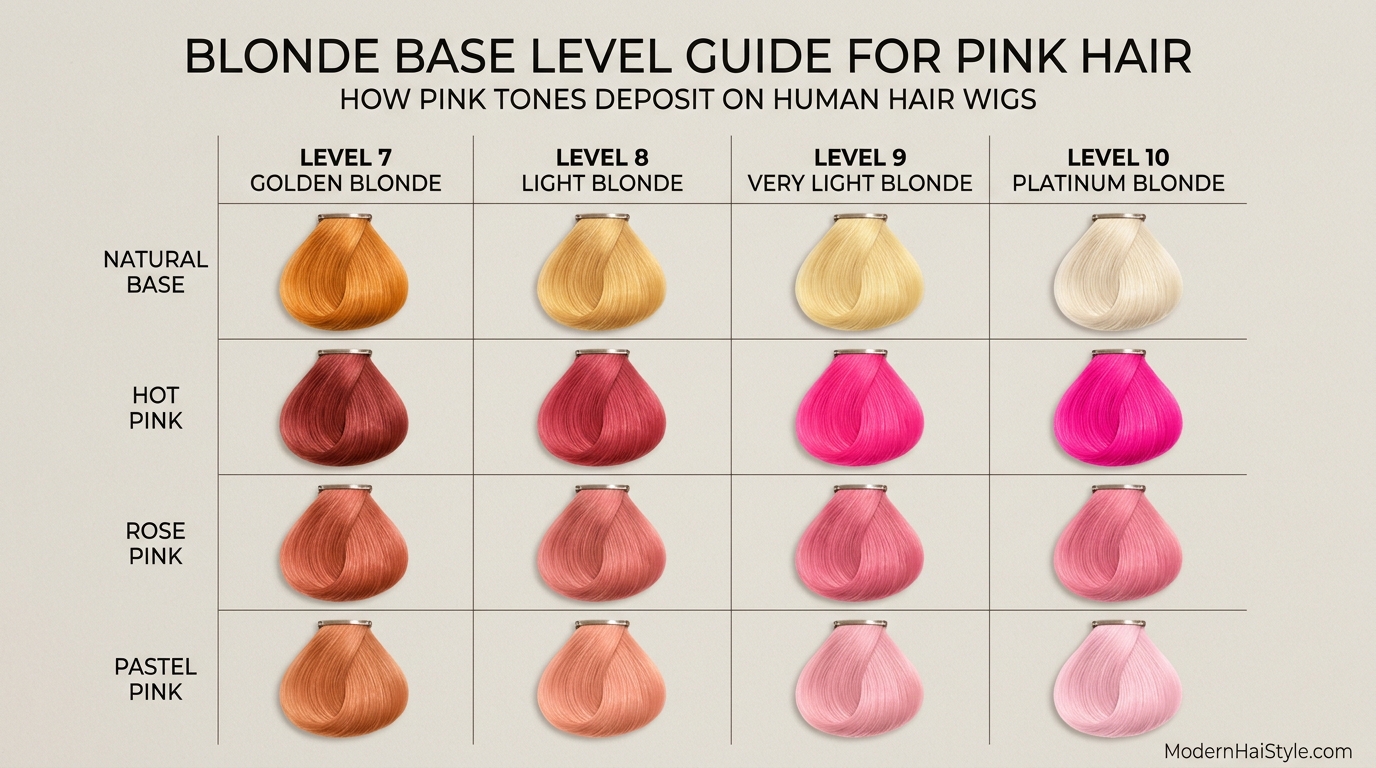
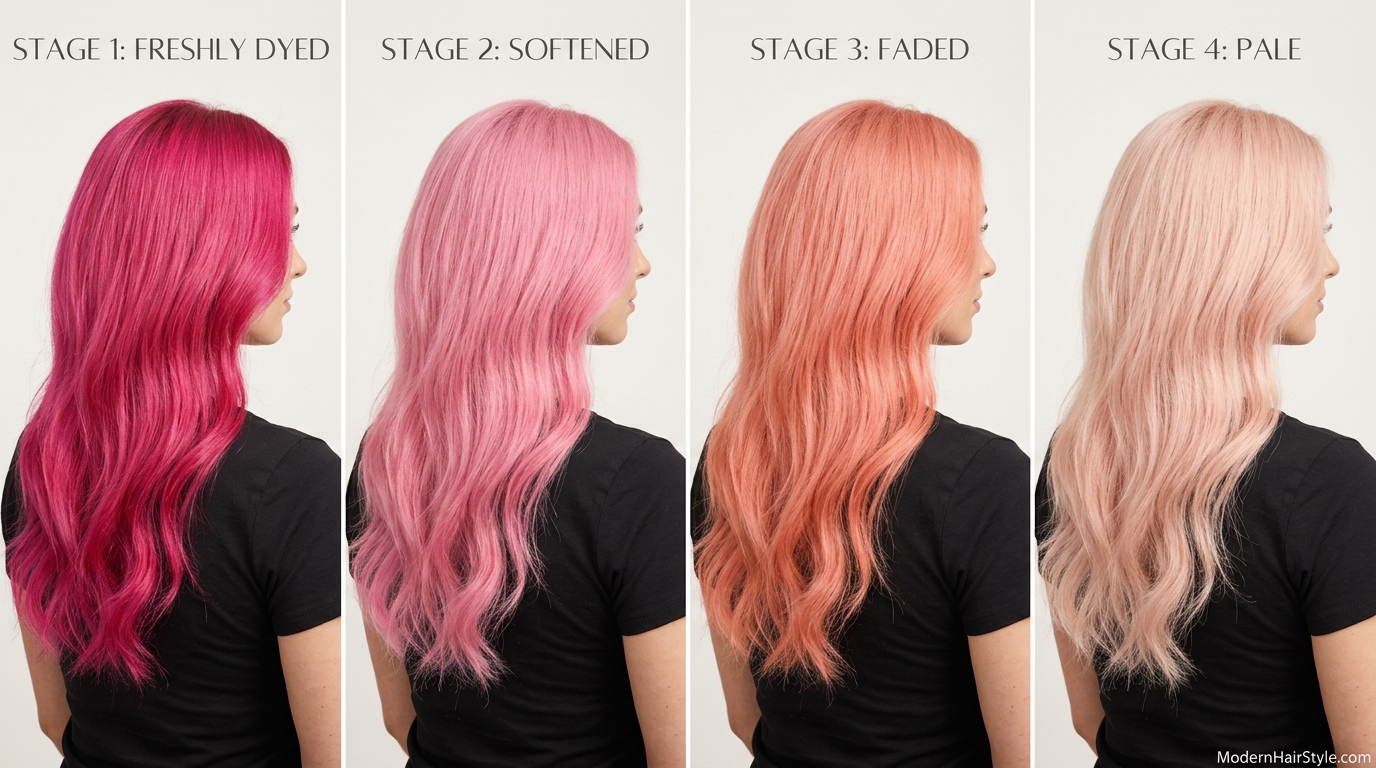
The fade order tells you which shade leaves first. The fade calendar tells you what you will see, stage by stage, and which refresh belongs there.
Stages run in washes as well as weeks, because washing spends the pigment.
|
Stage |
What you see |
The refresh that fits |
Cost strand |
|---|---|---|---|
|
Stage one, first washes |
Softening at ends and hairline |
None yet; condition only |
No spend |
|
Stage two, the softening |
Shade drops one visible step |
Colour depositing conditioner |
One tub, several refreshes |
|
Stage three, peach and patchy |
Peach cast, uneven patches |
Gloss, or deposit dye on worst zones |
Salon gloss strand or one dye pot |
|
Stage four, the end states |
Faded pastel, wash out, or patchy |
Keep it, refresh it, re-dye once, or retire it |
By condition, not colour |
Stage One: The First Washes
On the stylist strands, the first visible change is softness at the ends and hairline, where friction concentrates.
Pastel moves first inside this stage; magenta barely moves.
Stage Two: The Softening
Stage two is where the shade drops one visible step: pastel turns whisper pale, bubblegum turns soft peach pink.
This is the depositing conditioner stage, and the trigger is visual, not calendrical. Refresh when the drop shows.
Stage Three: Peach and Patchy
The destination strands agree: pink drifts toward peach, then pale orange or blondish wash out, as red pigment leaves first.
The Alibaba insights strand and the Allure Philippines artist strand both describe visible, uneven fade, printed unmerged as separate witnesses.
Ends and front fade ahead of the back, so stage three reads as a gradient nobody ordered. A gloss evens tone at this stage; it cannot restore saturation.
Stage Four: The End States
Every pink wig arrives at one of three end states. Naming them at purchase separates a plan from a disappointment.
The three: a pleasing faded pastel some wearers keep, a blondish wash out that takes a gloss or deposit refresh, or a unit ended by condition, not colour.
Plan the end state at purchase, not at week eight.
The Refresh Ladder: Deposit, Gloss, Re-Dye
Three refresh tools exist, and they are a ladder, not a menu: each rung costs more and restores more.
|
Refresh option |
What it does |
How long it holds |
Best stage |
Main limit |
|---|---|---|---|---|
|
Colour depositing conditioner |
Adds surface pigment while conditioning |
A few washes |
Stage two |
Cannot fix patchiness or dryness |
|
Colour gloss |
Deepens and evens tone, adds shine |
A limited run of washes |
Stage three |
Cannot lift wash out back to vivid |
|
Full re-dye |
Repeats the original deposit dye process |
A new fade cycle |
Stage four |
Sits on already processed hair |
The Honest Re-Dye Position
No fetched source prints a verified number of safe re-dyes, so none is stated here as fact.
Every re-dye sits on hair already bleached and deposit dyed once, and dye guides warn processed units take colour unpredictably.
Treat one careful re-dye as the planning assumption, strand test first, ends first.
Decision Two: The Wash Decides How Long
You cannot stop a deposit colour leaving. You can only slow the exit, and that control sits in your wash routine.
Every wash opens the cuticle and lets pigment escape: wash less, wash cold, wash gentle is the entire system.
Wash Rules for a Deposited Colour
Wash in cold or lukewarm water only. Hot water opens the cuticle wide, and one hot wash can take pastel down a full shade.
Use a sulfate free, colour safe shampoo at the cap and roots. Lengths need rinsing and conditioning more than scrubbing.
Wash a daily wear unit roughly every seven to ten wears, as the fuller how to wash a human hair wig routine sets out.
Purple shampoo has one narrow job: toning yellow out of a peachy pastel base. Overuse pushes blue based pinks toward lavender.
Heat, sun and chlorine all accelerate fade: moderate tool temperatures, a hat or UV spray outdoors, and a rinse after swimming. Store the unit on a wig stand out of sunlight.
The Maintenance Schedule in One Table
|
Task |
Everyday wear |
Occasional wear |
|---|---|---|
|
Detangle with a wide tooth comb |
Before and after each wear |
Before and after each wear |
|
Wash with sulfate free shampoo |
Every 7 to 10 wears |
After 6 to 8 wears or monthly |
|
Deep condition |
Every second wash |
Every second wash |
|
Colour depositing refresh |
Every 2 to 3 washes |
Before an event if faded |
|
Gloss or full re-dye |
When refresh no longer evens out |
Rarely needed |
|
Stand storage out of sunlight |
Every night |
Always |
Ombre, Highlights and Roots: Fade Camouflage as a System
On a pink wig, dark roots and ombre are engineering: the eye reads the dark base as constant while pink lengths fade underneath.
PWigs built its pink range on exactly this, listing an ombre dark root bob across a 106.67 to 382.22 dollar ladder.
Ombre Versus Highlights Versus Full Pink
Ombre is a gradient: dark roots melt into pink lengths, and the fade softens the gradient.
Highlights are placed pieces. Soul Lady sells pink highlights on a dark base under code P1B/PK, plus a peekaboo variant.
Highlights spend less pink, fade less visibly, and suit conservative settings. Full pink is the boldest read and the highest maintenance.
Two Routes In: Buy It Pink or Dye a 613 Pink
Every pink wig starts as blonde hair: buy it after the maker coloured it, or buy blonde and colour it yourself.
The DIY base is the famous 613 blonde wig, named for its pale platinum colour code: at about level 10, a blank canvas for deposits.
Route One: Pre-Coloured Pink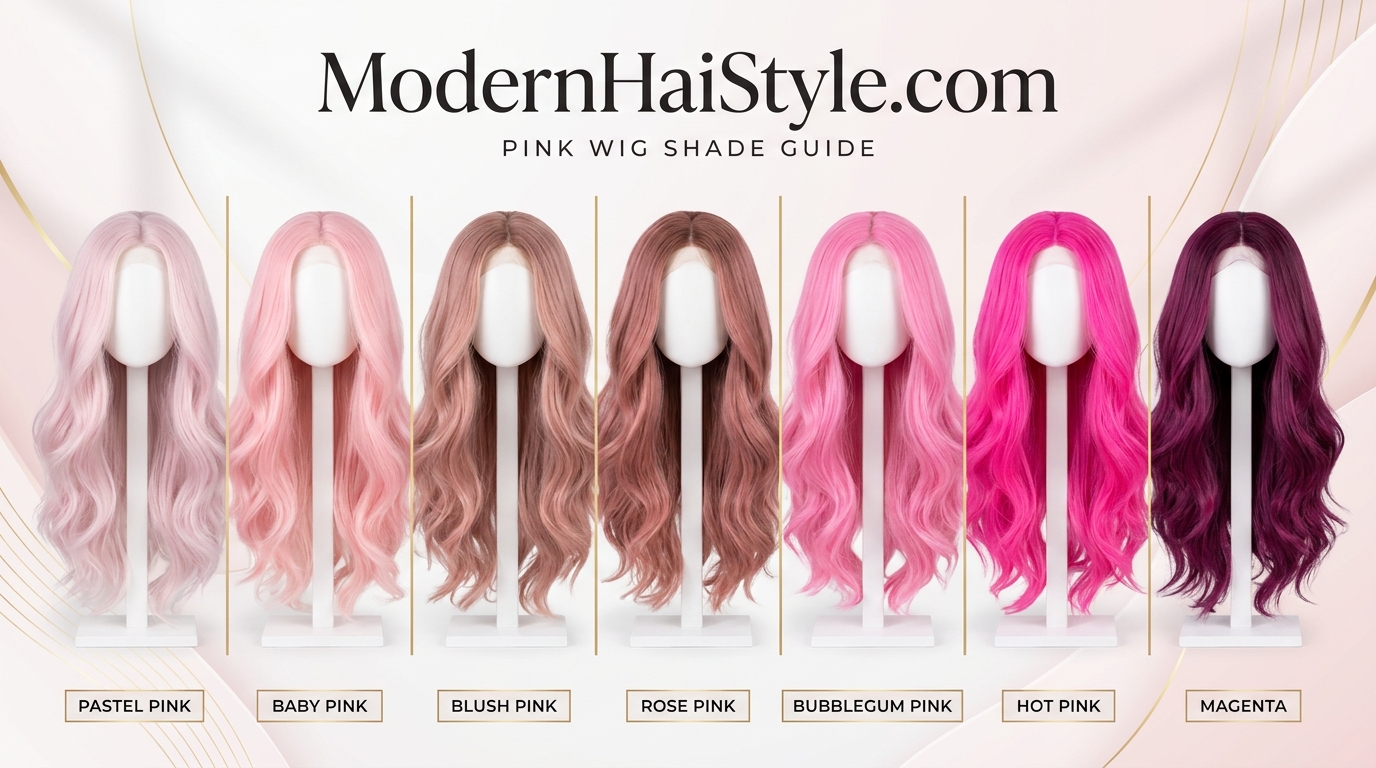
Buying pre-coloured means the factory did the chemistry. You choose shade, cap, density and length from a grid like the Luvme pink wig collection, and it arrives ready.
The catch is trust: you cannot see the base or true shade until it arrives, and shade names are not standardised between sellers.
Route Two: Dyeing a 613 Blonde Wig Pink
Dyeing it yourself flips the control: the exact dye, dilution and placement, solid pink, ombre, split dye or highlights, matched to a reference photo.
The method is gentle: a strand test first, semi permanent deposit dye, often diluted with conditioner in the watercolor method, worked through in sections.
Protect the lace: pink dye stains lace and knots, and a stained hairline announces the wig.
The Route Comparison Table
|
Factor |
Buy pre-coloured pink |
Dye a 613 wig pink yourself |
|---|---|---|
|
Starting cost |
Shade and cap set the price; bobs from budget strands |
613 unit plus dye and tools; often similar total |
|
Shade control |
Seller’s shade name and photos |
Exact dye and dilution in your hands |
|
Skill needed |
None beyond choosing well |
Strand test, sectioning, lace protection |
|
Risk |
Colour differs from photos; base hidden |
Uneven colour, lace staining, over processing |
|
Reversibility |
Fades out; re-dye possible |
Fades out; re-dye or new colour possible |
|
Returns |
Unworn units sometimes returnable |
A dyed wig is effectively non returnable |
|
Best for |
Beginners, everyday wear, gifts |
Cosplay accuracy, custom shades, creators |
Neither route escapes the fade. The DIY advantage: you own the refresh, in the exact shade, from the same dye pot.
Pick your route, then pick your shade family inside it. The pre-coloured advantage is zero chemistry risk, refreshed by the ladder above.
Human Hair vs Synthetic Pink: The Honest Table
Synthetic pink wigs are far cheaper. Human hair wins on realism and restyling; synthetic wins on price and colour that never fades.
|
Factor |
Pink human hair wig |
Synthetic pink wig |
|---|---|---|
|
Price shape |
Higher; bobs from budget strands, long units climb fast |
Low; costume units from very small money |
|
Colour life |
Deposit fades over weeks; refreshable |
Colour is the fibre itself; does not fade |
|
Heat styling |
Yes, with moderate heat and protectant |
Only heat friendly fibres, within limits |
|
Look and shine |
Natural movement, soft shine |
Can read plasticky, especially in pale pink |
|
Lifespan with care |
Months of regular wear, refresh dependent |
Shorter with daily wear; friction frizz builds |
|
Restyle and re-dye |
Re-dye and refresh at home |
Cannot be dyed with normal hair dye |
|
Best use |
Daily wear, realism, long term piece |
One event, cosplay photos, testing a shade |
A smart pattern: test the shade in synthetic first, then commit human hair money to the shade that survives.
Choosing Your Wig: Cap, Density, Length and Texture
Once shade and route are settled, construction choices decide comfort, realism and price more than another half inch of length. Straight textures show solid pink cleanly; curly textures hide patchy fade better.
Cap Types, From Most Hairline to Least Fuss
A lace front wig gives a natural hairline you can part and pull back. A 13×4 or 13×6 frontal gives the most freedom and highest price.
A closure wig uses a smaller lace piece, parts fewer ways, and costs less. For one parting, a closure does the whole job.
A glueless wig human hair unit skips adhesive entirely, using pre cut lace, an elastic band and combs. The two minute install wins for beginners.
Headband and U part wigs trade the hairline for simplicity. A pink upart wig human hair unit blends with your own leave out.
Brand checks matter here: the cluster’s wiggins hair glueless wig review shows how to verify a glueless claim.
Density Without the Marketing
Density percentages describe how much hair is on the cap. Around 130 to 150 percent reads natural, 180 percent reads glamorous, 200 percent plus is a statement.
Length Is Measured Stretched
Wig length is measured with the hair pulled straight. Curly textures hang about two to two and a half inches shorter than the label.
Wearers with long natural hair underneath should read how to wear a wig with long hair before choosing a cap, because flattening changes the fit.
Texture and Use Case Chooser
|
Use case |
Shade advice |
Construction advice |
|---|---|---|
|
Everyday wear |
Rose, hot pink or ombre with dark roots |
Glueless or closure, 150 percent, bob to 16 inch |
|
Cosplay and anime |
Exact character shade, often DIY dyed |
Any cap; match the reference, synthetic test first |
|
Festivals and Pride |
Hot pink, neon or magenta, buy deeper |
Secure fit, combs and band; expect sun fade |
|
Special occasions and photos |
Pastel or bubblegum, freshly refreshed |
Lace front for the hairline; style once, wear gently |
|
Hair loss coverage |
Any shade that feels like you |
Soft, breathable cap; no glue needed |
What a Pink Human Hair Wig Costs: Dated Price Strands
There is no single pink wig price; any page quoting one average is inventing it. These are dated strands from named retailers, checked November 2026, never merged.
|
Retailer strand, November 2026 |
Product shape |
Price strand |
|---|---|---|
|
UNice, via price comparison listings |
Pink bob, 13×4 lace front |
49 dollars against a 139 dollar list price |
|
Lolly Hair product page |
Pink bob, Brazilian hair, 13×4 or 13×1, 8 to 14 inch |
88.24 dollars against a 160.16 dollar list |
|
Soul Lady product page |
Pink highlight bob, dark base P1B/PK, 180 percent, 8 inch, glueless |
89 dollars against a 239 dollar list |
|
PWigs product page |
Pink ombre dark root bob, Peruvian hair, 150 to 180 percent |
106.67 to 382.22 dollars across lengths and caps |
|
West Kiss product page |
Rose pink glueless 5×5 closure unit |
154.99 dollars against a 235.28 dollar list |
|
Luvme pink collection |
Pink variants across caps and lengths |
Variants observed at 193.60 to 223.60 dollars, configurations unnamed |
The Grade Labels Are Marketing, Not Measurement
Listings headline grades like 10A and 12A, but no standards body certifies them and no US standard exists for wig grades or density.
Treat virgin, Remy and raw as descriptions to verify by behaviour: quality shows in how the unit washes and holds a refresh.
The Total 90-Day Cost of Pink
The wig is not the whole purchase: pink ownership adds refresh products and care basics across the first ninety days.
The example below is exactly that: one example, clearly labelled, not an average. It assumes a mid range pre-coloured bob, everyday wear, and home refreshes.
|
90-day example item |
Example cost |
|---|---|
|
Pre-coloured pink bob, mid strand |
89 dollars |
|
Sulfate free shampoo and conditioner set |
18 dollars |
|
Colour depositing conditioner, two tubs |
24 dollars |
|
Wig stand, wide tooth comb, satin cover |
15 dollars |
|
Heat protectant and detangling spray |
12 dollars |
|
Example 90-day total |
158 dollars |
The lesson is the ratio: upkeep adds roughly a third to a half on top of a budget unit across its first season.
Buying Risks: Read This Section Before Checkout
Screen Colour Is Not Delivered Colour
Pink is the colour screens lie about most: pale shades shift, and sellers photograph under bright studio light. Expect the delivered unit half a shade deeper or warmer.
Sellers who show the unit in natural light and on a head show the honest version.
Dyed and Worn Wigs Are Effectively Non Returnable
A wig that has been dyed, cut or worn is generally final sale, for hygiene. The shade decision, and the re-dye decision, are one way doors.
Confirm the return terms in writing, keep the unit unworn until the shade is checked in daylight, and never dye a unit you might send back.
Marketplace Listings Can Contradict Themselves
Marketplace copy is often generated, not written: the first edition found a listing titled synthetic whose own spec table claimed human virgin hair.
Care and Storage: The Full Routine in Order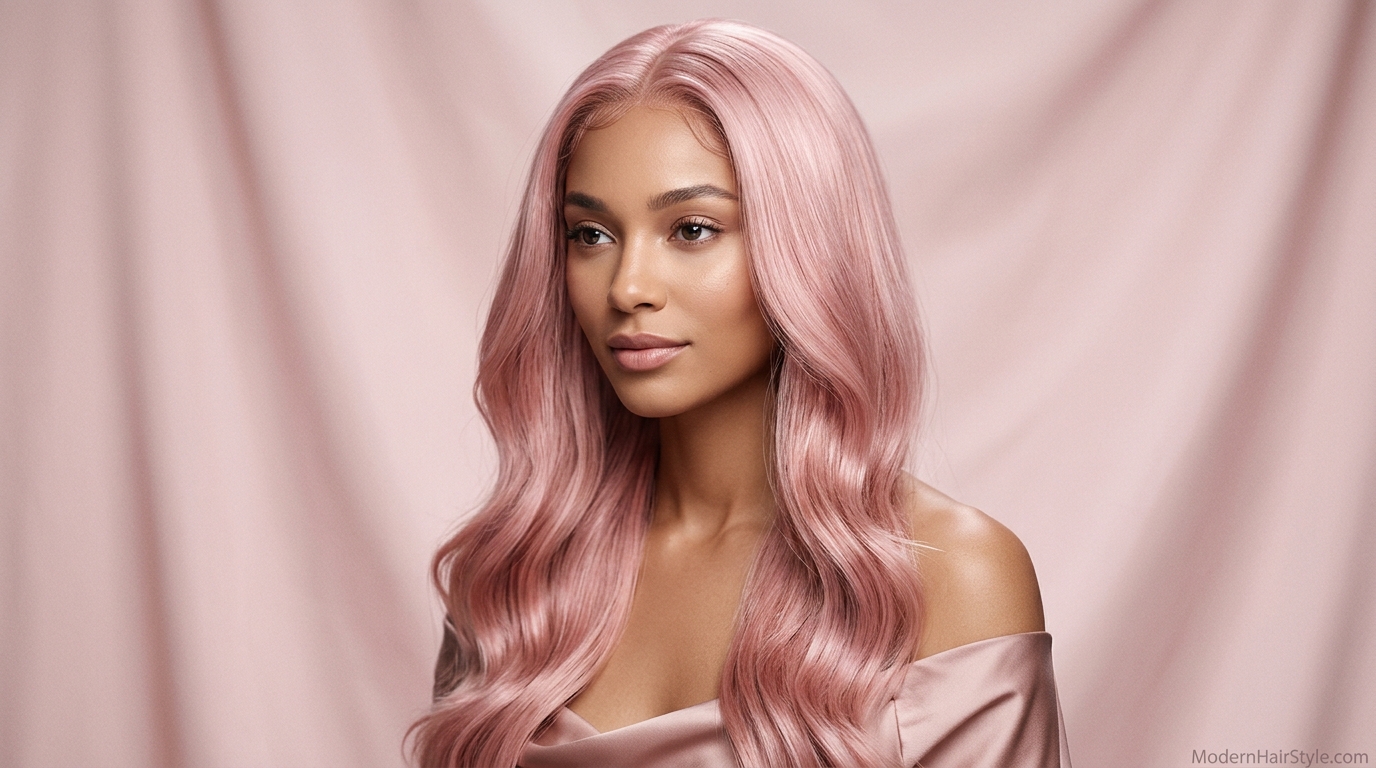
- Detangle dry, from the ends up, with a wide tooth comb before water touches the unit.
- Wash cool and gentle with sulfate free shampoo, working the cap and roots.
- Condition generously, mid lengths to ends, detangling again in the conditioner with your fingers.
- Refresh when needed by swapping the conditioner for a colour depositing one.
- Air dry on a stand, never wrung or blasted with hot air.
- Style at moderate heat with protectant.
- Store on the stand, covered, out of sunlight.
Two habits do quiet damage: sleeping in the unit doubles friction fade at the nape, and product pile up dulls pale pink.
Frequently Asked Questions
1. Which pink shade suits cool skin undertones?
Blue based pinks are the labelled stylist guidance for cool undertones: magenta, fuchsia, orchid and blue leaning bubblegum. The Alibaba SmartBuy guide prints the same split. Treat it as guidance, not a rule.
2. Which pink shade suits warm or golden undertones?
Peach leaning pinks are the labelled stylist guidance for warm undertones: rose, coral pink, salmon pink and warm rose gold. The SmartBuy strand agrees. Dusty and muted pinks are the neutral ground.
3. Which pink shade is safest for a conservative workplace?
Dusty pink, muted rose and pink highlights on a dark base are the low contrast options sold for restrained settings. Soul Lady lists pink highlights under code P1B/PK; its peekaboo piece hides colour under the top layer.
4. What does pink look like at week two?
On the stylist strands, the first visible change is softness at the ends and hairline. The Necole Bitchie colourist strand puts noticeable fade inside a 2 to 6 week window; on a wig it reads across the whole unit.
5. What does a faded pink wig look like at week six?
The destination strands agree: pink drifts toward peach, then pale orange or blondish wash out, as red pigment leaves first. The Alibaba and Allure Philippines strands both describe visible, uneven fade.
6. When should I refresh pink with a colour depositing conditioner?
The trigger in the care strands is visual, not calendrical: refresh when the shade drops one visible step on the fade calendar. Deep condition in the same session.
7. Can I use a colour gloss instead of re-dyeing pink?
Yes: the Top5Best care guidance names a professional colour gloss as the mid strength refresh between depositing conditioner and re-dyeing. It evens tone for a limited run of washes, but cannot lift blondish wash out back to vivid.
8. How many times can a pink human hair wig be re-dyed?
No fetched source prints a verified number, so none is stated as fact. Treat one careful re-dye as the planning assumption on already bleached, deposit dyed hair, strand test first, ends first.
9. Do dark roots make pink last longer visually?
Dark roots and ombre are fade camouflage, on the stylist strands: the eye reads the dark base as constant while pink lengths fade underneath. PWigs lists an ombre dark root bob across a 106.67 to 382.22 dollar ladder.
10. What is the difference between pink ombre and pink highlights?
Ombre is a gradient: dark roots melt into pink lengths. Highlights are placed pieces: Soul Lady sells them on a dark base under code P1B/PK, plus a peekaboo variant. Highlights spend less pink and fade less visibly.
11. Which pink fades slowest, in order?
The stylist strand order, printed as one labelled strand: pastel fastest, then baby and bubblegum, then rose, then hot pink, then magenta slowest. The Alibaba strand gives pink a 6 to 10 wash window beside it, unmerged.
12. Does purple shampoo help or hurt a pink wig?
Both, by shade: purple shampoo tones yellow out of blonde bases, cleaning up a peachy pastel, but violet pigment can push a blue based pink toward lavender with repeated use. It is a toning tool, not a weekly shampoo.
13. Can I swim in a pink human hair wig?
The care strands treat chlorine and salt water as fade accelerants for deposited pigment on human hair. Rinse before and after, expect the swim to cost visible shade, and keep a cheaper unit for pool days.
14. Why did my pink wig arrive a different colour than the photo?
Screen colour is the named cause: retailer photos are lit, filtered and shown on uncalibrated screens, and no top page prints a colour accuracy standard. Defences are daylight customer photos and checking the return rule before ordering.
15. What is a pink skunk stripe wig?
A skunk stripe places a contrasting pink panel against a dark base, usually at the front or as face framing sections. A TikTok Shop listing sells one; its details are labelled AI generated, so every spec is a marketplace strand.
16. Is rose gold pink a good first pink?
Rose gold sits between blonde and pink, the lowest commitment step on the shade map: a tint in soft light, clearly pink in daylight, fading toward warm blonde. It needs a light base like other pale pinks.
17. How do I store a pink wig so colour does not transfer?
Freshly dyed pink can bleed and transfer, on the Top5Best care strand: wash before first wear, wash separately from clothing, and store dry on a stand away from direct sunlight.
18. Can pink dye stain the lace, and how do I prevent it?
Yes, and the dye guides name the defence: a lace protector barrier applied before dyeing, named in the Loxx of Hair and Luvme Wigs 101 method strands, keeps deposit dye off lace and knots.
19. What undertone is dusty pink best for?
Dusty and muted pinks are the neutral strand on the shade map: greyed pigment reads calm against warm and cool skin, suiting mixed or olive undertones. They need a light base. Their fade destination is a soft mauve blonde.
20. Does heat styling make pink fade faster?
Yes, on the care strands: the Top5Best guidance advises heat protectant and lower settings around 300 to 350F, and warns frequent heat fades pink. The Alibaba 300F line is quarantined as content farm copy.
21. Can I tone a pink wig darker instead of re-dyeing it?
Deposit only colour can deepen a shade, because it adds pigment without lifting: faded hot pink can be toned toward magenta or deeper rose. It cannot go lighter or fix patchiness. Test the ends, judge dry, then commit.
22. What is the honest end state of a pink wig?
Three end states print on the fade calendar: a pleasing faded pastel, a blondish wash out that takes a gloss or deposit refresh, or a unit whose condition ends the story. Plan the end state at purchase.
23. Are pink wigs good for Halloween and cosplay in human hair?
Halloween and cosplay demand is a verified listing strand: Amazon and Top5Best listings tag pink units for cosplay, party and Halloween wear. Human hair earns its price for photography and repeat characters; synthetic usually wins for one night.
24. How long does the colour last on a pink human hair wig, in washes?
Two strands print unmerged. The Alibaba strand gives pink a 6 to 10 wash window before strong fade, labelled low authority. The stylist strands speak in weeks: noticeable fade inside 2 to 6 weeks of regular wear.
25. What is a pink human hair wig made from?
Human hair pre lightened to a blonde base and deposit dyed pink; no human hair grows pink. The base caps the shade: pastel needs a near white level 10 base, hot pink tolerates level 7 to 8.
26. How long does a pink human hair wig last as a unit?
The Alibaba SmartBuy guide strand claims 6 to 12 months or longer with proper care for the unit itself, separate from colour life. The pink usually retires before the hair does.
27. Which pink shade fades the fastest?
Pastel, on every strand that ranks shades: it holds the least pigment on the lightest base, so each wash removes a visible share. The standing rule: buy one shade deeper than your target.
28. What colour does pink fade to on a blonde base?
Toward peach, then pale orange, then blondish, as red family pigment leaves first; the Allure Philippines and Alibaba strands agree on visible, uneven fade in that direction. Dark rooted and ombre units hide the destination longest.
29. Can I dye a blonde human hair wig pink at home?
Yes; that is route two. The method strands from Luvme Wigs 101, Mayvenn and Loxx of Hair agree: wash first, strand test, protect the lace, use deposit only colour, and accept a dyed wig is generally non returnable. A 613 blonde wig is the standard base.
30. What is a 613 wig and why is it used for pink?
613 is the industry colour code for a pale blonde, near level 10 unit sold as a dye base. Deposit dye needs a light base to read true, and 613 arrives already lightened.
31. Can I dye a black human hair wig pink?
Not directly: deposit pink over black reads as nothing, because the base is darker than the target shade. The hair would need bleaching first, the highest damage route, reserved for professionals. Buying pre coloured or starting from 613 is the honest recommendation.
32. Is it better to buy a pink wig or dye a 613 wig?
Buying pre coloured wins on convenience, factory consistency and return of an unworn unit; dyeing a 613 wins on exact shade control and refreshability. The route table scores both on cost, control, risk and reversibility.
33. What is the difference between a pink human hair wig and a synthetic pink wig?
Human hair pink can be heat styled, restyled and refreshed with deposit colour; synthetic pink holds a set style, costs far less, and cannot take deposit dye the same way. The synthetic wig vs human hair guide owns the full comparison.
34. How do I wash a pink human hair wig without losing colour?
The care strands agree: sulfate free colour safe shampoo, cold water, no vigorous rubbing, wash only when needed. Air dry on a stand away from sunlight. Every wash spends pigment; the how to wash a human hair wig routine covers the method.
35. How often should I wash a pink wig?
One stylist led strand, the Elsa Claire pink guide, says every 6 to 8 wears with sulfate free products and cold water. The Top5Best strand says wash only when the wig looks dirty or loses shape. Both print unmerged.
36. What density should I choose for a pink wig?
Density is a relative fullness scale, not a regulated measurement, and the same percentage photographs differently across brands. Common offerings run 130 to 180 percent, with Soul Lady and QVR listing 180 percent units in this pull.
37. How much does a pink human hair wig cost?
Only as dated strands, never merged: UNice pink bob at 49 dollars via Klarna, checked November 2026; Lolly Hair at 88.24 dollars; Soul Lady at 89 dollars; QVR ladder 73 to 103 dollars; Luvme variants at 193.60 to 223.60 dollars. The Stellari unit at 595 EUR is non US.
38. What does 10A or 12A grade mean on a pink wig listing?
Nothing regulated. Grade labels such as 10A and 12A appear in top selling Amazon listing titles, observed in the first research run, and no standards body certifies them. The same applies to Remy and virgin. Judge construction, base and return terms instead.
39. Can I wear a pink human hair wig every day?
Yes, with the calendar accepted: daily wear multiplies washes and sun exposure, so the shade walks the fade stages faster and the refresh budget becomes monthly rather than occasional. Rotation with a second unit halves each unit’s load.
40. Can I wear a pink wig to work or school?
It depends on the setting’s dress code, which no source can decide for you; the shade map exists for exactly this choice. Dusty pink, rose gold and dark rooted highlights are the low contrast end.
41. Why are some pink wigs under 50 dollars and others over 300?
The price strands show the drivers: base quality and lightening work, lace size and type, density, length, and whether colour was applied to a premium or budget unit.
42. How should I store a pink wig?
On a stand or mannequin head, dry, away from direct sunlight, per the care strands; the Top5Best strand adds covering with a silk or satin scarf. Keep a freshly dyed unit away from light fabrics until the bleed stops.
Conclusion: Map the Shade, Calendar the Fade
A pink wig human hair purchase rewards the buyer who shops for the whole colour life, not the first photograph: base, undertone and setting.
Run the shade map before checkout, walk the fade calendar after it, and climb the refresh ladder one rung at a time.
Browse the shade families in your matrix row with the base it demands and the return terms behind every checkout.

Dilawar is a passionate writer and contributor at Modern Hairstyle (modernhaistyle.com), specializing in hairstyles, hair care, grooming, fashion, beauty, and lifestyle trends. He enjoys sharing practical tips, hairstyle inspiration, and easy-to-follow guides to help readers discover their personal style. His goal is to provide informative, engaging, and helpful content that keeps readers updated with the latest trends.