You want a haircut that turns heads but still looks sharp on a Monday morning. The burst fade mullet does exactly that.
The sides are faded clean around the ear, the top has light texture, and the back keeps length without going wild. It looks tidy from the front, sharp from the side, and cool from the back.
Not sure where to start? Here’s a quick path:
- Want neat and safe → Low Burst Fade Mullet or Taper Mullet Fade
- Want bold contrast → Mullet Skin Fade or Burst Fade Mullet V Cut
- Straight hair → Straight Hair Burst Fade Mullet with layers
- Curly hair → Burst Fade Mullet Curly Hair with shaping
- Low effort → Taper Short Mullet Fade or Short Mullet Fade
- Wider face → Temple Fade Mullet
What Is a Burst Fade Mullet
A burst fade mullet is a mullet with a fade that curves in a smooth arc around the ear. That rounded shape the burst is what sets it apart from a standard fade.
The back keeps length, so you still get the classic mullet shape. The sides stay clean and tight, which keeps the whole cut looking modern and well-designed rather than overgrown.
Why Choose a Mullet Fade
A mullet with faded sides removes the bulk that made older mullet styles look messy. When the sides sit flat, all the attention goes to the texture on top and the flow in the back.
It’s also easier to style than it looks. With the right layers and a bit of product, you’re done in a few minutes and it still looks like you put in real effort.
Burst Fade Mullet vs Drop Fade Mullet
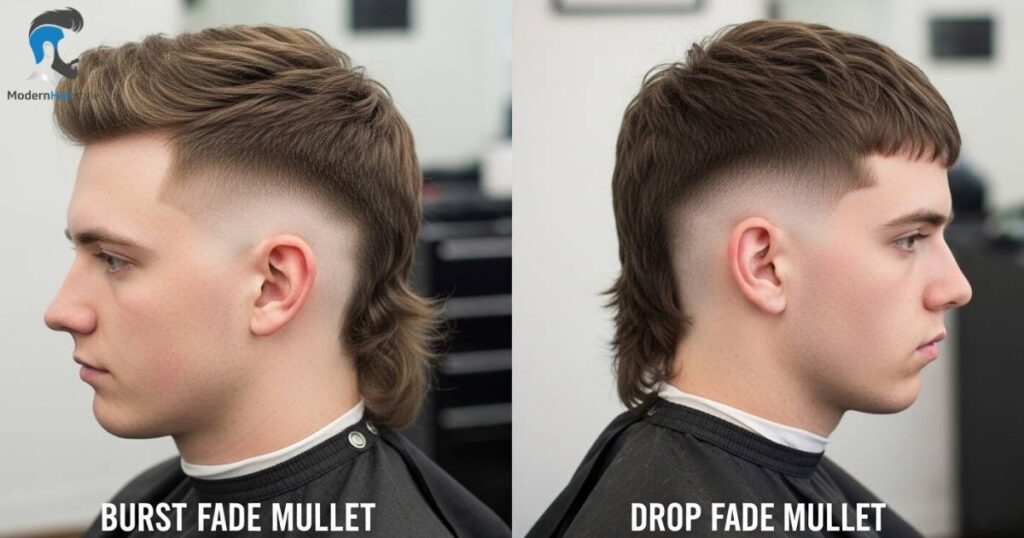
A burst fade wraps around the ear in a rounded outward curve. A drop fade drops lower behind the ear and follows the head’s natural curve downward.
Most guys prefer burst because the side profile looks cleaner and more sculpted. It also blends into the mullet back more naturally without leaving a heavy step.
Burst Fade Mullet vs Taper Mullet Fade
A burst fade is sharper and more noticeable. A taper mullet fade is softer, grows out more smoothly, and suits stricter dress codes better.
If you want bold contrast, go burst. If you need something calm that stays neat longer, go taper. You can always step up later once you know the style works for you.
Face Shape Tips
Round faces look better with slimmer sides and a bit of height on top. Square faces can handle more volume, but keep the arc smooth. Long faces should avoid too much height on the crown.
If you’re unsure, start with a low or mid burst fade mullet. It’s the safest option for most face shapes and grows out cleanly.
Bangs, Hairline, and Sideburns
A light fringe softens the forehead and adds a relaxed feel. A small quiff at the front gives lift if you want height without going over the top.
Sideburns need to stay tidy for the arc to look clean. And don’t skip the nape a crisp neckline is what separates a sharp mullet fade from one that just looks grown out.
25 Burst Fade Mullet Variations
1. Classic Burst Mullet
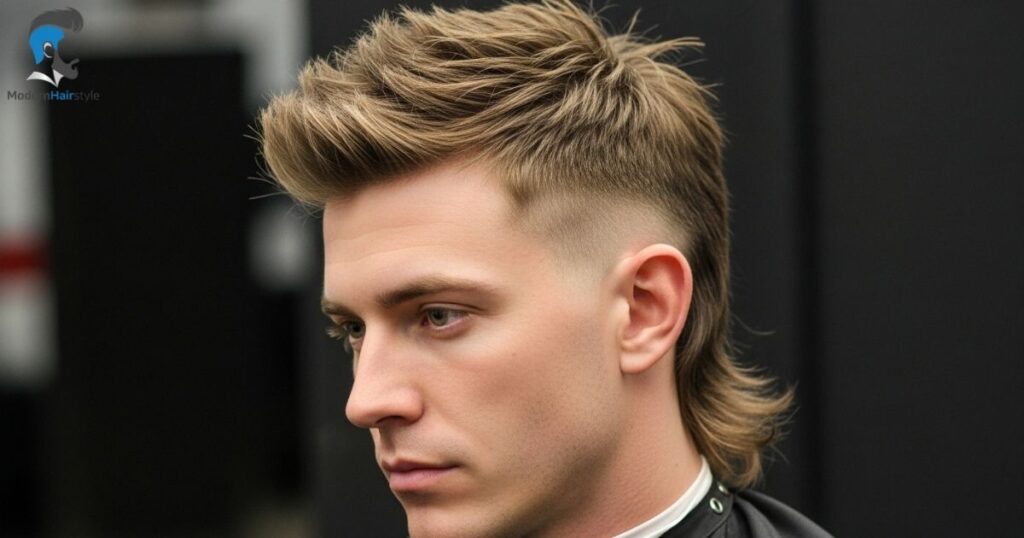
The safest starting point for most guys. The sides have a clean arc around the ear, the back sits around collar length, and the top has light texture so it doesn’t go flat.
It grows out evenly and holds its shape well. If you’re trying a mullet for the first time, start here.
2. Burst Fade Mullet Haircut
This version sharpens everything up. The burst arc is tighter, the top texture is more defined, and the back is layered so it moves.
It looks clean from the front and strong from the side. A crisp neckline finishes it off and keeps the whole thing looking intentional.
3. Low Burst Fade Mullet
The fade stays close to the ear and doesn’t climb too high. The contrast is subtle, but the burst curve is still visible from the side.
This is the right call for strict jobs, school dress codes, or anyone who wants a neat look without drawing too much attention.
4. Straight Hair Burst Fade Mullet
Without layers, straight hair sticks out at the back like a shelf. Ask for soft layers through the back and lighter ends so the hair falls and flows instead.
Keep two to four inches on top for styling room. The burst arc keeps your side profile sharp no matter what your hair naturally wants to do.
5. Burst Fade Mullet Curly Hair
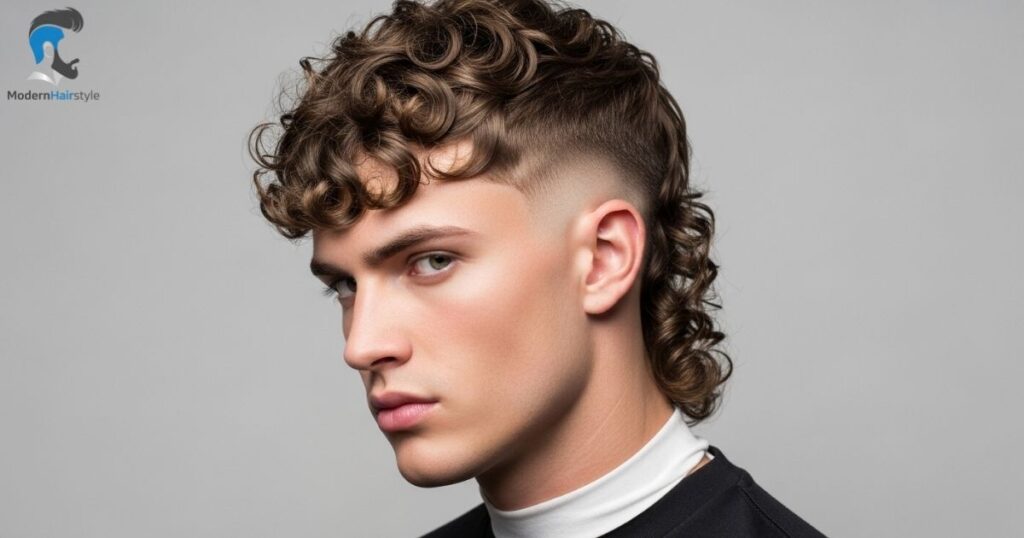
Clean faded sides frame the face while curls take center stage in the back. Ask your barber to remove bulk near the temples so curls don’t puff too wide.
The back should have soft layers so the curl pattern stays defined. Keep the arc even on both sides for a balanced, bold result.
6. Mullet Skin Fade
The highest contrast version available. The sides fade all the way down to bare skin at the base of the arc before blending into the crown.
It looks loud and sharp, especially on thick hair. Plan cleanups every three to four weeks because this level of fade shows regrowth fast.
7. Mullet Side Fade
The fade sits higher on the side panel and blends quickly toward the crown. It slims the head shape and reduces side bulk effectively.
It’s also practical if you wear hats regularly since short sides recover their shape fast. Ask for a layered back so the mullet still has movement.
8. Modern Mullet Fade
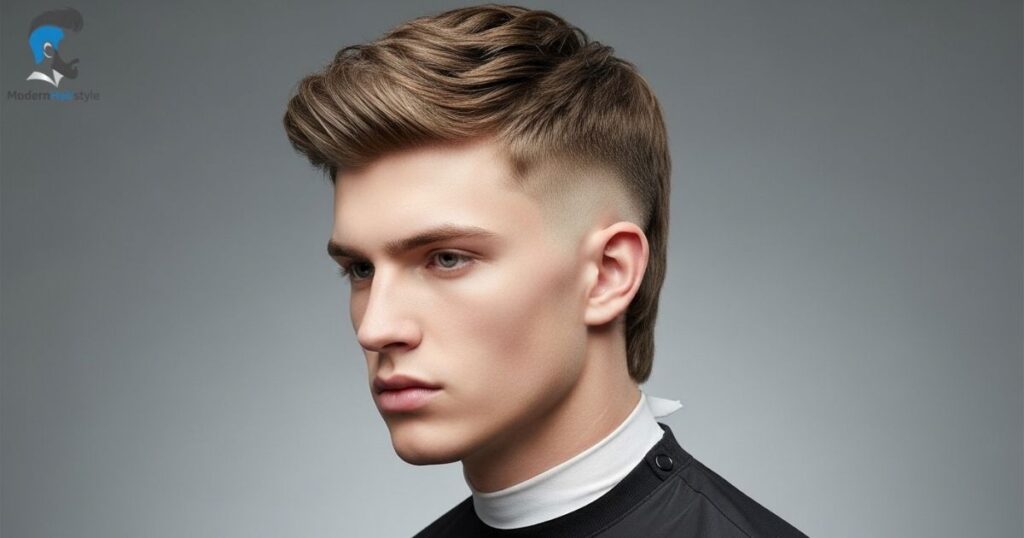
This version looks like a real haircut rather than a throwback. The top has clean texture, the back is layered, and the outline stays crisp without going over the top.
It’s office-friendly but still stylish. Go mid fade for stronger contrast or taper for a softer finish both work well here.
9. Taper Mullet Fade
Soft, natural, and easy to maintain. The taper keeps the transition gradual around the ear without going very short.
It’s great for guys with strict workplaces or sensitive skin. You still get the mullet length in the back the overall look is just calmer and more understated.
10. Curly Mullet Fade
This cut tames side puff while letting curls flow freely in the back. Ask your barber to remove bulk selectively so the curls keep their natural form.
A tidy neckline keeps it looking fresh longer and stops the back from looking unkempt between visits.
11. Short Mullet Fade
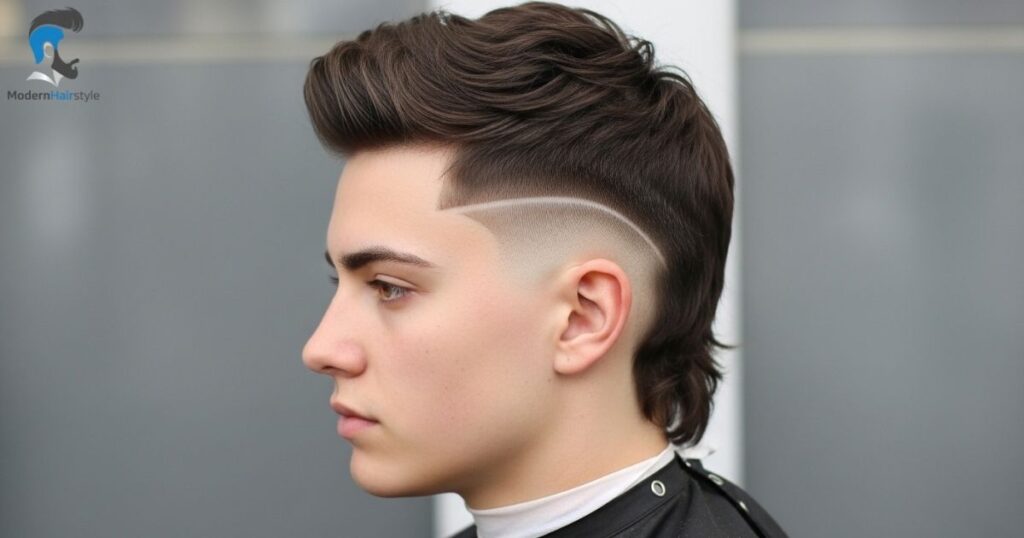
The back stays modest two to three inches rather than full collar-length flow. The top has light movement and the sides are tapered or lightly faded.
It’s perfect if you want the mullet vibe without committing to real length yet. Ask for texture on top so it looks relaxed on purpose.
12. Kids Mullet Fade
A low fade keeps the ear area tidy without going too short for active days. The top stays lightly textured and the back is short enough to behave during sports.
It washes fast and needs almost no product. A natural hairline and clean nape are all it takes to keep this cut looking sharp all week.
13. Taper Modern Mullet Fade
This blends a clean modern shape with the softer grow-out of a taper. The sides don’t go down to skin they fade gradually into the crown.
It’s a strong weekday haircut that still looks great in photos. Ask for a smooth bridge from the arc into the crown so there’s no harsh visible step.
14. Taper Short Mullet Fade
One of the lowest-effort options on this list. The back is short, the top has light texture, and the taper keeps the outline clean without dramatic contrast.
It’s great for fine hair and works well if you’re growing your hair out through an awkward stage. Clean sideburns and a tidy neckline are all it needs.
15. Modern Mullet Fade Straight Hair
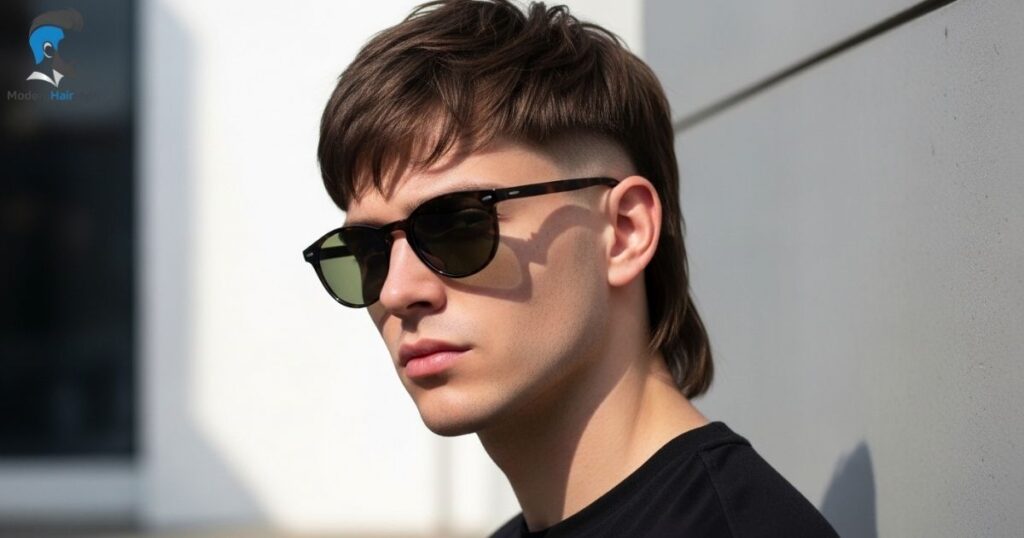
Straight hair needs layers in the back no way around it. Without them, the hair falls heavy and cuts off bluntly, killing the flow.
Ask for softened ends rather than blunt cuts. That small detail is what makes straight hair mullets look like they move naturally instead of just hanging there.
16. Burst Fade Mullet V Cut
A shallow V shape at the nape makes the whole back look sharper and more sculpted. It draws the eye toward the back length and gives the cut a second strong focal point.
Keep the V centered and clean between trims. A layered back ensures the V stays visible rather than disappearing into a blunt edge.
17. Mullet Burst Fade
This is the general term your barber understands without needing extra explanation. The arc height, fade level, and back length all get customized to your face and hair type.
Ask for a smooth bridge between the arc and crown and a layered back. It’s the best way to get a burst fade mullet built specifically around you.
18. Temple Fade Mullet
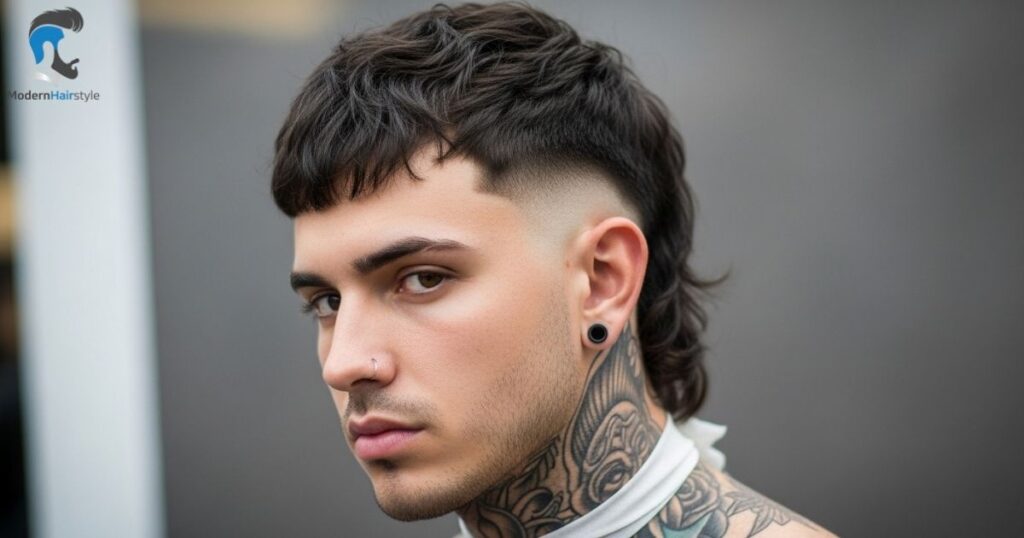
The fade focuses on the temples and sideburn zone rather than wrapping fully around the ear. It’s a smart pick for wider faces because it narrows the frame subtly.
It also works especially well if you wear glasses. The area around the ear stays clean without competing with your frames.
19. Burst Fade Mullet Straight Hair V Cut
This combines the clean burst arc on the sides with a sharp V at the nape both on straight hair. It’s bold but neat when the neckline stays crisp.
Ask for feathered ends in the back to stop the hair sticking out at angles. Together, the arc and V give straight hair far more visual interest than it usually carries.
20. Mid Burst Fade Mullet
A mid burst fade gives stronger contrast than a low fade without going all the way to skin. The curve sits higher above the ear and makes the top and back stand out clearly.
It’s the best middle-ground option for guys who want real impact without heavy maintenance. Keep the back layered so the mullet length flows rather than sits flat.
21. High Burst Fade Mullet
This pushes the fade high above the ear for maximum contrast. The focus shifts entirely to the top texture and back length because the sides disappear quickly.
It works especially well on thick hair. Growth shows fast at this level, so plan barber visits every three to four weeks to keep the contrast sharp.
22. Burst Fade Mullet with Design
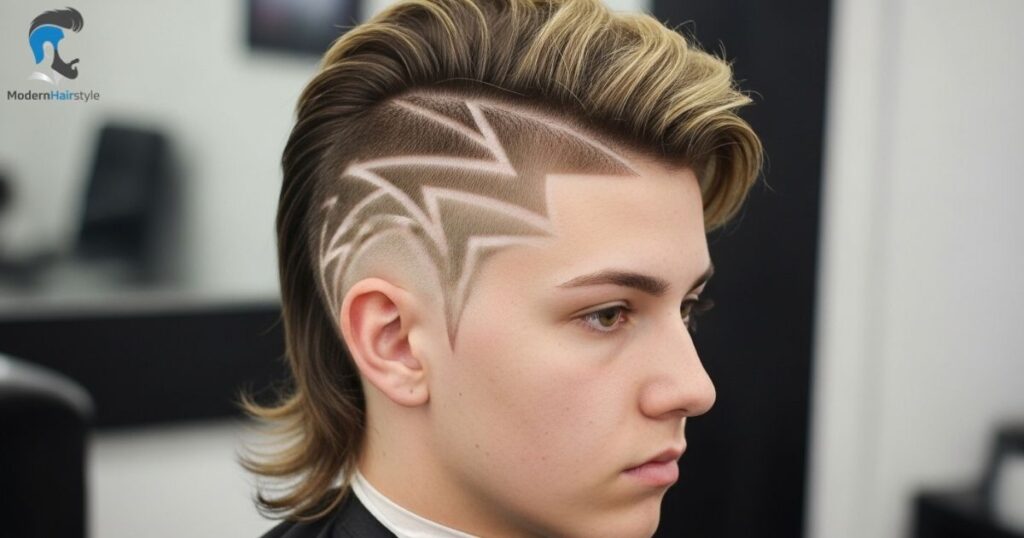
A razor line or simple pattern near the ear arc turns this cut into a statement. Keep the design simple one curved line holds up far better as it grows than anything complex does.
Plan trims often. Razor designs fade into the skin within two to three weeks, so maintenance is the price of this level of detail.
23. Taper Burst Fade Mullet
Softer than a skin or mid burst, this version gives you the round ear arc without high contrast. The fade is gradual and keeps more hair, which means cleaner grow-out.
It works comfortably in professional settings. A tidy sideburn outline and clean neckline keep the softer fade looking styled rather than unfinished.
24. Burst Fade Mullet with Beard Blend
If you wear stubble or a fuller beard, this version ties the whole look together. The burst fade blends smoothly at the sideburn into the beard line so there’s no awkward disconnect.
Ask your barber to fade the beard at the sideburn and keep the cheek line neat. It’s the most mature version of the burst fade mullet and looks sharp in any setting.
25. Burst Fade Mohawk Mullet
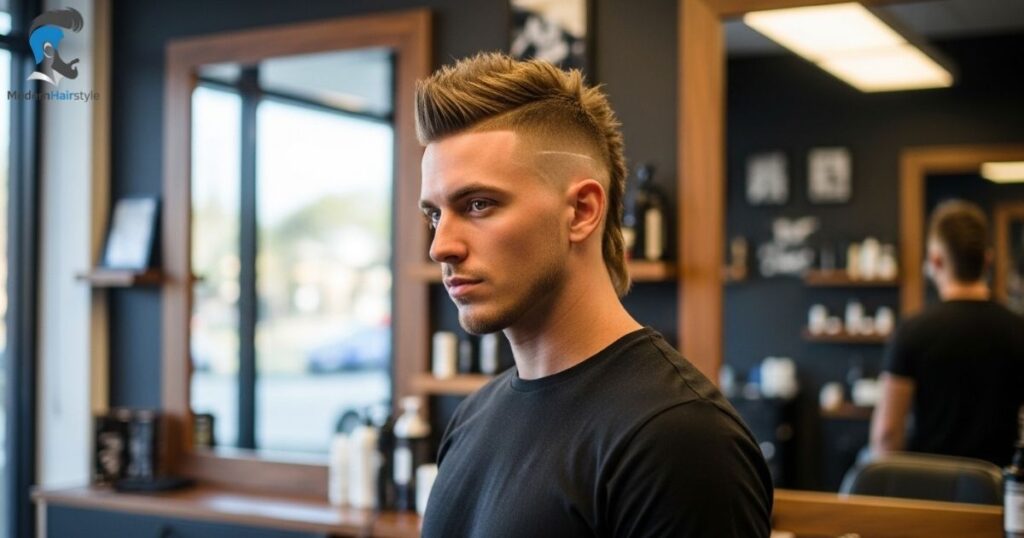
Bold, sporty, and completely modern. The sides stay tight while a textured strip runs down the center of the head and flows into the longer back.
Ask for the strip to look natural and textured rather than stiff or spiked. Choose a mid or high burst fade so the mohawk strip has enough contrast to really pop.
Quick Reference Table
| Hair Type or Goal | Best Option | Why It Works |
| Fine straight hair | Straight Hair Burst Fade Mullet | Layers add shape and movement |
| Thick hair | Mullet Skin Fade or Side Fade | Cuts bulk fast |
| Curly hair | Burst Fade Mullet Curly Hair | Frames face, controls puff |
| Low effort | Taper Short Mullet Fade | Clean grow-out, minimal styling |
| Bold back shape | Burst Fade Mullet V Cut | V nape sharpens the silhouette |
| Office or school safe | Low Burst or Taper Mullet Fade | Neat arc, soft contrast |
| Wider face | Temple Fade Mullet | Narrows the frame at temples |
| Beard wearer | Burst Fade with Beard Blend | Smooth sideburn connection |
Easy Styling Routine
Start with towel-dried hair and use your hands, not a comb. Straight hair does well with a light grip cream. Curly hair responds better to a small amount of curl defining cream worked through the back.
Blow-dry on low heat and shape the top with your fingers. Stop before it looks too perfect. The burst fade mullet looks best with soft movement, not a stiff finished shine.
What to Tell Your Barber
Say this one line: “I want a burst fade mullet with a smooth blend from the ear arc into a layered back.”
Then add your details:
- Low, mid, or skin burst
- How long you want the back
- Rounded nape or V cut
- Fringe or no fringe
- Beard blend or clean shave
Care and Upkeep
Most guys trim every four to six weeks. Skin fades need it sooner because regrowth shows faster. Wash two or three times a week with a gentle shampoo and use conditioner on the mid-lengths and ends so the back doesn’t dry out.
Between visits, keep the nape and sideburn area tidy. That small step keeps the whole haircut looking fresh.
Where It Fits
For office and school, pick a low burst or taper with a shorter back. For weekends and photos, go mid burst with more back length. For a fashion-forward look, go skin fade or V cut nape.
Every version works if the outline stays clean and the back is layered with control.
Conclusion
The burst fade mullet gives you bold shape with clean, everyday control. Keep the ear arc neat, add light texture on top, and layer the back so it flows naturally.
Pick the version that fits your hair type and your daily life from low and taper cuts to skin fades and V cuts. Save one photo, use the barber language from this guide, and you’ll walk out with a mullet fade that looks sharp and feels easy every single day.

