The low taper fade with textured fringe has taken over barbershops in 2026. Clean faded sides. Choppy, textured front. One haircut that does it all.
It fits real life perfectly. Sharp enough for the office on Monday. Relaxed enough for a night out on Friday. Style it neat or leave it messy it works either way.
That flexibility is exactly why barbers call it one of their most requested cuts right now.
- Pairs smooth faded sides with a choppy layered fringe for a modern, versatile look.
- Went viral on social media and is now a barbershop staple worldwide.
- Works on straight, wavy, and curly hair suits round, square, oval, and long faces.
- Low maintenance daily, but trim every few weeks to keep it sharp.
This guide covers everything. What the cut is, who it suits, how your barber builds it, and how to style it at home. Plus variations, FAQs, and what is trending next.
Related post: Low Taper Mullet Guide 2026: Best Styles & Care
What Is a Low Taper Fade Textured Fringe?
A low taper fade with textured fringe is a modern men’s haircut that pairs two distinct techniques into one cohesive, versatile style. Here is a quick breakdown of each element:
- Low taper fade The hair gradually shortens along the sides and back, starting near the ears and neckline rather than high on the head. Because the fade sits low, more length stays on the sides, which creates a softer, more natural silhouette. There is no harsh jump from short to long just a seamless blend.
- Textured fringe The hair on top is left longer and cut with movement in mind. Using techniques like point cutting, slide cutting, and razor work, barbers add separation and depth so the front section falls forward with a lived-in, piecey quality not flat, not stiff.
Together, these two elements create a haircut with clean, controlled sides and an expressive, movement-rich top. The contrast is what makes the style so compelling. The precision of the fade anchors the look while the choppy fringe keeps it from feeling too stiff or corporate.
| Feature | Low Taper Fade | High/Mid Taper |
| Fade start point | Near ears and neckline | Above the ears or at the temples |
| Scalp exposure | Minimal | Moderate to high |
| Grow-out between trims | Smoother, longer-lasting | Fades faster |
| Best face shapes | All, especially round and square | Oval, oblong |
| Overall vibe | Natural, versatile | Bold, high-contrast |
Understanding this structure helps you communicate with your barber and appreciate what goes into every step of the cut.
Why This Style Became So Popular
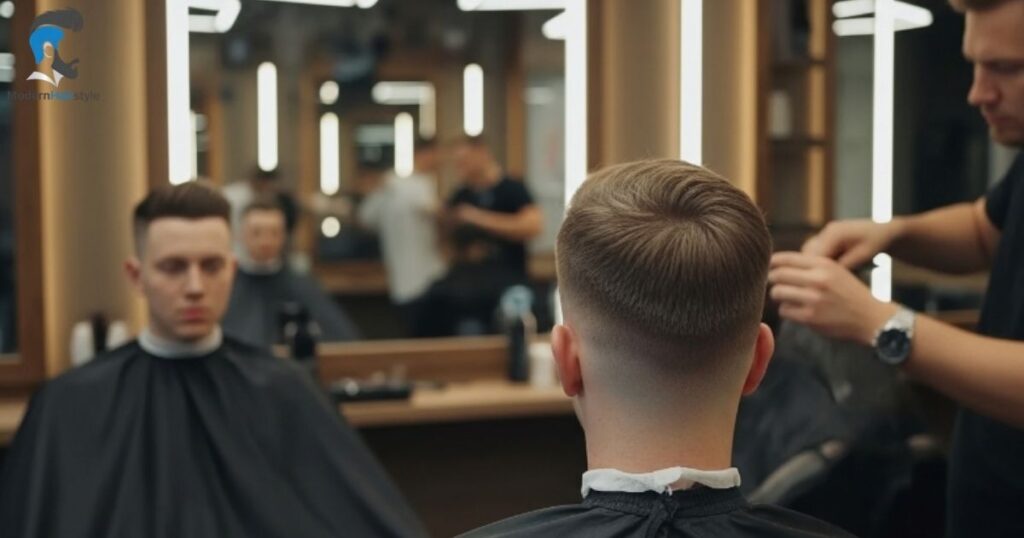
Not every haircut earns its place in barbershop culture. The low taper fade textured fringe did and these are the reasons it keeps growing.
It genuinely suits most people. The low taper does not expose a lot of scalp, which makes it less confrontational than a high skin fade. Combined with a textured fringe that frames the face softly, the cut flatters a wide range of face shapes and hair densities without requiring dramatic changes.
It transitions effortlessly. Style the fringe neatly forward for a professional Monday. Tousle it with your fingers on Saturday night. The same haircut reads differently depending on how much effort you put into it and that flexibility is rare.
Social media accelerated its reach. Barbers showcasing sharp before-and-after transformations on TikTok and Instagram brought the style to millions of men who might never have encountered it at their local shop. What once required word of mouth now travels instantly.
It is genuinely low maintenance. The low taper grows out gradually rather than abruptly. The textured fringe does not need precision styling every morning finger-styling with a small amount of matte clay is enough to look intentional.
Boys and teens love it too. It feels modern and confident without breaking school dress codes. Parents approve because the sides stay tidy; young men approve because the top has personality.
Variations of the Low Taper Fade with Textured Fringe
One of the biggest strengths of this haircut is how adaptable it is. Below are the most popular and requested variations, with barber insight on each.
Short Textured Fringe

This version keeps the fringe trimmed close to the forehead usually sitting just at or above the eyebrow line. The hair is still point-cut for texture, so it does not look blunt or helmet-like, but the overall length stays tidy and conservative.
It is an ideal choice for men in professional environments who want a modern look without anything that reads as too casual. Barbers often recommend this variation to first-timers who are nervous about going too bold. The short fringe also suits men with larger foreheads, as it draws the eye down and balances the face proportionally.
Best for: Office settings, school environments, first-timers, wider foreheads.
Products: Light matte cream or styling paste, applied with fingertips.
Wavy Fringe with Low Taper
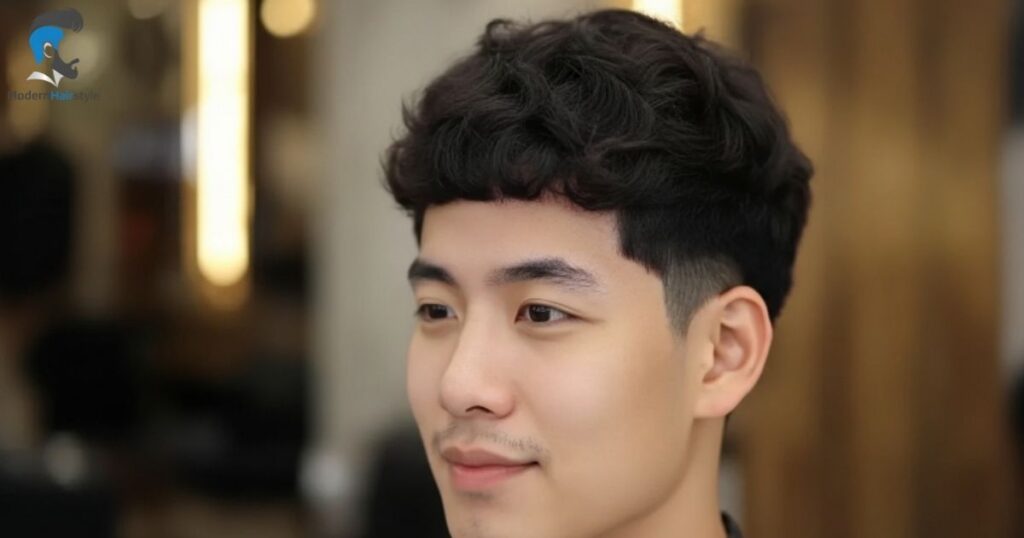
If your hair has a natural wave pattern, this variation lets the texture do most of the work. Rather than fighting the wave, the barber cuts the fringe to follow it so it falls in soft, organic curves across the forehead rather than lying flat.
Many men with wavy hair spend years trying to straighten or control their natural texture. This cut does the opposite: it embraces and showcases it. The low taper keeps the sides controlled and structured while the wave in the fringe moves freely. The result is effortless and slightly beachy without looking unkempt.
Best for: Naturally wavy hair, medium hair density, casual and creative settings.
Products: Sea salt spray on damp hair, air-dried or diffused for natural wave definition.
Curly Fringe Low Taper
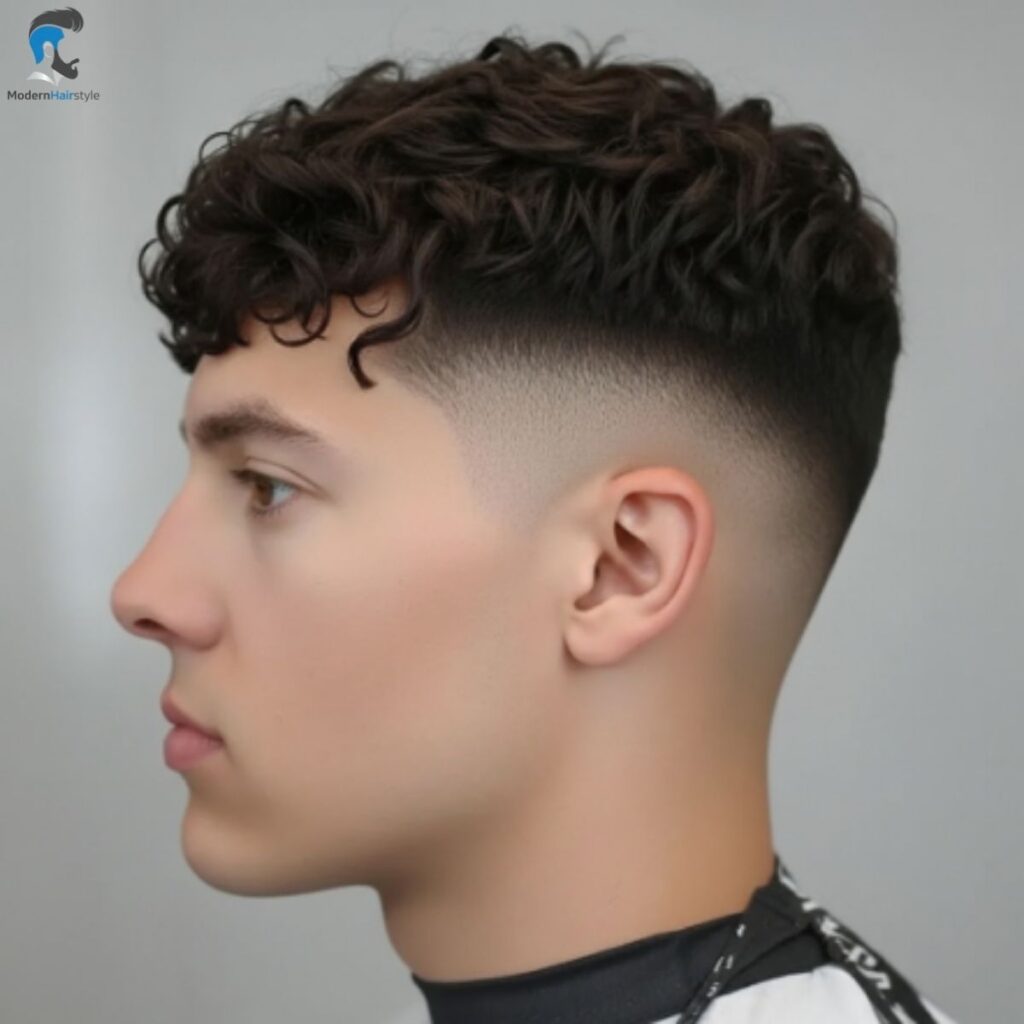
For men with curly hair, this is one of the most transformative cuts available. The low taper keeps the sides from ballooning outward, which is a common struggle for curly-haired men. Meanwhile, the curls in the fringe are shaped to fall forward and frame the face, adding definition rather than chaos.
Barbers typically trim the curls just above the eyes so they bounce but do not block vision. They also leave extra length to account for curl shrinkage curly hair always appears shorter when it dries. Many men with curls say this is the first haircut that made them feel like their natural texture was an asset rather than a problem to manage.
Best for: Natural curls of all types, men who want to embrace texture, oval and square faces.
Products: Lightweight curl cream or leave-in conditioner; avoid heavy gels that create crunch.
Messy Textured Fringe
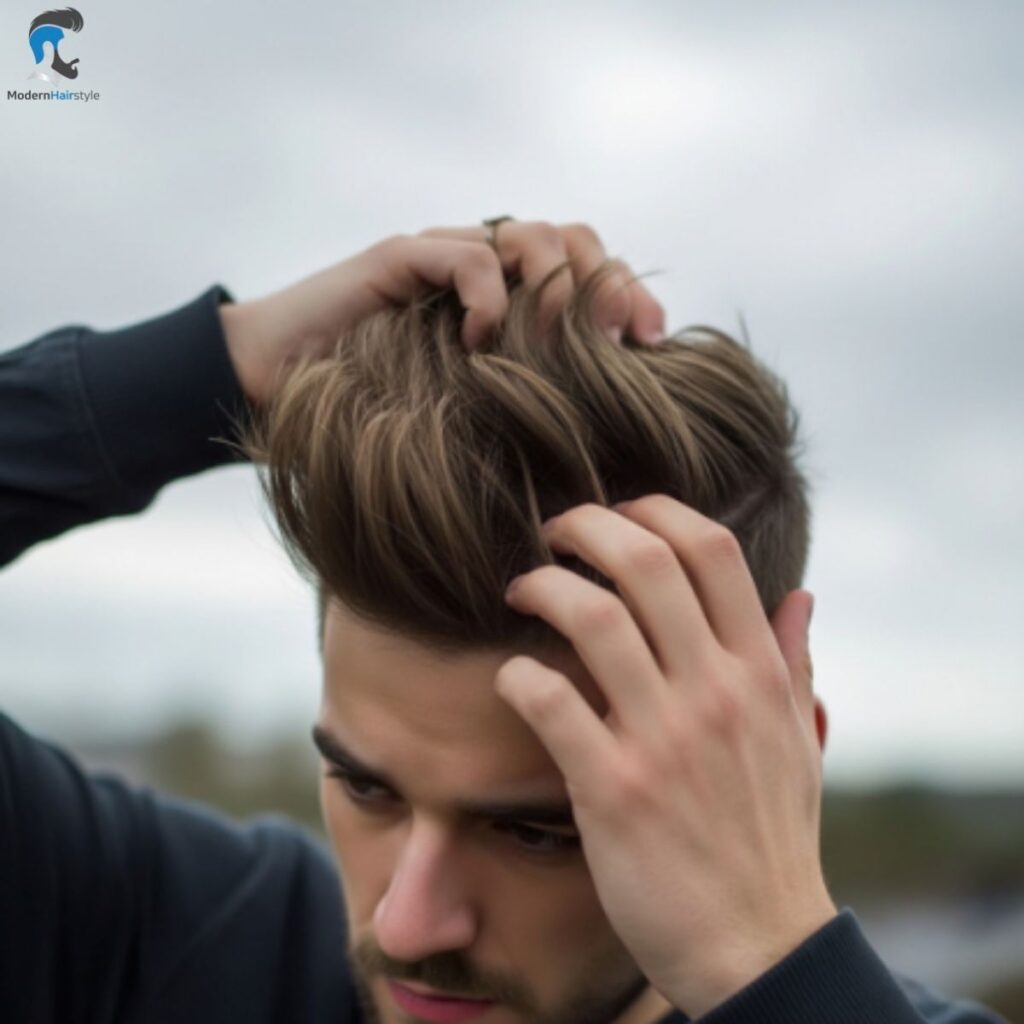
This is the most relaxed and expressive version of the cut. The fringe is kept longer, the layers are deeper, and the overall styling intention is intentional dishevelment it looks like you ran your hands through it once and walked out, even though some thought went into it.
The low taper sits softer and lower in this variation, letting the volume on top take center stage. It is a favourite among men who prefer streetwear aesthetics and younger men who want maximum personality without committing to anything too structured. Thick or coarse hair works especially well here because the weight of the hair helps the messy style hold its shape.
Best for: Thick or coarse hair, casual and creative lifestyles, teens and young adults.
Products: Matte clay worked through dry hair with fingers; no comb.
Layered Fringe with Low Taper
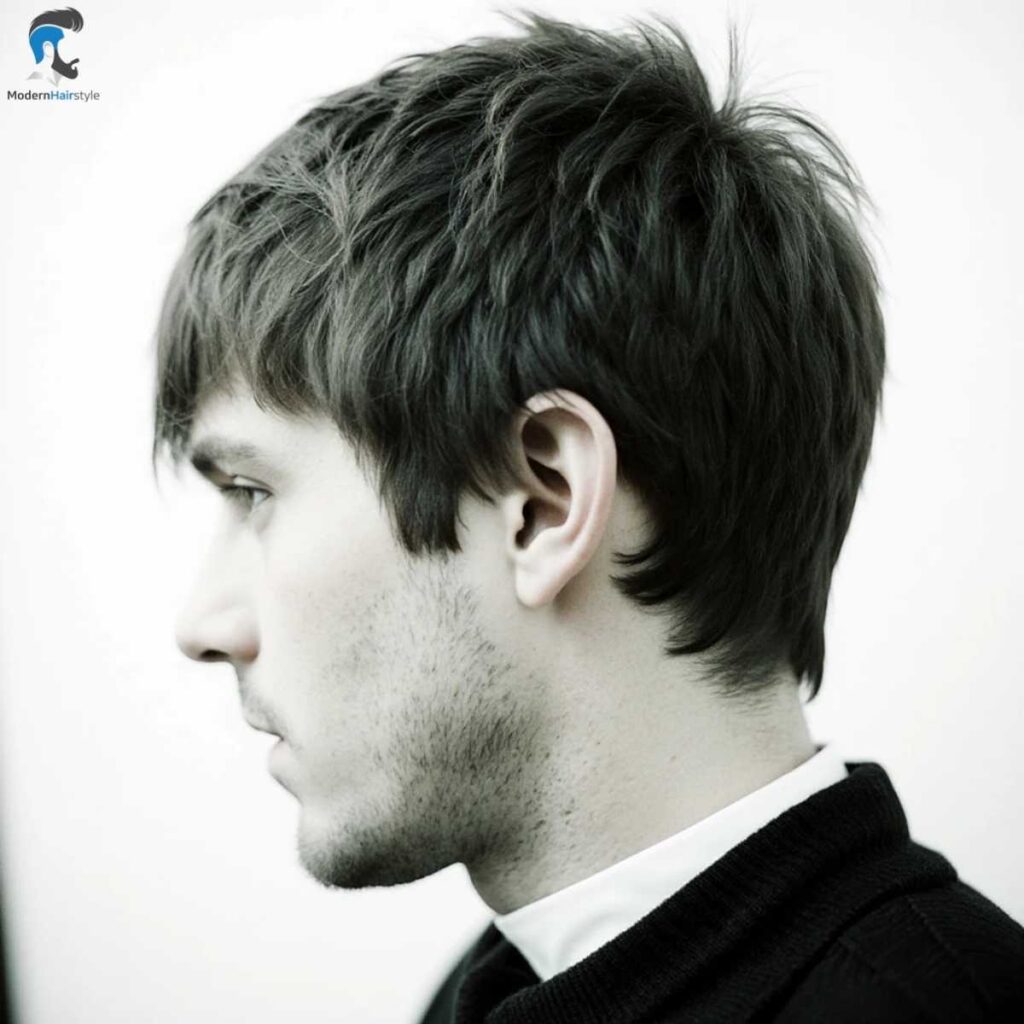
This variation adds the most internal structure to the fringe. Multiple layers are cut throughout the top section, which adds volume, bounce, and dimensional movement. For men with fine or flat hair, this approach can make the fringe appear significantly fuller than it actually is.
The layered fringe also gives barbers more sculpting flexibility they can adjust where the layers fall to balance specific face shapes. A man with a long face might have layers cut to add width, while someone with a round face might have layers designed to build height. It is the most customizable version of the cut.
Best for: Fine or flat hair, men who want maximum volume, those with longer or rounder faces.
Products: Thickening spray on damp hair before blow-drying; matte clay to finish.
How Your Barber Creates This Haircut
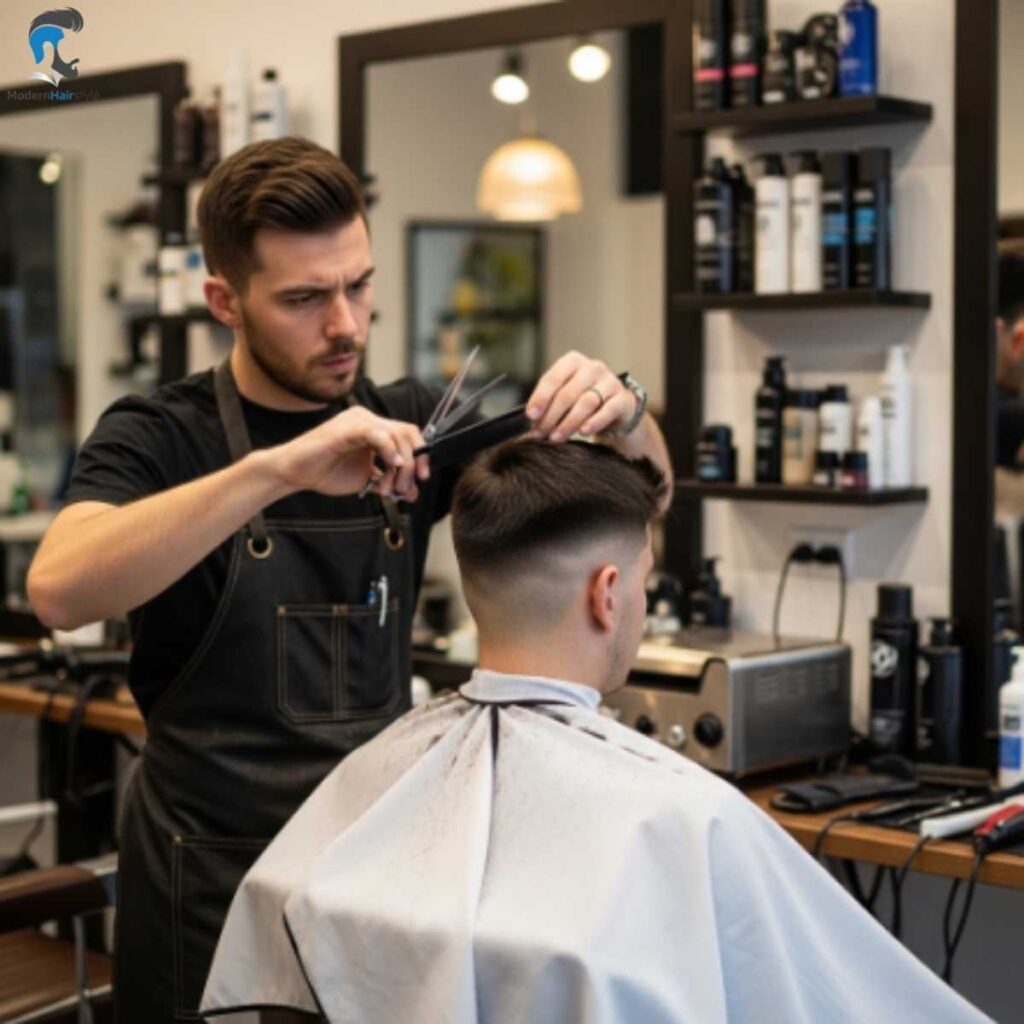
Understanding the process helps you communicate better in the chair and appreciate the craft behind the cut. Here is how a skilled barber typically builds a low taper fade textured fringe from start to finish.
Step 1 Consultation
A good barber always asks questions before picking up clippers. They want to know your hair type, how much time you spend styling in the morning, whether you wear glasses, what your lifestyle looks like. The answers shape every decision that follows.
Step 2 Sectioning and fringe cut
The barber sections out the top and cuts the fringe first to establish the target length. This sets the foundation for everything else. They use scissors and point cutting to create soft, choppy ends rather than a blunt line.
Step 3 Layering the top
Once the fringe length is set, layers are added through the crown and top section. This creates the internal movement and volume that makes the style feel alive when it falls forward.
Step 4 Building the low taper fade
Using clipper guards in descending sizes typically starting at a #3 or #2 near the top and working down to a #0 near the ears and neckline the barber builds the fade from the bottom up. The blend is blended in passes using shorter guards until the transition is invisible to the eye.
Step 5 Detail work
A trimmer cleans the hairline around the ears and neckline. Blending shears soften any hard lines in the fade. Some barbers use a razor to refine the fringe ends further.
Step 6 Dry check
The barber lets the hair fall naturally and checks the shape dry. Small adjustments are made if any section is uneven or the fade needs refining.
What to Say to Your Barber
Use these exact phrases to get the result you want:
- “I want a low taper fade starting near my ears and neckline, fading to a zero.”
- “Leave around 3 inches on top and point-cut the fringe for texture I want movement, not a blunt line.”
- “Make the fringe fall just above my eyebrows with a piecey, lived-in finish.”
- “I want the sides clean but not skin-tight keep it looking natural.”
Bring a reference photo if possible. Most barbers say a photo is worth more than any verbal description.
How to Style a Low Taper Fade Textured Fringe at Home
You do not need a full grooming kit or twenty minutes in the bathroom. Here is a simple, repeatable routine that keeps the style looking sharp every morning.
1. Start with towel-dried hair
Wash your hair and towel dry gently until it is damp not soaking, not completely dry. This is the ideal state for product absorption.
2. Choose the right product
Match your product to your hair type:
| Hair Type | Best Product | Why |
| Straight or fine | Texture powder or matte clay | Adds grip and lift without weight |
| Wavy | Sea salt spray | Enhances natural wave pattern |
| Curly | Lightweight curl cream | Defines curls, controls frizz |
| Thick or coarse | Matte clay or paste | Tames bulk, holds texture |
3. Apply with your fingers, not a comb
Work the product through the top and fringe using your fingertips. Start from the back and work forward. Avoid combing it removes the texture you are trying to build.
4. Push the fringe forward
Use your fingers to direct the fringe slightly forward and downward. Lift small sections to create separation and show the layers underneath. You can sweep it slightly to one side for a more directional look.
5. Blow-dry for volume (optional)
If you want more lift, use a blow-dryer on low heat while lifting the fringe with your fingers. A diffuser attachment works beautifully for curly and wavy hair.
6. Final pinch and separate
Once dry, pinch individual pieces in the fringe to separate and define them. This creates the piecey quality that defines the textured look. Less is more you are aiming for natural movement, not stiff points.
Barber tip: “The biggest mistake men make is over-styling. Apply less product than you think you need, style it, and only add more if it falls flat.”
Maintenance and Hair Care
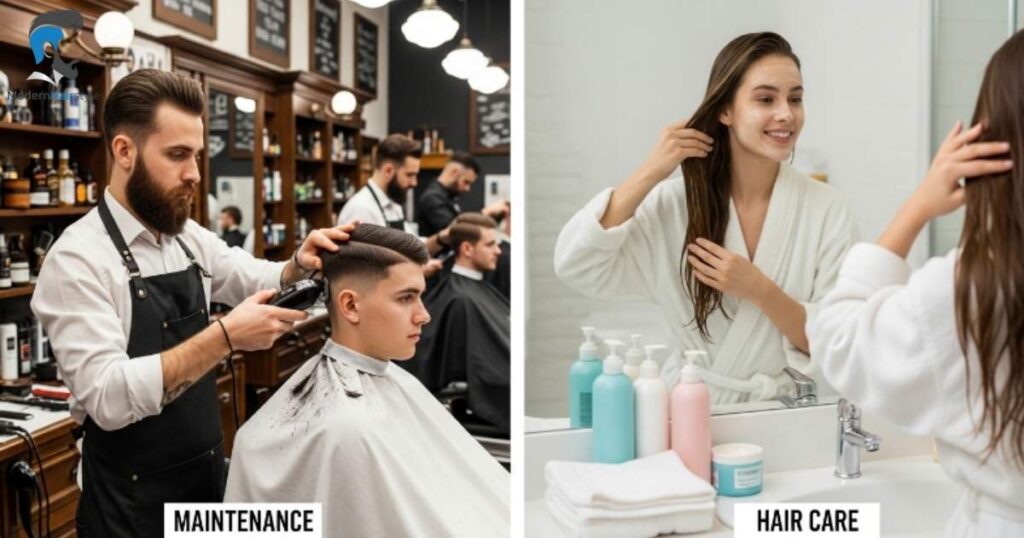
Barber Visits
The low taper fade textured fringe is relatively low maintenance compared to high skin fades but it still needs regular attention to stay sharp.
Recommended visit frequency:
| How Sharp You Like It | Barber Visit Schedule |
| Very clean, tight fade | Every 2–3 weeks |
| Natural, slightly grown-out look | Every 3–5 weeks |
| Relaxed and casual | Every 4–6 weeks |
What your barber will address each visit:
- Sharpen the fade and clean the neckline
- Trim the fringe back to your preferred length
- Remove any weight that has built up on top
- Refine the layers if the fringe has lost its shape
Waiting too long between visits means the taper loses its clean graduation and the fringe can become heavy and flat two things that undermine the whole point of the style.
At-Home Care
Keeping your hair and scalp in good condition between visits makes a noticeable difference in how the style holds and how the fringe sits.
- Shampoo 2–3 times a week Daily washing strips natural oils and can make the fringe harder to style with texture. Find the rhythm that suits your scalp.
- Condition regularly A light conditioner keeps the fringe soft and manageable without weighing it down.
- Avoid heavy products Thick gels and waxes can make the fringe look greasy and stiff. Stick to matte-finish products for a natural result.
- Protect from humidity If your hair tends to frizz, a light anti-humidity spray can help the fringe hold its shape throughout the day.
- Finger-comb gently Avoid dragging a brush or comb through the fringe repeatedly. Fingers preserve the texture and layering the barber created.
Who This Haircut Suits Best

Face Shapes
One of the genuine strengths of the low taper fade textured fringe is how adaptable it is across different facial structures.
| Face Shape | How the Cut Helps | Fringe Tip |
| Round | Low taper adds definition; fringe adds forward projection | Keep fringe slightly longer to add length to the face |
| Square | Soft, choppy fringe softens a strong jawline and angular features | Avoid very blunt fringes; go for a natural, layered finish |
| Oval | Already balanced almost any version works | Choose based on personal preference |
| Long or rectangular | More width on top helps balance the face | Keep fringe shorter; avoid too much height |
| Heart or diamond | Fringe fills in the narrow forehead area | Medium-length fringe with volume at the crown works well |
Hair Types
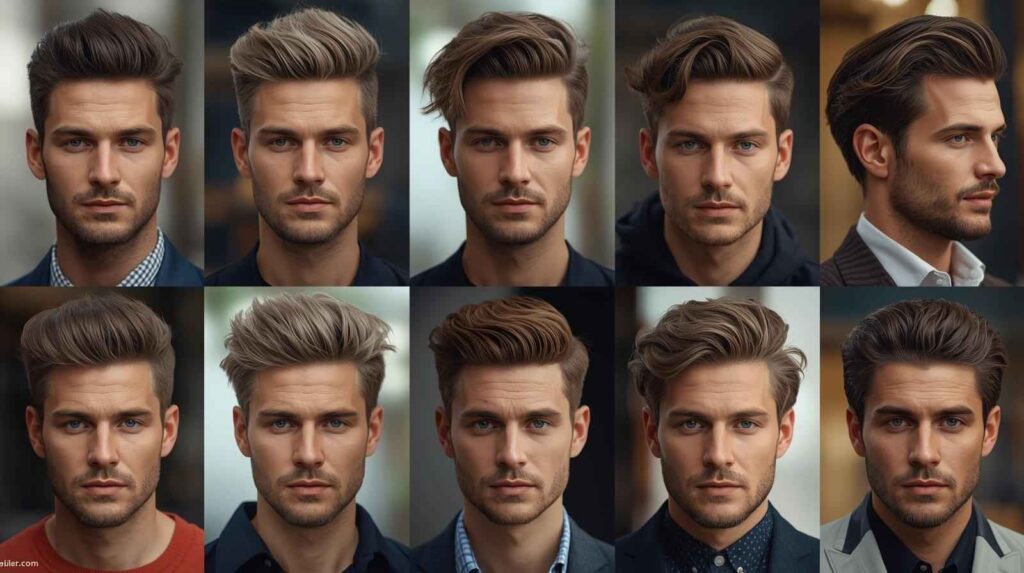
The cut adapts to every hair texture but each type benefits from slightly different cutting and styling approaches.
Straight hair Point cutting creates texture that straight hair would not have naturally. The fringe gains movement and dimension through technique rather than natural wave. Products with grip (matte clay, texture powder) are essential.
Wavy hair The natural wave does much of the work. The barber follows the wave pattern when cutting the fringe so it enhances rather than fights the texture. Light products and air-drying are usually enough.
Curly hair The low taper controls the width that curly hair naturally builds on the sides. Extra fringe length compensates for shrinkage when the hair dries. Curl cream keeps the coils defined and soft.
Fine hair Extra layers add the illusion of volume. Keeping the fringe at a medium length prevents it from looking limp. Thickening spray before blow-drying makes a significant visible difference.
Thick or coarse hair The barber may use slide cutting to remove internal bulk without shortening the fringe. The style actually looks best on thick hair because the texture holds its shape all day.
The Style’s Journey and What’s Ahead
The low taper fade textured fringe has roots in the classic taper cuts of mid-20th century barbering, mixed with the fringe-forward styles that became iconic in the 1960s. For decades these techniques existed separately. Modern barbering brought them together in a way that suited contemporary men’s grooming: clean where it counts, expressive where it matters.
Social media accelerated the style’s rise from niche to mainstream. When skilled barbers started posting before-and-after content on Instagram and TikTok, the request for this cut spread faster than any trend had before. Men who had never thought about their hair much started bringing reference photos to their barbers and asking for this specific combination.
What is coming next in 2026 and beyond:
- Softer, longer tapers The trend is moving slightly away from ultra-tight skin fades toward more natural, blended tapers that feel less rigid. The low taper is already ahead of this curve.
- Personalized fringe lengths Rather than one standard fringe length, barbers are customizing more aggressively based on individual face shape and hair density.
- Natural texture focus Matte, lived-in finishes continue to replace high-shine, product-heavy looks. The textured fringe fits this direction perfectly.
- Creative additions Some men are pairing the cut with subtle highlights, shaved details along the taper line, or curtain bang influences that split the fringe gently down the center.
- Men’s perms as a companion Loose wave perms are gaining traction as a way to create permanent texture in the fringe without daily heat styling.
The core silhouette clean low taper, expressive textured front is not going anywhere. It is flexible enough to absorb new influences without losing what makes it work.
Low Taper Fade Textured Fringe: Asked Questions
What is the difference between a low taper fade and a mid or high fade?
A low taper starts near the ears and neckline, keeping more length on the sides. A mid fade starts around the temples, and a high fade begins above the ears. The low taper is more subtle, grows out more gracefully, and suits more face shapes.
Can I get this cut if I have thinning hair?
Yes. The forward-falling fringe actually helps disguise the forehead and adds apparent fullness at the front. Ask your barber for extra layering to build volume in the top section.
What product is best for a textured fringe?
It depends on your hair type. Matte clay or texture powder for straight or fine hair. Sea salt spray for wavy hair. Lightweight curl cream for curly hair. Avoid heavy gels or waxes that create stiffness or shine.
How long does the haircut take at the barbershop?
Most experienced barbers complete this cut in 30 to 45 minutes. If you are adding extra detail work like a line-up or a beard trim, allow a bit more time.
Is this haircut appropriate for formal or professional settings?
Absolutely. Style the fringe neatly forward and keep it at a moderate length and it reads as polished and contemporary in almost any setting. The low taper keeps the sides clean and professional.
Can boys and teens wear this style?
It is one of the most popular cuts for younger men right now. The sides stay tidy, the fringe can be kept at a school-appropriate length, and the overall look feels modern without being extreme.
How do I know if my barber is cutting it correctly?
The fringe should have visible separation and movement not a blunt wall of hair. The fade should blend invisibly from very short near the ears to longer toward the crown. If either element looks too harsh or flat, communicate clearly and ask for adjustments.
Can I grow this cut into a different style later?
Yes. The top and fringe can grow into a medium-length cut that is easy to push back, part to the side, or wear as curtain bangs. The fade slowly transitions into a natural taper as it grows. Tell your barber you plan to grow it out and they can shape the cut to transition smoothly.
Conclusion
The low taper fade with textured fringe is not just another trend that comes and goes. It is a genuinely smart haircut clean where it needs to be, expressive where it counts. It suits almost every hair type, every face shape, and every lifestyle. Whether you are heading into a boardroom or a barbecue, this cut keeps up without asking much in return. That kind of everyday reliability is rare, and it is exactly why this style keeps growing in popularity year after year.
If you are thinking about making the switch, now is the right time. Bring a reference photo, talk to your barber about your daily routine, and ask for a low taper fade with a textured fringe. Get the maintenance right, use the right products for your hair type, and this cut will reward you every single morning. It is one of those haircuts that genuinely makes life a little easier.
FAQs
How often should I visit my barber for this cut?
Every 3 to 5 weeks to keep the taper sharp and fringe at the right length.
Does a textured fringe work on straight hair?
Yes point cutting creates the texture even when your hair is naturally straight.
What is the easiest way to style this at home?
Apply a small amount of matte clay to damp hair, push the fringe forward with your fingers, and air dry or use a blow-dryer on low.
Is the low taper fade good for growing out?
Yes it grows out more naturally than higher fades, staying presentable longer between trims.
Can I add color or highlights to this cut?
Absolutely. Subtle highlights in the fringe area add dimension and make the textured layers stand out even more.
What is the difference between a textured fringe and a blunt fringe?
A textured fringe is point-cut for a piecey, separated finish. A blunt fringe is cut straight across for a heavier, uniform line.
Is this cut high maintenance?
Not at all. A quick finger-style with minimal product each morning is usually enough. The main commitment is regular barber visits every few weeks.
Does this haircut work for men with beards?
Yes the clean low taper pairs beautifully with a well-kept beard. The contrast between the fade and beard creates a sharp, defined look.

