
Mens wedding guest outfits start with one decision: read the invitation dress code before choosing any suit, shirt, or shoe. That single line controls formality, color, fabric, tie rules, and shoe rules for the day. Guessing from venue photos or other guests often creates the wrong level of dress.
Mens wedding guest outfits work best when venue, time, season, and couple requests adjust the code, rather than replace it. A beach venue softens fabric and shoes, but it does not turn black tie into shorts. An evening ballroom darkens color, but it does not turn casual into a tuxedo.
Mens wedding guest outfits should always respect three guest rules: never wear white, ivory, or cream, never outshine the couple, and never copy the groom exactly. Photos last for decades, so classic choices age better than loud trends or novelty pieces. A simple, well fitted outfit photographs cleanly in every setting.
Mens wedding guest outfits also need comfort for a long day: ceremony standing, dinner seating, photos outdoors, and dancing late. Shoes must be broken in, fabric must breathe or insulate, and fit must allow movement without pulling. Style without comfort becomes visible by the second hour.
Mens wedding guest outfits reward early planning more than last minute shopping or rental. Fit checks, alterations, shoe break in, and weather backup plans need days, not minutes. A checklist two weeks before the wedding prevents most avoidable mistakes.
The Dress Code Decision
Read the Invitation First
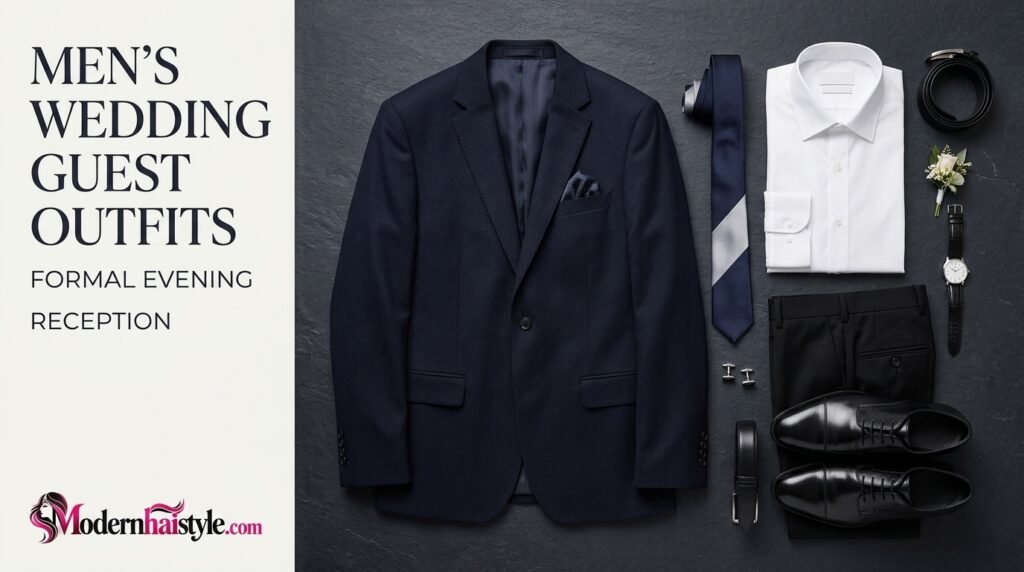
The invitation dress code is the strongest signal, because the couple chose it for their venue, time, and vision. Wording like black tie, cocktail, semi formal, dressy casual, casual, or beach formal each carries a different outfit formula. If wording is unclear, check the wedding website before asking other guests for guesses.
Wedding website details often explain theme, venue surface, weather, and couple requests in plain language. Look for notes on grass, sand, outdoor heat, cold halls, or specific colors to avoid. Those notes can change shoes, fabric, and layers without changing the core code.
Asking the couple is respectful when wording is unusual, like garden chic, festive, or themed dress. Ask early, ask once, and ask for a simple example rather than a full outfit approval. Couples appreciate a short question more than a long style debate.
Other guests are weak evidence, because friends may guess, follow different codes, or wear the wrong level themselves. One overdressed friend does not make a tuxedo correct for a casual barn wedding. Trust the invitation first, then the couple, then a trusted wedding party member.
When No Dress Code Is Given
No dress code does not mean no expectation, because weddings still carry ceremony, photos, and celebration norms. A dark navy or charcoal suit with a white or pale blue shirt and polished shoes is the safest default. That level reads respectful at most venues without looking like the groom.
No dress code at a daytime outdoor wedding can soften to a lighter suit or a blazer with dress trousers, depending on venue and season. Keep a collared shirt, tailored trousers, and real shoes, even when the setting feels relaxed. Shorts, jeans, sneakers, and flip flops still fail the wedding test.
No dress code at an evening venue should stay darker and more formal, because evening light and ballroom settings raise expectations. A dark suit, silk or matte tie, and black or dark brown shoes suit most evening rooms. Light summer suits can look thin and casual after dark.
When in doubt, dress one step up, because removing a tie or jacket at the reception is easier than fixing an underdressed arrival. A suit jacket can come off during dancing, while a missing jacket cannot appear from nowhere. Overdressing slightly is safer than underdressing clearly.
Time, Venue, and Season Adjustments
Time of day changes color and formality, with daytime weddings allowing lighter colors and softer fabrics. Evening weddings favor darker suits, richer fabrics, and more polished shoes. A light gray daytime suit can look washed out under evening ballroom light.
Venue type changes shoes, fabric, and layers, but not the stated code level. Grass calls for wider soles or loafers that resist sinking, while sand calls for loafers or leather sandals only when allowed. Church venues favor modest, structured outfits, while barn venues allow texture and boots.
Season changes fabric weight, color, and outerwear, with summer favoring linen, cotton, and tropical wool. Winter favors wool, flannel, tweed, and a proper overcoat for travel between venues. Spring and fall sit between, with midweight wool and richer seasonal colors.
Couple requests outrank general rules, including requests for specific colors, themes, or cultural dress. Follow a stated color palette through tie, pocket square, or shirt, without copying wedding party colors exactly. If a request conflicts with a guest rule, ask the couple for clarification early.
Dress Code Ladder From White Tie to Casual
White Tie
White tie is the most formal wedding code, and it is rare outside state events, galas, and very traditional ceremonies. Men wear a black tailcoat with matching trousers, a white wing collar shirt, a white bow tie, and a white waistcoat. Black patent shoes complete the exact formula, with no room for creative substitution.
A tuxedo is not a white tie substitute, according to the Men’s Wearhouse wedding page, which states that distinction clearly for guests. Wearing a standard tuxedo to a white tie wedding reads as underdressed, even when the tuxedo is expensive. Rental specialists should confirm tailcoat fit, shirt style, and waistcoat details in advance.
White tie accessories stay minimal and formal, with cufflinks, a white pocket square, and optional white gloves for the most traditional events. Novelty colors, patterned ties, and casual shoes break the code immediately. Fit matters most, because tailcoats expose poor shoulder and length choices quickly.
Black Tie
Black tie means a tuxedo, white tuxedo shirt, black bow tie, and black patent or highly polished shoes. Satin lapels, a cummerbund or waistcoat, cufflinks, and a white pocket square complete the classic look. Evening timing is typical, because black tie suits after dark formality best.
Midnight blue tuxedos can appear almost black under artificial light, and they remain a classic alternative in many black tie guides. Black remains the safest choice for a first tuxedo rental or purchase, because it matches every black tie room. Color should never distract from the couple or the wedding party.
Self tied bow ties are preferred by traditional guides, because pre tied versions can look stiff and flat in photos. Practice tying before the wedding day, and bring a backup plan if the knot fails under pressure. A rental shop can demonstrate the knot and check shirt collar fit.
Black tie in summer still requires a tuxedo, but fabric weight can ease heat without breaking the code. RealMenRealStyle notes a lightweight wool tux around 8 to 9 ounces for beach or extreme heat settings. Velvet jackets suit December better than August, so seasonal fabric choice matters even at formal levels.
Black Tie Optional and Formal
Black tie optional means a tuxedo is welcome, but a dark suit and tie is also acceptable for guests. Men’s Wearhouse frames formal and black tie optional weddings around a dark navy or charcoal suit with a dress shirt and tie. That option helps guests who do not own or want to rent a tuxedo.
Formal without the word optional still points to a tuxedo or a very dark, structured suit with a tie. SherriHill places formal above cocktail, with dark suits and ties for men and long or dressy midi dresses for women. Evening formal weddings favor darker colors, silk ties, and polished black shoes.
Light gray suits fail black tie optional, according to RealMenRealStyle, because the code still means dark, even in summer. A charcoal or midnight navy suit with a white shirt, dark tie, and black shoes keeps the evening tone correct. Summer formality comes from fabric weight, not from pale color.
Choosing between tuxedo and suit depends on ownership, rental cost, and how often formal events occur. Guests who attend formal weddings often can justify a tuxedo purchase or a quality rental. Guests attending once should choose a dark suit they can reuse for work and other weddings.
Cocktail Attire
Cocktail attire sits below black tie and above business casual, with a dark suit and tie as the core formula. Color and pattern have more room here, so burgundy ties, patterned pocket squares, and textured shirts can add personality. The suit should still be tailored, dark, and polished, not casual or broken.
Cocktail color often means navy, charcoal, or deep green, with white or pale blue shirts and leather dress shoes. Evening cocktail weddings skew darker, while daytime cocktail events allow mid gray or softer tones. Pattern should stay subtle, because loud checks or bright suits can outshine the couple.
Cocktail tie rules favor a tie at the ceremony, with removal at the reception when the vibe allows. That flexibility helps guests adapt to dancing, heat, and long evenings without arriving underdressed. Bring a tie even when uncertain, because removal is easy and absence is hard to fix.
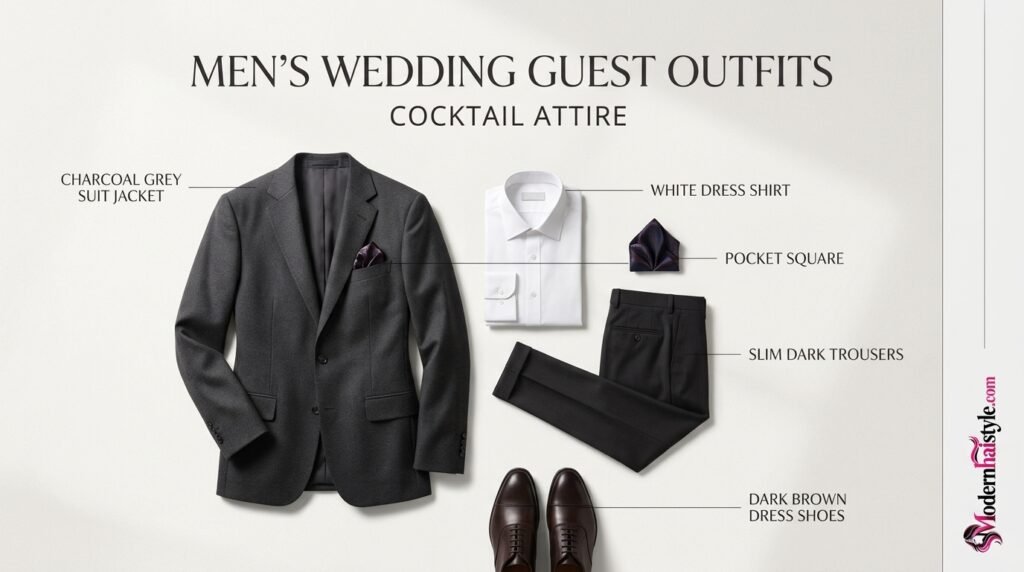
Cocktail broken suits can work when the jacket and trousers coordinate well, according to some wedding guides, but a matched suit remains safer. A broken suit with a strong color contrast can read as smart casual rather than cocktail. When the invitation says cocktail, default to a matched suit first.
Semi Formal Attire
Semi formal attire means a matched suit and tie for men, according to Luxe Digital, which stresses that rule clearly. Navy and charcoal carry almost every semi formal invitation, with a collared dress shirt, tie, and leather dress shoes. A tuxedo is one rung too formal, while a jacket without a tie is one rung too casual.
Blazer plus odd trousers reads as smart casual, not semi formal, even when the blazer is tailored and the trousers are neat. That distinction matters most at weddings, where guests often mistake a sport coat outfit for a suit. Semi formal requires jacket and trousers cut from the same cloth.
Khakis and chinos sit below semi formal, even when paired with a jacket and tie, according to Luxe Digital. Tailored wool trousers that match the jacket are the correct base, not cotton casual trousers. Evening semi formal weddings ask for navy or charcoal with black shoes, while afternoon events allow mid gray and brown shoes.
Semi formal color mistakes include white, ivory, and anything close to wedding party colors, which can create confusion in photos. Dark suits keep focus on the couple, while ties and pocket squares add controlled personality. Keep patterns subtle and metals matched across belt, watch, and cufflinks.
Dressy Casual and Casual
Dressy casual means a step above everyday casual, with a jacket recommended even when a full suit is not required. Tip Top Canada frames dressy casual and smart casual as lean dressier, with a sport jacket or blazer added for polish. A collared shirt, dress trousers or chinos, and polished shoes complete the base.
Casual wedding attire still means a collared shirt, proper trousers, and real shoes, according to Tip Top Canada casual guidance. No suit is required and no tie is required, but shorts, jeans, sneakers, and flip flops remain wrong unless the couple explicitly allows them. Backyard, barn, brewery, garden, and beach weddings often use this level.
Casual jacket choices include unstructured blazers, sport coats, and textured jackets that suit season and venue. Herringbone or check jackets feel right in fall, while lighter colors suit spring and summer. A jacket instantly makes a casual outfit wedding ready, even without a tie.
Casual shoe choices include polished oxfords, loafers, and clean minimalist sneakers only when the couple says so. Tip Top Canada lists polished oxfords as the safe choice, with sneakers as an exception rather than a default. Break in any new shoe before the wedding, regardless of formality.
Beach Formal and Destination
Beach formal means dress up while acknowledging sand, heat, and outdoor light, according to RealMenRealStyle. Light linen or cotton suits in pale colors suit the setting, with loafers and no socks as a common choice. No tie is required, but a pocket square or light shirt can keep the look intentional.
Beach formal shoes must handle sand without sinking or filling with grit, so loafers beat narrow dress shoes on many beaches. Leather sandals suit only when the couple explicitly allows barefoot or sandal friendly dress, and flip flops never suit a formal beach wedding. Check venue surface notes before choosing footwear.
Destination weddings add packing, climate, and cultural rules to the beach formal base, with wrinkle management as a major concern. Linen wrinkles naturally, so a linen blend or tropical wool can travel better for some guests. Pack a spare shirt, steam at the hotel, and test the outfit in heat before departure.
Barefoot rules require explicit couple permission, because assuming barefoot is allowed can create an awkward arrival. Some beach ceremonies invite barefoot guests, while others expect shoes on sand paths and grass areas. Bring loafers even when barefoot is likely, so the choice stays flexible.
Garden, Barn, Church, and Ballroom Adjustments
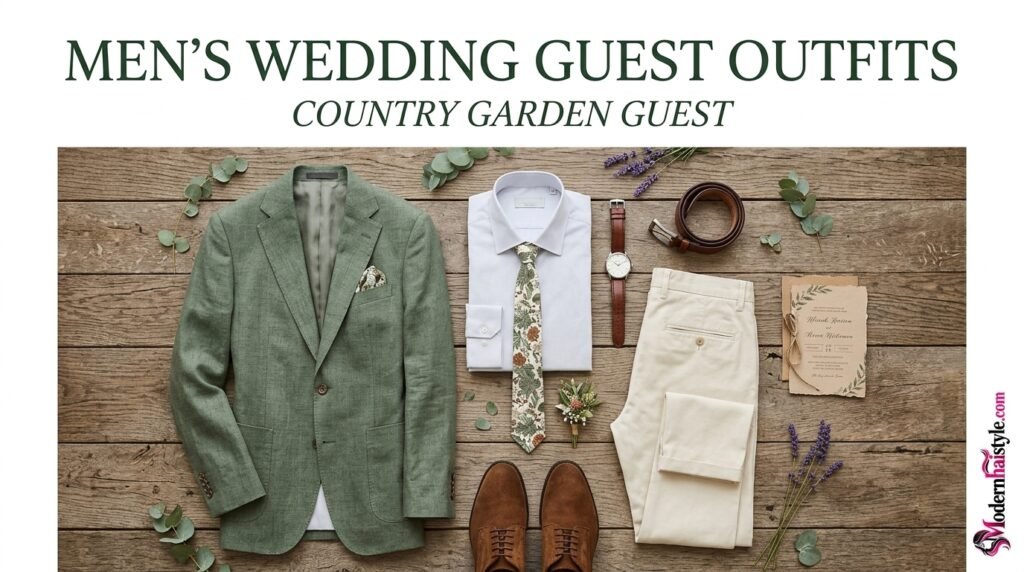
Garden weddings favor light suits, pastel shirts, and floral or subtle patterned ties, with shoes that handle grass. Brown loafers suit many garden looks, while narrow heels or thin soles can sink into lawns. Sunglasses help outdoor ceremonies, but remove them indoors and for photos when appropriate.
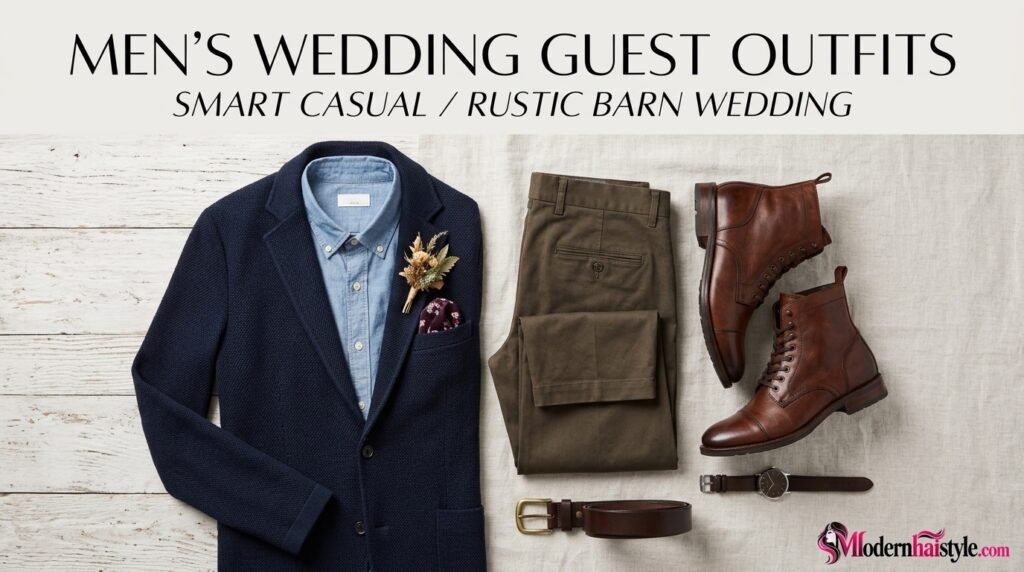
Barn weddings allow texture, boots, and richer fall colors, but a full tuxedo with patent shoes usually feels overdressed. Tweed blazers, wool suits, and leather boots suit rustic venues without losing polish. Dust, gravel, and uneven floors make sturdy soles more practical than delicate dress shoes.
Church weddings favor modest, structured outfits with full sleeves, collared shirts, and tailored trousers or suits. Short sleeves, open collars, and very casual fabrics can feel out of place in traditional religious settings. When in doubt, choose a suit and tie for a church ceremony, even at a daytime wedding.
Ballroom weddings favor structured suits, darker colors, and polished shoes, with evening formality as the dominant cue. Overcoats and scarves suit winter travel, but remove outerwear indoors to reveal the full outfit. Ballroom floors reward leather soles and broken in shoes for dancing.
| Dress code | Core outfit | Shirt | Tie | Shoes |
| White tie | Black tailcoat, matching trousers, white waistcoat | White wing collar shirt | White bow tie | Black patent shoes |
| Black tie | Tuxedo | White tuxedo shirt | Black bow tie | Black patent or polished shoes |
| Black tie optional, formal | Tuxedo or dark navy, charcoal suit | White or pale blue dress shirt | Dark tie, silk preferred | Black dress shoes |
| Cocktail | Dark matched suit | White or pale blue shirt, pattern welcome | Tie at ceremony, optional at reception | Leather dress shoes |
| Semi formal | Matched suit, no broken suit | Collared dress shirt | Tie required | Leather dress shoes, black evening, brown afternoon |
| Dressy casual | Blazer plus dress trousers or chinos | Collared shirt | Tie optional | Polished oxfords or loafers |
| Casual | Blazer optional, dress trousers or chinos | Collared shirt | Tie optional | Polished oxfords, loafers, or approved clean sneakers |
| Beach formal | Light linen or cotton suit | Light dress shirt, linen welcome | No tie required | Loafers, leather sandals only if allowed |
Outfit Formulas by Code
Twelve Ready Formulas
- Black tie classic: Black tuxedo, white shirt, black bow tie, patent oxfords, white pocket square, cufflinks.
- Black tie summer: Lightweight wool tuxedo, white shirt, black bow tie, polished black shoes, minimal accessories.
- Formal evening: Charcoal suit, white shirt, dark silk tie, black oxfords, white pocket square.
- Formal daytime: Navy suit, pale blue shirt, burgundy tie, dark brown oxfords, subtle pocket square.
- Cocktail evening: Navy suit, white shirt, patterned tie, black derby shoes, pocket square with color.
- Cocktail daytime: Mid gray suit, pale blue shirt, textured tie, brown loafers, light pocket square.
- Semi formal evening: Navy matched suit, white shirt, dark tie, black oxfords, simple cufflinks.
- Semi formal afternoon: Charcoal matched suit, pale pink or blue shirt, patterned tie, brown shoes.
- Dressy casual spring: Light gray blazer, navy dress trousers, white shirt, brown loafers, pocket square.
- Casual summer: Unstructured navy blazer, stone chinos, pale blue linen shirt, brown loafers.
- Beach formal: Beige linen suit, white shirt, no tie, tan loafers, sunglasses for ceremony.
- Winter ballroom: Charcoal wool suit, white shirt, dark tie, black oxfords, charcoal overcoat for travel.
Formula Rules That Keep Looks Clean
One focal point keeps an outfit polished, because suit, tie, pocket square, and shoes should not all compete. Choose a patterned tie or a colored pocket square, but not both at full strength. Neutral suits let one accessory carry personality without noise.
Suit color controls the whole look, because navy and charcoal accept the widest shirt, tie, and shoe combinations. Light gray and tan suit daytime and summer, but they need careful shoe and shirt choices to avoid looking washed out. Black suits suit evening and formal events, but they can look harsh in bright daylight.
Shirt color should lighten the outfit, with white as the safest formal choice and pale blue as the most versatile daytime choice. Pastel pink, lavender, and pale green suit semi formal and casual weddings when patterns stay subtle. Dark shirts with dark suits can hide in photos and reduce contrast.
Tie color should complement, not match exactly, because an identical tie and pocket square set looks staged. A tie can echo a shirt tone, suit undertone, or seasonal palette without repeating the same fabric. Pattern scale matters, with small patterns pairing better with patterned shirts than large patterns.
Fit That Makes a Suit Look Expensive
Jacket Fit Checklist
Shoulder seam should sit at the natural shoulder edge, without extending past bone or pulling inward. Extended shoulders look borrowed, while tight shoulders create dents and restrict movement. A tailor can adjust minor issues, but shoulder reconstruction is expensive and slow.
Jacket length should cover the seat and reach about mid hand when arms hang naturally, with variation by style and height. Very short jackets can look trendy but less formal, while very long jackets can shorten legs visually. Try the jacket with the intended trousers and shoes, not with jeans.
Jacket button rule says fasten the top button on a two button jacket and leave the bottom button undone. Single button jackets fasten when standing and open when seated, while three button jackets usually fasten the middle button only. Buttoning the bottom button pulls fabric and breaks the jacket line.
Vent stitches are temporary X stitches on vents and pockets that must be removed before wear, according to HeWore mistake guidance. Leaving them in restricts movement and signals an unworn, unprepared outfit in photos. Check vents, pockets, and lapel tags before leaving home.
Trouser Fit Checklist
Trouser waist should sit comfortably without a belt holding the whole outfit together, because belts are finishers, not structural supports. A waist that gaps when seated or pinches when standing needs alteration before the wedding. Bring the intended belt and shoes to the fitting.
Trouser break describes how fabric meets the shoe, with a slight break as the safest wedding choice for most men. No break suits modern slim looks, while a full break can pool fabric and look untidy. Test break while standing, walking, and sitting, because wedding days include all three.
Trouser taper should narrow gently below the knee without clinging to calf or ankle, because extreme taper can look casual at formal weddings. Straight or lightly tapered legs suit most dress codes and shoe types. Very wide legs need careful shoe balance to avoid a dated silhouette.
Trouser length with shoes must be checked with the actual wedding shoes, because shoe height changes hem position. A hem that works with oxfords may drag with loafers or float with boots. Alterations should use the wedding shoe, not a similar pair.
Shirt, Tie, and Shoe Fit
Shirt collar should close comfortably with a tie without gaping when buttoned, because collar gap undermines the whole neckline. A collar that pulls open with a tie needs a larger neck size or a different collar style. Test collar fit after a full day of wear, not only in the shop.
Shirt sleeve should show about half an inch of cuff beyond the jacket sleeve when arms hang naturally. Too much cuff looks sloppy, while no cuff looks like a short sleeve under a jacket. Cufflinks need double cuffs on formal shirts, so check shirt style before buying accessories.
Tie length should reach the belt buckle when tied, with the narrow end hidden behind the wide blade. A tie that ends far above or below the belt breaks proportion in photos. Practice the knot with the actual shirt collar, because collar height changes knot size.
Shoe fit should allow toes to move without heel slip, because wedding days involve standing, walking, and dancing. Break in new shoes over several short wears before the wedding, as Alibaba wedding guidance also warns. Sore feet change posture, mood, and photos faster than any outfit flaw.
Fit by Body Type and Height
Short men benefit from higher trouser rises, shorter jacket lengths, and tapered legs that lengthen the leg line visually. Monochrome dark outfits and vertical patterns can add perceived height without tricks. Avoid very wide trousers, long jackets, and heavy patterns that overwhelm a smaller frame.
Tall men benefit from balanced jacket length, mid rise trousers, and patterns that break up height without shortening legs. Three button jackets and textured fabrics can add proportion, while very short jackets can look undersized. Check sleeve length carefully, because tall sizes often need longer sleeves.
Slim men benefit from slim, not skinny, fits that follow the body without pulling or clinging. Structured shoulders and light padding can add balance, while very soft unstructured jackets can look shapeless. Avoid oversized jackets that hide frame and create excess fabric.
Broad or big and tall men benefit from structured jackets, wider lapels in proportion, and trousers with enough room through thigh and seat. Dark colors and vertical textures help, but fit matters more than color alone. A good tailor can adjust waist, seat, and sleeve length for comfort and polish.
| Fit area | Pass check | Fix before wedding |
| Jacket shoulders | Seam at natural shoulder edge | Tailor or change size, do not force |
| Jacket length | Covers seat, about mid hand | Hem or size change by tailor |
| Trouser waist | Comfortable without belt strain | Waist alteration, correct size |
| Trouser break | Slight break, no pooling | Hem with wedding shoes |
| Shirt collar | Closes with tie, no gap | Larger neck size or collar change |
| Tie length | Tip at belt buckle | Re-tie, adjust knot and length |
| Shoe fit | Toes move, heel stays put | Break in, insoles, size change |
Color, Pattern, and Fabric System
Safe Color Palettes by Code
Formal palettes stay dark and restrained, with navy, charcoal, and black as foundations, plus white shirts and dark ties. Burgundy, deep green, and navy ties add controlled color without breaking evening formality. Metallic or neon colors should stay out of formal wedding outfits entirely.
Cocktail palettes allow more color through ties, pocket squares, and shirts, while suits stay dark and tailored. Burgundy, plum, teal, and patterned ties suit cocktail evenings, while pastel shirts suit daytime cocktail events. Color should add interest, not compete with the couple.
Semi formal palettes favor navy, charcoal, and mid gray, with pale blue, white, and pale pink shirts as safe partners. Brown shoes suit afternoon semi formal events, while black shoes suit evening semi formal events, according to Luxe Digital. White, ivory, and cream outfits stay off limits for guests.
Casual palettes allow tan, stone, light gray, olive, and pastel shirts, with brown loafers and lighter belts. Seasonal color should match venue and weather, with lighter tones for summer and richer tones for fall. Bright patterns still need restraint, because casual does not mean loud.
Pattern Rules That Avoid Noise
One pattern at a time is the safest rule, because a patterned suit, patterned shirt, and patterned tie together create visual noise. Pair a patterned tie with a solid shirt, or a patterned shirt with a solid tie and solid suit. Scale should differ when two patterns appear, with one small and one larger.
Subtle patterns include micro checks, small dots, fine stripes, and textured weaves that read as solid from a distance. Large windowpane checks, bold plaids, and strong florals need a very relaxed code and venue to work. Wedding photos amplify pattern, so test the outfit in a photo before the day.
Tie and pocket square patterns should coordinate in color family without matching exactly, because identical sets look staged. A solid pocket square with a patterned tie is safe, while a patterned pocket square with a solid tie also works. Avoid novelty ties with cartoons or slogans unless the couple requests them.
Suit patterns should stay subtle at formal and semi formal weddings, with solid navy and charcoal as the safest choices. Windowpane and check suits suit cocktail and casual weddings better than black tie or formal events. Patterned suits need simpler shirts, ties, and shoes to stay balanced.
Fabric Weights by Season
Summer fabrics include linen, cotton, linen blends, seersucker, and tropical wool, with breathability as the main goal. RealMenRealStyle stresses fabric choice as the part that decides comfort at summer weddings, because heavy wool traps heat quickly. Linen wrinkles naturally, so blends can offer a cleaner look over long days.
Winter fabrics include wool, flannel, tweed, and heavier suiting with structured shoulders and warmer linings. Flannel suits suit cold ballrooms and barn venues, while tweed blazers suit fall and rustic settings. Overcoats protect suits during travel, but remove them indoors to show the full outfit.
Spring and fall fabrics include midweight wool, cotton blends, and textured jackets that handle changing temperatures. Layering with a waistcoat or light overcoat helps when ceremonies are outdoors and receptions move indoors. Check forecasts the day before, because spring and fall weather can shift quickly.
Fabric weight in ounces helps compare suits, with lightweight wool around 8 to 9 ounces suiting hot weddings, according to RealMenRealStyle. Heavier wool above 11 ounces suits winter, while midweight wool around 9 to 11 ounces suits most seasons. Retailers do not always list weight, so ask before buying for a specific season.
| Season | Best fabrics | Avoid | Color direction |
| Summer | Linen, cotton, seersucker, tropical wool | Heavy wool, flannel, velvet | Light gray, tan, stone, pastel shirts |
| Spring | Midweight wool, cotton blend, linen blend | Heavy tweed, velvet | Light gray, navy, pastel, soft patterns |
| Fall | Wool, tweed, flannel | Thin linen, seersucker | Navy, charcoal, burgundy, olive |
| Winter | Wool, flannel, tweed | Linen, seersucker, thin cotton | Charcoal, navy, black, deep tones |
Shoes, Accessories, and Grooming
Shoe System by Code and Venue
Oxford shoes suit formal, black tie optional, cocktail, and semi formal weddings best, with black for evening and dark brown for afternoon. Closed lacing and polished leather signal formality, while scuffed or casual soles undermine a tailored suit. Polish shoes the night before, not minutes before departure.
Derby shoes suit semi formal, cocktail, and dressy casual weddings, with open lacing giving a slightly more relaxed look than oxfords. Dark brown derbies pair well with navy and charcoal suits at daytime events. Black derbies suit evening events when oxfords are unavailable.
Loafers suit casual, beach, garden, and dressy casual weddings, with leather loafers beating suede on wet or sandy ground. Penny loafers and plain loafers look cleaner than heavily decorated styles at weddings. Socks or no socks depends on venue and formality, with dress socks safer at semi formal events.
Brogues and boots suit barn, fall, and rustic weddings, with leather boots handling gravel and uneven ground better than thin dress shoes. Brogue detailing adds texture, but heavy brogues can look casual at formal weddings. Choose boots only when the venue and code allow a rugged finish.
Grass and sand rules require wider soles, loafers, or sturdy shoes that resist sinking, because narrow dress shoes can sink into lawns. Some guests add sole protectors or choose a second pair for outdoor photos, then change for the reception. Check venue surface notes and bring a backup plan for rain.
Tie, Pocket Square, Belt, and Watch Rules
Tie width should match lapel width roughly, because very skinny ties with wide lapels or wide ties with narrow lapels look unbalanced. Slim lapels pair with slimmer ties, while classic lapels pair with classic tie widths. Test tie and lapel together in a mirror before the wedding.
Tie knots should match collar style and face proportion, with four in hand for slim collars and half Windsor for spread collars. Full Windsor suits wide spread collars and larger frames, but it can overwhelm small collars. Practice the knot with the actual shirt to avoid a lopsided result.
Pocket squares should add a controlled accent, with white linen as the safest formal choice and colored silk for cocktail personality. A simple presidential fold suits formal events, while a puff fold suits casual and cocktail events. Never match tie and pocket square fabric exactly, because coordination beats identical matching.
Belt and shoe matching remains a core menswear rule, with black shoes paired with black belts and brown shoes paired with brown belts. Belt shade should sit close to shoe shade, not necessarily identical, because leather tones vary by brand. Suspenders can replace belts with tuxedos and three piece suits when fitted correctly.
Watch and metal matching should stay consistent across watch, cufflinks, tie bar, and belt buckle, with one metal tone dominating. Silver, gold, and black metals should not compete in one outfit, according to CT Magazine UK accessory guidance. One watch, one pocket square, and cufflinks when needed are enough for most weddings.
Grooming and Final Checks
Hair and facial hair should be trimmed, styled, and set a few days before the wedding, not experimented with on the morning. A fresh haircut two to three days before allows natural settling, while a same day cut can look too sharp or unfamiliar. Beard oil, trim, and clean necklines finish the look without distraction.
Skin and fragrance should stay clean and subtle, because strong cologne can overwhelm ceremony seating and photos. Apply fragrance lightly, avoid new skincare products before the wedding, and carry blotting paper for summer heat. Sunscreen matters for outdoor ceremonies, but choose a non greasy formula under dress shirts.
Final checks should include vent stitches removed, bottom button undone, collar closed, tie at belt, shoes polished, and pockets emptied of bulk. HeWore lists backpacks as a mistake, because a smart bag or empty pockets suit wedding photos better. Leave bulky items in the car or coat check when possible.
Season and Venue Playbook
Summer and Beach
Summer weddings demand breathable fabric, light colors, and a plan for sweat, sun, and outdoor standing. Linen suits, cotton shirts, and tropical wool suits handle heat better than heavy wool or flannel. A spare shirt and pocket square can refresh the look between ceremony and reception.
Summer color favors light gray, tan, stone, pastel blue, and pale pink shirts, with brown loafers for daytime events. Evening summer weddings can darken to navy or charcoal, even when the day is hot. Avoid all white outfits, because white remains reserved for the couple.
Beach weddings add sand, wind, and sun to summer rules, with linen suits and loafers as the practical base. Wind can lift jackets and ties, so unstructured blazers and secure pocket squares help. Sunglasses suit outdoor ceremonies, but remove them for indoor photos and evening events.
Summer rain plans need a compact umbrella, a water resistant shoe plan, and a jacket that can handle humidity. Check forecasts the morning of the wedding, because summer storms can change ground conditions quickly. Arrive early enough to dry shoes and adjust layers before photos.
Spring and Garden
Spring weddings favor light gray suits, pastel shirts, and floral or subtle patterned ties, with garden venues as a common setting. Midweight wool and linen blends handle cool mornings and warm afternoons better than single season fabrics. A light blazer layer helps when ceremonies start outdoors and receptions move inside.
Garden shoes need wider soles or loafers for grass, because narrow dress shoes can sink and stain. Brown loafers suit many garden looks, while black oxfords suit more formal garden weddings. Check venue paths, because gravel, lawn, and stone each favor different soles.
Spring patterns can include small florals, micro checks, and pastel ties, but scale should stay subtle for guests. A floral tie with a solid shirt suits garden weddings, while a floral suit can outshine the couple. Keep one pattern focal point and let the rest stay quiet.
Fall and Barn
Fall weddings favor wool, tweed, flannel, and richer colors like burgundy, olive, and charcoal, with texture as a key feature. Tweed blazers, wool suits, and leather boots suit barn venues without losing polish. Layering with a waistcoat adds warmth for outdoor ceremonies and cool evenings.
Barn venues add dust, gravel, and uneven floors, so sturdy leather shoes and darker trousers handle conditions better than delicate fabrics. A full tuxedo usually feels overdressed at a barn wedding, while a textured suit or blazer outfit feels intentional. Check heating, because barns can swing from warm to cold quickly.
Fall color should stay rich but not loud, with burgundy ties, olive accents, and charcoal suits as safe combinations. Bright orange or neon accents can clash with fall decor and wedding party colors. Earth tones suit fall photos, especially in outdoor and barn settings.
Winter and Ballroom
Winter weddings favor wool and flannel suits in dark tones, with overcoats, scarves, and gloves for travel. HeWore layering guidance starts with a moisture wicking undershirt, then dress shirt, tie, suit, waistcoat, and topcoat for cold weather. Remove outerwear indoors to reveal the full outfit and avoid overheating.
Ballroom weddings favor structured suits, polished shoes, and evening formality, with dark colors and silk ties. Dance floors reward broken in leather soles and comfortable fit, because guests spend hours standing and moving. Avoid heavy boots indoors, because they can look casual under ballroom light.
Winter accessories include leather gloves and neutral scarves outdoors, but remove them indoors for photos and dining. A dark overcoat in black, navy, or gray suits most winter weddings, while bright outerwear can clash with formal dress. Check coat check availability before choosing a bulky coat.
Budget, Rental, and Reuse
Buy, Rent, Borrow, and Secondhand
Buying a navy suit gives the best reuse value, because one well fitted navy suit can serve weddings, work, dinners, and funerals. Navy suits accept white, pale blue, pink, and patterned shirts, plus black and brown shoes. Buy quality fabric and fit first, then add ties and pocket squares for variety.
Renting a tuxedo suits black tie weddings and rare formal events, because rental avoids storage and cleaning costs. Alibaba wedding budget content lists tuxedo rental around 100 to 150 dollars, but that figure is a page claim and must be verified with current US rental shops. Book rental fittings early, because sizes and styles can sell out during wedding season.
Borrowing a suit works only when fit, length, and condition match the borrower well, because a borrowed suit that fits poorly looks worse than a cheaper owned suit. Check shoulders, jacket length, trouser length, and shoe size before accepting a loan. Alterations on borrowed suits need owner permission and a clear return plan.
Secondhand suits can offer strong value through reputable resale shops, but condition, fabric, and fit need careful checks. Look for intact linings, working buttons, clean lapels, and no moth damage or strong odors. Budget for cleaning and alterations, because secondhand savings can disappear without them.
Budget Tiers With Dated Price Guidance
Budget tier focuses on one versatile suit, existing shoes, and minimal new accessories, with alterations as the main investment. Alibaba wedding budget content lists alterations under 50 dollars as a page claim, but tailors vary by city and task, so get a local quote. Fit beats brand at this tier, because a tailored budget suit photographs better than an untailored premium suit.
Mid tier adds a second shirt, a quality tie, polished shoes, and a proper overcoat or blazer for season. A navy suit plus a charcoal suit covers most wedding codes, seasons, and venues for frequent guests. Shoes should be leather, resoleable, and broken in, because cheap shoes fail fastest at weddings.
Premium tier adds a tuxedo, a linen suit, and a tweed or flannel suit for season specific weddings, plus quality accessories. Premium spending should focus on fabric, construction, and fit, not on loud branding or novelty details. A premium suit that fits poorly wastes money faster than a mid tier suit that fits perfectly.
Rental vs buy math should count weddings per year, formal frequency, storage, cleaning, and alteration costs over three years. Renting wins for one black tie event every few years, while buying wins for frequent formal guests. Include shoe and accessory costs, because rental packages vary in what they include.
| Route | Best for | Main cost to verify | Main risk |
| Buy navy suit | Frequent guests, work reuse | Suit, shoes, alterations, cleaning | Poor fit without tailoring |
| Rent tuxedo | Rare black tie events | Rental fee, deposit, late fees | Size or style sold out |
| Borrow suit | One event, close fit match | Cleaning, minor alterations | Poor fit, damage responsibility |
| Secondhand suit | Budget guests, vintage styles | Purchase, cleaning, alterations | Hidden damage, dated fit |
| Buy second suit | Frequent guests, season split | Second suit, shoes, accessories | Overbuying before fit is settled |
Alterations That Transform Fit
Jacket alterations can adjust sleeves, waist suppression, and minor length issues, but shoulder changes are costly and limited. Sleeve length should show shirt cuff, while waist suppression should follow the body without pulling buttons. Bring wedding shoes and shirt to every fitting for accurate checks.
Trouser alterations can adjust waist, seat, taper, and hem, with hem length set by wedding shoe height. Waist adjustments need belt and shirt checks, because a waist that fits standing may gap when seated. Taper changes should stay moderate, because extreme taper can look casual at formal weddings.
Shirt alterations can adjust collar, sleeve, and body fit, but collar size changes need care with tie knots. A shirt that fits the neck and shoulders matters more than a shirt that fits the waist alone. Tuck shirts properly and test with the jacket buttoned and unbuttoned.
Alteration timing should start at least two weeks before the wedding, with a final fitting a few days before departure. Rush alterations cost more and leave less room for fixes, especially during wedding season. Keep tailor contact details and a backup shirt in case of a last minute issue.
Travel, Weather, and Last Minute Rescue
Packing a Wedding Outfit
Packing a suit needs a garment bag, careful folding, and a hotel steam or iron plan on arrival. Roll shirts only when necessary, because dress shirts wrinkle fast in luggage. Pack shoes in bags to protect suit fabric, and fill shoes with socks or ties to hold shape.
Carry on vs checked luggage matters for destination weddings, because lost luggage can ruin a wedding outfit plan. Carry the suit, shirt, tie, shoes, and accessories in hand luggage when possible, with a backup shirt in a second bag. Check airline garment bag rules before packing a long suit bag.
Hotel preparation should include steaming, shoe polishing, and a full outfit try on the night before the wedding. Test the outfit with the actual shoes, belt, and accessories, not with similar items. Photograph the outfit in hotel light to check color, pattern, and fit before the day.
Rain, Heat, and Cold Plans
Rain plans need a compact umbrella, a shoe change plan, and a jacket that can handle moisture without damage. Suede shoes suffer in rain, so leather shoes suit wet forecasts better. Arrive early, dry shoes, and change socks if needed before photos.
Heat plans need breathable fabric, a spare shirt, blotting paper, and water before and during the ceremony. Linen and cotton shirts can show sweat, so undershirts and light colors help manage visible marks. Sit in shade when possible and avoid heavy layers during outdoor ceremonies.
Cold plans need a proper overcoat, scarf, gloves, and a waistcoat or sweater layer that does not bulk under the jacket. Remove outerwear indoors promptly to avoid overheating and wrinkling. Check venue heating, because cold halls and warm dance floors need different layers.
Last Minute Rescue
Last minute suit problems include missing ties, wrinkled shirts, scuffed shoes, and broken buttons, all fixable with a small kit. Pack a spare tie, spare shirt, shoe polish cloth, sewing kit, and stain pen for destination weddings. A local rental shop or tailor can sometimes rescue fit issues with same day service, but call early.
Last minute code confusion can be solved by asking a wedding party member for a quick example, rather than guessing from social media. Choose the safer default suit and tie when no answer arrives before departure. A dark suit with a white shirt and polished shoes rarely fails as a rescue outfit.
Last minute shoe pain can be eased with insoles, heel grips, and a second pair for dancing, but new shoes should never debut at a wedding. Break in shoes over several short wears, and test them on the venue surface when possible. Comfort aids help, but they cannot fix a fundamentally wrong size.
Cultural Sensitivity and Guest Behavior
Respectful Choices Across Cultures
Cultural weddings may invite traditional dress, specific colors, or modest coverage, but guests should follow couple guidance rather than costume ideas. Alibaba wedding cultural content mentions sherwani, kurta, and Nehru jacket options for Indian weddings, plus head covering at Jewish ceremonies. Ask the couple or wedding party before choosing traditional dress, because context and family norms vary.
Religious venues often expect modest, structured outfits with covered shoulders and tailored trousers or suits. Catholic, Jewish, Muslim, and other religious ceremonies each carry different norms, so check venue guidance and couple notes. Shorts, sleeveless shirts, and very casual fabrics can feel disrespectful in traditional settings.
Color symbolism varies by culture, with red symbolizing luck in some Asian contexts and white carrying different meanings across cultures. Do not assume a color rule from one culture applies to another wedding, because couple guidance outranks general color lists. When uncertain, choose a neutral suit and ask about specific color requests.
Head covering should follow venue practice, with kippahs often provided at Jewish ceremonies and other coverings requested by specific venues. Bring a respectful option only when the couple or venue invites it, and follow local practice on removal and placement. Never wear a religious item as a fashion accessory without invitation and understanding.
Guest Behavior That Protects the Couple
Guest behavior includes arriving on time, following photo rules, and respecting seating, speeches, and ceremony quiet. Outfit choices are part of behavior, because dressing correctly shows respect for the couple, family, and venue. A polished guest who follows the code blends into celebration rather than distracting from it.
Photo behavior matters, because wedding photos circulate for years and outfit mistakes become permanent. Classic suits, clean shoes, and restrained accessories photograph better than loud patterns, novelty items, or mismatched metals. Check the full outfit in a photo before leaving, including back, side, and seated views.
Dance floor behavior should protect the outfit and other guests, with jacket removal, tie loosening, and shoe comfort as practical choices. Dance shoes should grip without sticking, because leather soles can slide on polished floors. Remove jackets only when the vibe allows, and keep the shirt tucked and neat.
Mistakes to Avoid
- Wearing white, ivory, or cream as a guest, because those colors compete with the couple in photos and tradition.
- Copying the groom exactly, including suit color, tie, and pocket square combination, which can confuse guests and photos.
- Wearing a tuxedo when the groom is not, because Tip Top Canada warns guests against outdressing the groom.
- Ignoring the invitation dress code, because venue, season, and personal taste never override a stated code.
- Choosing a broken suit for semi formal, because Luxe Digital defines semi formal as a matched suit and tie.
- Wearing khakis to semi formal, because khakis sit below the semi formal line even with a jacket and tie.
- Wearing jeans, shorts, sneakers, or flip flops unless the couple explicitly allows that exact item.
- Leaving vent stitches in, because X stitches restrict movement and signal an unprepared outfit.
- Buttoning the bottom jacket button, because it pulls fabric and breaks the jacket line in photos.
- Wearing unbroken shoes, because blisters and poor posture appear quickly at long weddings.
Tips That Improve Every Outfit
- Read the invitation, then check the wedding website for venue, surface, weather, and couple notes.
- Choose navy or charcoal first when uncertain, because both accept the widest shirt, tie, and shoe combinations.
- Bring a tie even when uncertain, because removal at the reception is easier than finding one later.
- Match belt and shoes by color family, with black with black and brown with brown as the base rule.
- Match metals across watch, cufflinks, and buckle, with one tone dominating the whole outfit.
- Break in shoes over several short wears, and test them on grass, sand, or ballroom floors when possible.
- Steam and polish the night before, with a full try on using actual shoes, belt, and accessories.
- Pack a spare shirt and shoe cloth for destination weddings, heat, rain, and long days.
- Photograph the full outfit in natural and indoor light before leaving, including seated and side views.
- Dress one step up when uncertain, because a jacket can come off but a missing jacket cannot appear.
Frequently Asked Questions
What should men wear to a wedding as a guest?
Men should wear an outfit that matches the invitation dress code, with a matched suit for most formal and semi formal weddings. A dark navy or charcoal suit with a dress shirt, tie, and polished shoes suits most weddings. Casual weddings still need a collared shirt, dress trousers, and real shoes.
What is the dress code for a wedding guest man?
The dress code is the couple’s formality instruction, usually printed on the invitation or wedding website. Common codes include white tie, black tie, black tie optional, formal, cocktail, semi formal, dressy casual, casual, and beach formal. Each code has a different suit, shirt, tie, and shoe formula.
What is white tie for men at a wedding?
White tie means a black tailcoat, matching trousers, white wing collar shirt, white bow tie, and white waistcoat. Black patent shoes complete the formula, with minimal formal accessories. A standard tuxedo is not a white tie substitute, according to Men’s Wearhouse guidance.
What is black tie for men at a wedding?
Black tie means a tuxedo, white tuxedo shirt, black bow tie, and black patent or highly polished shoes. Satin lapels, a cummerbund or waistcoat, cufflinks, and a white pocket square complete the classic look. Black tie weddings usually occur in the evening.
What is black tie optional for men?
Black tie optional means a tuxedo is welcome, but a dark suit and tie is also acceptable. A dark navy or charcoal suit with a white shirt, dark tie, and black shoes keeps the evening tone correct. Light gray suits fail the code, even in summer, because black tie optional still means dark.
What is formal attire for men at a wedding?
Formal attire means a tuxedo or a very dark, structured suit with a tie. Evening formal weddings favor darker colors, silk ties, and polished black shoes. Formal sits above cocktail, with less room for color and pattern than cocktail allows.
What is cocktail attire for men at a wedding?
Cocktail attire means a dark matched suit and tie, with room for color and pattern. Navy, charcoal, and deep green suits suit cocktail weddings, with white or pale blue shirts and leather dress shoes. Ties are expected at the ceremony, with removal at the reception when the vibe allows.
What is semi formal attire for men at a wedding?
Semi formal attire means a matched suit and tie, with no broken suit substitute. Luxe Digital stresses that a blazer plus odd trousers reads as smart casual, not semi formal. Khakis sit below the line, while tailored wool trousers that match the jacket are correct.
What is dressy casual for men at a wedding?
Dressy casual means a jacket is recommended, with dress trousers or chinos and a collared shirt. A tie is optional, but a blazer or sport coat adds the polish that separates dressy casual from everyday casual. Polished oxfords or loafers complete the look.
What is casual attire for men at a wedding?
Casual wedding attire still means a collared shirt, proper trousers, and real shoes. Tip Top Canada defines casual as no suit required and no tie required, but not shorts, jeans, sneakers, or flip flops unless the couple allows them. A blazer instantly makes a casual outfit wedding ready.
What should men wear to a beach wedding?
Men should wear a light linen or cotton suit, a light dress shirt, and loafers at a beach formal wedding. No tie is required, but the outfit should still look intentional and polished. Leather sandals suit only when the couple explicitly allows them, and barefoot needs explicit permission.
What should men wear to a garden wedding?
Men should wear a light suit or blazer with dress trousers, a pastel or white shirt, and grass friendly shoes. Brown loafers suit many garden looks, while narrow dress shoes can sink into lawns. A floral or subtle patterned tie suits garden settings when the pattern stays restrained.
What should men wear to a barn wedding?
Men should wear a wool or tweed suit, or a textured blazer with dress trousers, plus sturdy leather shoes or boots. A full tuxedo usually feels overdressed at a barn wedding, while texture and earth tones feel intentional. Dust and gravel make darker trousers and robust soles practical.
What should men wear to a church wedding?
Men should wear a modest, structured suit with a collared shirt, tie, and tailored trousers at a church wedding. Short sleeves, open collars, and very casual fabrics can feel out of place in traditional religious settings. When uncertain, choose a suit and tie for a church ceremony.
What should men wear to a ballroom wedding?
Men should wear a structured dark suit, polished shoes, and a tie at a ballroom wedding. Evening ballroom settings favor darker colors, silk ties, and leather soles for dancing. Overcoats suit winter travel, but remove them indoors to show the full outfit.
Can men wear jeans to a wedding?
Men should not wear jeans to a wedding unless the couple explicitly allows denim. Dark, well fitted jeans still read as casual at most weddings, and they fail formal, cocktail, and semi formal codes completely. Casual weddings usually still expect dress trousers or chinos instead of denim.
Can men wear sneakers to a wedding?
Men should not wear sneakers to a wedding unless the couple explicitly allows clean, minimalist sneakers. Polished oxfords or loafers suit almost every wedding code, while athletic sneakers break formality and photos. Casual weddings may allow approved sneakers, but they remain an exception, not a default.
Can men wear shorts to a wedding?
Men should not wear shorts to a wedding unless the couple explicitly allows shorts for a specific beach or tropical dress code. Even beach formal weddings usually expect light trousers or a light suit, not shorts. Shorts read as everyday casual and fail ceremony, photo, and reception expectations at most weddings.
Can men wear a black suit to a wedding?
Men can wear a black suit to evening, formal, and black tie optional weddings, with a white shirt and dark tie. Black suits can look harsh in bright daytime light, so navy or charcoal often suit daytime weddings better. Avoid an all black outfit that could read as funeral dress or wedding party dress.
Can men wear white to a wedding?
Men should not wear white, ivory, or cream outfits to a wedding as guests. White remains reserved for the couple in most traditions, and light colors close to white can create confusion in photos. A white dress shirt with a dark suit is different from an all white outfit, and the shirt remains safe.
Can men wear brown shoes with a navy suit?
Men can wear brown shoes with a navy suit, especially at daytime, semi formal, and cocktail weddings. Dark brown shoes suit navy suits well, while black shoes suit evening and formal navy suits better. Match the belt to the shoe color family for a polished result.
Do men need a tie at a wedding?
Men need a tie at black tie, formal, cocktail, and semi formal weddings, with semi formal requiring a tie by definition. Dressy casual and casual weddings make ties optional, but bringing a tie still helps when the vibe is uncertain. Beach formal weddings usually do not require a tie.
Can men wear a blazer without a tie to a wedding?
Men can wear a blazer without a tie at dressy casual, casual, and beach formal weddings. A blazer without a tie fails semi formal, cocktail, formal, and black tie codes, where a tie or bow tie is expected. When uncertain, bring a tie and remove it later if the setting allows.
What color suit is best for a wedding guest?
Navy and charcoal are the best wedding guest suit colors, because they suit most codes, seasons, and venues. Light gray and tan suit daytime and summer weddings, while black suits evening and formal weddings. Avoid white, ivory, and wedding party colors as a guest.
What shoes should men wear to a wedding?
Men should wear leather dress shoes that match code, venue, and suit color, with oxfords for formal events and loafers for casual and beach events. Black shoes suit evening and formal weddings, while dark brown shoes suit daytime navy and charcoal suits. Break in shoes before the wedding and polish them the night before.
Should men wear a tuxedo if the groom is not wearing one?
Men should not wear a tuxedo when the groom is not wearing one, unless the invitation code is black tie or black tie optional. Tip Top Canada warns guests against wearing a tuxedo when the groom is not in one, because it can outshine the groom. Match the stated code, not the highest possible formality.
Conclusion
Mens wedding guest outfits work when code comes first, fit comes second, and personality comes third. A dark suit or tuxedo that fits well, matches the invitation, and respects the couple will beat a loud outfit that guesses wrong. Color, fabric, and shoes should support the code, not fight it.
Mens wedding guest outfits also reward practical preparation: broken in shoes, steamed fabric, matched belt and metals, and a weather plan for the venue. Those details show in photos, comfort, and confidence across a long celebration. Guests who plan early arrive calm, while guests who rush arrive distracted.
Mens wedding guest outfits should end with one simple action: check the invitation code, choose the matching formula, fit the suit with a tailor if needed, and pack a spare shirt and shoe cloth. Ask the couple early when wording is unclear, and dress one step up when doubt remains. That measured choice respects the couple, suits the venue, and lets the guest enjoy the celebration fully.

