Short, sharp and built to last. That is why military haircuts for men never really go out of style. They save time in the morning, stay neat under a cap or helmet, and look good on almost every head shape when cut properly.
This 2026 guide covers the 10 best military haircuts, from the classic high and tight to the flat top, the induction cut and modern fade versions. You will also learn clipper guard lengths, upkeep schedules, face shape matches and the exact words to use at the barbershop.
What Is a Military Haircut?
A military haircut is a short, tapered men’s haircut that meets the grooming standards of armed forces. The sides and back are cut very close to the scalp, and the top is kept short enough to stay neat with or without headgear.
The look comes from practical needs. Short hair is easier to keep clean in the field, fits under helmets, and gives a uniform appearance across a unit.
Here are the traits most military cuts share:
- Tapered or faded sides and back
- Short length on top, from a few millimeters to about an inch
- Clean neckline and edges
- Little or no styling product needed
- Fast to maintain with regular trims
Rules differ by country and branch, so always check your current grooming regulation before you book a cut. Civilians have no such limits, which is why many men copy these styles with a bit more length or a smoother fade.
10 Best Short Hairstyles and Haircuts for Men
Here is a quick list before we go deeper into each style:
- High and Tight
- Regulation Cut
- Military Fade
- Crew Cut
- Flat Top
- Induction Cut
- High and Tight Recon
- Buzz Cut
- Ivy League Cut
- Brush Cut
The first seven have their own sections below. The last three are shorter styles worth knowing, so here is a quick look at them.
Buzz Cut

The buzz cut uses one clipper guard over the whole head. It is the simplest and cheapest option, and it takes about five minutes to maintain at home. A longer guard such as a #3 or #4 looks softer. A #1 or #2 looks more severe.
Ivy League Cut
The Ivy League cut is a longer cousin of the crew cut. The top is left long enough to part or sweep to the side, while the sides stay tapered. It suits men who need a professional look but want a little more length to style.
Related Post: Mid taper fade curly hair: styles, barber guide, and maintenance
Brush Cut

The brush cut keeps the top slightly longer and stands the hair up like bristles. It sits between a crew cut and a flat top, and it works well on thick, straight hair that naturally stands up.
The High and Tight
The high and tight is the signature military haircut. The sides and back are clipped very short, often to bare skin or a #0 or #1 guard, and the cut rises high up the head. A sharp line separates the tight sides from a short layer of hair on top.
Typical specs:
- Sides and back: skin to #1 guard
- Top: about 1/4 inch to 1 inch
- Neckline: clean and tapered
It is popular in Marine Corps culture and with many law enforcement officers. Civilians like it because it looks tidy, and it needs almost no styling. Brush the top forward or use a tiny bit of matte clay if the length allows.
Best for: Oval, square and diamond faces. Men with thinning crowns can also use it, because the short top hides thin areas better than longer styles.
The Regulation Cut
The regulation cut, often called the reg cut, is the classic tapered military cut. The hair blends from very short at the neckline into a slightly longer top. Many barbers also call it a military taper.
Think of it as the safe, standard choice. It is clean and professional.
How to ask for it:
- Short back and sides with a natural taper
- Top about 1/2 inch to 1 inch, cut with scissors or clippers over comb
- Squared or slightly rounded neckline
- Clean edges around the ears
The reg cut works well for office jobs, interviews and anyone who wants a no-fuss cut that never looks out of place.
Military Haircuts with Fade
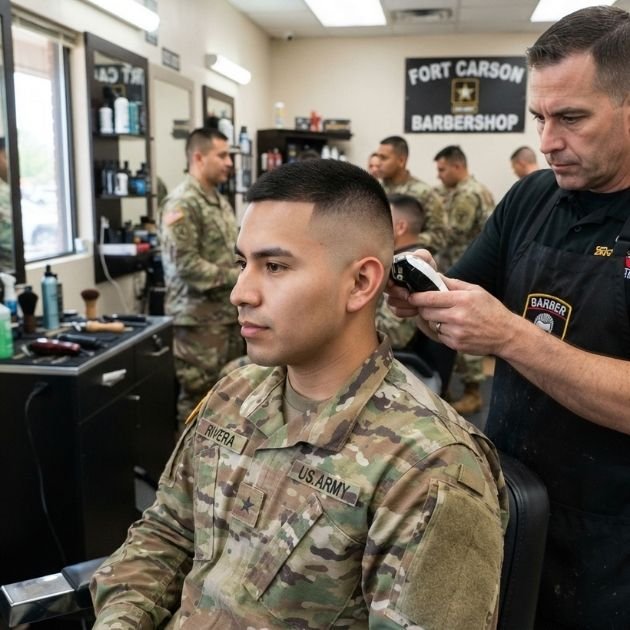
A fade is a smooth gradient from very short hair to longer hair. Military haircuts with a fade have become common because they look sharp while still following the short length rules.
Always confirm that your branch allows fades before getting one. Most rules ask for a tapered look rather than a hard, high contrast style.
Types of Military Fades
- Low fade: starts just above the ear and neckline. It is subtle and safe for strict dress codes.
- Mid fade: starts around the temple area. It balances neatness and style.
- High fade: starts near the top of the head. It gives the strongest contrast and looks closest to a high and tight.
- Skin fade (bald fade): blends all the way down to bare skin for a razor clean finish.
- Taper fade: keeps a natural look by tapering only around the ears and neck.
Who Should Choose a Fade?
A fade works for most hair types, including straight, wavy and curly hair. It is especially good if you want a modern look at work and still meet grooming standards. Keep in mind that fades grow out faster, so plan on a trim every two to three weeks.
The Crew Cut
The crew cut is a classic men’s haircut that started in American universities and was adopted widely by the military. The sides are tapered short, and the top is longer, usually 1 to 2 inches at the front, then graduated shorter toward the crown.
It is more flexible than the high and tight. You can brush the front up for a bit of height or keep it flat and neat.
Why men like it:
- Easy to cut at home with clippers and a comb
- Works on thick or medium hair
- Looks professional and casual at the same time
- Grows out gracefully
Styling tip: Towel dry, then apply a pea-sized amount of paste or pomade and comb the front forward or slightly up.
Best for: Round, oval and rectangular faces. The extra height at the front adds length, which helps round faces look slimmer.
The Flat Top Cut
The flat top is bold and unmistakable. The hair on top is cut to stand upright and then leveled so the surface looks flat like a table. The sides are tapered or faded, with squared corners.
The style became iconic with drill instructors and athletes through the mid 1900s, and it still has a strong presence today.
Key points:
- Needs hair thick and strong enough to stand upright
- Requires a skilled barber with a steady hand
- Top is usually 1/2 inch to 1.5 inches
- Works with square or rounded corners
Upkeep: The flat top asks for more maintenance than most military cuts. Expect a visit every two to three weeks, and use a firm wax or hair stick to keep the top stiff.
Best for: Square and long faces. The flat shape adds width on the top and balances a narrow forehead. Men with very curly or very fine hair may find it harder to keep the shape.
The Induction
The induction cut is the shortest style on this list. It is the first haircut recruits receive when they enter basic training. The whole head is clipped almost to the skin, often with a #0 guard or bare clippers.
It is not meant to be a style statement. It is meant to be quick, equal and clean.
Why it is popular outside the military:
- No styling needed at all
- Great for men with receding hairlines
- Hides uneven hair growth
- Very cheap and quick
Things to know:
- It shows the shape of your skull, so check if you like how your head looks with very short hair
- Sunscreen matters, because your scalp is exposed
- You can maintain it yourself with a basic clipper every week
If you want a low commitment way to try it, start with a #1 guard and go shorter once you are comfortable.
High and Tight Recon
The Recon is a more extreme version of the high and tight. The sides and back are bare skin, with a very sharp contrast against the top. The top is cut short and often squared or flat, sometimes with a visible line along the center.
It is known as a Marine style, and it looks severe in the best way. Because the contrast is so strong, the cut shows every flaw. Fresh edges are a must.
Maintenance:
- Trim every 10 to 14 days
- Shave the sides with a foil shaver between visits
- Use sunscreen on exposed skin
Best for: Men with symmetrical head shapes and thick hair on top. If your scalp has scars or birthmarks, think about whether you are comfortable showing them.
Best Low Maintenance Military Haircuts
Not everyone wants a barber visit every two weeks. These are the easiest military haircuts to maintain, ranked from least to most upkeep:
- Induction cut: one guard, one minute with a clipper
- Buzz cut: one guard all over, grows out evenly
- Regulation cut: a natural taper that looks fine for three to four weeks
- Crew cut: forgiving as it grows, easy to restyle
- High and tight: needs trims to keep the contrast sharp
Clipper Guard Lengths at a Glance
| Guard | Approximate length |
| #0 | 1/16 inch |
| #1 | 1/8 inch |
| #2 | 1/4 inch |
| #3 | 3/8 inch |
| #4 | 1/2 inch |
Simple Upkeep Routine
- Moisturize the scalp lightly to avoid dryness
- Apply SPF if your scalp is exposed
- Clean up the neckline at home between barber visits
Short hair is easy, but it is not zero care.
Best Military Haircuts for Your Face Shape
The right cut can balance your features. Use this guide as a starting point.
- Oval face: almost any military cut works. The high and tight, crew cut and flat top are all good choices.
- Round face: pick a cut with height on top and short sides, such as a crew cut with a slight lift or a high fade.
- Square face: the flat top, regulation cut and buzz cut highlight a strong jawline.
- Rectangular or long face: avoid too much height. A low fade, regulation cut or Ivy League cut keeps proportions balanced.
- Diamond face: a crew cut or brush cut with a bit of texture on the front softens wide cheekbones.
- Heart face: a longer top such as an Ivy League cut balances a narrow chin and a wider forehead.
Hair type also plays a role. Thick, straight hair is best for flat tops and brush cuts. Curly hair looks great with a fade and a short crew cut. Fine or thinning hair looks best with a buzz or induction cut.
How to Choose the Right Military Haircut
1. Your Rules and Environment
If you serve, follow your branch’s current grooming regulation first. If you are a civilian, think about your workplace dress code.
2. Your Hair Type and Hairline
Thick hair holds shape for flat tops. Thin or receding hair works best with shorter styles like the induction, buzz or high and tight.
3. Your Time and Budget
Count how often you can visit the barber. A flat top or Recon needs trims every two weeks. A regulation cut or buzz cut can wait longer.
4. Your Face Shape and Style
Use the face shape guide above, then pick the cut that matches your personal style, whether sharp and strict or relaxed and modern.
What to Tell Your Barber
Clear words save you from a bad cut. Try something like this:
- Name the cut: “High and tight” or “regulation cut”
- Give the guard numbers: “#1 on the sides, blend up”
- Give the top length: “About 1/2 inch on top”
- Mention the fade: “Mid skin fade” or “taper only”
- Bring a photo for reference
A good barber will ask about your hair type and show you a plan before cutting. If they do not, ask them to.
Frequently Asked Questions
What is the most popular military haircut?
The high and tight is the most popular military haircut. It is easy to maintain and meets grooming standards in most forces.
What is the difference between a high and tight and a crew cut?
A high and tight has very short sides and a short top. A crew cut has a longer top with softly tapered sides.
Are fades allowed in the military?
Many branches allow tapered or faded sides, but the rules vary and change. Check your current grooming regulation before your cut.
How often should I get a military haircut?
Every two to three weeks keeps most styles sharp. The induction cut and buzz cut can last longer between trims.
What clipper guard is used for a military haircut?
Most use a #0 to #2 guard on the sides and a longer guard or scissors on top. Exact lengths depend on the style.
What military haircut is best for thinning hair?
The buzz cut, induction cut and high and tight hide thinning best. Their short length reduces the contrast with thin areas.
How do I ask my barber for a military haircut?
Name the style, guard numbers on the sides and the top length. Bringing a photo makes it even easier.
Is the flat top still in style in 2026?
Yes, it is a niche but steady choice for men with thick hair. It needs regular trims and styling wax to hold its shape.
Conclusion
Military haircuts for men are practical, clean and surprisingly versatile. The high and tight and regulation cut give you a classic, rule friendly look. The crew cut and Ivy League cut add flexibility. The flat top and Recon bring a bold statement. The induction and buzz cut win on pure convenience.
To get the best result, match the cut to your face shape, hair type and schedule. Take clear guard numbers and a photo to your barber, and book regular trims to keep the edges sharp.

