Human Hair Headband Wig: The Band Decides Fit, Grip and Edge Health
Human hair headband wig shopping usually starts with texture and length. That order is backwards, because the band and its grip stack decide whether the wig stays on, feels fine and protects your edges.
The hair decides the look of the unit. The band decides the security, the comfort by hour three and the pressure on your hairline, every single wear.
That is the spine here. Band first, grip second, fit third, and only then texture, length and density, in that order, every time.
The general buying overview for this category already lives in the headband wig human hair guide. This page does a different job: the band system in depth, from grip layers to elastic replacement.
Prices, install times and lifespan figures below print as dated, labelled strands. Sellers disagree, and those disagreements stay visible, never merged.
The Short Answer: The Band Is the Wig
Quick answer: a human hair headband wig is a human hair unit sewn to a fabric band at the front, with no lace and no glue anywhere in the system.
Grip comes from a stack, not one part. Band friction, an inner elastic, combs and, on newer units, a drawstring share the holding work.
A drawstring unit suits a buyer who adjusts daily. A velcro unit suits fast changes and forgiving fits, if your front hair tolerates the hooks.
Pick the band by your routine first. Then measure your head, then read density and length, then judge the price by its channel, not its headline.
The Grip Stack: Five Layers That Hold the Wig On
Security in this category is layered, not magical. When a unit slips, one layer failed, and fixing the wrong layer makes comfort worse.
- Base preparation layer: flat braids, flat twists or a wrapped base under the cap.
- Friction layer: velvet grip, a silicone strip or the band fabric itself.
- Elastic layer: the inner elastic or drawstring that sets the tension.
- Anchor layer: combs or clips that catch into your base hair.
- Display layer: the visible fashion band, which should carry almost no load.
The order matters for diagnosis later. A friction problem solved with more tension becomes an edge and headache problem instead.
The wider glueless family works on the same principle. The glueless wig human hair guide covers fit systems across textures beyond the band format.
Band Types Decoded: Four Systems, Four Tradeoffs
Every headband wig uses one of four adjustment systems, and most listings name theirs only in the specification block. Learn the four and you can read any listing in seconds.
Plain Elastic Fabric Bands: The Original Format
A plain elastic band is sewn in and does everything itself. Friction and stretch hold the unit, and the fit is whatever the stretch range gives you.
It is the cheapest system to make and the fastest to wear out. One stretch range must cover small and large heads, so it often runs loose or tight at the edges of the size band.
Wide Fabric and Scarf Bands: Pressure Spread as Style
A wide fabric band spreads pressure over more forehead. That lowers peak pressure at the temples and reads as a deliberate, styled finish.
Its weakness is friction, not width. Smooth fashion fabrics slide on smooth hair, so a wide band still needs an inner grip system doing the real holding underneath.
Velcro Adjustable Bands: Fast Steps, Real Snag Risk
A velcro strap adjusts at the back in wide, fast steps. Mayvenn states this system plainly in its specifications: velcro strap and inner combs, at 150 percent density.
Velcro forgives a bulky base and changes in seconds. The hooks snag fine front hair, load with lint over time and concentrate tension in one narrow line.
Drawstring Bands: Fine Steps, Hidden Inside
A drawstring system pulls the cap toward the head from inside. Luvme calls its version Flexi-Fit and UNice calls its version HookFit, both named in seller copy.
Adjustment comes in finer steps than velcro, and the display band stays purely decorative. The cost is setup time and a cord that must sit flat at the nape.
The Band Decision Table
|
Band type |
Adjustment steps |
Snag risk |
Best for |
Service life note |
|---|---|---|---|---|
|
Plain elastic fabric |
None, stretch only |
Low |
Lowest price, forgiving heads |
Elastic tires first |
|
Wide fabric or scarf |
Low, fit by stretch |
Low |
Temple comfort, styled finish |
Fabric fades before it fails |
|
Velcro adjustable |
Wide, fast steps |
High at the front hair |
Fast changes, bulky bases |
Hooks clog and lose grip |
|
Drawstring assisted |
Fine, internal steps |
Low |
Daily adjusters, active wear |
Cord and elastic both replaceable |
Read the table by your weakest point. Fragile edges point to drawstring, rushed mornings point to velcro, and temple pressure points to a wide band.
Why Headband Wigs Slip: Five Causes in Order
Slipping advice online usually says tighten everything. That is the worst order, because most slipping is not a tension problem at all.
Diagnose in grip stack order instead. Each cause below has one matching fix, and you stop at the first cause that fits your symptom.
|
Symptom |
Likely cause |
Fix in stack order |
|---|---|---|
|
Whole unit moves as one piece |
Cap too big for your head |
Size down or choose a drawstring model |
|
Unit slides straight back |
Friction layer too smooth |
Add a velvet wig grip under the band |
|
Front edge lifts when you look up |
Band placed too far forward |
Reposition the band on the hairline join |
|
Back rides up at the nape |
Nape fit and anchor gap |
Set combs at the nape or pin for activity |
|
Fine at minute one, loose by hour three |
Sweat, heat and elastic relaxing |
Rotate bands and reset tension at midday |
Seller help guides support this order. Luvme guidance checks cap size and placement first, flattens the base second and adjusts straps evenly third.
Never solve a friction problem with tension. Extra tightness buys an hour of hold and charges it to your edges and your temples.
Fit First: Measure Your Head, Then Read Size Claims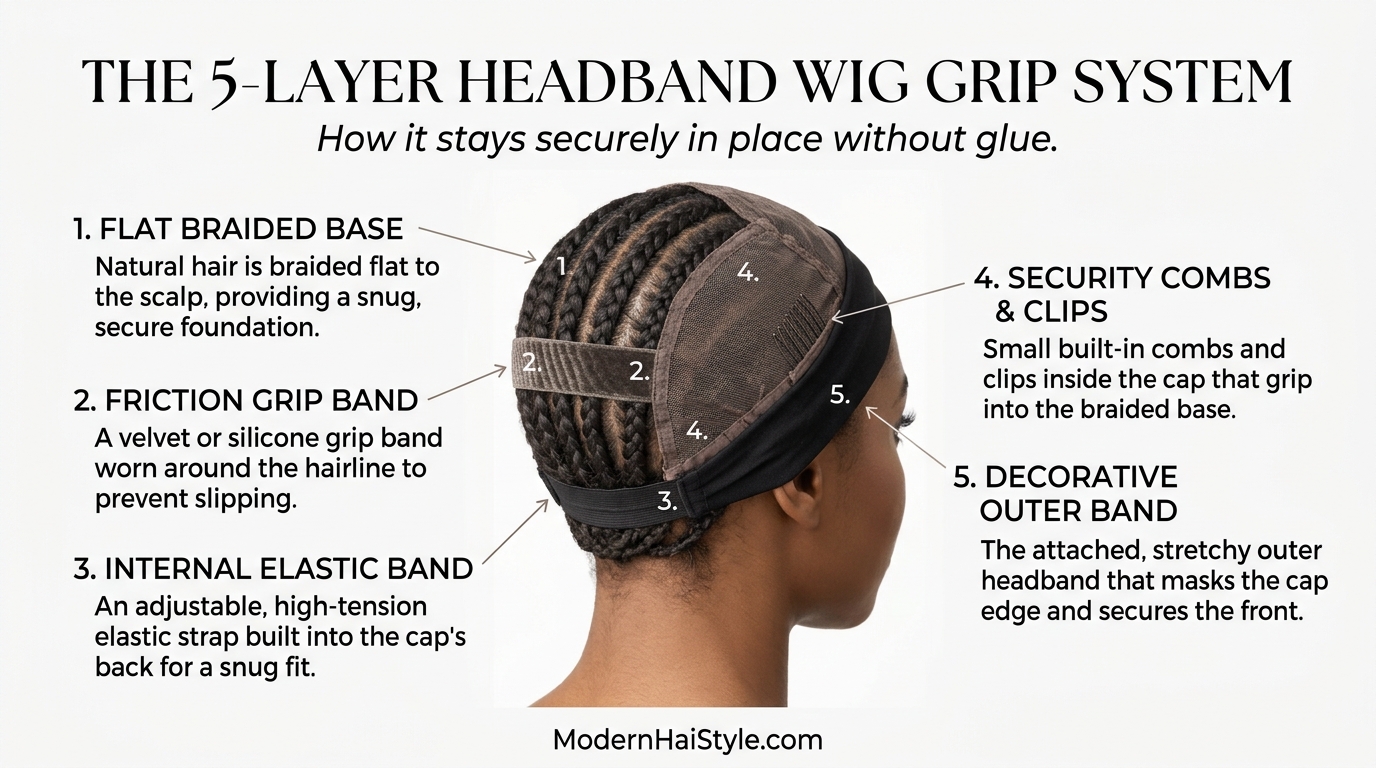
Cap size claims in this category do not agree, so print them as strands. Luvme filter strands list one size band of 21 to 22.5 inches for its headband range.
Marketplace copy strands cluster near 21 to 21.5 inches adjustable. A Luvme product strand lists 22.5 inches as standard medium, a different figure inside one brand’s own system.
The strands teach one rule: your measurement outranks every average. Measure before ordering, with your hair flattened as it will sit under the cap.
Wrap a soft tape around your hairline, over the ears and at the nape. Write the number down and compare it with the seller’s size filter first, before price or texture.
The Head Shake Test and the 30 Minute Check
Fit has two honest tests at home. First, the head shake test: turn, nod and tilt, and the unit should stay placed without a hand rescue.
Second, the 30 minute comfort check. No temple ache, no building headache and no red line that lingers means the tension is right for a full day.
Pain is a fit failure, not a break in period. Loosen, reposition or change band type instead of training yourself to endure a bad fit.
Small Heads and Large Heads: Outside the Band
Heads outside the 21 to 22.5 inch strands need adjustment range, not hope. Drawstring models fine tune furthest, which is why they suit both ends of the size range.
A cap that is truly too big will slip at any tension. A cap that is truly too small will hurt at any looseness, so size honesty beats adjustment tricks.
Edge and Scalp Protection: The Tension Rules
The headband format removes adhesive from the hairline, which is its real protective claim. It then adds three quieter risks that sellers rarely name.
The risks are band tension across the forehead and temples, comb points loading the same front hair daily, and velcro catching fragile edges during removal.
The protective routine answers each one. Set tension by the shake test, rotate comb positions, skip combs on grip sufficient days and smooth front hair away before opening velcro.
Rotate band styles across the week too. Moving the pressure line stops one strip of forehead and hairline carrying every wear, every day.
The American Academy of Dermatology warns that tight styles can damage hair and scalp over time. Its hair damage prevention guidance covers that general principle for all tight wear, headband wigs included.
The Hair Loss and Sensitive Scalp Path
Coverage wearers need comfort before hold tricks. Choose soft, wide bands, skip combs entirely and let a velvet or silicone grip do the holding instead of anchors.
Trial wear at home for a full day first. A band that feels fine for an hour can irritate by hour six, and home is where that lesson is cheap to learn.
Treat pulling, itching or red marks as stop signals. Change the band fabric or the grip layer, because sensitive skin rarely adapts to a wrong material.
Textures, Lengths and Density: Chosen After the Band
Texture is the last decision, not the first. Once the band system fits your routine, texture only decides how the unit looks and behaves between washes.
Kinky and curly textures hide band joins and forgive gym frizz. Body wave reads natural for daily wear, while straight textures show slippage and shine the fastest.
The curly wig human hair guide owns curl care in full. For length, remember textured hair is measured stretched, so worn length runs shorter than the label.
A dedicated texture example sits in the cluster too. The deep wave human hair wig parent page treats wave shrinkage in depth once it publishes, and the live deep wave 13×4 HD lace front wig page shows the same texture on lace.
Density by Length and Use Case
Density strands also split by seller. Most listings sit at 150 percent standard, including Mayvenn and the Amazon house brands in roundup checks.
West Kiss and Luvme drawstring styles appear at 180 percent in roundup strands. Treat both numbers as seller ratios, not a weighed standard anyone certifies.
Choose 150 percent for daily realism and gym weight. Choose 180 percent for photo fullness and long lengths, where fullness spreads over more inches.
Short styles concentrate fullness near the face. The bob wig human hair guide shows why short units usually want less density, not more.
Price by Channel and Length: Dated Strands
There is no single headband wig price. Price follows channel first, then length, then density, and the strands below keep seller, channel and date together.
|
Price strand, checked November 2026 |
Channel and spec |
Listed price |
|---|---|---|
|
HearSmart roundup, November 11, 2026, early Black Friday |
Luvme, from price on sale, regular $109.90 |
From $79.13 |
|
HearSmart roundup, same date |
UNice, from price on sale, regular $127.14 |
From $89 |
|
HearSmart roundup, same date |
Beauty Forever, from price |
From $97 |
|
HearSmart roundup, same date |
Asteria from price; West Kiss 180 percent from price |
$75; $100.07 |
|
UNice own product pages, November 2026 |
Switch water wave $109; HookFit water wave $89; one drawstring listing $104 |
$89 to $109 |
|
UNice TikTok Shop strand |
Water wave headband, was $168 |
$79.80 |
|
Luvme own store strands |
Deep wave headband by length, 12 to 26 inch; headband bob strand |
$99.90 to $319.90; $119.90 |
|
Mayvenn own store |
Jerry curl $120; body wave $115; virgin, 150 percent, velcro and combs |
$115 to $120 |
The HearSmart roundup itself warns its prices were early Black Friday sale prices. Its best headband wigs comparison prints the method and date, which is why its strands are usable at all.
Length is the price engine inside one product. The Luvme deep wave strand runs from $99.90 at 12 inches to $319.90 at 26 inches on the same unit design.
The full Luvme range sits in its headband wig collection. Check the return policy before the discount, because a fair unworn return is worth more than a small sale gap.
UNice is named in text only here, because its site blocked automated checking at verification time. Its prices above are roundup and seller strands, labelled as such.
The Federal Trade Commission advertising guidance is the backdrop for review literacy. Sale and review claims need dates and context, which is exactly how the table above treats them.
Photo and Review Literacy for Band Listings
Listing photos show the display band, never the grip. The inside of the cap, where security actually lives, is the photo most sellers do not publish.
Ask three questions of every listing. Does it show the inside construction, does it name the adjustment system, and does it state cap circumference in numbers?
Weight reviews by the second and third wash. Delivery day reviews praise packaging; wash three reviews report slipping, shedding and elastic behavior honestly.
Filter reviews for your band type and head size. A five star review from an average head says little to a buyer outside the size band.
For the wider starting point across all formats, the hair wig hub maps the full category. The human hair wig guide owns the general human hair overview above this cluster.
Fiber honesty matters here too. The wig human hair decoder explains claim language, and the real hair wig guide plus the synthetic wig vs human hair comparison cover fiber checks in full.
Color claims follow the same literacy rule. The 613 human hair wig page shows how a bleached color claim should be read before paying for it.
Routines by Use Case: Timed and Checklist Shaped
The category promise is throw on and go. The honest version is a short routine whose length depends on where you are going and what the day will do to the band.
The Beginner Routine: Week One to Habit
- Measure once: know your circumference before the first wear.
- Flatten the base: braids, twists or a smooth wrap, low bulk.
- Band on and place: sit the band on the hairline join.
- Set tension in small steps: drawstring or velcro, evenly both sides.
- Shake test, then edges: smooth a thin front section over the join.
Seller install claims form a claim ladder, not a fact. Marketing copy claims 1 second, 10 seconds and 5 seconds across brands, printed here as claims only.
HearSmart language puts putting one on at a minute or two. YWigs guidance frames a 2 minute throw on routine, the closest strand to a practiced routine.
A realistic first week routine is 2 to 5 minutes including base and edges. Five minutes in week one becomes two as the steps turn into habit.
The Gym Routine: Security Tested Before Sweat
Flatten the base, add a wig grip under the band and set the drawstring or velcro snug. Pin at the nape for high movement work like running or circuits.
Test before the workout: head turns and a light jog in place. A unit that survives the test usually survives the session; one that creeps will travel under load.
Sweat is the elastic aging agent. Rinse or rotate the band the same day after hard sessions, because salt left in fabric tires elastic fastest.
The Work and Healthcare Shift Routine
Long shifts reward comfort over maximum hold. Choose a wide band to spread pressure and set tension for hour ten, not for minute one bravery.
Reset tension at midday instead of over tightening in the morning. A texture that forgives a long day without mirror time earns its place on shift weeks.
The convertible option helps here. UNice Switch style units convert between headband and half wig wear, one of the few designs built for changing days.
The Errand and School Run Routine
This is the honest throw on case. Lengths refreshed the night before, band as the style, edges smoothed in under a minute at the door mirror.
Keep a spare fashion band by the door. Swapping the display band changes the whole look while the grip system stays untouched underneath.
The Protective Rotation Routine
Rotate two units, or at least two bands, across the week. Elastic rests and recovers between wears, and no single pressure line becomes permanent on your hairline.
Rotation also spreads wash load. One unit dries on a stand while the other works, so neither is worn damp and heavy.
Half and part formats rotate differently. The half wig human hair guide owns leave out blending, and the U part wig human hair guide plus V part wig human hair guide cover your own part showing styles.
Band Care: Washing, Velcro Cleaning and Elastic Replacement
The band absorbs forehead oil and sweat on every wear. It needs washing far more often than the hair does, and almost no seller teaches that rhythm.
Wash the band weekly in active use with mild soap and lukewarm water. Do not wring it, and air dry it flat so the elastic keeps its shape.
Wash the hair by wear count on its own schedule. Keep detergent off the band where you can, because stiffened fabric loses friction and starts the slipping cycle.
Velcro Cleaning: Restoring the Hooks
Velcro fails by clogging, not by breaking. Lint and shed hair load the hooks until a firm close feels soft and uncertain.
Pick the hooks clean with a fine comb or tape after every few wears. A cleaned velcro strap often recovers most of its original grip in minutes.
Elastic Fatigue: The Signs and the Fix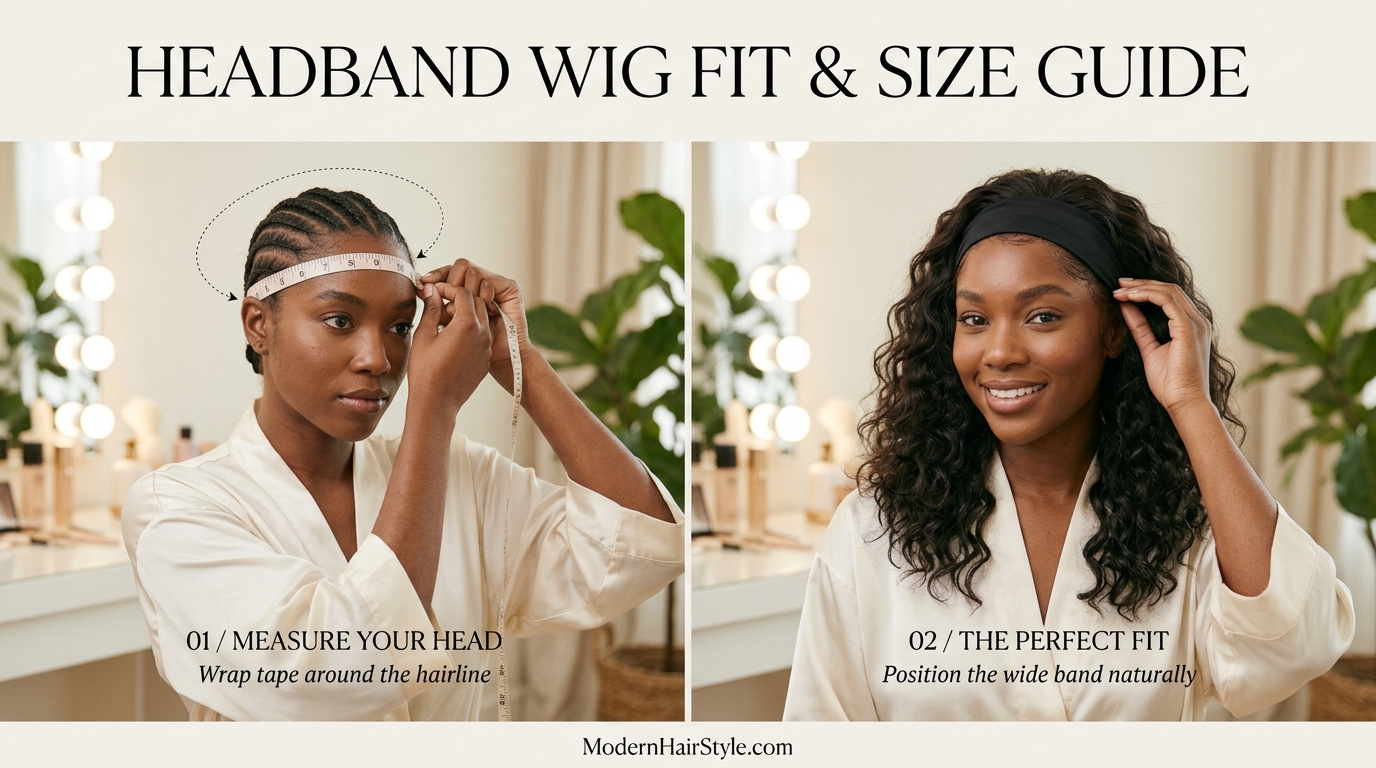
Elastic is a wear item, like a shoe lace. It shows fatigue as slower recovery after stretch and a band that feels fine at minute one and loose at hour three.
The third sign is diagnostic: the unit only passes the shake test at its tightest setting. At that point the elastic, not the wig, has reached its end.
Replacement elastic or a sewn in new band restores the unit for a fraction of replacement cost. Readers who do not sew can use a wig repair service for the same fix.
Lifespan by Part: Hair, Band, Elastic and Combs
Single lifespan claims hide the real story. Seller strands split widely: Luvme product copy uses one more year language, while YWigs guidance claims 6 plus months for protective headband use.
Roundup and review language adds a third strand of several months with care. None of these is merged here, because each describes a different part wearing out.
|
Part |
What wears first looks like |
Realistic strand framing |
|---|---|---|
|
Hair lengths |
Dryness, tangling, shedding over time |
Months to over a year by care tier |
|
Display band |
Fading, pilling, lost shape |
Often presentable after the grip fades |
|
Elastic |
Slow recovery, hour three looseness |
Usually the first true failure |
|
Velcro |
Hooks clogged, weak close |
Recovers with cleaning, then wears |
|
Combs |
Bent teeth, loose stitching |
Replaceable, cheap to refresh |
The lesson is practical: maintain the band system and the hair strand claims become reachable. Ignore it, and even good hair becomes unwearable early.
Styling Limits: Heat, Dye and the Band
Human hair takes heat, and Mayvenn copy says its headband hair can flat iron and revert after washing. Repeated heat still spends texture and dries the lengths.
Keep heat off the band entirely. Elastic and velcro both degrade with heat, so style the lengths away from the front construction or remove your own fashion band first.
Dyeing darker is the gentler color move. Mayvenn lists its headband hair as lifting to a number 27 shade, a seller strand, not a promise for every unit.
Protect the band from dye with a barrier and careful rinsing. Strand test first, and give major lifts to a professional colorist, not a bathroom session.
Ponytails and buns are the format’s signature styles. Check nape coverage and comb security before wearing an updo all day, because updos load the grip stack hardest.
Pros and Cons by Band Family
|
Band family |
Pros |
Cons |
|---|---|---|
|
Plain elastic |
Lowest price, nothing to learn |
Fit is whatever stretch gives, tires first |
|
Wide fabric |
Lowest temple pressure, styled finish |
Smooth fabrics slide without inner grip |
|
Velcro |
Fastest adjustment, forgiving of bulk |
Snags front hair, hooks clog over time |
|
Drawstring |
Finest adjustment, display band stays decorative |
Slower setup, cord must sit flat |
The lace comparison clarifies the tradeoff. The human hair lace front wig guide owns hairline illusion, while this format trades that realism for speed and zero adhesive.
Mistakes That Cost Headband Wig Buyers the Most
Most headband regret is band regret, not hair regret. These errors produce it, in the order buyers usually make them.
- Solving slipping with tension: friction problems become edge and headache problems.
- Skipping the tape measure: average cap strands fail heads outside the band.
- Trusting install time claims: 1 second marketing sets up a disappointed beginner.
- Never washing the band: oil and sweat quietly destroy friction and elastic.
- Loading the same comb points daily: one strip of front hair carries every wear.
- Opening velcro fast: front hair pays for a two second saving, every time.
- Judging by delivery day reviews: elastic behavior only shows by wash three.
The curly hair wig guide adds the texture side of upkeep. Pair its care rules with the band calendar here and the whole unit lasts longer.
Frequently Asked Questions
What is a human hair headband wig?
A human hair headband wig is a human hair unit sewn to a fabric band at the front, with no lace and no glue. Grip comes from elastic, velcro, combs or a drawstring inside.
How is a human hair headband wig different from a headband wig human hair listing?
It is the same product in reversed word order. Sellers use both phrases for one category, which is why this page treats the band system, not a new product, as its subject.
Is the band the most important part of a headband wig?
Yes. The band and its grip stack decide security, comfort and edge pressure. Texture changes the look, but a weak band makes even good hair unwearable within an hour.
What band types exist on human hair headband wigs?
Four main types: plain elastic fabric, wide fabric or scarf, velcro adjustable and drawstring assisted bands. Some units combine a display band outside with a separate grip system inside.
Which is better, velcro or drawstring adjustment?
Velcro adjusts fast in wide steps but can snag hair and wear out. A drawstring adjusts in finer steps and hides inside the cap, so daily adjusters often prefer drawstring.
How does a headband wig stay on without glue?
By a grip stack, not one part: band friction, an inner elastic, combs or clips, and on newer units a drawstring. Seller FAQs from UNice and roundup summaries describe combs plus interior straps.
Why does my headband wig keep slipping back?
Usual causes in order: cap too big, base too bulky, band placed too far forward, stretched elastic, or a smooth base with no friction. Diagnose in that order before adding any tension.
How do I stop a headband wig slipping at the gym?
Flatten the base, set the drawstring or velcro snug, add a wig grip under the band and pin at the nape for high movement. Test with head turns and a light jog first.
Can you workout in a human hair headband wig?
Yes, it is a core use case sellers market. Sweat loosens grip and salts the band, so rinse or rotate bands after hard sessions and wash on a shorter cycle in training weeks.
Does a headband wig damage your edges?
It can, if the band is over tightened, combs pull the same spots daily, or velcro catches front hair. Worn at correct tension and rotated, it avoids glue, the risk it removes.
How tight should a headband wig feel?
Secure in a head shake test, with no temple ache, no headache building after 30 minutes and no lasting red line. Pain is a fit failure, not a break in period.
What head size do most headband wigs fit?
Seller strands cluster at average caps around 21.5 to 22.5 inches, with Luvme filter strands listing 21 to 22.5 inches as one band. Measure your circumference; outside that band, fit claims weaken fast.
What if my head is smaller or larger than average?
Choose drawstring models for fine adjustment and check the seller size filter before price. A cap that is truly too big will slip no matter how tight the band feels.
How long does a human hair headband wig take to put on?
Seller claims range from 1 second and 10 seconds in marketing to a minute or two in roundup language. A realistic first week routine is 2 to 5 minutes including edges.
Can a beginner wear a headband wig as a first wig?
Yes. There is no lace to cut, no glue to learn and no leave out blending on full band styles. The beginner skills are measuring, flattening the base and setting tension correctly.
Is a headband wig a protective style?
It can be: your hair rests braided under the cap and no adhesive touches the edges. Protection fails when tension is high or the same comb points load the same hair daily.
Headband wig vs half wig: which should I choose?
Choose a headband wig for full front coverage and zero blending. Choose a half wig when you want your own hairline showing and accept daily blend work. Some 2 in 1 units do both.
Headband wig vs glueless lace wig: what is the difference?
A glueless lace wig creates a hairline illusion and needs lace care. A headband wig covers the hairline area with fabric, installs faster and gives up parting realism in exchange.
Can you wear a ponytail or bun with a headband wig?
Yes. The band holds the front while lengths go up, which is why sellers demo high ponytails and buns. Check nape coverage and comb security before wearing an updo all day.
Can you change the headband on a headband wig?
On many units, yes: your own interchangeable fashion bands cover the sewn band, and some designs make the band fully removable. UNice FAQ strands describe a removable, washable band.
How do I wash a human hair headband wig?
Wash the hair gently downward with sulfate free shampoo, condition the lengths and clean the band separately with mild soap. Air dry on a stand and never wring the band.
How often should the band itself be washed?
Far more often than the hair in summer or gym use, because it absorbs sweat and skin oil at the forehead. A spare band rotation makes that weekly rhythm practical.
When should a band or elastic be replaced?
Replace when elastic no longer recovers after stretching, velcro stops holding through a head shake, or the band stays loose at its tightest setting. Elastic fatigue is a wear item.
Can velcro on a headband wig snag my hair?
Yes. Keep front hair smoothed away before closing velcro, open it slowly, and prefer drawstring models if your edges are fragile or your hair catches easily.
What density is best for a headband wig, 150 or 180 percent?
Most listings sit at 150 percent, with 180 percent drawstring styles in roundup strands. Choose 150 for daily realism and gym weight; 180 for photo fullness and long lengths.
What lengths do human hair headband wigs come in?
Common retail strands run 10 to 26 inches. Luvme deep wave listings price by length from 12 to 26 inches, and Mayvenn headband units span the same broad range across textures.
Which texture is best for a headband wig?
Match the routine, not only the look. Kinky and curly textures hide band joins and forgive gym frizz; body wave reads natural daily; straight shows slippage and shine fastest.
Can you straighten or curl a human hair headband wig?
Yes, human hair takes heat, and Mayvenn copy says its headband hair can flat iron and revert after washing. Repeated heat still spends texture, so use protectant and low heat.
Can you dye a human hair headband wig?
Darker dye is the safer move. Mayvenn lists its headband hair as lifting to a number 27 shade; protect the band from dye, strand test first and give major lifts to a professional.
How long does a human hair headband wig last?
No single verified number exists. Luvme copy claims one more year language; YWigs guidance claims 6 plus months for protective use. Band and elastic usually wear before the hair.
How much does a human hair headband wig cost?
Dated November 2026 strands: Asteria from $75, Luvme from $79.13 on sale, UNice from $89, Mayvenn at $115 to $120, with long Luvme lengths to $319.90. Channel and length explain the spread.
Why do headband wig prices vary so much?
Length first, then density, texture work and whether the price is a sale, code or marketplace strand. The HearSmart prices were early Black Friday prices, so regular prices run higher.
Are cheap Amazon headband wigs worth it?
Marketplace house brands dominate Amazon roundups at 150 percent density. They can be a low risk first try, but check return terms, density honesty and band construction photos before trusting reviews.
What is a 2 in 1 headband half wig?
A convertible unit: wear the attached band as a classic headband wig, or remove it and wear the unit as a half wig blending with your own hairline. UNice Switch and Beauty Forever versions are the named examples.
Do headband wigs work for hair loss?
They are widely used for daily coverage because no glue touches sensitive skin and the band covers the front. Choose soft fabrics, avoid comb pressure on fragile areas and check full day comfort.
Can you sleep in a headband wig?
You can, but it shortens band and hair life and loosens grip by morning. Most wearers remove it at night, store it on a stand and keep a satin bonnet routine for their own hair.
Do headband wigs look natural?
The front reads as a styled band, not a bare hairline, so natural means neat and intentional rather than invisible. Your own edges showing at the front is what sells the look.
What do I put under a headband wig?
Flat braids, flat twists or a wrapped base, plus an optional wig cap or wig grip. Bulk under the cap is the top hidden cause of slipping and pressure.
How do I style my edges with a headband wig?
Leave a thin front section out, smooth it over the band join and set it lightly. Keep product off the band fabric or it will stain and lose friction.
What comes in the box with most headband wigs?
Common strands: the unit, one or two extra fashion bands and a wig cap. Extra lashes or caps in marketplace bundles are bundle filler, not quality signals.
Can a headband wig be worn in rain or humidity?
Yes. Human hair reacts to moisture by texture, curly styles forgive it best, and the band keeps the front controlled. Carry a spare dry band on humid days.
When should a headband wig be replaced instead of repaired?
Replace when the cap stretches out, shedding stays heavy after care, or a new band and elastic no longer restore a secure fit. A band swap is cheap; a spent cap is not.
Conclusion
A human hair headband wig rewards the buyer who judges the band first. Grip stack, band type, measured fit and tension rules decide the wear, while texture only decides the look.
That order turns a vague category into four clear band choices. Pick the system your routine can keep, wash the band weekly and replace the elastic before it fails in public.
Start with the fit that fits your week: drawstring for daily adjustment, velcro for fast changes, or a wide fabric band for temple comfort on long days.
Buy your chosen human hair headband wig with the shake test and the size strands above open beside the listing.

Dilawar is a passionate writer and contributor at Modern Hairstyle (modernhaistyle.com), specializing in hairstyles, hair care, grooming, fashion, beauty, and lifestyle trends. He enjoys sharing practical tips, hairstyle inspiration, and easy-to-follow guides to help readers discover their personal style. His goal is to provide informative, engaging, and helpful content that keeps readers updated with the latest trends.