Red Hair Wig: The Whole Spectrum, From Ginger to Wine
Red hair wig shopping looks simple until the shade names start: ginger, copper, auburn, 350, 33, 99J, all sold as if they were one color. They are not.
Red is a spectrum, wider than the entire range of most color families. The orange bright end and the wine deep end share a word and almost nothing else.
This query also hides a fork. Some red wigs are human hair you live in for months; others are synthetic pieces built for a night, a costume, a character.
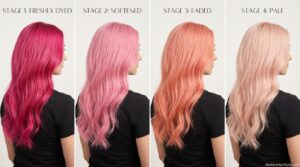
And every red, at every price, carries the family’s known tax: red pigments fade faster and louder than dark colors. Shade choice is how you budget that fade.
So this page works as a decoder, not a catalog. Spectrum first, skin match second, the fade strategy third, the material split fourth, in that order.
What a Red Hair Wig Actually Is
A red hair wig is a wig in a red based shade, from ginger and copper through auburn to wine and burgundy, made from human hair or synthetic fiber.
The Ywigs guide states that definition plainly, and its honesty matters: this category sells two materials under one name, and they serve different lives.
Human hair red is dyed hair, which makes it processed hair: it styles with heat, lasts months, and asks for color care from the first wash.
Synthetic red is colored fiber: it holds its styled shape, shrugs off humidity, costs a fraction, and serves events and characters better than seasons.
Decide the material by the life you are buying, before the shade seduces you. A red you live in and a red you visit are different products.
For the base construction underneath every shade decision, the hair wig guide and the human hair wig guide cover caps, density, and lengths in full.
The Shade Spectrum: Codes Decoded
Red shades travel under numbers, and the numbers need one warning before the table. Codes are a shared dialect, not a standard.
One retailer guide, the HairCity colour guide, states the rule plainly: colour can vary between manufacturers, so treat a code as a colour family or reference, never a guarantee of an exact shade.
That means you buy red by photographs in several lights, with the code as your search term. One brand’s 350 is another brand’s slightly different ginger.
|
Code or name |
What it is |
Family |
Fade path |
|
350 ginger |
Bright orange red, the marketplace standard |
Warm |
Fades loudest, toward pale orange |
|
Copper |
Warm metallic orange red, often highlighted |
Warm |
Brightness drops first, warmth stays |
|
30 auburn |
Warm brown with copper undertones |
Warm, natural |
Fades gently into light brown |
|
33 reddish brown |
Deep auburn copper, the natural end |
Warm, natural |
Fades the quietest of the warms |
|
99J burgundy |
Deep wine red with plum depth |
Cool to warm split |
Fades gracefully into reddish brown |
|
Cherry red |
Bright true red, fashion pole |
Cool |
Fades fast and visibly |
|
Wine red |
Deep red, evening register |
Cool |
Holds depth, loses shine first |
|
Strawberry |
The blonde red boundary shade |
Warm |
Fades toward blonde quickly |
Read the fade column as part of the purchase. Two shades that look close on day one can be different colors and different budgets by month two.
Luvme’s storefront adds the second warning beside the first: red shades look warmer, darker, or brighter under daylight, indoor light, and different screens. Check multiple images before choosing.
Ginger and Copper: The Bright Warm End
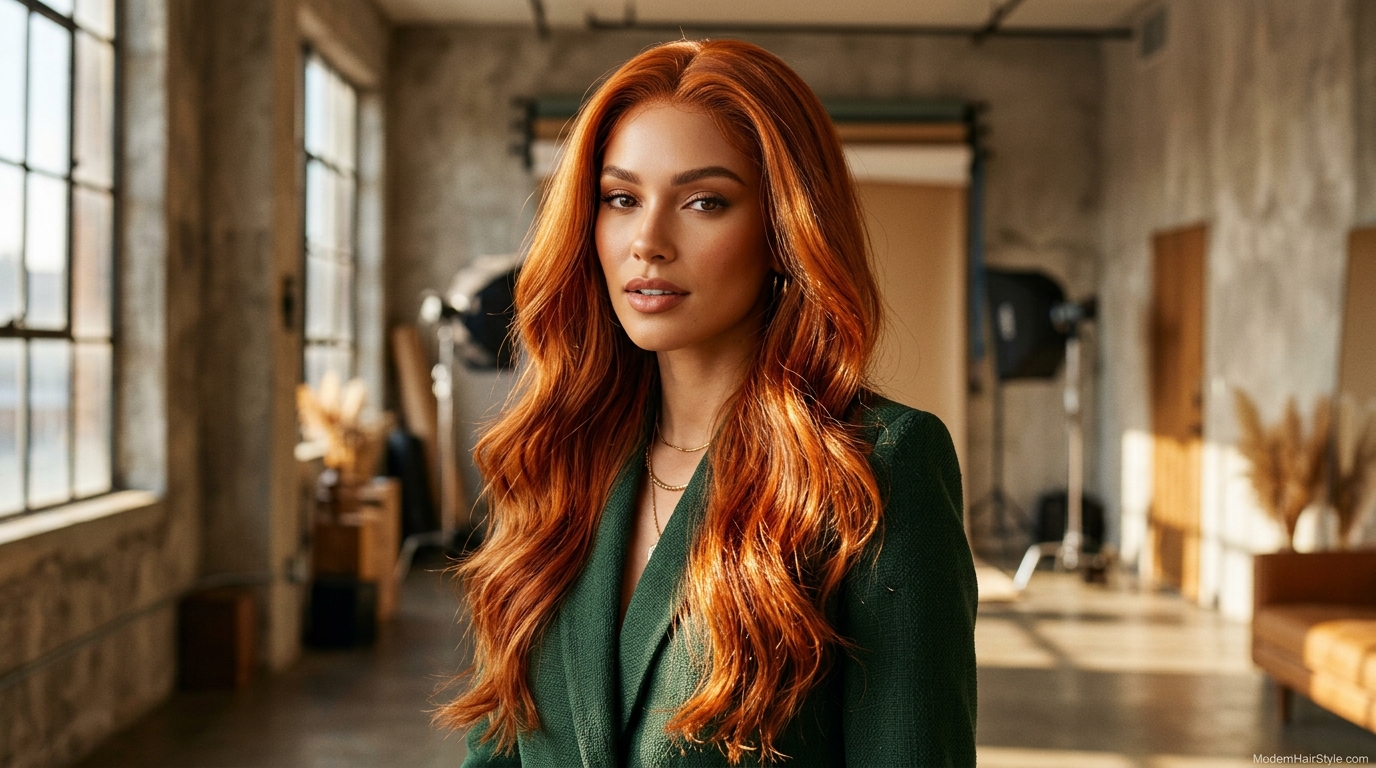
Ginger, code 350, is the shelf’s dominant red: bright orange red, sold mostly as HD lace frontals in deep wave and straight, at 180 percent density.
Marketplace listings even give it a season: 350 is marketed as an autumn color, which tells you how the trade itself reads its register, warm, bright, and bold.
Copper runs beside it, warmer and more metallic, and the premium version marries it over depth: P4/350 ombre and highlight mixes put copper light over a darker base.
That dimension matters at this end of the spectrum. A flat block of bright orange red is the loudest object in any room, including rooms where you wanted elegance.
The bright end’s bargain is honest: maximum transformation, maximum attention, and the fastest visible fade in the family. Buy it with the refresh budget attached.
Volume checkers confirm the demand shape: scored roundups of copper wigs are swept by reddish brown and ginger highlight lines from the big marketplace brands.
If your red is for photographs, events, or a season of being noticed, this end earns its upkeep. If it is for Tuesday at work, keep reading toward brown.
Auburn and Reddish Brown: The Natural Reds
Auburn, code 30, is defined by the colour guide as a warm brown with noticeable copper or reddish undertones. That brown base is what makes it read as born, not dyed.
Reddish brown, code 33, pushes the same idea deeper: auburn copper in marketplace language, the red most likely to be mistaken for your own hair.
These are the everyday reds. They sit inside professional dress codes, family photos, and ordinary light without announcing a costume decision.
Both big buying guides converge here from different directions: deep, brown based reds are the shades they describe for deeper skin tones, where bright orange can sit on top of the skin instead of belonging to it.
Auburn also wins the aging contest among warm reds. Its fade path runs toward light brown, a color that still reads intentional months in.
If your brief is natural first, your shortlist lives in this section: 30 for warmth with light in it, 33 for depth with red in it.
The curly end of natural red, deep wave and water wave textures in ginger and auburn, gets its own treatment in the curly hair wig guide if curl is your texture.
Burgundy and 99J: The Deep Reds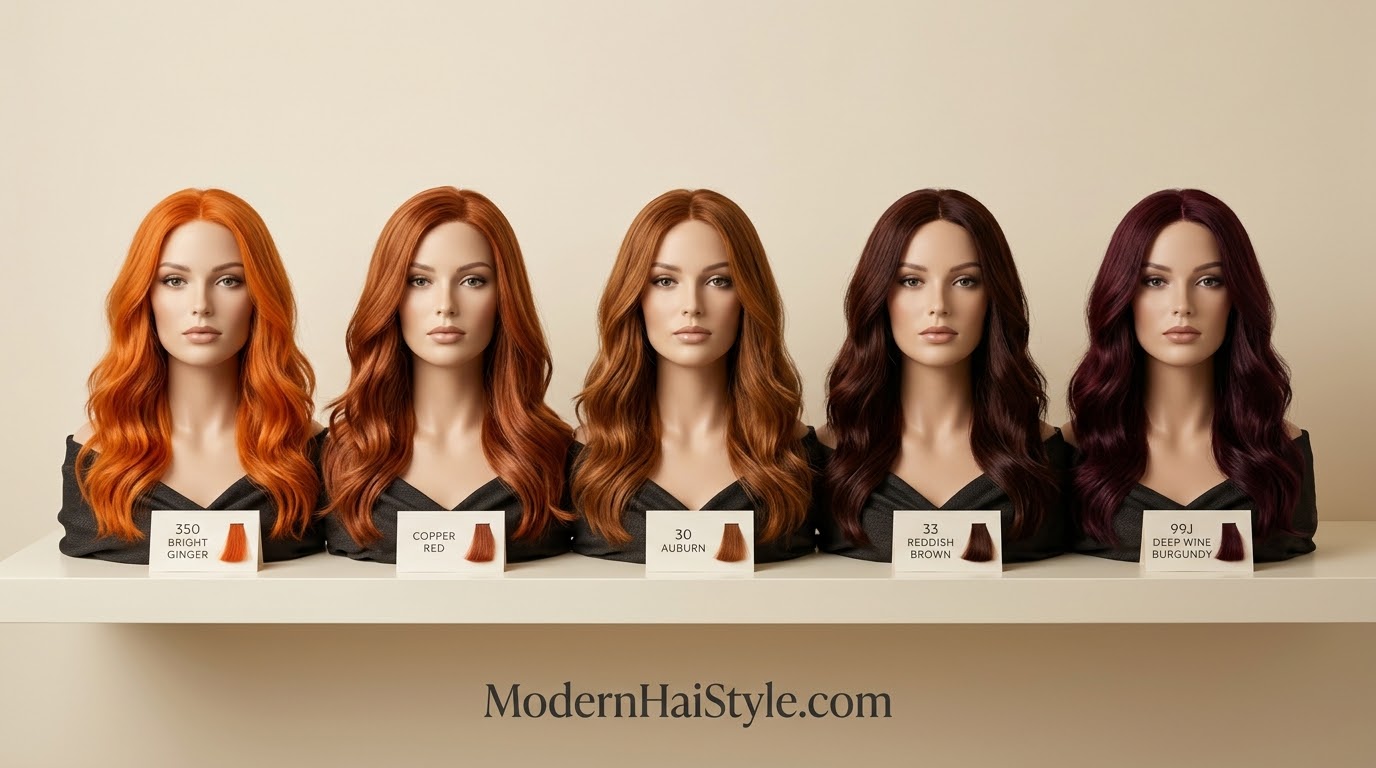
Burgundy is a deep, rich red with purple undertones in the standard brand description: sophisticated, jewel like, and the darkest register most daily wearers choose.
99J is where the terminology gets interesting, because the trade uses one code for what one careful explainer insists are two neighboring shades.
One detailed breakdown, the GoviHair 99J explainer, defines 99J as a rich wine red with a dark plum undertone and brownish red richness, then separates it from burgundy in a table worth printing.
In that split, burgundy runs red plus purple: cooler, lighter, more vibrant. 99J runs red plus brown wine: warmer, deeper, more muted.
Retail pages mostly use 99J as burgundy shorthand, so treat the distinction as a shade neighborhood, and judge any specific unit by its photos, as the code rule demands.
What both sides agree on is the ownership: 99J is relatively low maintenance for a fashion shade, because darker pigment hides regrowth and ages slowly.
Its fade is the family’s most graceful: 99J softens into a reddish brown rather than orange, which means the unit effectively becomes a second, quieter wig over time.
For deep skin, the biggest brand’s shade FAQ gives the same verdict this page does: purple red undertones like burgundy, wine red, and 99J provide depth without over illuminating.
Match Red to Your Skin: Undertone, Then Saturation
Red is the highest chroma of the natural adjacent colors, which is why the matching method here runs in two steps instead of one.
Step one is the familiar one: undertone family. Warm skin pairs with the orange based reds; cool skin pairs with the purple based reds; neutral and olive sit between.
The standard table comes from the Ywigs red wig guide: warm undertones to copper, ginger, and strawberry; cool undertones to burgundy, cherry, and wine; dark and cool skin to burgundy, wine, and 99J.
Step two is where honesty is required, because the guides disagree at the bright end, and this page prints the disagreement instead of picking a winner quietly.
A second guide, the Wig Avenue buying guide, advises that brighter copper and ginger tend to suit lighter, cooler undertones, with reddish brown and deep auburn as its deep skin recommendations.
The overlap is the reliable ground: both sources send deep skin to deep reds, and both treat saturation as the bright end’s real variable. The contested zone is bright warm red on warm deep skin.
Resolve it with your saturation tolerance. If you want red that belongs quietly, choose depth. If you want red that arrives first, choose brightness and accept the attention as part of the shade.
The lighting warning applies double at decision time: the shade that flatters in a daylight selfie can shout under office fluorescents, so judge by several lights, not one mirror.
Red Fades First: The Fade Tax and Its Budget
Every serious care source in this category says the same sentence in different words: red family pigments change or fade more noticeably than very dark colors.
The drivers are listed just as consistently: washing, heat, sun exposure, styling, chemical processing, and product use. Notice that four of the six are habits, which means the tax is partly negotiable.
The fade runs on a curve set by depth. Bright copper and 350 lose their fire first and drift orange; cherry fades fast and visibly; auburn dims gently toward brown.
99J sits at the kind end of the curve, softening into reddish brown. When sellers call deep reds low maintenance, this curve is the entire content of the claim.
Budget the tax with four habits. Wash less: the glueless brand’s fade answer leads with avoiding unnecessary washing, and the guide cadence is every 7 to 10 wears.
Wash gentle: sulfate free, color safe products in cool water, which also slows the color bleeding new red units show in their first washes.
Starve the accelerants: prolonged direct sunlight and repeated high heat are the two fastest fade drivers you control daily. Store the unit out of sun for the same reason.
Plan the refresh: color depositing conditioners restore the warm and deep reds at home. A shade chosen with its refresh product already owned never reaches the faded panic stage.
One major storefront, the Luvme red wig collection, organizes its red range by exactly the directions this section uses, warm, deep, brown based, and purple based, which makes shade replacement shopping unusually honest.
Human Hair or Synthetic: The Material Decision
The fork from the first section deserves its own table, because the wrong material makes even the right shade a bad purchase.
One major brand’s FAQ supplies the lifespan strands, printed here as the seller’s claims: a red human hair wig lasts 6 to 12 months of daily use with care; synthetic red usually lasts 1 to 3 months.
Treat those as orientation, not warranty. Your wash cadence, heat habits, and storage will move your unit along the range more than the label will.
|
Question |
Human hair red |
Synthetic red |
|
What it is |
Real hair, dyed red |
Colored fiber, pre styled |
|
Lifespan strand |
6 to 12 months daily (seller claim) |
1 to 3 months (seller claim) |
|
Heat |
Styles like bio hair, with protectant |
Only heat friendly lines, low limits |
|
Color life |
Fades on the red curve, refreshable |
Holds shade, cannot be re dyed |
|
Feel in month three |
Still hair, if cared for |
Fiber fatigue shows as frizz |
|
Price pole |
Roughly 80 to 200 dollars for quality (seller frame) |
Costume and bob prices, often under 50 |
|
Best brief |
A red you live in |
A red you visit: events, characters |
The heat row carries the practical warning: the same brand puts its red heat guidance under 350 degrees Fahrenheit with protectant, because heat is a fade accelerant as well as a styling tool.
Synthetic’s honest wins are real: it keeps a set style through humidity, it costs little enough to own two shades, and for cosplay and character work its color can be more exact than dyed hair.
Buy human hair when the red is becoming your hair for a season. Buy synthetic when the red is a costume, a test, or a single unforgettable weekend.
Choose the Build: Lace, Density as Color Volume, Length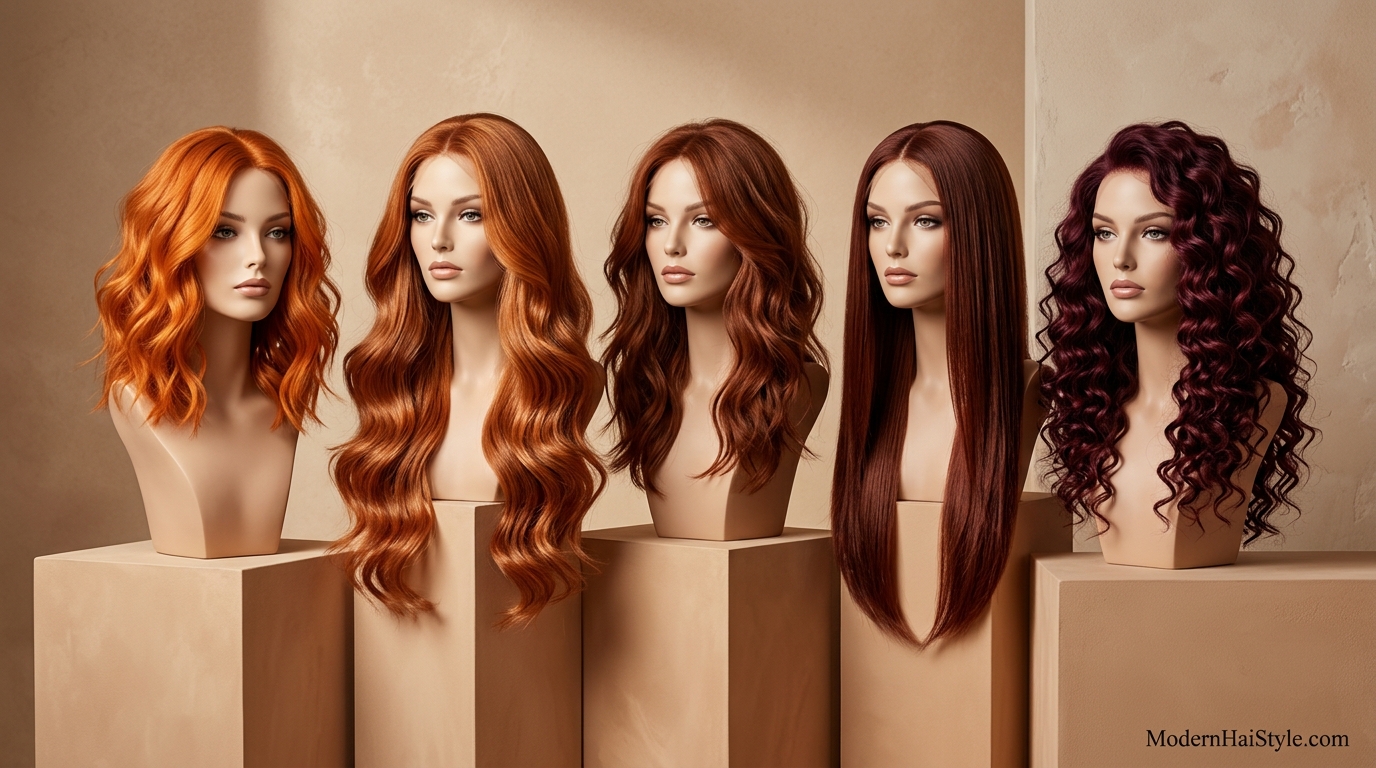
Build choices in red carry one twist the general guides understate: at bold shades, density is a color decision, because volume multiplies how much chroma a room sees.
The buying guide that noticed it puts numbers on the effect: 150 percent reads natural everyday volume, while 180 to 200 percent gives a thicker, more dramatic finish, mattering more on bold shades like ginger or wine.
So match density to the shade’s job. Natural briefs in bright shades should step down a density class; dramatic briefs in deep shades can step up without shouting.
Lace area follows your parting habits as usual: closures for one fixed part, 13×4 and 13×6 frontals for a free hairline, 7×5 glueless closures for the wide part without glue skill.
Ombre and rooted builds earn a special mention in red: dark roots soften the transition at the parting, which tames the bright shades at the face where they are hardest to wear.
Texture trades brightness for forgiveness. Straight shows the shade at full saturation; body wave and deep wave break the light and make both the color and the fade kinder.
Leave out formats exist in red too, reddish brown V part lines are a beginner staple, and the U part wig guide and the V part wig guide cover both part based routes in full.
Glueless builds now span the whole spectrum, and the Luvme glueless wig guide audits the glueless system, bands, combs, and cap, that most of them share.
Lengths and Textures in Red
Length behaves differently in red than in black, because pale and bright shades draw the eye along the whole length instead of letting it rest at the face.
Bobs are the bright end’s best friend: a ginger or copper bob concentrates the color, reads deliberate, and carries the least fade surface of any build. The social commerce ginger bob phenomenon is built on exactly this math.
Mid lengths, 16 to 22 inches, are the spectrum’s all purpose zone: long enough for the transformation, short enough that the ends, where fade and dryness show first, stay manageable.
Long red, 26 inches and beyond, is a commitment to the ends. Dyed hair’s oldest fiber sits at the tips, and in red the tips announce their age in brightness loss before anywhere else.
Texture trades the same bargain as in every color, at higher stakes. Straight shows red at full saturation and full fade; body wave splits the difference; deep wave and curly scatter the light, forgiving both.
One marketplace pattern is worth naming: the ginger shelf’s signature unit is a 30 inch deep wave frontal, brightness plus curl plus length at once. It is a legitimate fashion object and a demanding first red.
If your natural hair is already red, match the unit to your own fade state, not your fresh dye state. A unit matched to week one color will clash with your leave out by week three.
Buying Channels and the Price Spread
The red shelf runs across three economies, and each one sells the same codes at very different risk levels.
Marketplaces run the volume: 350 ginger frontals at 180 percent are the standard unit, with strands like a 30 inch body wave frontal listed at about 110 dollars, and social commerce pushes ginger bobs far lower.
That low end carries the category’s variance warning: one factory ginger bob listed under 36 dollars holds a one star review calling the unit constructed wrong beside a healthy storefront average.
Brand collections run the system sale: shade organized ranges, glueless engineering, published care answers, and the seller frame of 80 to 200 dollars for a good quality red human hair unit.
Salons and custom units run the top: a red built or colored to your skin and brief, priced as an outcome. For a signature red worn daily, this tier’s fitting can be the cheapest per wear.
Compare across channels by reviews, return terms, and multi light photos, never by listing adjectives. On the ginger shelf, every listing claims virgin, tangle free, and true to length in the same words.
Ginger vs Copper and 99J vs Burgundy: The Two Decisions
Two comparisons decide most red purchases, and both are usually answered with a photograph instead of a framework. Here is the framework.
Ginger vs copper is a brightness and texture decision wearing a color costume. Ginger (350) is the brighter, more orange, more uniform red; copper reads warmer and more metallic, and it is the shade most often sold with highlights.
Choose ginger when the brief is impact: events, photographs, a defined character, a season of being the redhead in every room. Its cost is the family’s loudest fade.
Choose copper when the brief is warmth with movement: copper’s metallic read and its highlight mixes give it dimension that flat ginger has to fake with styling.
On skin, both are warm family shades. The real separator is saturation tolerance and how much brightness your daily rooms, office, family, camera, can absorb.
99J vs burgundy is a depth and temperature decision. On the careful explainer’s split, burgundy leans purple, cooler and more vibrant; 99J leans brown wine, warmer, deeper, more muted.
Choose burgundy for jewel register: evening light, cool skin, a red that reads as a gemstone. Choose 99J for depth that behaves: warm or olive skin, professional rooms, and the graceful fade.
Because retail uses the names loosely, decide from the unit’s own photographs which side of the line a given product sits on. The name on the box is a hint; the photos are the evidence.
Either deep shade beats both bright ones on ownership cost. If the comparison is still tied after color, let the fade curve break the tie toward depth.
Red at Work, at Events, and On Camera
The same unit is three different reds across a week, because red answers light and context more dramatically than any other shade family.
At work, depth and brown do the diplomacy. Auburn and reddish brown pass in conservative rooms because they read as a plausible natural color under fluorescent light.
Bright 350 in an office is a statement you repeat daily, which some careers reward and most do not. If the statement is the point, rooted or ombre builds soften it at the face.
At events and in photographs, the ranking inverts. Ginger and copper catch light, separate you from dark backgrounds, and hold their own beside flash, which is why the event shelf is bright.
Deep wine shades photograph rich at night and can disappear against dark rooms in daylight shots. Match the shade to the event’s light, not its dress code alone.
On camera and calls, screens push red warmer and brighter than the mirror shows. A shade that feels perfect at home can read orange on a video call, so test your finalist shade on your own webcam first.
The Fade Rescue: When Red Has Already Faded
A faded red is not a dead unit. It is a unit at a later point on its curve, and three rescues cover most situations, cheapest first.
Refresh it. A color depositing conditioner in your shade family restores warmth and depth in one wash cycle. This is the planned maintenance from the care section, done late.
Shift it. Faded bright red tones down gracefully: an orange faded 350 can be deposited toward copper or auburn, converting the fade path into a shade change you chose after all.
Retire it upward. A unit too tired for daily wear becomes the event and costume piece, where dramatic light forgives what daylight audited. Human hair red rarely dies all at once; it demotes.
What not to do: bleach it lighter at home chasing the original brightness. Pre colored hair was never promised a lift, and porous dyed hair punishes the attempt with patchiness.
Mistakes That Make Red Look Wrong
Most disappointing reds trace back to five decisions, each visible before the unit is even worn twice.
1. Buying the code instead of the color
Ordering a number and expecting the photo. Codes name families that vary by maker; the buyer who checks multi light photos gets the red they meant, the other gets a dialect surprise.
2. Choosing saturation before undertone
Falling for the brightest shade in the listing while your skin asked for depth. Red amplifies a family mismatch louder than any other color, which is why the method runs undertone first.
3. Full density in a bright shade
180 to 200 percent of 350 ginger is a wall of orange. Bold shades want a density step down for daily briefs; volume is chroma, and chroma compounds.
4. Washing red like black hair
Hot water, harsh shampoo, weekly washes: the fade drivers, self administered. Red’s care discount comes entirely from washing less and cooler than your other units.
5. Judging the shade under one light
Red rewrites itself between daylight, indoor light, and screens. A unit approved under a bathroom mirror and rejected at the office was never actually evaluated.
The Beginner Configuration
A first red should remove gambles: a wearable depth, a forgiving fade path, and a material that survives beginner care while you learn it.
1. Shade: auburn 30, reddish brown 33, or 99J
All three read believable, flatter the widest range of skin, and fade toward another wearable color instead of toward a problem.
2. Material: human hair if it is a daily red
The seller strand of 6 to 12 months assumes ordinary care, which a beginner can actually deliver. Keep synthetic for a bright test shade on the side.
3. Density: 150 percent, 180 at most
Natural volume keeps a new color from overwhelming your face while you adjust to seeing red in the mirror. Drama can be unit two.
4. Build: glueless closure or 13×4 frontal
Glueless for fast mornings, frontal for styling freedom. Both are stocked across the hair wig category in every shade family on this page.
5. Care in the same order
A sulfate free color safe shampoo and a color depositing conditioner matched to your shade family. Owning the refresh before the fade is the whole strategy in one sentence.
Credits and Strand Notes
The spectrum definitions and undertone table follow the Ywigs red wig guide, whose shade and care guidance anchors the everyday end of this category.
The density as color volume insight, the ombre root point, and the contested bright end skin note come from the Wig Avenue buying guide, printed with its disagreement visible rather than smoothed over.
The code definitions and the family not guarantee rule come from the HairCity colour guide; the 99J identity and its graceful fade follow the GoviHair 99J explainer.
One major brand’s red collection FAQ is credited here in text: its dark skin shade verdict, and its lifespan, heat, and price figures, are quoted in this page as the seller’s strands, because its pages would not answer the link checker directly.
Prices are dated listing strands recorded during research in November 2026: the roughly 110 dollar marketplace frontal and the under 36 dollar social commerce bob mark the spread’s poles, not promises.
Frequently Asked Questions
1. What is a red hair wig?
A red hair wig is a wig in a red based shade, ginger to wine, made from human hair or synthetic fiber.
The material decides whether it is a season of hair or an event piece.
2. What color is 350 hair on a wig?
350 is the ginger code: bright orange red, the marketplace standard, usually on HD lace frontals at 180 percent density.
Listings also market it as an autumn color.
3. What color is 99J hair?
99J is a deep wine red with plum depth and brownish red richness.
One detailed explainer separates it from burgundy as the warmer, deeper, more muted of the two.
4. What is the difference between 99J and burgundy?
On the careful split, burgundy leans purple, cooler and more vibrant, while 99J leans brown wine, warmer and more muted.
Retail uses the names loosely, so judge by photos.
5. What color is 33 hair on a wig?
33 is reddish brown, the deepest natural reading red, sold widely as auburn copper body wave lines.
It is the red most likely to be mistaken for natural hair.
6. What color is 30 auburn hair?
30 is auburn: a warm brown with noticeable copper or reddish undertones, per the standard colour guide.
The brown base is what makes auburn read as born, not dyed.
7. What is the difference between ginger and copper wigs?
Ginger is brighter and more uniformly orange; copper reads warmer and more metallic and is usually sold with highlights or ombre depth.
Choose ginger for impact, copper for movement.
8. What is the difference between auburn and burgundy?
Auburn is brown based and reads natural; burgundy is wine based with purple depth and reads as a deliberate fashion color.
They sit at opposite ends of the spectrum.
9. Which red wig shade suits warm skin tones?
Warm skin takes the orange based reds: copper, ginger, and strawberry in the standard guide table.
Match saturation to your tolerance, because bright warm shades also fade the loudest.
10. Which red wig shade suits cool skin tones?
Cool skin takes the purple based reds: burgundy, cherry, and wine.
Ash leaning skin also suits the deep muted end, where 99J’s brown wine depth works quietly.
11. What red wig shade looks best on dark skin?
The guides agree here: burgundy, wine red, and 99J give deep skin richness without over illuminating.
Auburn and reddish brown are the natural reading alternatives.
12. What red wig shade looks most natural?
Auburn 30 and reddish brown 33 read most natural, because their brown base matches how real red hair grows.
Rooted and ombre builds add to the effect.
13. Do red wigs fade faster than other colors?
Yes, on the guides’ consensus: red family pigments fade more noticeably than dark colors.
Washing, heat, sun, styling, and processing are the listed drivers.
14. Why did my red wig turn orange?
Because your shade sat at the bright end of the fade curve.
Bright reds lose fire first and the orange base shows through.
A **copper or auburn deposit** can convert the fade into a chosen shade.
15. How do you keep a red wig from fading?
Wash less and cooler, use sulfate free color safe products, limit sun and high heat, and own a color depositing conditioner for refreshes.
The care guide cadence is every 7 to 10 wears.
16. Is color bleeding normal when washing a red wig?
Yes, early color bleeding is common on new red units.
Rinse gently in cool water before the first wear and wash separately until the water runs nearly clear.
17. How long does a red human hair wig last?
One major seller’s strand says 6 to 12 months of daily use with care.
Treat it as orientation: your washing, heat, and storage habits move you along that range.
18. How long does a synthetic red wig last?
The same seller strand puts synthetic red at 1 to 3 months of regular wear.
For events and characters it outlasts its brief; for daily wear it tires fast.
19. Red human hair wig or synthetic: which should I buy?
Human hair for a red you will live in, synthetic for a red you visit.
Human hair styles and refreshes like your own; synthetic wins on price, set style, and exact character color.
20. Can you use heat on a red human hair wig?
Yes, with restraint.
The big brand guidance keeps heat under 350 degrees Fahrenheit with protectant, because heat is a fade accelerant as well as a styling tool on dyed red hair.
21. Can you dye a red wig darker?
Darker, yes; lighter, no. Pre colored hair takes deposits and darker tones but was never promised a bleach lift.
Going darker is also a graceful way to retire a bright shade.
22. Can you tone down a red wig that is too bright?
Yes.
A color depositing conditioner a shade deeper, copper over ginger or auburn over copper, tones brightness down in one wash cycle and rescues most too bright purchases.
23. How often should you wash a red wig?
Every 7 to 10 wears is the guide cadence, less if your life allows it.
Red’s fade tax is mostly a washing tax, so frequency is the biggest lever you own.
24. What density is best for a red wig?
150 percent for natural briefs, especially in bright shades, and 180 for deliberate drama.
At bold colors density is color volume, so one step down reads calmer.
25. What lace is best for a red wig?
Closures for a fixed part and low upkeep, 13×4 or 13×6 frontals for a free hairline, 7×5 glueless closures between them.
Bright shades forgive less at the hairline, so pre plucked matters.
26. Is a glueless red wig good for beginners?
Yes, it is the lowest skill first red: bands and combs instead of glue, stocked across the spectrum from copper auburn to 99J, with a wide part zone on modern builds.
27. How much does a red hair wig cost?
A good quality human hair red sits in a seller framed 80 to 200 dollars; marketplace strands run from under 36 dollars for a factory bob to salon prices for custom units.
28. Why does the same color code look different from different brands?
Because codes name families, not exact shades, and makers mix them differently.
The colour guide’s rule is to treat codes as references and judge each unit by photographs in several lights.
29. What red wig is best for everyday wear?
Auburn or reddish brown at moderate density in human hair.
It reads as plausible natural color under office light, fades toward brown gracefully, and never needs explaining.
30. What red wig is best for cosplay or a character look?
Synthetic, usually: exact character colors, set styles that survive a convention day, and prices that forgive a one night brief.
Heat friendly fiber covers simple styling needs.
31. What is an ombre red wig (P4/350)?
P4/350 is an ombre highlight mix: a darker base, color 4 family, melting into 350 ginger copper light.
The dark root softens the bright shade at the face.
32. What is a strawberry red wig?
Strawberry is the boundary shade between blonde and red: pale warm red with blonde lightness.
It flatters fair warm skin and fades back toward blonde the fastest of the family.
33. Do red wigs stain pillowcases or clothes?
A new unit can, while early bleeding settles.
Rinse before first wear, wash separately at first, and use dark pillowcases for the first weeks of a saturated shade.
34. How do you store a red wig to protect the color?
Out of sunlight, on a stand or in its box.
Sun is a listed fade driver even off your head, and pale bright shades yellow and dull fastest in bright storage.
35. What is the best red wig for a beginner?
The configuration in this page: auburn, 33, or 99J in human hair, 150 percent density, glueless or 13×4, with a color depositing conditioner bought in the same order.
36. Can a red wig look natural at work?
Yes, the brown based reds were practically designed for it: auburn and reddish brown read as natural hair color in conservative rooms and need no defense in photographs.
37. What red shades are best for autumn?
350 ginger and copper, which is why listings name 350 an autumn color.
Warm bright reds match the season’s palette and light, and their fade matters less across one season.
38. Are red wigs high maintenance?
More than black, less than blonde.
Red adds fade patrol and refresh to ordinary wig care, and deep shades narrow the gap to almost nothing with graceful aging.
39. How do you refresh a faded red wig?
A color depositing conditioner in your shade family restores warmth and depth in one cycle.
If the fade ran orange, deposit toward copper or auburn instead of chasing the original.
40. What should you check before buying a red wig online?
Check multi light photos, the code’s family meaning, density against your brief, return terms, and review photos, in that order.
Listing adjectives are identical across the whole shelf.
41. Where can you try a red wig in person?
Some DTC brands run US stores where shades can be seen against your skin, and local wig shops and salons stock reds.
Seeing red in person settles what screens argue about.
42. What is the difference between cherry red and wine red wigs?
Cherry is the bright true red, vivid and fashion first; wine red is deep and muted, the evening register.
Cherry fades fast and visibly; wine holds depth and loses shine first.
Conclusion
A red hair wig purchase stops being a gamble when the shade is treated as a position on a spectrum with a fade path attached, rather than a name on a box.
Hold the three rules. Buy the color, not the code, from photographs in several lights. Match undertone before saturation, and let depth win ties, because depth owns the graceful fade.
Decide the material by the life you are buying: human hair for a red you live in, synthetic for a red you visit. Then keep the tax low with cool, rare washing and a refresh product already on your shelf.
If it is your first, take the beginner configuration and learn red on a shade that forgives. The bright end of the spectrum will still be there for your second unit.
Start by browsing the hair wig category on ModernHaistyle with the spectrum table open, and let the system, not the listing photo, choose your red.
That is how a red hair wig becomes a considered color instead of a hopeful one: the right depth, in the right material, with the fade already planned.

Dilawar is a passionate writer and contributor at Modern Hairstyle (modernhaistyle.com), specializing in hairstyles, hair care, grooming, fashion, beauty, and lifestyle trends. He enjoys sharing practical tips, hairstyle inspiration, and easy-to-follow guides to help readers discover their personal style. His goal is to provide informative, engaging, and helpful content that keeps readers updated with the latest trends.