
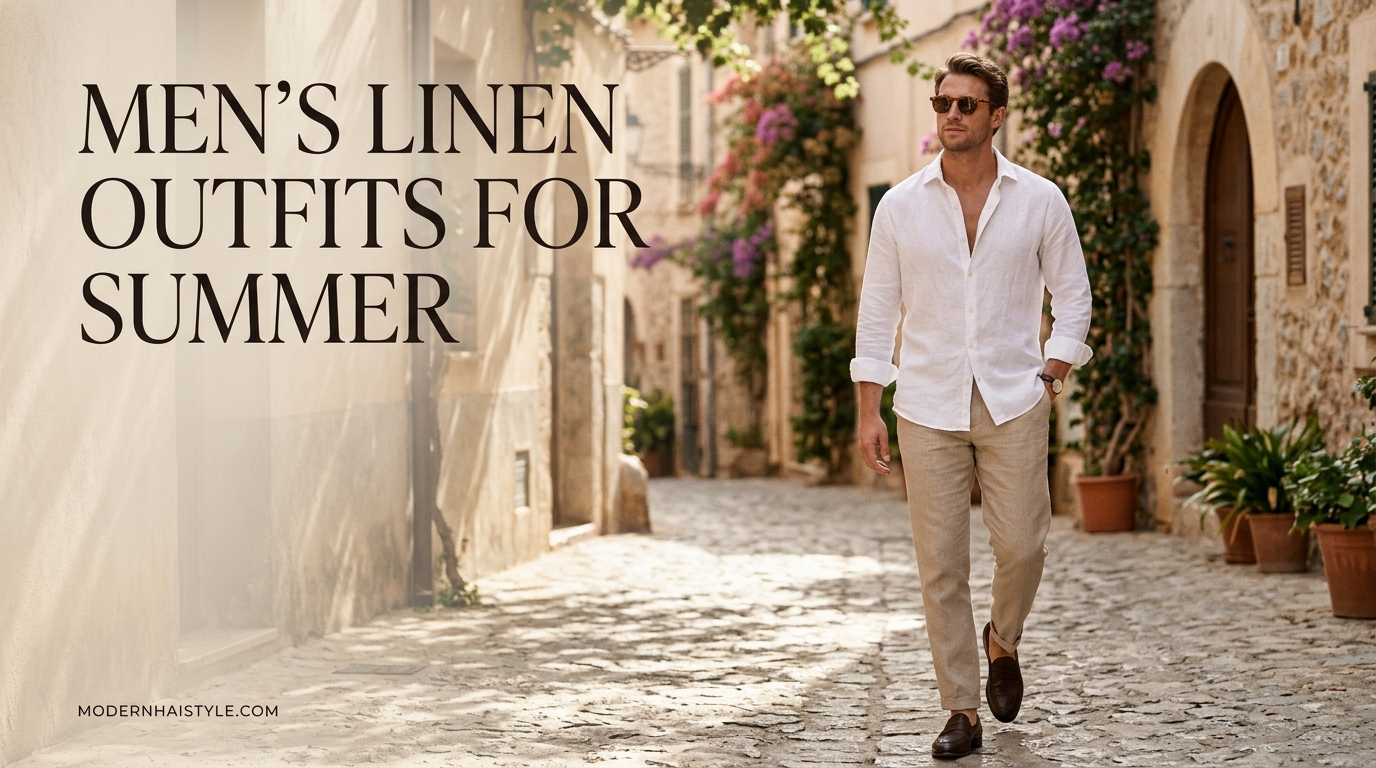
Men’s Linen Outfits for Summer: The Complete System, From Fabric to Formulas
Mens linen outfits summer searches spike every single year for one reason: linen is the only fabric that gets more stylish as the temperature becomes truly unreasonable.
Everything else in the summer wardrobe is a compromise; linen is a solution, provided you buy it, fit it, and pair it by its own rules, which is the specialty of the outfit system at Modern Hai Style.
Those rules are learnable in one read. Linen fails in predictable ways, sheer trousers, pajama sets, crumpled suits at evening events, and every failure traces back to a skipped decision: the fabric weight, the blend, the fit, the color logic, or the shoes.
This guide runs the decisions in order. First the physics of why linen cools, then what to buy (pure or blend, and the weight spec nobody prints on the tag in a useful way).
Then how it should fit, the color system, outfit formulas by occasion, the wrinkle doctrine, and the care that keeps a linen wardrobe alive for a decade.
Why Linen Cools: The Physics in One Minute
Linen is woven from flax (Linum usitatissimum), a plant fiber that is hollow and naturally stiff.
Woven in the open plain weave used for clothing, it lets air move through the cloth instead of trapping a layer of heat against the skin. That structure, not marketing, is the cooling.
TextileCloth’s guide to what linen fabric is lays out the commonly cited property set: linen absorbs up to about 20 percent of its weight in moisture before it feels damp, and releases that moisture and dries faster than cotton.
It also ranks linen among the strongest natural fibers, which is why good linen garments are measured in years.
A brand guide citing textile data sheets puts moisture regain around 12 percent; treat both figures as textile guidance, not laboratory promises about a specific shirt.
Two consequences matter for outfits.
First, linen feels cool even at weights where cotton would feel heavy, because airflow does the work. Second, the same stiff fiber that breathes also holds a bend, which is the wrinkle story told properly in its own section below.
What to Buy: Pure vs Blend, and GSM by Garment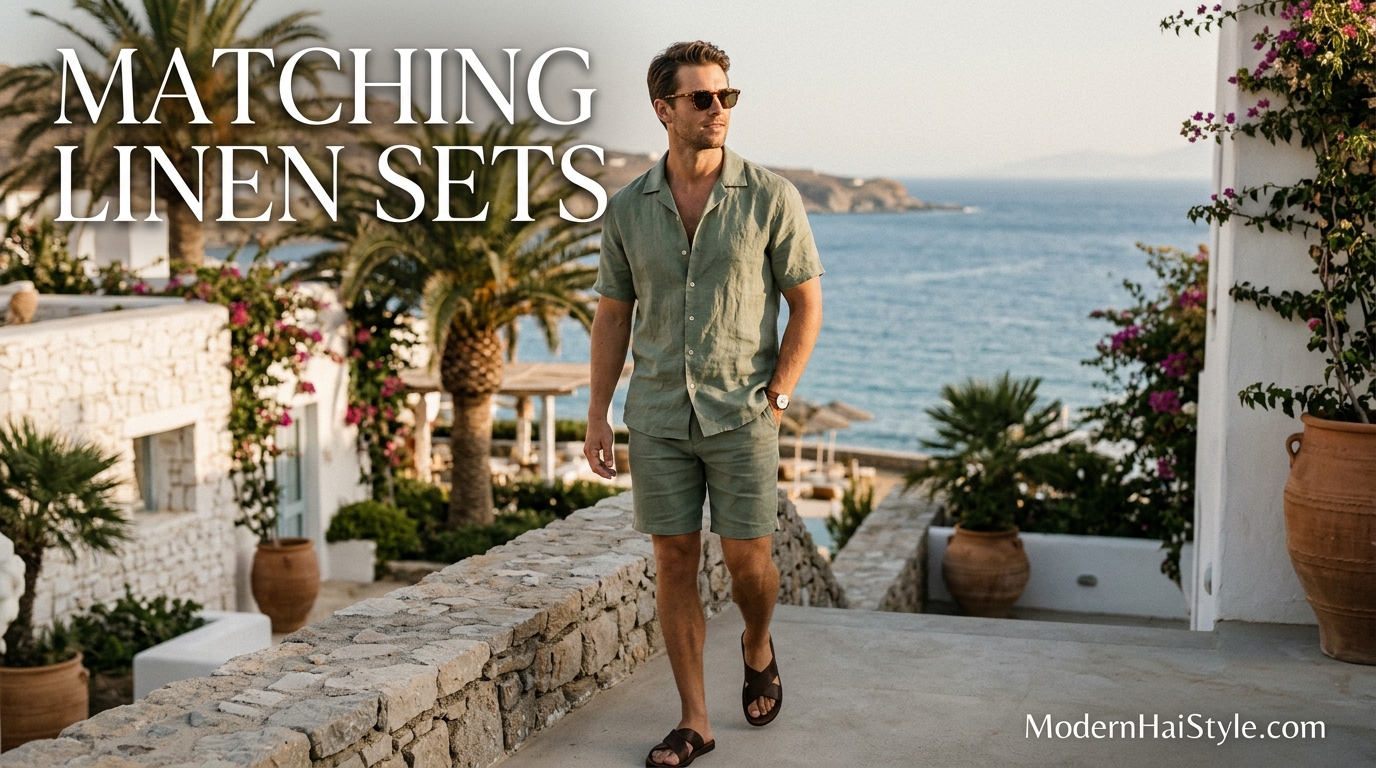
Fabric weight is the spec that predicts whether a linen garment delights or disappoints, and it is measured in GSM, grams per square meter. KOSSR’s linen fabric weight guide gives the taxonomy most fabric guides agree with.
|
Garment |
Weight band to buy |
Why |
|---|---|---|
|
Beach shirts and overshirts |
About 90 to 130 gsm |
Maximum airflow; sheerness acceptable at the beach |
|
Everyday shirts |
About 120 to 160 gsm |
Breathable with opacity for real life |
|
Trousers and sets |
About 140 to 180 gsm |
The mid weight sweet spot: opaque, drapes, holds a line |
|
Blazers and structured pieces |
About 180 to 220 gsm |
Holds shape and a lapel; still breathes |
Most complaints about linen are weight complaints in disguise. White trousers that show everything are underweight trousers. A blazer that collapses by noon is underweight suiting. Buy the band, and half the fabric’s reputation problems never happen to you.
Pure linen versus blends is the second buying decision. Pure linen maximizes airflow, texture, and the softening with age; it also creases most and feels crispest when new.
Cotton linen blends soften the hand, cut the creasing, and lower the price.
One large set brand calls its 55/45 cotton linen ratio the best balance, which is that brand’s position, useful as a starting point rather than a verdict. Linen viscose blends drape smoother still, at some cost to the dry linen feel.
The practical rule: pure for shirts and suits where character is the point, blends for travel, sets, and first purchases, where lower maintenance teaches you the fabric without punishing you.
How Linen Should Fit
Linen’s fit doctrine is relaxed tailoring: ease for airflow, precision everywhere the eye judges intention. The fabric supplies the relaxation, so the cut must supply the discipline.
Shirts: room through the body, sleeves that roll to the forearm cleanly, and a length that works both tucked and untucked.
The outfit guides’ phrasing is exact: boxy relaxed, not oversized sloppy. A billowing shirt is not more breathable in any way that matters; it is just more shirt.
Trousers: a tapered leg with a clean, minimal break, sitting at the natural waist.
Billow at the ankle is where linen trousers turn into pajama bottoms. Tailoring voices make the same point from the other side: because the cloth is relaxed, the fit must be precise, and linen repays a tailor’s hour better than almost any summer fabric.
Blazers and suits: go unstructured, little or no shoulder padding, half lined or unlined.
Structure is what makes a jacket hot and formal; summer tailoring keeps the silhouette and drops the scaffolding. The jacket should still close without pulling and cover the seat; unstructured is a construction choice, not a size up.
Shorts: above the knee, with the same taper logic. In a matching set, the shorts’ hem and the shirt’s boxiness are the two measurements that decide whether the set reads Riviera or sleepwear.
The Color System
Linen’s palette is a system, not a spectrum. Build it in three layers.
The neutral core: white, cream, sand, stone, and beige. These reflect heat, mix without thinking, and are what most people picture as the linen look, correctly. A wardrobe of neutrals plus one dark anchor covers nearly every summer occasion.
The anchor dark: navy.
Navy linen is the evening and smart casual workhorse, and it obeys one law: contrast. Navy top, light bottom (the Mediterranean formula below); navy on navy in linen goes flat and stiff, because the fabric’s texture needs light against it to read.
The soft colors: powder blue, sage, and olive for shirts and sets; terracotta and clay for vacation confidence. These sit inside the neutral system rather than replacing it, which is why they photograph as taste instead of effort.
Tonal dressing, one color family head to toe in varied shades, is linen’s advanced move and its easiest elegance: a stone set with slightly deeper trousers and tan loafers looks considered in a way mixed brights never do in this fabric.
Outfit Formulas by Occasion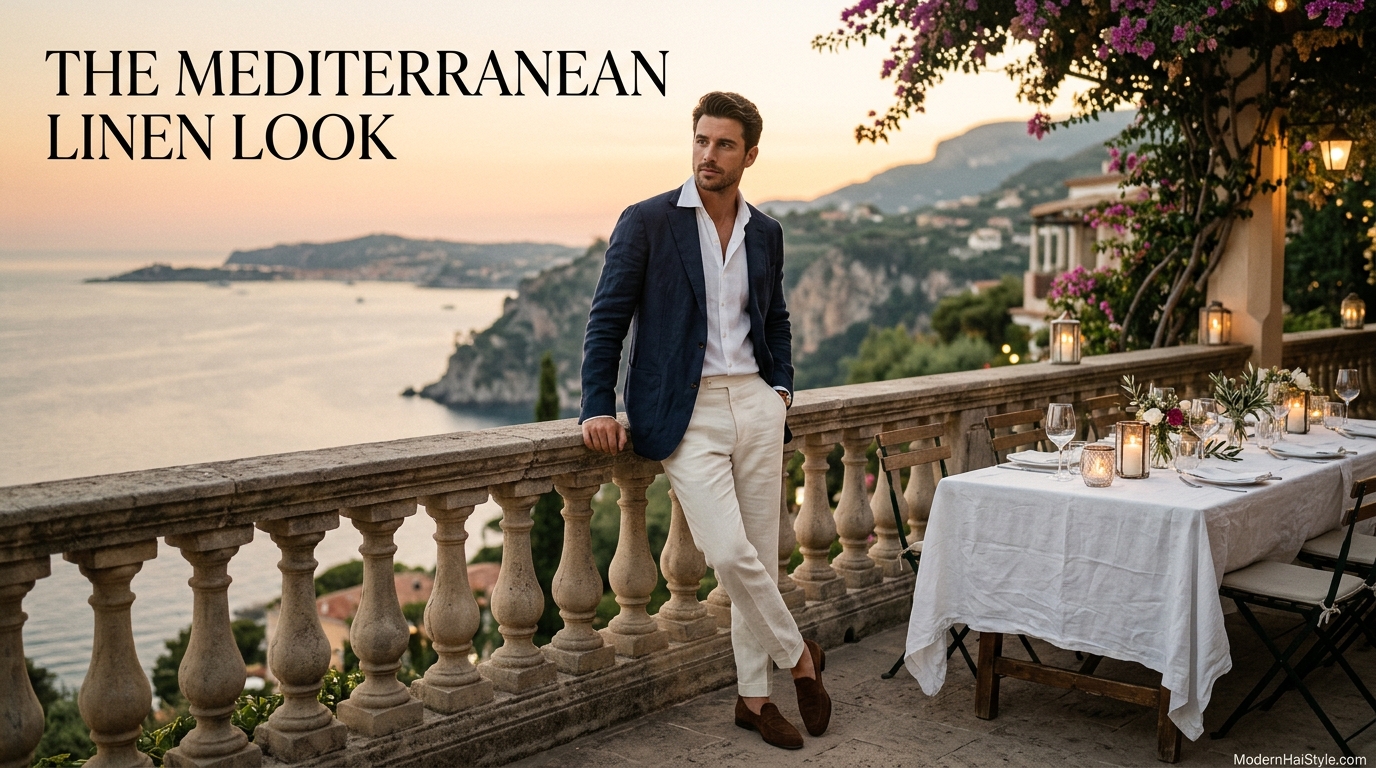
Formulas are the system applied. Each one names the pieces, the pairing logic, and the shoe, because in linen the shoe is half the tailoring.
Everyday Heat
The formula: linen overshirt worn open over a white tee, with chinos or linen trousers and clean sneakers.
Why it works: the overshirt gives the outfit a third piece and a collar line, the tee keeps it casual, and sleeves roll as the day warms.
In tonal neutrals it is close to foolproof, and it is the fastest upgrade for men who default to a tee and shorts.
The Matching Set
The formula: camp collar shirt and shorts or trousers in the same fabric and color, with loafers, espadrilles, or leather sandals.
Why it works: one cloth head to toe reads as intention. The failure mode is fit, not concept: boxy relaxed shirt, clean hemmed bottoms, structured shoe. Sage, dusty blue, stone, and terracotta outperform navy here, where the dark color stiffens the silhouette.
Summer Wedding Guest
The formula: beige, cream, or light neutral linen suit, pale or white shirt, suede or leather loafers, no tie unless the invitation demands one.
Why it works: daytime weddings reward exactly what linen is: formal silhouette, breathable cloth, soft finish. Our wider rulings on men’s wedding guest outfits cover the dress code side; the linen specific rule is the shirt, addressed head on in the disagreement section below.
The Mediterranean Dinner
The formula: navy unstructured linen blazer, white or off white trousers, espadrilles or loafers, open collar shirt or knit polo beneath.
Why it works: contrast is the engine, dark structured top against light trousers, and the blazer raises a holiday outfit to restaurant level.
It is the most repeated formula across the guides because it has no weak version when the trousers stay light. The blazer mechanics live in our guide to men’s blazer outfit casual; linen simply supplies the summer cloth for the same play.
Summer Office
The formula: mid weight linen trousers, tucked linen blend shirt or a fine cotton shirt, unstructured blazer on meeting days, loafers.
Why it works: opacity and a morning steam carry linen through business casual.
The office caps are real, though: no beach weights, no drawstring waists, no sandals. The broader business casual frame is in our guide to men’s office outfits casual; linen is its warm weather dialect.
Garden Party and Daytime Events
The formula: linen trousers or a set in a soft color, camp collar or band collar shirt, loafers or clean sneakers, sunglasses doing quiet work.
Why it works: daytime social events sit exactly at linen’s formality center. The same register governs most of the looks in our guide to men’s party outfits, with linen as the fabric that keeps them comfortable past noon.
Evening and Date Night
The formula: darker tonal linen, navy or charcoal separates or a dark set, a blend if you want a smoother drape, structured shoes, and minimal metal (one watch, nothing shiny competing with matte cloth).
Why it works: evening forgives linen’s softness when the colors go serious.
The staging and confidence side of dressing for the night is covered in our guide to men’s date night outfits; the linen rule is simply to darken and structure as the light drops.
The Linen Shirt Question: An Honest Disagreement
One pairing splits the experts, and you deserve the split rather than a smoothed over answer.
A long standing tailoring voice advises against a linen shirt under a linen suit: two crumpling pieces, it argues, clash, and a crisp cotton shirt adds contrast and polish.
Other guides style a tonal linen shirt under the suit deliberately, treating the matched texture as the relaxed point of the outfit. Both camps produce good photographs; they are optimizing for different things, polish versus ease.
The working rule that respects both: cotton shirt when the occasion grades you (weddings, photographs, anyone’s parents), linen on linen when the setting is yours (vacations, your own parties, tonal sets).
Never mix a crumpled linen shirt with a pressed suit in mismatched colors; that is the only version everyone agrees fails.
The Wrinkle Doctrine
Linen creases because the flax fiber, bent, holds the bend until moisture and heat relax it. That is a physical property, and no honest seller promises it away. The doctrine that every serious guide converges on is one line: aim for tidy, not immaculate.
Tidy has a technique. Choose mid weight cloth, which creases finer than featherweight.
Prefer tighter weaves and lighter textures when crease visibility bothers you; a tailoring tip holds that smoother, lighter textured linen shows creasing less. Steam or press the night before, and hang the garment in a steamy bathroom on the morning.
Accept the sitting creases at lap and elbow as the fabric’s signature, the same one that signals the cloth is real.
What tidy is not: ironing linen board flat like a cotton dress shirt. A light, living crease is part of the garment’s charm and its credibility; a man in razor flat linen looks like he is wearing a photograph of linen.
Shoes and Accessories: The Structure Layer
Linen is soft, matte, and unstructured, so the outfit’s discipline has to come from somewhere. It comes from the feet.
|
Shoe |
Register |
Pairs with |
|---|---|---|
|
Suede loafers |
Smart |
Suits, trousers, wedding and office formulas |
|
Leather loafers |
Smart to smart casual |
Blazer outfits, Mediterranean formula |
|
Espadrilles |
Vacation smart |
Sets, shorts, Mediterranean and beach formulas |
|
Clean minimal sneakers |
Casual |
Sets, overshirt formula, everyday heat |
|
Leather sandals and mules |
Beach to relaxed |
Shorts sets, vacation, garden parties |
Accessories follow the same natural register: woven or suede belts (never over a drawstring waist), a straw hat at midday, sunglasses, and a minimal watch.
Shiny, formal accessories fight the fabric; natural materials agree with it. That restraint is also the whole engine of the aesthetic in our guide to men’s old money outfits, where linen does the quiet luxury work without a logo in sight.
The Starter Wardrobe: Three Pieces, Three Roles
You do not need a linen closet to start; you need three pieces in three roles, the starter structure one major set brand teaches and the logic holds regardless of brand.
Role one, the universal shirt: a mid weight shirt in navy or white.
It pairs with jeans, chinos, shorts, and trousers you already own, and works open over a tee. That brand prices its version around $25 to $35, its own figure, quoted to show the entry cost can be low, not as a recommendation.
Role two, the trouser: tapered linen trousers in beige or khaki. They unlock the wedding, office, and dinner formulas at once.
Role three, the set: a matching set in cream, stone, or a soft color, the one purchase that is a complete occasion outfit (vacation, dates, parties) with zero pairing thought.
Bought in that order, each piece teaches the next: the shirt teaches your size and care tolerance, the trousers teach fit, and the set cashes in both lessons.
This is the same build in stages logic as our guide to men’s capsule wardrobe essentials, applied to one fabric.
Evening Limits and Dress Codes
Linen’s formality has a ceiling, and knowing it prevents the fabric’s most public failure. Daytime formal (weddings, ceremonies, garden events): linen is a first choice.
Smart casual and business casual: linen lives there happily. Formal evening (black tie adjacent, strict receptions): linen suits sit below the line; a blend blazer with tailored trousers is the fabric’s highest evening register, and beyond that the correct move is a different cloth.
Dress codes grade the whole outfit, not the fiber, so a pressed mid weight suit with loafers passes rooms that a crumpled lightweight suit fails.
When in doubt, darken the color, smooth the blend, structure the shoe, and press the garment; those four moves buy linen its maximum formality.
Care: Washing, Shrinking, Steaming, Packing
Linen rewards basic care with unusual longevity. Wash gentle and cold where the label allows, and remove pieces promptly when the cycle ends, because creases set as cloth sits.
Dry hanging or on low tumble; high heat is the shrink risk, not water. Iron or steam while slightly damp for the crispest result, or steam only for the tidy doctrine’s softer finish.
Shrinking truth: linen can shrink under hot washing and hot drying; cold and low keep the fit you bought, and pre washed pieces move least.
Softening is the reward loop: linen starts crisp and grows softer with every wash without losing strength, the rare fabric that improves under use.
Packing: roll rather than fold, choose blends or mid weights for travel days, and plan a bathroom steam on arrival. A linen wardrobe travels light, breathes on arrival, and asks only those ten steamy minutes in return.
Storage: hang tailored pieces on wide hangers that support the shoulder, and fold knits and tees rather than hanging them into stretch.
Linen asks for no special chemistry, no mothproofing rituals beyond a clean, dry closet, and it tolerates being worn hard between washes better than delicate summer fabrics do. Clean before long storage, as with any natural fiber, and the wardrobe wakes up ready next season.
Linen by Build and Age
The system flexes by frame, and the adjustments are small and mechanical.
Shorter frames: keep untucked shirts shorter, taper trousers with a minimal break, and lean on tonal dressing to lengthen the visual line. Billowing cloth shortens any frame; on a shorter one it simply shows sooner, so the fit discipline matters double.
Bigger builds: mid weight cloth is your friend twice over, for opacity and for the line it holds.
Choose structure where the fabric allows it (a blazer over a shirt beats a shirt alone), darker anchors for the largest pieces, and trousers with a proper rise rather than drawstrings sitting low.
Over 40 and beyond: linen may be the most age fluent summer fabric there is.
Tailored trousers, a pressed shirt, and loafers read distinguished at sixty exactly as they do at thirty, and the comfort case only strengthens. The adjustments are the same two: tailored rather than billowing, mid weight rather than sheer.
Mistakes and Fixes
Mistake: buying by color, ignoring weight. Sheer white trousers and collapsing blazers follow. Fix: buy the GSM band for the garment (trousers and sets at 140 to 180).
Mistake: the pajama set. Baggy shirt, baggy shorts, flip flops. Fix: boxy relaxed fit, clean hems, structured shoes, and one accessory that signals intention.
Mistake: linen on linen by accident. Mismatched colors, one piece pressed and one crumpled. Fix: cotton shirt for polish, or commit to the full tonal linen look deliberately.
Mistake: navy on navy. The Mediterranean formula with dark trousers. Fix: contrast, light trousers under the navy top, always.
Mistake: ironing for cotton standards. Board flat linen reads fake and re creases by the door. Fix: tidy, not immaculate, steam, mid weights, and acceptance.
Mistake: evening overreach. A crumpled light suit at a formal night event. Fix: know the dress code ceiling, darken, blend, structure, press, or change cloth.
Frequently Asked Questions
What is a linen outfit for men?
An outfit built on linen garments, shirts, trousers, shorts, blazers, suits, or matching sets, worn in warm weather because flax linen breathes, absorbs moisture, and dries quickly. The summer version pairs light colors and relaxed tailoring with breathable shoes like loafers, espadrilles, or sandals.
Why is linen the best fabric for summer outfits?
The flax fiber is hollow and the weave is open, so air moves through instead of trapping heat.
TextileCloth’s guide to what linen fabric is summarizes the commonly cited properties: linen absorbs up to about 20 percent of its weight in moisture before feeling damp, and it dries faster than cotton, which is why it feels cool against skin.
What GSM linen is best for summer outfits?
KOSSR’s linen fabric weight guide puts most linen clothing between about 120 and 180 gsm.
Mid weight cloth around 140 to 180 gsm is the sweet spot for shirts and trousers: opaque, structured, still airy. Below roughly 120 gsm linen turns sheer; above 200 gsm it holds a jacket’s shape but floats less.
Is pure linen or a cotton linen blend better?
Pure linen maximizes breathability and texture; blends trade a little of both for softness and fewer wrinkles.
One major set brand calls a 55/45 cotton linen blend the best balance, which is that brand’s position, stated as such. Choose pure for heat and character, blends for travel and lower maintenance.
Does linen wrinkle too much to look smart?
Linen creases because the flax fiber holds a bend; it is a property, not a defect.
The styling consensus is to aim for tidy, not immaculate: a light press or steam, mid weight fabric, and a tailored fit read as intentional. Ironing linen flat like cotton fights the fabric’s nature and loses.
Can you wear a linen shirt with a linen suit?
Guides disagree, and the disagreement is worth knowing. One tailoring source advises against it because two crumpling pieces clash, and recommends a crisp cotton shirt for contrast.
Others style a tonal linen shirt under a linen suit deliberately. The safe rule: cotton shirt for polish; linen on linen only as a relaxed, tonal, intentional look.
What colors are best for men’s linen outfits?
The summer core is neutrals: white, cream, sand, stone, and beige, which reflect heat and mix freely.
Navy is the anchor dark (and needs light trousers for contrast), powder blue and sage soften it, and earthy tones like olive and terracotta carry evening and vacation looks.
What shoes go with linen outfits?
By formality: suede or leather loafers for smart looks, espadrilles for Mediterranean and vacation outfits, clean canvas or minimal leather sneakers for casual sets, leather sandals or mules at the beach end.
The shoe’s structure is what keeps a soft outfit from reading as sleepwear.
Can men wear a linen suit to a summer wedding?
Yes, for daytime weddings it is one of the best answers in menswear: beige, cream, or powder blue reads formal enough and breathes through the ceremony.
For formal evening receptions, guidance shifts to a linen blend or another fabric, because linen’s creasing and softness sit below evening formality.
How should a linen shirt fit?
Relaxed but deliberate: room through the body for airflow, sleeves that roll cleanly, and a length that works tucked or untucked depending on the formality.
The outfit guides’ line is boxy relaxed, not oversized sloppy; linen’s drape does the relaxing, so the cut should stay honest.
Should you tuck in a linen shirt?
Match the setting: tucked for smart casual, weddings, and trousers with a belt line to show; untucked for sets, shorts, and beach contexts.
A half tuck is the common styling compromise with chinos and loafers. Whichever you choose, the shirt’s length decides whether untucked looks styled or unfinished.
What pants go with a linen shirt?
Linen trousers for the full warm weather system, cotton chinos for contrast, tailored shorts in heat, and even dark jeans for an evening smart casual mix. The texture contrast rule helps: one soft crumpled piece pairs well with a smoother partner.
How do you wear a linen two piece set without looking like pajamas?
Fit and footwear do the work: a boxy relaxed (not baggy) shirt, shorts or trousers with a clean hem, and structured shoes, loafers, espadrilles, or clean sneakers.
Tonal sets in sage, dusty blue, stone, or terracotta read intentional; adding a watch, sunglasses, or a woven belt finishes the signal.
What is the difference between a linen suit and a linen blazer outfit?
A suit is matching jacket and trousers in the same cloth, worn as one formal unit.
A blazer outfit separates them: a navy or neutral linen blazer over contrasting trousers or chinos, which is more versatile because each piece works alone across the summer wardrobe.
Can you wear linen to the office in summer?
Yes in most business casual settings: mid weight linen trousers and a tucked linen or blend shirt, or an unstructured linen blazer over chinos.
The office rules are opacity (mid weight, not sheer), a press or steam the night before, and shoes with structure. Strict dress codes still cap linen below formal suiting.
How do you wash linen clothes?
Standard care guidance: machine wash gentle and cold where the label allows, remove promptly to limit set creases, hang dry or tumble low, and iron or steam while slightly damp for a crisper finish.
Linen softens with every wash. Tailored pieces with structure sometimes specify dry cleaning; the label governs.
Does linen shrink?
Linen can shrink in hot water and high dryer heat, which is why care guidance defaults to cold washing and low or no tumble heat. Pre washed and garment dyed pieces shrink less. Buy your true size rather than sizing down in anticipation.
How do you stop linen from creasing so much?
You reduce, not eliminate: mid weight fabric creases finer than featherweight, tighter weaves and blends hold smoother, hanging garments in a steamy bathroom relaxes light creases, and sitting creases at the lap are simply the fabric’s signature.
Anyone promising wrinkle free pure linen is selling a blend or a coating.
Is linen see through?
Lightweight white linen can be, which is a weight problem: below about 120 gsm, white trousers and shirts risk show through, especially wet or backlit.
Mid weight cloth (140 to 180 gsm), a light test before wearing, and nude toned underlayers solve it; beach weight linen belongs at the beach.
What is the best linen outfit for a beach vacation?
A matching set or a camp collar shirt with linen shorts, leather sandals or espadrilles, sunglasses, and a straw hat for midday.
Lightweight fabric is right here, sheerness and all, because the context is sand and water, and an overshirt layer handles restaurants and evening breezes.
What accessories work with linen outfits?
Natural materials that share linen’s register: leather sandals and belts, woven belts, straw hats, canvas sneakers, sunglasses, and a minimal watch. Accessory guidance across guides is consistent: understated and natural beats shiny and formal next to linen’s matte texture.
Can older men wear linen outfits?
Linen is one of the most age fluent fabrics in menswear: tailored trousers, a pressed shirt, and loafers read distinguished at any age, and the fabric’s comfort case strengthens with heat sensitivity.
The adjustments are fit (tailored, not billowing) and weight (mid weight for opacity and structure).
Is black linen a good idea for summer?
It works in the evening and in sets, where the relaxed texture offsets the color’s formality, but black absorbs heat and shows lint and creases more visibly.
Most summer guidance builds the wardrobe on light neutrals first and treats black linen as an evening specialist.
What is an unstructured linen blazer?
A blazer with little or no shoulder padding, minimal lining (often half lined or unlined), and soft construction that drapes like a shirt jacket.
It is the summer tailoring default because structure is what makes jackets hot and stiff; the trade is formality, which drops to smart casual.
How many linen pieces does a man need for summer?
One brand’s starter framing is three pieces: a versatile shirt, a pair of tapered trousers, and a set, covering daily wear, travel, and events, with its own prices putting that around $85 to $125.
Treat the structure (three pieces, three roles) as the useful part and prices as that brand’s own.
Can you wear linen in the evening?
Yes, with adjustments: darker or tonal colors, a blend for smoother drape, structured shoes, and a blazer to raise the register. Full linen suits sit below formal evening dress codes, but linen separates and sets carry dinners, rooftops, and warm night events comfortably.
What is the old money linen look?
Quiet, tailored, and neutral: cream or beige suiting, a pale shirt, loafers, no logos, and clothes that look inherited rather than purchased loudly. The look works because linen’s texture supplies the interest that branding supplies elsewhere. Fit and restraint are the whole recipe.
Linen vs cotton for summer: which is cooler?
Linen, by structure: hollow fibers and an open weave move more air, it absorbs moisture without feeling damp longer, and it dries faster.
Cotton is softer at first touch, cheaper, and wrinkles less, which is why blends exist. For peak heat, guidance consistently picks linen.
Linen vs seersucker for summer suits?
Both are warm weather classics.
Seersucker’s puckered weave holds fabric off the skin and hides creases almost entirely, making it the lower maintenance formal option; linen drapes more elegantly and textures richer, at the cost of visible creasing. The choice is maintenance tolerance, not correctness.
How do you pack linen for travel?
Roll rather than fold where possible, pack a travel steamer or plan a bathroom steam on arrival, and choose blends or mid weights that release creases faster.
Linen’s travel case is strong: light, breathable on arrival days, and comfortable across climates in a way heavier summer fabrics are not.
What underwear avoids lines under linen trousers?
Seamless, close fitting, skin toned underlayers are the standard fix, especially under white and light trousers. Mid weight trousers reduce the problem at the source. The light test in daylight before an event is the two minute check that prevents the classic mistake.
Are linen outfits expensive?
The range is wide: fast fashion and marketplace sets sell at budget prices (one big brand’s set pieces run in the $25 to $55 band), while European flax tailoring costs many times more.
The value question is fabric weight and construction at the price, not the label; mid weight cloth and clean finishing are what to inspect.
What is a camp collar (Cuban collar) linen shirt?
A shirt with a flat, open notch collar and usually short sleeves, borrowed from mid century vacation wear.
In linen it is the personality shirt of the summer wardrobe: worn open over a tee or buttoned with shorts and trousers, in colors like olive and sage or in prints.
How long does linen clothing last?
Linen is among the strongest natural fibers (textile guides commonly cite it as stronger than cotton, wet or dry), and quality garments are measured in years to decades with basic care.
It softens rather than wearing thin quickly, which is why vintage linen circulates as heirlooms; the weak points are usually stitching and finishing, not the cloth.
Can you wear a tie with a linen suit?
Usually skip it for daytime: the suit’s softness and an open collar are the point, and most wedding guidance says no tie unless the invitation demands formality.
If a tie is needed, a knit or textured tie matches linen’s register better than a smooth silk one.
What belt goes with linen trousers?
Woven leather or fabric belts suit drawstring free trousers in smart settings; suede belts match suede loafers. Drawstring and elastic waist linen trousers are casual by construction and usually skip the belt entirely; wearing one over a drawstring waist is a common styling error.
Is linen sustainable?
Flax is generally considered a lower input crop than conventional cotton (less water and fewer pesticides in most assessments), and linen is biodegradable.
Certifications like OEKO TEX and European flax programs exist for buyers who want the claim verified; treat blanket sustainability claims from sellers as marketing unless a certification is named.
What is the Mediterranean linen outfit formula?
The most repeated formula in the guides: a navy linen blazer over white or off white trousers with espadrilles or loafers. Its engine is contrast, dark top against light bottom, and it fails when the trousers go dark and the contrast disappears.
How do you keep linen trousers from looking baggy?
Choose a tapered leg with a clean break, mid weight cloth that holds a line, and a rise that sits at the natural waist.
Have them tailored; tailoring sources stress that linen rewards a precise fit precisely because the fabric itself is relaxed. Billow is a fit problem, not a fabric property.
What shirts go under a linen blazer?
A crisp cotton shirt for polish and contrast, a knit polo for smart casual ease, a plain tee for the casual end, or a tonal linen shirt as the deliberate relaxed option.
The under layer’s job is texture management: one smooth piece steadies the outfit.
Can short men wear linen outfits?
Yes, with proportion control: shorter shirt lengths worn untucked or cleanly tucked, trousers with a taper and minimal break, tonal dressing to lengthen the line, and sets that do not overwhelm the frame.
Billowing fabric is the enemy at any height; on shorter frames it simply shows sooner.
What is the best first linen purchase for a man?
A mid weight shirt in navy or white, by the starter logic guides repeat.
It pairs with jeans, chinos, shorts, and trousers you already own, works open over a tee, and teaches your size and care tolerance in the fabric before you commit to suits or sets.
Conclusion
Mens linen outfits for summer stop being a gamble the moment the decisions run in order: weight before color, fit before formulas, shoes supplying the structure, and the wrinkle treated as a signature rather than a flaw.
Start with the universal shirt, add the tapered trouser, and let the set be your third purchase, not your first one.
Keep the cotton shirt ruling for graded occasions, the contrast law for navy, and the tidy doctrine for every single morning after a long, hot, well dressed summer day.
Do that, and linen becomes what it has been for every well dressed warm climate for centuries: the coolest cloth in the room, in both senses of the word, worn like you genuinely meant every part of it.

Dilawar is a passionate writer and contributor at Modern Hairstyle (modernhaistyle.com), specializing in hairstyles, hair care, grooming, fashion, beauty, and lifestyle trends. He enjoys sharing practical tips, hairstyle inspiration, and easy-to-follow guides to help readers discover their personal style. His goal is to provide informative, engaging, and helpful content that keeps readers updated with the latest trends.


