Short Hair Wig: The Length Positions, Texture Corrections and Fit Fixes
Short hair wig shopping starts with an argument nobody warns you about. The charts cannot agree on what short means, and the disagreement is four inches wide.
One chart files short at 6 to 10 inches, another at 8 to 12, another at 8 to 14, and market segmentation quoted by a fourth puts short at anything under 14 inches.
Quick answer: Work with under 14 inches as the boundary, then choose by position and texture, not by the label. A straight 12 inch wig and a curly 12 inch wig are different products on your head.
This page maps the positions, corrects them for texture, routes you between pixie and bob, and fixes the failure set that only short wigs have.
What Counts as Short: The Boundary Strands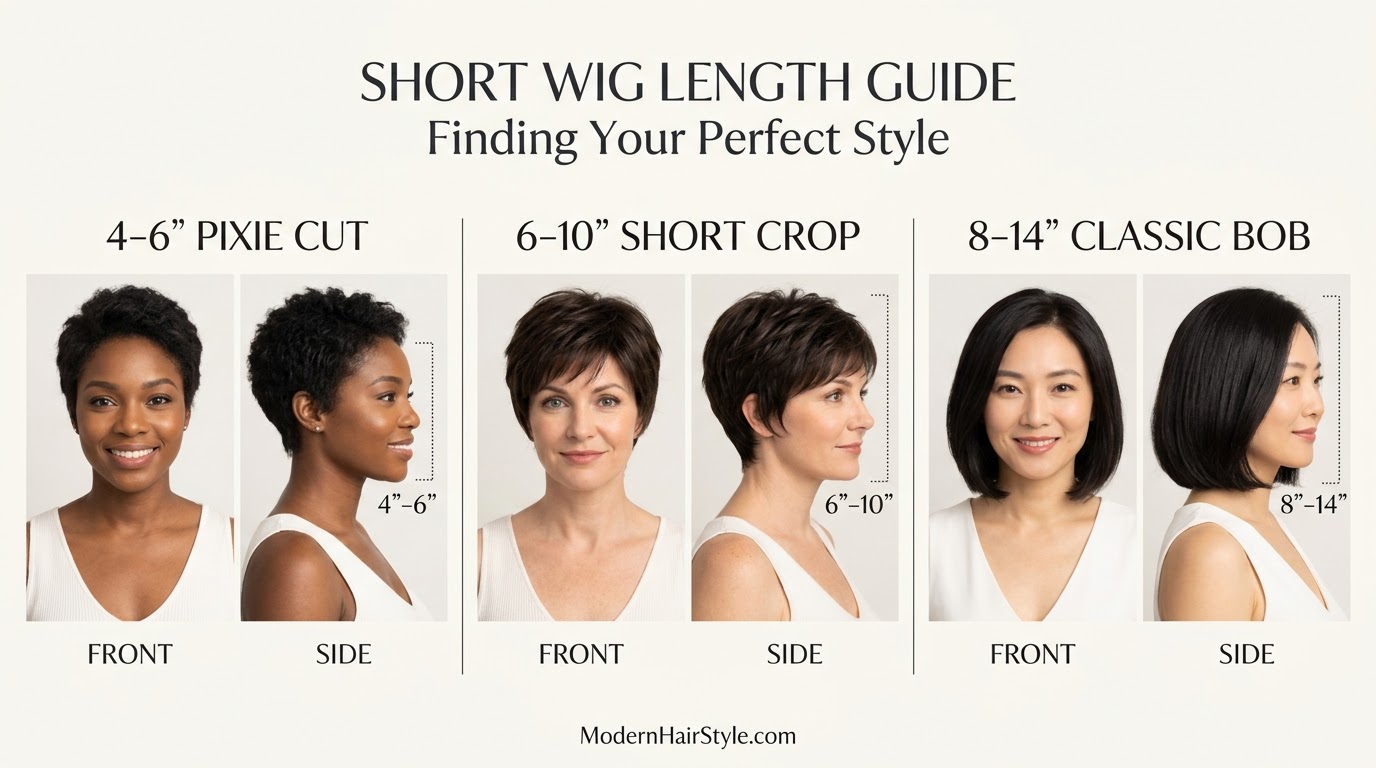
Every source below was checked on the same day, and each states its own range as plain fact. They are printed here as labelled strands, because merging them would invent a standard that does not exist.
|
Source type |
Its short range |
Note |
|---|---|---|
|
Retailer length chart |
6 to 10 inches |
Treats 12 inches as the start of the next category |
|
Specialist length chart |
8 to 12 inches |
Files 14 inches outside short |
|
Wig depot chart |
8 to 14 inches |
Calls 14 inches short to medium in its own detail |
|
Retail short collection |
8 to 14 inches |
The range the collection actually sells |
|
Market analyst segmentation, quoted by a chart |
Under 14 inches |
Industry segmentation, not a styling guide |
The working boundary for this page is under 14 inches, with 14 inches itself treated as the disputed edge. At exactly 14, decide by texture and fall, not by category name.
The most honest chart in the set admits the wider problem. The Mayvenn wig length guide notes that published charts disagree by two to four inches at the long end, because torso length varies more than total height.
That honesty is the model for this whole page. Positions below are starting points for an average frame, and your own torso moves every landmark.
For the other side of the boundary, our long hair wig guide owns length from the medium zone upward, measured and maintained its own way.
The Short Length Map: Inches, Landmarks and Texture
All wig lengths are measured the same way: from the crown, with the strand pulled straight. What changes is where that measurement lands once texture takes its share.
|
Labelled length |
Straight fall, average frame |
Wavy hang, approx |
Curly hang, approx |
Cut family |
|---|---|---|---|---|
|
4 to 6 inches |
Above and around the ears |
Slightly shorter |
Noticeably shorter |
Pixie |
|
8 inches |
Ear to chin |
About 6 inches |
About 4 to 6 inches |
Crop, short bob |
|
10 inches |
Chin to jaw |
About 8 inches |
About 6 inches |
Bob, layered crop |
|
12 inches |
Chin to shoulders |
About 10 inches |
About 8 inches |
Classic bob |
|
14 inches |
Collarbone |
About 11.5 to 12 inches |
About 10 inches |
Long bob, boundary |
The wavy and curly columns follow the pattern in one maker’s own measured test. The Soul Lady measured texture article hung four labelled 14 inch wigs and recorded 14 straight, about 12 loose curly, 11.5 water wave and 10 jerry curly.
That maker states the lesson directly: short plus tightly curled is the combination that catches people out most. At 10 inches labelled, its chart shows curly hair hanging at about 6 inches.
So buy the hang, not the label. Decide where you want hair to land on your body, then read across the row for your texture and order that labelled length.
A second chart agrees on the direction. The Luvme wig length guide warns that a 12 inch curly wig appears shorter and fuller than the same length straight, and calls the listed length a reference, not a guarantee.
The Three Zones Inside Short
The pixie zone, 4 to 6 inches, sits above the ears with a tapered nape. It exposes the whole face, weighs the least and asks the most of the cut itself.
The crop zone, 6 to 10 inches, covers the ears partly or fully and reaches the chin. Layered crops and short bobs live here, with more styling forgiveness than a pixie.
The bob zone, 8 to 14 inches, carries a defined perimeter between chin and collarbone. It is the most populated zone and the one with its own dedicated guide in this cluster.
Pixie or Bob: Route by Face, Routine and Tolerance
Pixie and bob are both short, and they fail in opposite ways. Route by what each asks of you, not by which photograph you prefer today.
|
Decision |
Pixie |
Bob |
|---|---|---|
|
Face exposure |
Full; every feature on show |
Framed; jaw and cheeks partly covered |
|
Morning routine |
Fingers and steam, minutes |
Brush and shape, slightly longer |
|
Cut precision needed |
Highest; errors sit at eye level |
More forgiving; perimeter hides small errors |
|
Density risk |
Crown bulk and helmet effect |
Nape tangling and a heavy perimeter |
|
Grow out illusion |
Reads as a deliberate crop always |
Can mimic a growing out cut |
|
Best first short wig for |
Confident buyers, hot climates |
Most beginners |
Choose a pixie when you want the lightest, coolest, fastest category in wigs, and your face is happy fully exposed. Choose it also when a stylist you trust can do the first cut.
Choose a bob when you want cover at the sides, a familiar silhouette and room for small fitting errors. It is the safer first short wig for most buyers.
Our bob wig human hair guide owns the bob zone in depth: its lengths, lines and density. This page deliberately stops at the routing decision.
The hybrid is real too. A pixie bob, or bixie, keeps a bob’s perimeter at pixie length, and it is the standard compromise for buyers torn between the two rows above.
Density at Short Lengths: Less Hair, Better Silhouette
Density advice from long wigs does not transfer down. Volume that spreads along 22 inches stacks into a few inches of crown on a short cut.
That stacking is why short wigs read bulky or helmet like in buyer complaints. The hair is not bad; there is simply too much of it in too small a silhouette.
The one usable guidance strand in the field comes from a marketplace FAQ: about 120 to 150 percent for pixie cuts, to keep the silhouette full without bulk. It is printed here as a strand, not a standard.
At bob lengths, moderate densities behave better than headline densities for the same reason. A 150 percent bob usually reads like the photos buyers expect, while very high densities need professional thinning to sit close.
Read listings accordingly. When a short wig is offered at 180 or 200 percent, ask whether the style was designed for it, like an afro or a full curly cut, or whether it is a long wig specification copied onto a short product.
If a short wig you own already looks bulky, the fix order is thin, razor, layer, in a stylist’s hands. Removing weight from the top and perimeter fixes most cases without replacing the wig.
Our human hair wig guide explains how density percentages are built across the whole category, which helps you read any short listing more carefully.
Caps for Short Wigs: Where Construction Earns Its Price
Short cuts expose cap engineering. With little hair to hide behind, the nape, the ear tabs and the crown become the visible product.
|
Cap construction |
What it buys at short length |
Watch out for |
|---|---|---|
|
Machine wefted |
Lowest price, durable, fast wear |
Less natural part, bulk if density is high |
|
Machine made with bangs |
No lace routine at all, fringe covers the front |
Fixed front, no exposed hairline styles |
|
Lace front |
A believable exposed hairline on pixies and crops |
Lace work returns; temples are visible at short length |
|
Lace closure |
A defined part with less lace to manage |
Part position is limited |
|
Monofilament top |
The most realistic part and crown |
Higher price for a small visible area |
|
Hand tied |
Movement in every direction, lightest feel |
Highest price, most delicate cap |
A lace front earns its price on short styles that expose the hairline, because there is no length to distract from the front edge. Our human hair lace front wig guide covers lace sizes and blending.
A glueless cap suits short daily wear well, since short styles are put on and taken off fast. Our glueless wig human hair guide explains the hold systems behind that label.
Cap size range matters more at short lengths, because a loose long wig hides under its own weight and a loose short wig visibly moves. Petite, average and large caps all exist in this category.
The average circumference on checked listings is 22.5 inches. One handmade listing specified a 21.5 inch cap as its large option’s counterpart sizing note, which shows how much makers vary, so measure rather than assume.
The Short Failure Set and Its Fixes
Long wig failures are tangles, weight and shedding. Short wig failures are fit failures, and each one below has a check that costs nothing.
Nape Gap and Ride Up
A short wig that gaps at the nape or creeps up at the back is usually a measurement problem. The front to nape measurement is too short for the cap, so the cap climbs as you move.
Check in this order: measure front to nape, adjust both straps evenly, add a wig grip band, and only then blame the wig. Overtightening one strap tilts the cap and makes the gap worse.
Cut helps too. A tapered nape cut close to the neck hides small gaps that a blunt back edge advertises every time you turn your head.
Ear Tabs and Crown Bulk
Ear tabs are the reinforced temple points that hold the front sides flat. On short wigs they show whenever hair tucks behind the ear, which is exactly where glasses arms also sit.
Bend the tabs to your head’s shape, check them with your glasses on, and confirm the tab does not sit on the ear itself. A tab placed wrong reads as a visible step in the silhouette.
Crown bulk is the density problem from the earlier section, felt at the mirror. Steam and finger styling settle a day’s bulk; thinning settles the wig’s bulk permanently.
The general rule of this category: at short lengths the cap has nowhere to hide. Fit checks beat product swaps, because most short wig disappointment is a fitting issue wearing a product’s name.
Texture at Short Lengths
Straight short wigs show the cut most honestly and the errors most clearly. They hang at their labelled length and reward precise cutting.
Wavy short wigs forgive. Movement hides small density and perimeter issues, and the hang loss of about 2 inches at these lengths is easy to plan around with the map above.
Curly short wigs transform the map. Volume rises as length falls, shrinkage reaches about 4 inches on tight patterns, and the style reads fuller than the same density straight.
Our curly hair wig guide covers shrinkage and care across textures in full. Apply its tightest warnings here first, because short curly is where the surprise concentrates.
Yaki and kinky textures carry their own volume at short lengths. Their pixies and crops need less density to read full, and their silhouettes hold shape through a day better than silky textures do.
How Much a Short Hair Wig Costs, as Strands by Construction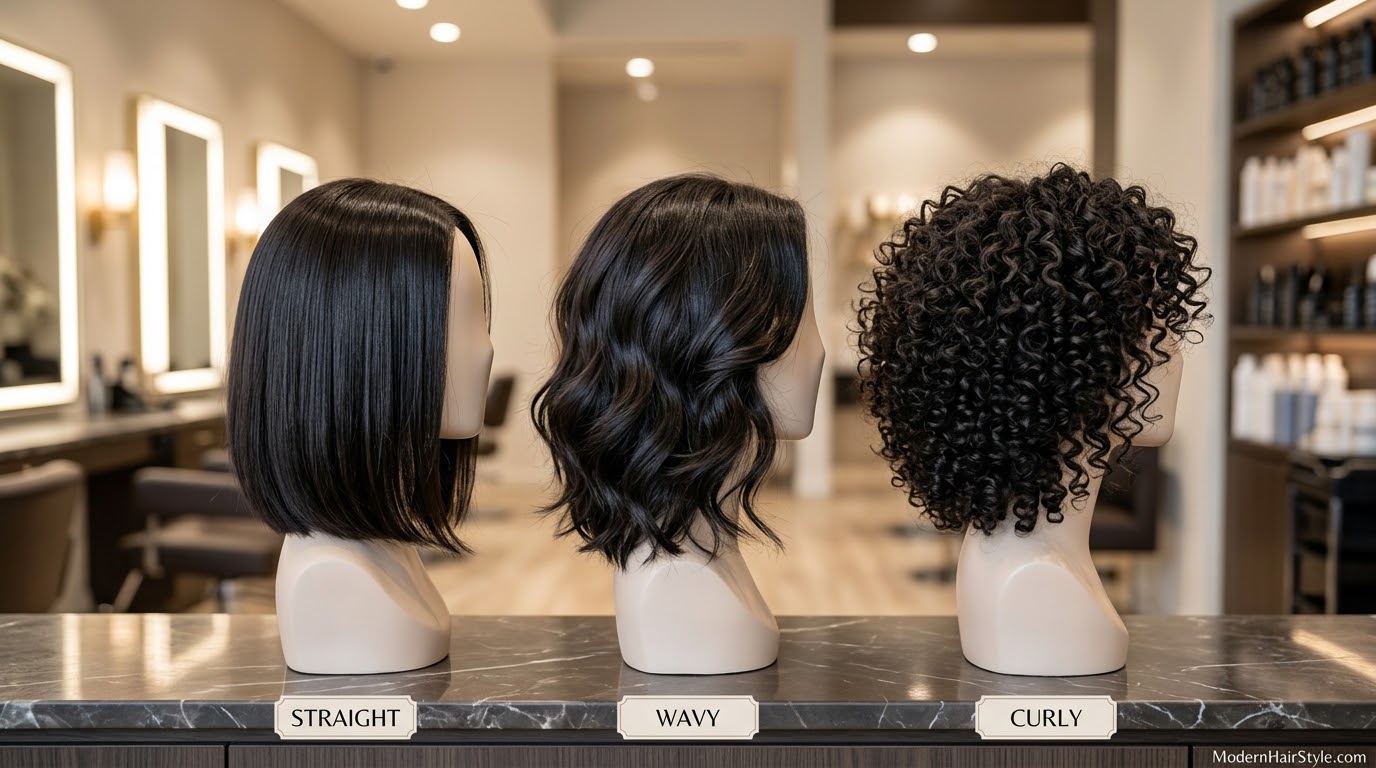
Prices below are checked strands, organised by construction and channel, never merged. Cap construction moves a short wig’s price more than its inches do.
|
Strand |
Checked figure |
Source and scope |
|---|---|---|
|
Factory glueless pixie |
$89 for a machine made pixie with bangs, 180 percent density |
One maker’s own product page, checked November 2026 |
|
Handmade marketplace pixie |
$185 and up, 130 percent density, average and large caps |
Handmade marketplace listings, checked November 2026 |
|
Senior specialist short styles |
Inside a wider family running $79.99 to $159.89 across lengths and blends |
One senior retailer’s product pages, checked November 2026 |
|
Premium hand tied short wigs |
Sold as a luxury class in European human hair; no price in the retrieved text |
One luxury brand’s short wig guide, checked November 2026 |
An unsourced roundup claim that human hair wigs start at $200 conflicts with the $89 maker listing above. It is excluded here, and it is the kind of figure to distrust wherever you meet it.
The honest pattern: short wigs use less hair, so at equal construction they cost less than long wigs. Construction then reorders everything, and a hand tied short wig can outprice a machine made long one.
Budget one service line: a professional first cut or trim on any short wig above the entry tier. Short cuts show errors at eye level, and the first cut is the cheapest quality upgrade available.
Styling and Care: The Short Routine
Short care is faster, lighter and more frequent at the contact points. The routine below is the whole of it for most owners.
Step 1: Revive before you wash. Fingers first, steam second, product last and lightly. Most short styles reset in minutes, and heavy product is the main cause of a separated, stringy pixie.
Step 2: Wash when revival fails. Short wigs collect oils at the crown and nape relative to their size. They also wash in minutes and dry fast, often overnight, which long wigs cannot promise.
Step 3: Dry on the stand. The stand holds the crown and nape shape while the wig dries. Short cuts keep their architecture this way instead of setting wherever they were dropped.
Step 4: Heat with discipline. Human hair short wigs can be heat styled, with protectant and low settings. Short hair sits close to the face and the cap, so heat care matters more here, not less.
Step 5: Store on the stand. Nothing crushes a short cut in storage, because there is no length to fold. A stand, a brushed crown and a settled nape are the entire storage system.
Tangling mostly leaves this category. The one zone that still rubs is the nape of a bob against collars, so that zone gets the detangling attention the rest no longer needs.
Senior, Medical and Beginner Buyers
Senior buyers are a core audience for short wigs, not a niche. Salt and pepper and grey pixies and bobs, at light densities and soft cuts, fill whole catalogues.
One checked handmade pixie listed a 34 salt and pepper shade at 130 percent density on an average cap, pre styled before shipping. That strand shows the segment’s formula: honest density, blend colour, ready to wear.
For medical hair loss, short styles are light on sensitive scalps and fast on low energy days. The fitting can also be private and quick, because the cut decision is smaller than a long restyle.
Insurers document this product as a cranial prosthesis, not a wig. IRS Publication 502 sets the narrow medical expense wording, and this cluster’s store guide walks the paperwork steps in full.
For beginners, short is the training ground of wigs: cheaper at the same quality, faster to wash and style, and easier to fit. The wider families in our hair wig hub and wig hair overview help you place the category before you commit.
Short Wig vs Long Wig vs Topper
|
Option |
Covers |
Routine |
Choose it when |
|---|---|---|---|
|
Short wig |
Whole head, 4 to 14 inches |
Fastest wash, style and dry |
You want low maintenance with full coverage |
|
Long wig |
Whole head, 16 inches and up |
Longest wash, detangle and dry |
The length itself is the look you want |
|
Hair topper |
Thinning zones only |
Blending with your own hair daily |
Your sides and back hair are still usable |
The topper comparison is the one buyers get wrong most. A topper needs your own hair around it to blend into; a short wig asks nothing of your own hair at all.
The long comparison is about time, not beauty. If your mornings are short, a short wig returns them; if the length is the point of the purchase, no routine argument should talk you out of it.
A third front deserves a mention for short styles worn down: the headband wig, whose band covers the front edge. Our headband wig human hair guide covers its grip and limits.
Human Hair vs Synthetic at Short Lengths
Short is the length where the human hair argument changes. The usual case for human hair is styling freedom over years of wear, and short cuts use that freedom differently.
Human hair short wigs can be razor cut, thinned, restyled with heat and re-cut as your taste changes. A pixie you tire of can become a crop; a crop can be re-tapered. That editability is the real premium.
Human hair also moves at short length the way the photos promise. Short cuts have no length to create movement artificially, so fibre behaviour is the movement, and real hair falls, separates and settles like grown hair.
Synthetic short wigs hold their factory style through weather and washing, which is a genuine advantage for a set and forget pixie. The limits are heat, shine under bright light and a shorter working life.
Heat friendly synthetic narrows the styling gap at a mid price. It still does not take a razor cut or a re-taper the way human hair does, and its lifespan claims belong to its sellers.
The honest routing: choose human hair when you will cut, restyle or wear the piece daily for a long season. Choose quality synthetic when the style is fixed, the budget is firm, or the wig is a dedicated swim, gym or travel piece.
Price strands support that split. The checked factory human hair pixie at $89 sits inside the range where synthetic roundups also play, which is why fibre should be verified on the label, not assumed from the price.
Choosing by Face Shape and Daily Life
Cut families flatter faces by where they put volume and where they end. Use the table as a starting route, then let a fitting or a stylist’s eye settle it.
|
Face shape |
Short route that usually works |
Usually avoid |
|---|---|---|
|
Oval |
Any zone; choose by routine |
Nothing structural |
|
Round |
Layered pixie with crown height, bob past the chin |
Blunt bob ending at the widest point |
|
Square |
Soft shag, feathered crop, wispy bob |
Severe blunt lines at jaw level |
|
Heart |
Bob with volume at the jaw, side swept crop |
Top heavy pixie with a bare chin line |
|
Long or oblong |
Chin length bob, fringe forward styles |
Very short pixie with height on top |
|
Diamond |
Bob with cheek level fullness, textured crop |
Narrow cuts that expose the jaw and forehead only |
Daily life routes as strongly as face shape. A gym heavy routine favours pixies and grips; a glasses all day routine favours ear tab checks and crops that clear the frames.
A commute and collar routine punishes bob napes, which rub on coats and scarves. If your winters are collar heavy, a crop or a tapered bob back will outwear a blunt bob at the nape.
A low energy routine, including treatment periods, favours the shortest honest option: a pre styled pixie or a bangs front crop that needs fingers only. Choosing it early, before energy drops, is the kindest version of this decision.
The Pre-Buy Checklist for Short Wigs
Run these six checks in order before paying for any short wig. They take ten minutes and they map exactly onto the failure set this category is known for.
- Zone first. Name pixie, crop or bob before opening a single product page, so listings cannot move you by photography.
- Hang, not label. Use the length map with your texture column, and write down the labelled length that lands where you want.
- Density ceiling. Set a maximum density for your zone before shopping, using the 120 to 150 percent pixie strand as the anchor.
- Measurements out. Circumference, front to nape and ear to ear, written down, checked against the maker’s own size chart, not a generic one.
- Front decision. Exposed lace hairline, monofilament part or bangs cover: pick one, because each implies a different cap and routine.
- First cut plan. Decide who cuts or trims it first, and confirm the return rule ends where the first cut begins, so the plan and the policy agree.
A shortlist that survives all six checks is usually two wigs, not ten. Compare those two on cap comfort and front realism, in daylight, and the decision makes itself.
Frequently Asked Questions
What counts as a short hair wig?
There is no single boundary. Checked charts place short at 6 to 10 inches, 8 to 12 inches, 8 to 14 inches, and market segmentation at under 14 inches. This page uses under 14 inches as the working boundary.
What lengths do short wigs come in?
Most short ranges run from about 4 inch pixies to 14 inch collarbone styles. Retail collections checked for this article ran 8 to 14 inches, with pixie specialists going shorter.
Is a 12 inch wig short?
Yes on most charts. A 12 inch straight wig falls around the chin to just above the shoulders, which every checked chart files as short or as the classic bob length inside short.
Is a 14 inch wig short or medium?
It is the disputed boundary. Some charts file 14 inches as short, some as short to medium, and some start medium at 14. In curly textures a 14 inch wig hangs at about 10 inches, which reads short.
What is the difference between a pixie wig and a bob wig?
A pixie is cropped close, usually 4 to 6 inches, above the ears with a tapered nape. A bob is a defined perimeter line, usually 8 to 14 inches, falling between the ears and the collarbone.
Are short wigs cheaper than long wigs?
Usually, at the same hair quality and cap, because they use less hair. Checked strands run from $89 for a machine made pixie to $185 for a handmade marketplace pixie, while premium hand tied short wigs cost far more.
How much does a short human hair wig cost?
As strands: $89 for one maker’s glueless pixie, $185 and up for handmade marketplace pixies, and premium European hand tied short wigs in a different price class entirely. Cap construction moves the price most.
What density is best for a short wig?
A marketplace FAQ strand suggests about 120 to 150 percent for pixies, to keep the silhouette full without bulk. Short cuts show excess density faster than long hair, because there is no length to distribute it.
Do short wigs look natural?
They can be the most natural looking category, because the cut sits close to how hair grows and moves. The risks are specific: too much density on top, a nape that gaps, and ear tabs that sit off the head.
Why does my short wig look bulky or helmet like?
Usually density and cut, not the wig itself. Short hair at high density stacks volume at the crown. Thinning, razor work and layering by a stylist fix most cases without replacing the wig.
How do I stop a short wig gaping at the nape?
Fit first: check the front to nape measurement, adjust straps evenly, and use a wig grip if the cap rides up. A tapered nape cut close to the neck also hides small gaps a blunt back exposes.
What are ear tabs and why do they matter on short wigs?
Ear tabs are the reinforced temple points that keep the front sides flat and let glasses sit over the cap. On short wigs they show whenever hair tucks behind the ear, so their position decides realism.
Are short wigs good for summer?
Yes. Less hair on the neck, faster drying and lighter weight make short wigs the standard hot weather recommendation. Cap breathability still varies by construction.
Are short wigs good for beginners?
Often the best first wig. The routine is short, washing and drying are fast, and tangling is minimal. The one skill to budget for is a professional first cut, because short cuts show errors.
Are short wigs good for medical hair loss?
Yes, and they are a large part of medical wig fitting. Short styles are light on sensitive scalps and quick on low energy days, and the item is documented as a cranial prosthesis for insurance purposes.
Can I cut a long wig into a short wig?
A stylist can, but the result is a cut down wig, not a designed short wig: the cap, density distribution and layering were built for length. A designed short wig usually looks better and can cost less.
Can short wigs be heat styled?
Human hair short wigs can, with heat protectant and low settings. Short hair sits close to the face and cap, so heat discipline matters more, not less, at short lengths.
How often should I wash a short wig?
Short wigs collect skin oils at the nape and crown faster relative to their size, and they wash and dry quickly. Follow the maker’s guidance and wash when the style stops reviving with steam or fingers.
Do short wigs tangle less?
Yes. Tangling is mostly a friction and length problem, and short hair has far less of both. The nape of a bob is the one zone that still rubs on collars.
How long does a short human hair wig last?
Seller claims of more than a year appear on checked pixie pages, but they are seller claims. Short wigs avoid many long hair failure modes, and real lifespan still follows wear and care.
What cap is best for a short wig?
It depends on the front you want. Lace fronts give an exposed hairline, monofilament tops give a realistic part, machine made caps with bangs give the simplest routine, and hand tied caps give the most movement at the highest price.
Do short wigs come in petite and large sizes?
Yes. Short styles are sold in petite, average and large caps, and one checked handmade listing specified a 21.5 inch cap detail against the 22.5 inch average standard found across listings.
What face shapes suit short wigs?
Most shapes suit some short cut. Pixies expose the face fully, bobs frame the jaw, and shags soften angles. Match the cut family to the face, not the category to the face.
Are short wigs good for round faces?
Layered pixies with height and longer bobs that pass the chin are the usual recommendations, because both add length. A blunt chin length bob at the widest point is the usual style to avoid.
Can I wear glasses with a short wig?
Yes. Check ear tab position with your frames on, because short styles tuck behind ears where frames sit. This is a fitting check, not a barrier.
Are there short wigs for older women?
Yes, a large segment: salt and pepper and grey pixies and bobs, in light densities and soft cuts, sold by senior specialists and handmade makers alike.
What is a salt and pepper short wig?
A short wig blending white or grey hair with naturally dark hair in set proportions. One checked handmade pixie listed a 34 salt and pepper shade at 130 percent density on an average cap.
Do short curly wigs run shorter than the label?
Yes, strongly. One maker’s measured table shows a labelled 14 inch jerry curly wig hanging at 10 inches, and a labelled 10 inch curly at about 6 inches. Short plus curly catches buyers out most.
How do I style a short pixie wig in the morning?
Finger style first, steam second, product last and lightly. Short human hair resets fast, and heavy product is the main cause of a separated, stringy pixie.
Can I wear a short wig to work out?
Many wearers do, with a grip band and a secure cap fit. Short wigs shift less than long wigs in movement, but sweat means more frequent washing.
Are short wigs good for travel?
Yes. They pack small, revive with fingers or steam, and dry overnight after washing, which long wigs often cannot.
What is the lightest wig style?
Short machine made and pixie styles are among the lightest full wigs. Exact weights are rarely published, so treat any gram figure as that seller’s strand.
Short wig or long wig for a first wig?
Short is the lower maintenance training ground: cheaper at the same quality, faster to wash and style, and easier to fit. Long is the choice when the look itself is the priority.
Can a short wig be worn up or clipped back?
Short wigs have little to tie back by design. Small clips and half up touches work on bob lengths, while pixies are worn as cut.
Do short wigs need a wig stand?
A stand keeps the cut’s shape, especially the crown and nape. Short wigs are also the easiest to store well, because there is no length to crush.
What is a tapered short wig?
A cut that is longer on top and progressively shorter into the nape and sides, following the head’s shape. Tapering is what makes a short wig sit close instead of puffing out.
What is an undercut wig?
A style with very short sides and back under a longer top. In wigs it is a designed cut, not something to improvise with clippers on a standard cap.
Are short wigs with bangs a good idea?
Yes for a simple routine: the fringe covers the front edge, so no lace work is needed. The bangs guide in this cluster covers bang types and face matching in full, in text here until that page publishes.
How do I choose between a short wig and a hair topper?
A topper adds coverage where your own hair thins and needs blending hair around it. A short wig covers everything and asks nothing of your own hair. Decide by how much of your own hair you can still use.
Can I swim in a short wig?
Makers generally advise against swimming in a good human hair wig; chlorine and salt damage hair that cannot recover. A dedicated older or synthetic piece is the usual swim answer.
Where can I try short wigs before buying?
A local wig boutique or salon lets you test pixie against bob on your own face and head size. The store vetting checks in this cluster’s store guide apply unchanged.
Why do short wigs ride up at the back?
Cap size mismatch is the usual cause: a cap too small in the front to nape measurement creeps up as you move. Measure before reordering, and adjust straps evenly rather than overtightening one side.
Conclusion
A short hair wig rewards the buyer who shops by position and texture, not by the word short. The boundary is disputed, the map above resolves it, and the curly column deserves your first look.
Fit is the quality that matters most here. Measure front to nape, check the ear tabs with your glasses on, keep density honest for the length, and let a stylist make the first cut.
Pick your zone tonight, pixie, crop or bob, then your texture, then your cap. More wig guidance waits on the ModernHaiStyle home page.

Dilawar is a passionate writer and contributor at Modern Hairstyle (modernhaistyle.com), specializing in hairstyles, hair care, grooming, fashion, beauty, and lifestyle trends. He enjoys sharing practical tips, hairstyle inspiration, and easy-to-follow guides to help readers discover their personal style. His goal is to provide informative, engaging, and helpful content that keeps readers updated with the latest trends.