
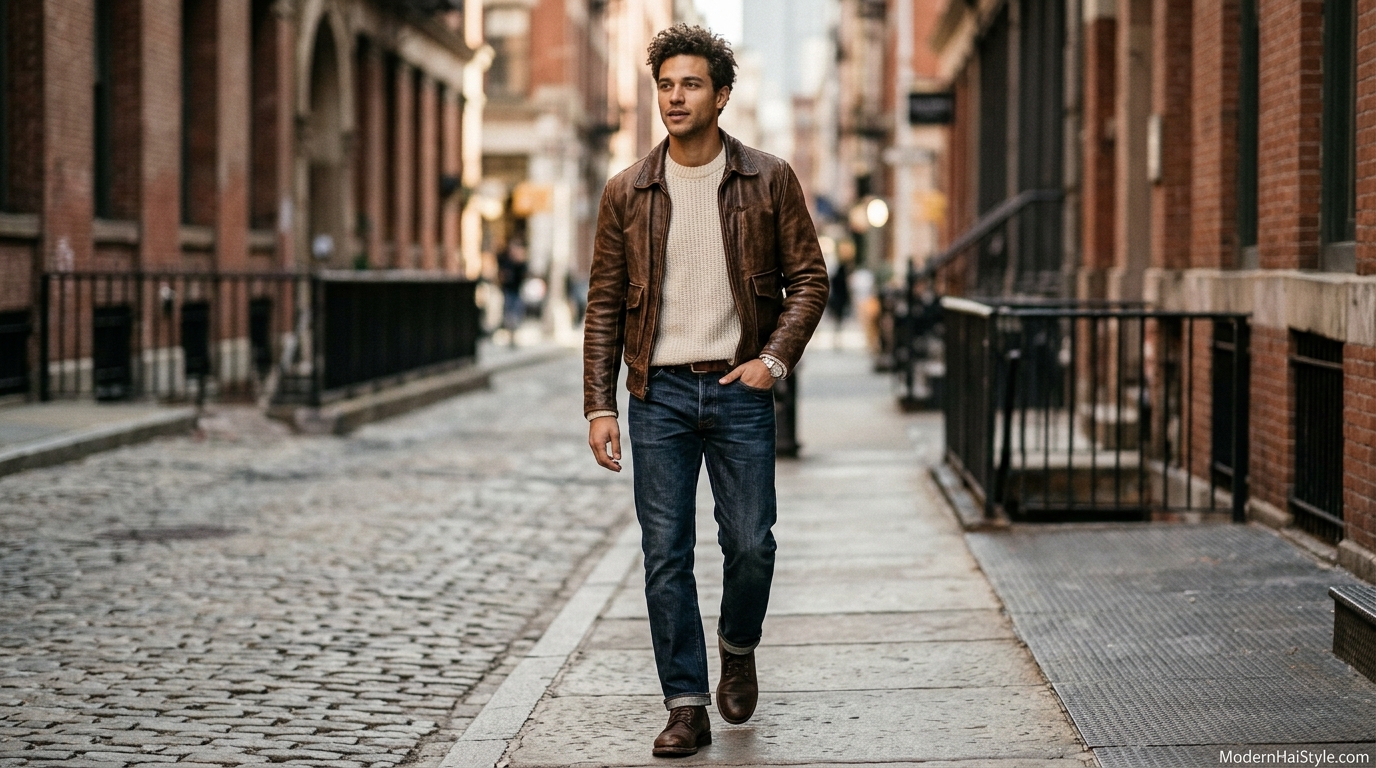
Men’s Thrifted Outfits: Hunt by Category, Judge by Fabric, Style One Piece at a Time
Mens thrifted outfits fail in the aisle, not in the mirror. The men who dress well from secondhand stores run a system: they hunt specific categories, judge fabric and construction in seconds, and style one vintage piece at a time.
Everyone else buys random cheap clothes and wonders why the outfits never come together. The rack is not the problem. The missing method is.
The method has four moves. Hunt by category, because some garments repay thrifting and others never do. Judge by fabric and construction, because labels and seams tell the truth fast.
Then run true cost math, because a bargain includes cleaning and tailoring. Finally, style with restraint, because one vintage piece reads as character and five read as costume.
The audience is already there. Modern Hai Style readers build outfits season by season, and the same discipline behind men’s summer outfits 2026 and men’s fall outfits 2026 applies here with a different supply chain.
Why Thrifting Works Now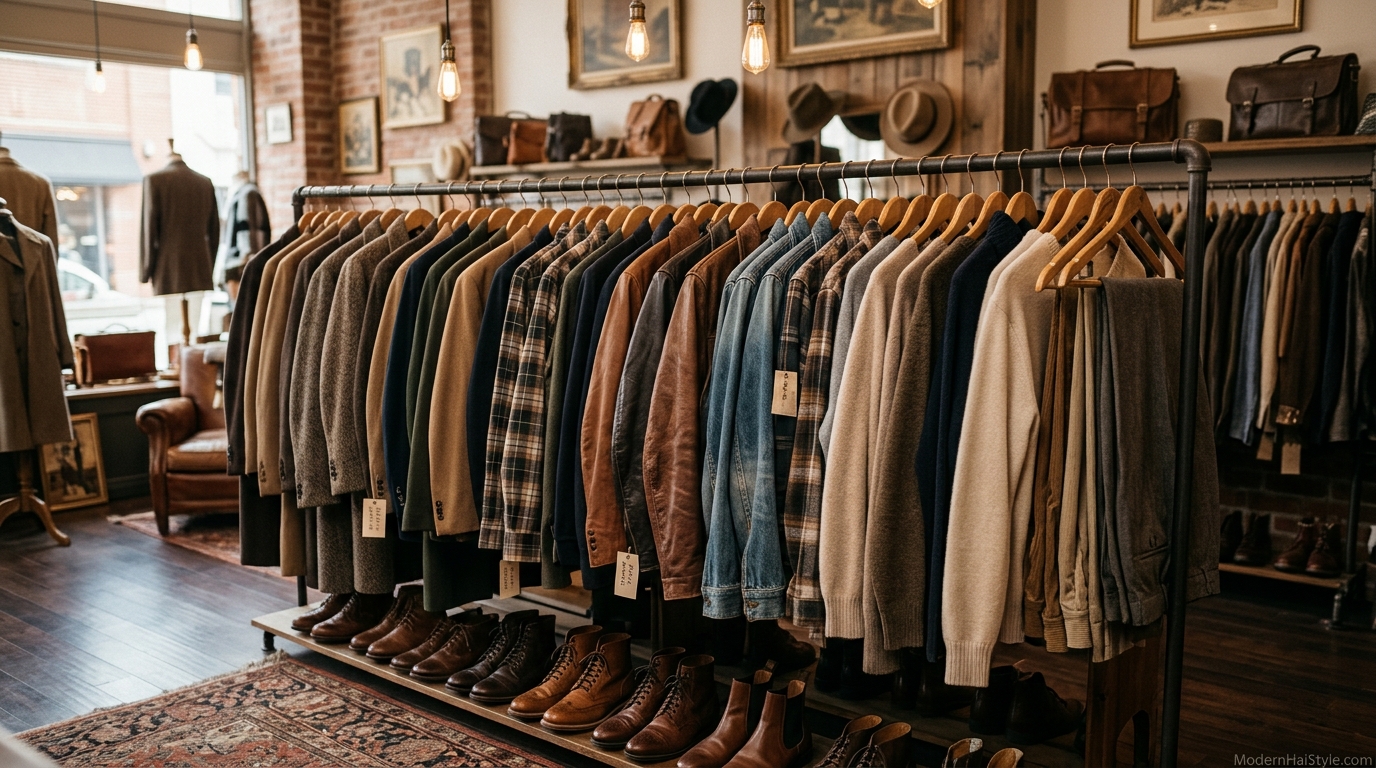
Secondhand shopping has moved from fringe habit to mainstream wardrobe building. The quality sitting on thrift racks is the highest it has ever been, because decades of good menswear keep recirculating.
ThredUp’s 14th annual Resale Report, produced with GlobalData, estimates the US secondhand apparel market at 56 billion dollars in 2025, up 13 percent and growing nearly four times faster than the broader retail clothing market.
The same report counts 59 percent of US consumers shopping secondhand apparel in 2025. ThredUp sells resale for a living, so treat those figures as industry estimates rather than neutral statistics.
The direction is still unmistakable: more quality stock, more shoppers, and a rising skill premium. Men who can judge a garment quickly take the best pieces home.
The Hit List: Categories Worth Hunting
Thrifting rewards category discipline. Some garments were built so well, and donated so often, that the racks reliably produce them. Others age badly no matter how cheap the ticket.
|
Category |
Tier |
Why It Wins |
First Check |
|---|---|---|---|
|
Wool overcoats and blazers |
Tier one |
Durable cloth, structured construction, donated after light wear |
Fabric label, moth check, shoulders |
|
Leather jackets |
Tier one |
Leather improves with age and arrives already broken in |
Zipper, cracking at stress points, lining |
|
Denim jeans and jackets |
Tier one |
Selvedge and heavyweight cloth outlast modern fast fashion denim |
Rise and waist fit, hem wear, hardware |
|
Flannel and workwear |
Tier two |
Thick cotton, simple construction, endlessly layerable |
Collar wear, shrinkage, buttons |
|
Cashmere and wool knitwear |
Tier two |
Premium fibers donated at fast fashion prices |
Pilling, moth holes, stretched cuffs |
|
Tailored trousers |
Tier two |
Correct waists are common and hems tailor cheaply |
Waist and rise, seat wear, hem length |
|
Leather shoes and boots |
Tier two |
Resoleable construction survives decades |
Soles, lining, upper cracking |
Tier One: Coats, Leather, Denim
Wool coats and blazers are the highest value square footage in any thrift store. A structured wool overcoat cost serious money new, survives decades, and gets donated when a wardrobe changes, not when it wears out.
Leather jackets are better bought used than new. The breaking in is already done, the patina is earned, and the fit question is settled on the spot, which matters because leather barely tailors.
Denim rewards patience because heavyweight and selvedge cloth from earlier decades outlasts most modern jeans. Fit the rise and waist in the store, since those are the parts no tailor rescues.
A men’s leather jacket outfit and a solid men’s denim jacket outfit are the two anchors most thrifted wardrobes get built around. Hunt them first, and let everything else support them.
Tier Two: The Supporting Cast
Flannel shirts and workwear layer over everything and forgive imperfect fits. Thick cotton, simple seams, and honest wear make them the easiest category for a beginner to judge.
Cashmere and wool knitwear is the quiet jackpot. Premium fibers land on thrift racks at fast fashion prices, and one good crew neck upgrades a whole rotation of plain outfits.
Tailored trousers are the professional’s pick. One menswear writer calls slacks his number one draft pick category, because correct waist sizes are common and hemming is the cheapest alteration there is.
Leather shoes and boots complete the list. Resoleable construction survives decades, and a cleaned, conditioned pair carries outfits that sneakers cannot. The men’s varsity jacket outfit shows how one character jacket behaves in the same supporting role.
The Caution List
Some categories age badly whatever the price. Elastic dies: waistbands, cuffs, and stretch fabrics lose their recovery and cannot be revived by any tailor.
White dress shirts show collar and cuff wear that no wash reverses. Thin fast fashion knits pill and stretch within a season, which is exactly why they were donated.
Broken zippers on jackets, scattered moth damage, and cracked soles all belong to the referee section later. Cheap is not a bargain when the repair bill exceeds the garment.
The 60 Second Quality Check
Speed is a skill, not a shortcut. Good pieces leave racks quickly, so the check runs in a fixed order: fabric, construction, condition. Sixty honest seconds beat ten vague minutes.
Step One: Fabric First
1. Read the fabric content label before anything else. Natural fibers win: wool, cotton, cashmere, alpaca, linen, and full grain leather outlast synthetics and age with character instead of shine.
2. Treat blends with suspicion. Articles of Style’s vintage shopping guide gives the blunt version: cheaper garments get blended with polyester, rayon, or nylon, and those are the pieces that look tired fastest.
3. Learn the mill cloth tag. A woven label naming a fabric maker, Harris Tweed being the textbook example, signals a manufacturer proud of its cloth. The same jackpot labels appear in a vintage seller’s sourcing tips at The SHFT, written from the seller’s side of the counter.
Step Two: Construction Tells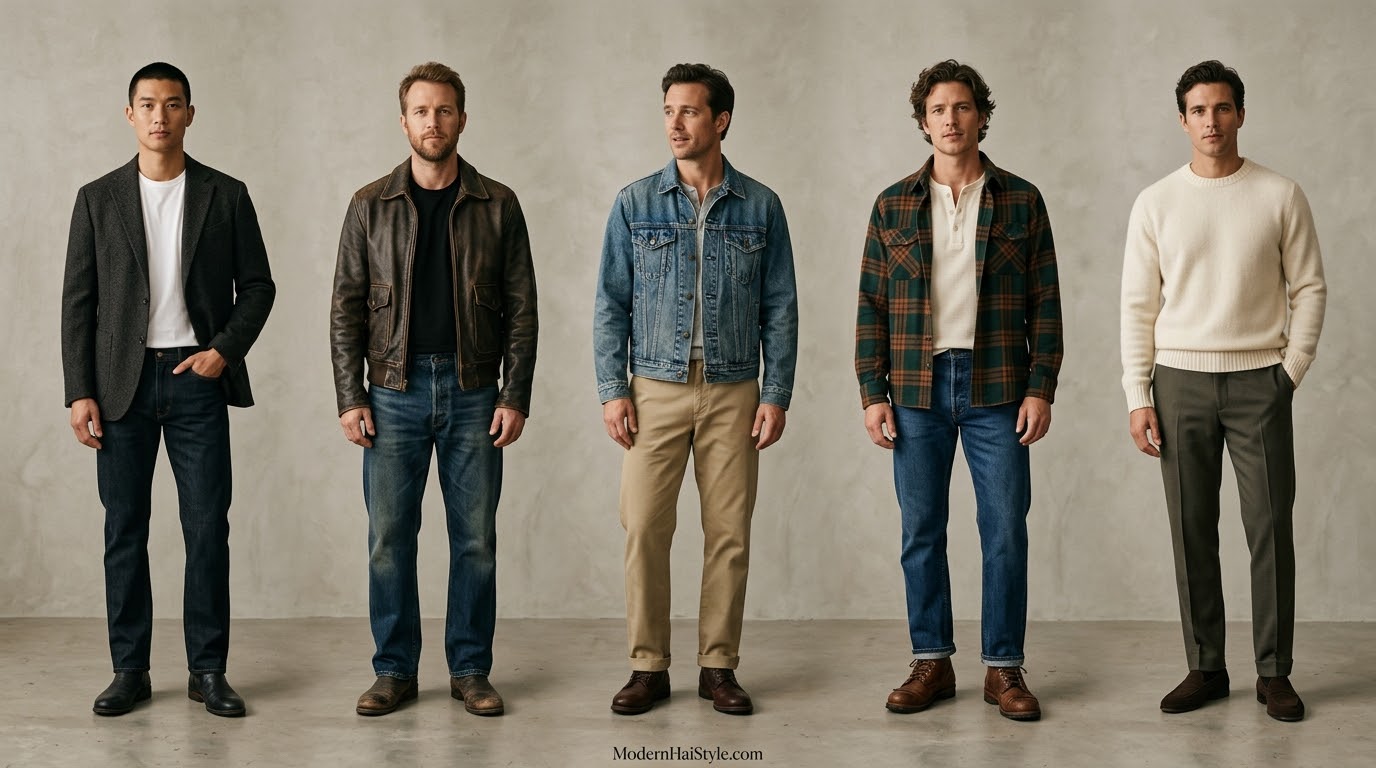
4. Run the seams. Stitching should be even, dense, and secure, inside as much as outside. Fraying armhole and shoulder seams are failures in progress, not character.
5. Test the hardware. Zippers should glide, buttons should sit tight, and metal should outweigh plastic. On leather and denim, hardware carries the garment’s whole working life.
6. Check the lining. A jacket’s inside tells its real story: tears, thinning, and underarm wear hide there. As the 3Legacies secondhand jacket fit guide puts it plainly: if there are no lining photos on an expensive online piece, ask before buying.
Step Three: Condition Inspection
7. Hunt the hidden damage. Collars, cuffs, elbows, and pocket edges take the abuse. Hold wool up to the light and look for the tiny holes that mean moths.
8. Smell the garment. Check at the collar and underarms. Surface odor washes out, but a deep smell lives in the fibers, and no cleaning fully rescues it.
9. Separate patina from failure. Leather sheen, denim fading, and mellowed brass are patina, and they are the point. Torn seams and cracked stress points are failure, priced as repairs or walked away from.
Dappered’s Thrifting 101 rules turns the same discipline into house rules, including the one beginners skip: try everything on, because thrift store sales are usually final.
Reading Era and Value Signals
Some construction details double as dating tools, and dating tools help you price a find against its real peer group. They signal era, not automatic quality, so they inform the check rather than replacing it.
Selvedge denim shows a finished self edge, often with a colored ID line, woven on shuttle looms. It marks heavier, slower made cloth that typically outlasts modern commodity denim.
Single stitch hems on tees point to production before the mid 1990s, when double stitch coverstitching became standard. Collectors use it to date band and graphic tees at a glance.
Union made tags and country of origin labels from earlier decades signal the domestic manufacturing era menswear hunters prize. On Levi’s, the capitalized big E red tab was discontinued in 1971, the single most cited dating marker in denim.
None of these details rescues a bad fit or a damaged garment. They tell you what you are holding, and the 60 second check still decides whether it comes home.
Fit Triage: What Tailoring Fixes and What It Cannot
Fit decides whether a find becomes a wardrobe piece or a donation you make yourself next year. Triage every garment by one question: is the flaw in a fixable zone or an unforgiving one?
|
Zone |
Verdict |
Why |
|---|---|---|
|
Shoulders |
Unforgiving |
Restructuring shoulders costs more than most finds are worth |
|
Waist and rise on trousers and jeans |
Unforgiving |
Pattern geometry, not a seam allowance |
|
Jacket chest and length |
Mostly unforgiving |
Structure and proportions are built in |
|
Sleeves |
Fixable |
Shortening is routine tailor work |
|
Trouser hems |
Fixable |
The cheapest alteration in the shop |
|
Taking in a body or waist |
Fixable |
Standard work when the change is modest |
|
Buttons and small repairs |
Fixable |
Pennies against the value of the garment |
Shoulders come first, always. Jacket specialists who sell secondhand for a living start there because shoulders that pull or droop make the whole garment feel wrong, and no economical alteration fixes them.
Compare the shoulder width against a jacket you already own and like. James Quiambao’s thrifting guide gives the matching rule from the buyer’s side: the more complex the alteration, the more the garment needed to fit properly in the first place.
Vintage sizing runs small, and tags lie politely about it. Standards shifted over decades and garments shrank across years of washing, so a vintage large often measures like a modern medium.
The answer is a measurement kit, five numbers carried in your phone: chest, waist, shoulder width, inseam, and the shoulder width of your best fitting jacket. Shop by numbers in the store and online, never by letters.
Length deserves one caution. Shortening is routine, but nothing can be lengthened, because there is no cloth to let down. A coat or trouser that is already short stays short.
True Cost Math: The Bargain Test
The ticket price is the smallest part of what a thrifted garment costs. True cost is ticket plus cleaning plus tailoring plus any repair, judged against the price of equivalent quality bought new.
|
Cost Line |
Question to Ask |
|---|---|
|
Ticket price |
What does the tag actually say, after sale days? |
|
Cleaning |
Wash at home, or dry cleaning for wool and structure? |
|
Tailoring |
Which fixable zone flaws does this piece carry? |
|
Repairs |
Buttons, seams, resoling, zipper risk priced honestly? |
|
Cost per wear |
How many times a year will this genuinely be worn? |
Worked honestly, the math still favors the hit list by a wide margin. Named thrift writers report finds like premium Japanese denim and a luxury cashmere sweater bought for the price of a takeout lunch each, against four figure retail tags.
Those are their reported examples, not price benchmarks, and this page promises no equivalent luck. What the system promises is the judgment to recognize the same categories when they appear in front of you.
The walk away threshold is simple. When cleaning and tailoring push the total near the price of a decent new version, the find has stopped being a bargain and become a project.
Overbuying is the hidden cost nobody prices. Cheap tickets invite volume, and volume reproduces fast fashion behavior at lower prices. The gap list, covered below, is the discipline that keeps the math honest.
Where and When to Hunt
Not all secondhand rooms are equal. Each store type draws a different donation stream, prices differently, and rewards a different kind of visit.
|
Store Type |
Price Level |
Best For |
Trade Off |
|---|---|---|---|
|
Charity thrift |
Lowest |
Hit list discovery, volume hunting |
Unpredictable stock, final sales |
|
Curated vintage |
Highest secondhand |
Coats, leather, era specific pieces |
You pay for the curation |
|
Buy sell trade chains |
Middle |
Trend pieces, current brands |
Stock skews young and fast |
|
Estate sales |
Low to middle |
Untouched older wardrobes, full outfits |
Irregular schedule, no returns |
|
Online platforms |
Middle to high |
Specific gap list hunts by measurement |
Return risk, no touch or smell test |
Timing and Territory
Thrift in affluent areas. The rule appears in nearly every serious guide because it is a stock fact: better neighborhoods donate better wardrobes, and charity stores price to move what arrives.
Shop early in the week. Donations surge over weekends and get sorted and racked in the following days, so Monday and Tuesday visits meet fuller racks and thinner crowds than Saturday ever offers.
Use the calendar twice more. Donation surges after New Year cleanouts and during spring cleaning restock the hit list categories, and chain sale days stack discounts on already low tickets.
Get to know the staff. Vintage guides have advised it for years: regulars learn when shipments hit the floor, and shopkeepers remember the customer hunting a charcoal overcoat in a specific size.
Shop with a gap list. Write the three pieces your wardrobe actually lacks, with measurements, and hunt only for those. The logic mirrors men’s capsule wardrobe essentials: a wardrobe is a plan, not a pile.
Online Thrifting Without the Guesswork
Online platforms win the specific hunts: the exact category, fabric, and era the local racks never produce. eBay carries the deepest vintage menswear stock on earth, and curated platforms trade higher prices for better photography and descriptions.
Buy from measurements, not sizes: pit to pit, shoulder, sleeve, and length for jackets, waist, rise, and inseam for trousers. Compare every number against a garment you own that fits.
Price the return risk honestly. A platform with weak returns turns a sizing mistake into a resale chore, so the discount has to cover that risk before the purchase makes sense.
Run Two Hunting Grounds, Not One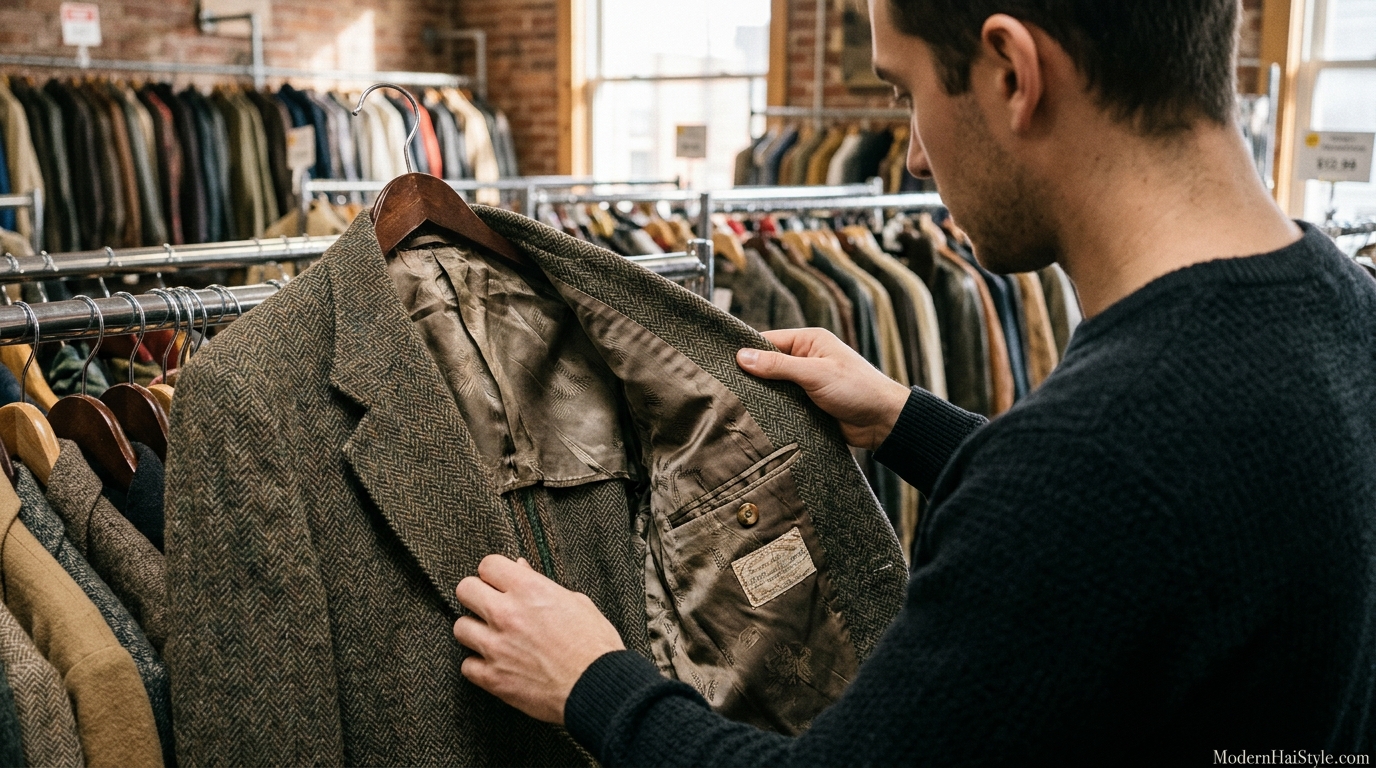
Serious thrifters split their hunting between one discovery store and one precision source. The discovery store is a charity thrift in a strong donation area, visited briefly and often, where pricing anomalies appear without warning.
The precision source is wherever a specific gap gets filled reliably: a curated vintage shop for coats, an estate sale circuit for tailoring, or saved online searches with your measurements for the exact piece.
Keeping the two roles separate stops the common failure mode. Men either wander discovery racks hoping for a specific jacket that never comes, or pay curated prices for basics the charity racks produce weekly.
Route each gap list item to the ground that actually produces it. Discovery finds are bonuses, and precision hunts are appointments, and confusing the two wastes both money and weekends.
Five Outfit Formulas Built From the Hit List
Formulas convert hunting skill into worn outfits. Each one below is built from a hit list category, follows the one vintage piece rule, and keeps the supporting pieces modern and quiet.
Formula One: The Blazer Anchor
A thrifted wool blazer, a plain white tee, and dark jeans. The blazer’s fabric supplies the texture, the tee keeps it current, and the jeans keep it grounded. It is the smart casual combination every styling tradition converges on.
Wear it to dinners, casual offices, and evenings out. The men’s blazer outfit casual develops the relaxed version, and the men’s blazer outfit formal shows the same jacket logic dressed fully up.
Formula Two: The Leather Anchor
A broken in leather jacket over a dark tee with clean jeans and boots. Nothing else in the outfit should compete: the jacket’s patina is the entire statement, and restraint is what makes it read as style.
Fit is the whole game here, since leather does not tailor. The men’s date night outfits builds evening outfits on exactly this kind of single strong anchor.
Formula Three: The Denim Anchor
A vintage denim jacket over a graphic tee with chinos, or heavyweight vintage jeans with a plain knit and clean sneakers. Contrast the washes when denim doubles up, or the outfit flattens into a uniform.
The men’s wide leg jeans outfit covers the relaxed jean silhouette that pairs best with thrifted tops. Finish with the men’s retro sneakers outfit approach: footwear with history, kept clean.
Formula Four: The Workwear Anchor
A flannel shirt layered over a henley, with straight jeans and leather boots. Workwear thrifts beautifully because it was built for abuse, and the layered top half carries the whole outfit’s texture.
In colder months the same flannel becomes a middle layer inside men’s winter layering outfits, which shows how thrifted workwear slots into a modern layering system without looking dated.
Formula Five: The Knit Anchor
A cashmere or wool crew neck over a collared shirt, with tailored thrifted trousers and loafers.
This is the quiet luxury register: premium fiber, calm colors, nothing loud, and it suits the men’s quiet luxury outfits and men’s old money outfits aesthetics at a fraction of their usual cost.
Dress it toward the office with men’s office outfits casual or fully formal with men’s formal office outfits. For events, the same discipline covers a men’s wedding guest outfits brief or a men’s party outfits look, each built from one strong secondhand piece.
The Clean and Tailor Protocol
Nothing goes from rack to wardrobe unprocessed. The protocol is short, fixed, and non negotiable, and Articles of Style states its order plainly: the dry cleaner and the tailor come before the first wear.
1. Clean everything first. Machine wash what tolerates it, dry clean wool coats, blazers, and delicate knits, wipe and condition leather, and clean shoe interiors before they touch your feet.
2. Inspect again at home. Home light reveals what store light hides: faint stains, weak seams, a second moth hole. Catching them now decides whether the piece gets repaired or returned to the donation stream.
3. Tailor the fixable zones. Hem the trousers, shorten the sleeves, take in the modest excess. Book these while the find is fresh, or the alteration queue becomes where good intentions go to wait.
4. Protect the wool. Cedar or equivalent moth protection in storage, and breathing room on the rail. A thrifted wool coat that survives its second owner should be dressed to survive a third.
Building a Thrifted Capsule Wardrobe
A thrifted capsule is a slow build, not a haul. Work the categories in value order: coats and blazers first, then denim and trousers, then knitwear and shirts, then shoes.
Hold a tight color palette so the pieces combine freely: charcoal, navy, brown, olive, and cream cover nearly every formula above. The men’s capsule wardrobe for winter applies the same palette discipline to a cold weather rotation.
Expect the build to take weeks of short visits. That pace is a feature: every piece is chosen against the gap list, checked properly, and tailored before the next hunt begins.
Seasonal guides complete the rotation once the core exists. Thrifted anchors slot straight into men’s summer outfits 2026 thinking in warm months and into the fall and winter systems in cold ones, because a good vintage piece is seasonless by design.
The Referee: What Not to Buy
Every confident buy in this system rests on an equally confident refusal list. These are the failures that no discount justifies, because each one converts a bargain into a repair bill or a re-donation.
- Broken zippers on jackets. Replacement involves specialist labor that routinely exceeds the ticket. Test every zipper twice in the store.
- Scattered moth damage. One hole can be rewoven at a price. A pattern of holes means the garment is finished.
- Cracked or separated soles. Uppers can be conditioned; failed soles turn a bargain into a cobbler’s invoice.
- Dead elastic. Waistbands and cuffs that have lost recovery never regain it. Stretch it in the store and watch it fail to return.
- Smell inside the fibers. If it survives the sniff test at collar and underarms with a deep, old odor, it will survive your washing machine too.
- Anything bought for the price alone. A garment you would not want at twice the price is clutter at this one. The ticket is not the outfit.
Frequently Asked Questions
What are the best men’s clothing items to buy at thrift stores?
Wool overcoats and blazers, leather jackets, denim, flannel, cashmere knits, tailored trousers, and leather shoes.
These categories were built to last, fill the racks from quality wardrobes, and hold their character with wear.
How do men build outfits from thrifted clothes?
Use the one vintage piece rule. One thrifted piece anchors the outfit, and modern basics carry the rest.
A vintage leather jacket over a plain tee and current jeans works. Head to toe vintage reads as costume.
How can you tell if thrifted clothing is good quality?
Read the fabric content label first. Natural fibers outlast synthetics and age better.
Then check construction: secure seams, metal hardware, lined jackets, mill cloth tags. Finish with condition, inside and out, including smell and moth damage.
Why does vintage clothing run small?
Sizing standards and average bodies have shifted over decades. Garments also shrink across years of washing.
A vintage large can measure like a modern medium. Shop by measurements, never by the tag.
What measurements should men know before thrifting?
Five numbers: chest, waist, shoulder width, inseam, and your best jacket’s shoulder width.
The jacket number matters most online, because shoulders are the fit a tailor cannot economically fix.
Is thrifting worth it for men?
Yes, by true cost math, for the hit list categories. Ticket plus cleaning plus minor tailoring buys quality costing far more new.
It fails for categories that age badly or need expensive repairs. Price the whole find, not the tag.
What should men not buy at thrift stores?
Skip jackets with broken zippers, wool with scattered moth damage, shoes with cracked soles, and dead elastic.
Avoid collar worn white shirts and any smell inside the fibers. Structural damage is the line. Patina is not damage.
How do you clean thrifted clothes?
Everything gets cleaned before it joins the wardrobe. Wash what tolerates it and dry clean wool coats, blazers, and delicate knits.
Wipe and condition leather. Clean shoe interiors properly. The order is clean, then tailor, then wear.
How do you get the thrift store smell out of clothes?
Most odor is surface level. A proper wash or dry clean plus airing removes it.
Sunlight helps knits and denim. A smell surviving a professional clean sits in the fibers, and that item should never have been bought.
What can a tailor fix on thrifted clothes, and what can’t they fix?
Cheap and reliable: hems, sleeves, taking in a waist, replacing buttons.
Expensive or impractical: shoulders, jacket chest structure, lengthening anything, wrong jean rise. Buy for the unforgiving parts and tailor the forgiving ones.
How much does tailoring thrifted clothes cost?
It varies by city and tailor, so honest guides publish no fixed figures. Hems sit at the cheap end everywhere.
Shoulder and waist restructuring sit at the expensive end. Complex work means the garment needed to fit properly first.
When is the best time to go thrifting?
Early in the week, after weekend donations are processed. One experienced thrifter’s rule is Monday or Tuesday, avoiding crowds.
Sale days and the donation surges after New Year and during spring cleaning are the other edges.
Where are the best thrift stores for men?
Judge by type, not name. Charity thrift in affluent areas, curated vintage for coats and leather, estate sales for untouched wardrobes.
Online platforms win specific hunts. The best store is the one whose donations match your hit list.
Is it better to thrift in store or online?
In store wins judgment: fabric, smell, lining, and fit checked in sixty seconds, at the lowest prices.
Online wins specificity: exact categories and measurements from home. Most serious thrifters run both systems together.
What is the difference between a thrift store, a vintage store, and consignment?
Thrift stores sell donations at flat low prices with little curation. Vintage stores buy and curate by era and quality.
Consignment splits the price with the original owner and skews newer. The same coat appears in all three at three prices.
How do men thrift for work and office outfits?
Hunt what offices donate: wool blazers, dress slacks, white and pale blue shirts, leather dress shoes, and ties.
One veteran thrifter calls slacks his top category. Correct waists are common, and hems tailor cheaply.
Can men thrift a suit or wedding outfit?
Yes, with lead time. Suits are abundant because men donate them after rare wear.
The unforgiving parts are jacket shoulders and trouser rise and waist. Start months ahead and budget the tailoring into the true cost.
What thrifted items make the best gifts or first pieces for beginners?
Start where fit risk is lowest: a flannel shirt, a wool scarf, a leather belt, a forgiving denim jacket.
Avoid online jackets and shoes until your measurement kit is dialed in. Small first reps build the skill.
How do you spot a valuable vintage denim jacket?
Collectors read era markers: selvedge fabric, period branding, and honest wear patterns.
The capitalized big E tab on Levi’s was discontinued in 1971. Valuable or not, the jacket still passes the same fit and condition checks.
What does single stitch mean on a vintage t-shirt?
Many tees made before the mid 1990s use single stitch hems. Later mass production moved to double stitch.
Thrifters use it as a quick dating tell for band tees. It signals era, not quality by itself.
Are thrifted shoes worth buying for men?
Yes for leather shoes and boots with sound soles and cleanable uppers. They can be conditioned and resoled.
Avoid cracked soles, collapsed structure, and worn through linings. Footwear molds to its first owner, so fit judgment matters most here.
How do men avoid looking costumed in vintage clothes?
Dose and contrast. One vintage piece at a time, modern basics around it, fits matching current silhouettes.
A 70s print shirt under a plain modern blazer is a statement. The same shirt with flares is a costume.
What is true cost in thrifting?
The full price of a wearable find: ticket plus cleaning plus tailoring plus any repair.
Compare it against equivalent quality new and your expected wears. Priced honestly, most hit list finds still win by a wide margin.
How often should men go thrifting to build a wardrobe?
Little and often beats rare and huge. Stock turns over daily, and hit list categories appear unpredictably.
A short weekly visit with a gap list finds more per hour and prevents impulse buying.
What is a gap list and why do thrifters use one?
A written list of the specific pieces your wardrobe lacks, in your measurements.
Thrifting is impulsive by design. The list converts random stock from a temptation into a search problem with an answer.
Do thrift stores restock on certain days?
Practices vary, but donations surge over weekends and get racked in the following days. That is why early week shopping is the insider rule.
Regulars learn each store’s rhythm from the staff themselves. Ask when new stock hits the floor.
How do men thrift in affluent areas without it feeling opportunistic?
Charity thrift exists to convert donations into funding. Buying there is the model working as intended.
Affluent stores receive better donations, which is a stock fact. Pay marked prices and donate your own quality pieces back.
What fabrics should men look for when thrifting?
Natural fibers first: wool, cotton, cashmere, alpaca, linen, and full grain leather.
Cheaper synthetic garments age worst. A mill cloth tag on a jacket signals a maker proud of its fabric.
How do you check a thrifted wool coat for moth damage?
Hold the fabric to the light. Look for tiny holes at the collar, cuffs, underarms, and folds.
A hole or two can be rewoven at a price. Scattered damage means the garment is done. Dry clean before storage.
Can thrifted leather jackets be tailored?
Barely. Leather tailoring is specialized and limited, so the fit in the store is the fit you own.
Buy leather broken in and fitting properly on the spot. Check zippers twice, because replacement on leather is a real cost.
What is patina, and when is wear actually damage?
Patina is surface character: leather sheen, denim fading, mellowed hardware.
Damage is structural: torn seams, cracked leather, separated soles, dead elastic. Buy patina gladly. Price failure as a repair bill, or walk away.
How do men build a capsule wardrobe from thrift stores?
Slowly, by category order: coats and blazers first, then denim and trousers, then knitwear and shirts, then shoes.
Hold a tight color palette so pieces combine. The gap list is the build plan, worked over weeks of short visits.
Is thrifting actually sustainable?
Buying an existing garment avoids a new one’s production impact. That core claim is fair.
The caveats: overbuying cheap clothes copies fast fashion behavior, and heavy shipping adds footprint. Buy less, buy quality, wear it for years.
How big is the secondhand market now?
ThredUp’s 14th annual Resale Report estimates the US secondhand apparel market at $56 billion in 2025, up 13 percent.
It counts 59 percent of US consumers shopping secondhand apparel in 2025. ThredUp sells resale, so treat the figures as industry estimates.
What are the best thrifted outfit ideas for dates?
One character piece, everything else quiet: vintage leather jacket, plain dark tee, clean jeans.
Or a thrifted blazer over a white tee with dark denim and loafers. The read is personal style, never costume or effort.
How do men style a thrifted blazer?
The reliable formula is blazer plus tee plus dark jeans. It works because the blazer’s fabric supplies the texture.
Check shoulders first, tailor sleeves and body, and let tweed or herringbone do the talking.
What era of vintage clothing is easiest for men to wear?
The 1980s and 1990s: denim jackets, flannels, chore coats, wool coats, relaxed blazers, straight leg jeans.
These sit close to current silhouettes. Earlier extremes and 2000s cuts need the one piece rule and careful dosing.
How do men thrift online without getting the fit wrong?
Buy listings with measurements, not just sizes: pit to pit, shoulder, sleeve, length, waist, rise, inseam.
Compare every number against a garment you own that fits. Ask for lining photos on expensive pieces before paying.
What should men do immediately after buying thrifted clothes?
Run the protocol: clean everything before it enters the closet, inspect again under home light, then tailor, then wear.
Add moth protection for wool storage. Nothing goes from rack to wardrobe unwashed, ever.
Are thrift stores more expensive than they used to be?
Prices have risen with demand, and curated resale skims quality stock earlier than before.
The counterweights hold: charity thrift still prices to move donations, and sale days still exist. The skill premium has risen, which rewards better systems.
Can men find plus size and tall sizes thrifting?
Yes, with a strategy adjustment. Extended sizes are scarcer per rack, so visit often and filter online by measurements.
Recent decades of secondhand beat true vintage here, since vintage runs smaller. Tailoring down a larger find is often easier.
What is the fastest way for a man to start thrifting well?
Learn your five measurements, write a gap list of three pieces, and make one short weekday visit.
Hunt only tier one categories, run the 60 second check, and buy at most one piece. Skill is reps with a system.
Conclusion
Mens thrifted outfits reward the man with a system over the man with luck. Hunt the hit list, run the 60 second check, triage fit by the unforgiving zones, and price every find by its true cost.
Then style with restraint: one vintage piece, modern basics, a clean and tailored finish. Do that on repeat and the wardrobe that emerges is better made than most new wardrobes at several times the price.
Start this week. Write the gap list, learn your five measurements, and make one short weekday visit hunting tier one only.
When you are ready to build the rotation around your finds, the seasonal and capsule guides at Modern Hai Style are the natural next step.

Dilawar is a passionate writer and contributor at Modern Hairstyle (modernhaistyle.com), specializing in hairstyles, hair care, grooming, fashion, beauty, and lifestyle trends. He enjoys sharing practical tips, hairstyle inspiration, and easy-to-follow guides to help readers discover their personal style. His goal is to provide informative, engaging, and helpful content that keeps readers updated with the latest trends.


